1159 Medium Easy Care | 2026 Guide - Page 30
Find 1159 medium easy care. Complete guide for your garden.
1159 Easy Care with medium level
Showing 1045-1080 of 1159
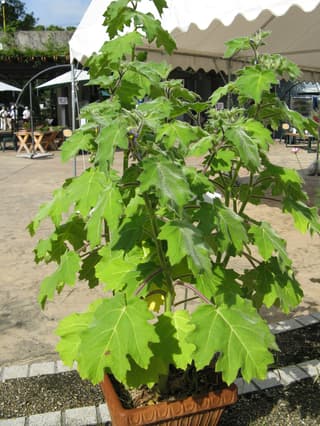
Nipplefruit
Solanum mammosum
Solanum mammosum, commonly known as Nipplefruit or Cow's Udder Plant, is a tropical shrub native to South and Central America. It is widely grown as an ornamental plant for its strikingly shaped fruits, which resemble animal udders or nipples. Belonging to the Solanaceae family, it grows up to 1.5 meters tall, with dense green foliage and white to purple flowers. Despite its ornamental appeal, all parts of the plant are toxic and should be kept away from children and pets.
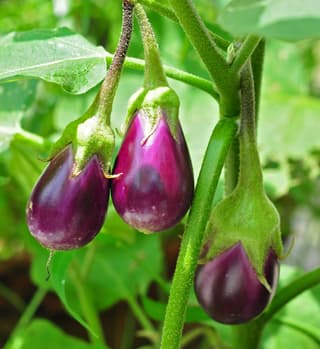
Eggplant
Solanum melongena
Eggplant (Solanum melongena) is a tropical and subtropical vegetable crop in the Solanaceae family, prized for its large, glossy, purple fruit. Native to India and Southeast Asia, it is now cultivated worldwide in warm climates. A bushy perennial grown as an annual, it reaches up to 1.8 m tall with star-shaped lavender flowers and fleshy fruit ranging from deep purple to white.
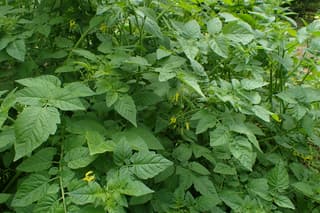
Currant Tomato
Solanum pimpinellifolium
Solanum pimpinellifolium, commonly known as the Currant Tomato or Wild Tomato, is the wild ancestor of all cultivated tomatoes. Native to Peru and Ecuador, it produces tiny, intensely sweet berries the size of currants. All green parts of the plant contain solanine and are toxic; only ripe fruits are edible.
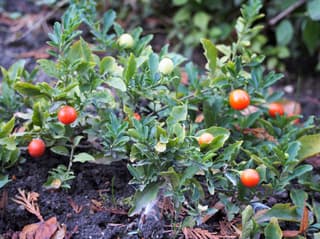
Jerusalem Cherry
Solanum pseudocapsicum
Solanum pseudocapsicum, commonly known as Jerusalem Cherry or Winter Cherry, is an evergreen ornamental shrub native to South America (Peru and Ecuador). It is widely grown for its decorative berries that transition through green, yellow, orange, and red, persisting for months. CRITICAL WARNING: all berries and leaves are severely toxic to humans, cats, and dogs due to solanocapsine and solanine alkaloids.
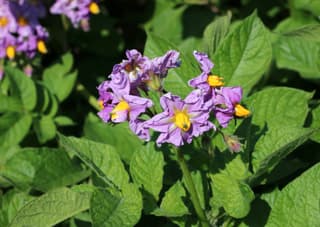
Potato
Solanum tuberosum
The potato (Solanum tuberosum) is a starchy tuberous crop from the Andes of South America, cultivated for over 7,000 years. A member of the Solanaceae (nightshade) family, it is now one of the world's most important food crops. The plant produces attractive white, pink, or purple flowers and nutritious underground tubers. CAUTION: All green parts of the plant contain solanine, a toxic alkaloid — only the healthy tubers are edible.

Japanese Pagoda Tree
Sophora japonica
The Japanese Pagoda Tree (Sophora japonica, syn. Styphnolobium japonicum) is a deciduous tree in the Fabaceae family, native to China and Korea, which has long been cultivated around temples and imperial gardens in Japan. It grows to a height of 15–25 m, featuring a broad, spreading crown and pinnate leaves composed of 7 to 17 leaflets. In summer (July–August), it blooms with creamy-white, lightly fragrant flowers in long panicles that are highly attractive to bees. Due to its resistance to drought, urban pollution, and frost (zones 4a–8b), it is frequently planted as a street and park tree. Because of its slow, resilient growth, thick bark, and ability to form aged, sculptural trunks, it is a popular species for bonsai.

Kōwhai
Sophora microphylla
The kōwhai (Sophora microphylla) is an evergreen tree endemic to New Zealand, where it grows from coastal areas to low montane environments. It reaches between 13 and 26 feet in height in cultivation (up to 82 feet in the wild), featuring pinnate leaves with small leaflets and weeping branches. In spring, it produces clusters of striking, pendulous yellow flowers, considered the country's unofficial national flower. All parts, especially the seeds, are toxic as they contain the alkaloid cytisine.
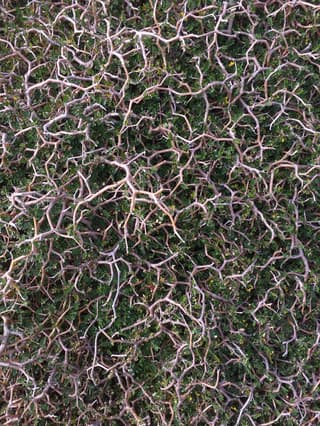
Dwarf Kowhai
Sophora prostrata
Sophora prostrata is a small, slow-growing evergreen shrub native to the dry hill country of New Zealand's South Island, prized for its dense tangle of wiry, zigzagging branches and tiny compound leaflets. In late winter to spring it produces clusters of tubular, pea-like yellow flowers that give the wider kowhai genus its Maori name, meaning "yellow". The rigid, interlocking branch pattern (divarication) is thought to be an evolutionary defence against browsing by the now-extinct moa. Popular as a specimen shrub, low hedge, or bonsai subject, it tolerates coastal exposure and poor soils once established but needs full sun and sharp drainage to thrive.
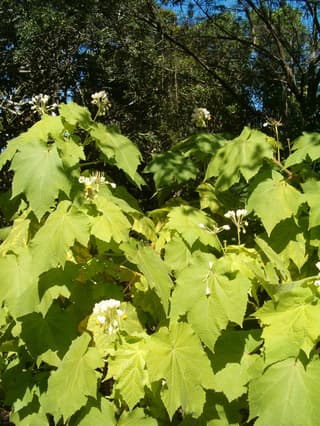
African Hemp
Sparrmannia africana
The African Hemp (Sparrmannia africana) is a fast-growing evergreen shrub from the mallow family (Malvaceae), native to the open woodlands of South Africa near the Cape of Good Hope. In the wild, it grows to 4–8 m, though it remains significantly smaller as a houseplant. It has heart-shaped, finely lobed leaves covered in short hairs, which can cause mild irritation to sensitive skin. From late winter to summer, it produces white flowers with striking yellow and red stamens that react with movement when touched by insects.
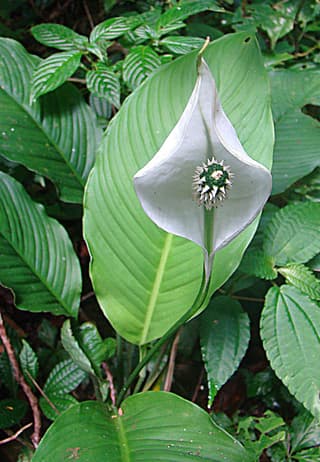
Peace Lily
Spathiphyllum wendlandii
Spathiphyllum wendlandii, commonly known as the Peace Lily, is a tropical evergreen perennial native to Central America — Costa Rica, Honduras, and Panama. With its lush dark-green leaves and graceful white spathe flowers, it is one of the most beloved indoor plants worldwide. It is also NASA-certified as an effective air purifier, removing benzene, formaldehyde, and trichloroethylene from indoor environments.
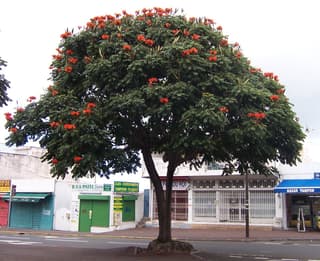
African Tulip Tree
Spathodea campanulata
Spathodea campanulata, commonly known as the African Tulip Tree, is a fast-growing evergreen tree native to the tropical rainforests of West and Central Africa. It is celebrated for its spectacular clusters of large, cup-shaped scarlet to orange flowers that blaze against its dense, dark green canopy. Growing up to 25 meters tall in ideal conditions, this majestic tree has been planted across tropical regions worldwide as an ornamental shade tree. Despite its beauty, it is considered invasive in several regions outside its native range.
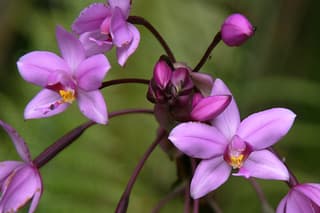
Philippine Ground Orchid
Spathoglottis plicata
Spathoglottis plicata, commonly known as the Philippine Ground Orchid, is a stunning terrestrial orchid native to Southeast Asia and the Pacific islands. Unlike most orchids that grow on trees, this species thrives in the ground, forming lush clumps of pleated, strap-like leaves topped by tall flowering spikes bearing up to 40 vibrant pink to purple blooms. It is one of the most accessible and rewarding orchids for tropical and subtropical gardens.
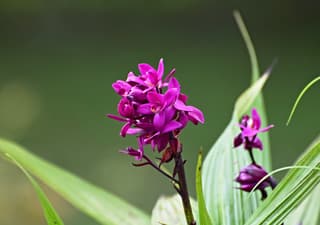
Clawed Ground Orchid
Spathoglottis unguiculata
Spathoglottis unguiculata, commonly known as the Clawed Ground Orchid, is a terrestrial orchid native to Southeast Asia and the Pacific region. Unlike most orchids that grow on trees, this species thrives in the ground, producing elegant flowers in shades of yellow and purple. Its distinctive claw-like lip gives it its name and makes it stand out among ornamental orchids.
cannonball fungus
Sphaerobolus stellatus
Sphaerobolus stellatus, commonly known as the cannonball fungus or artillery fungus, is a unique species of fungus known for its explosive spore dispersal mechanism. It produces tiny, star-shaped fruiting bodies that contain a single dark spore mass (peridiole). When internal pressure builds up, the fungus forcibly ejects the peridiole toward light sources, often sticking to surfaces like house siding or cars.
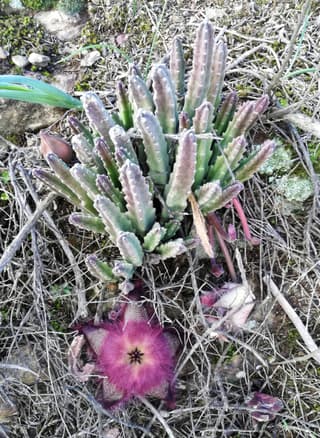
Starfish Flower
Stapelia hirsuta
Stapelia hirsuta is a striking South African succulent known for its velvety, four-angled stems and extraordinary star-shaped flowers that can reach up to 15 cm across. The flowers range from dark red to purple-brown and are covered in fine hairs, producing a foul odor to attract fly pollinators — a fascinating evolutionary adaptation. Native to the Cape Province of South Africa, it thrives in rocky, arid conditions and makes a rewarding houseplant for succulent enthusiasts.
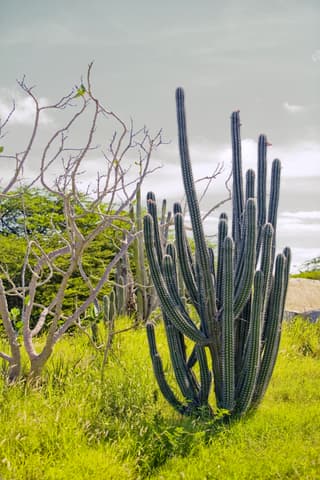
Mexican Organ Pipe Cactus
Stenocereus griseus
Stenocereus griseus, commonly known as the Mexican Organ Pipe Cactus or Dagger Cactus, is a tall columnar cactus native to Mexico and the Caribbean. It can grow up to 9 meters tall, producing white nocturnal flowers pollinated by bats and edible red fruits prized across the Caribbean. Extremely drought-tolerant, it thrives in arid landscapes and desert gardens.
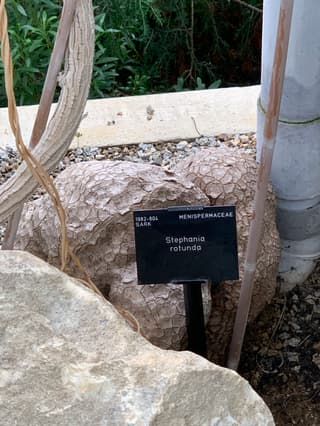
Elephant Foot Plant
Stephania
Stephania is a genus of caudiciform vines in the Menispermaceae family, native to the tropical forests of Southeast and East Asia. It is prized by collectors for its swollen, potato-like caudex, a woody, water-storing tuber that can grow to nearly a foot across over many decades. Each growing season, slender, twining vines emerge from the caudex, unfurling round, peltate leaves before dying back into dormancy when temperatures drop. Left largely untouched during its winter rest, the plant channels its energy into slowly thickening the caudex, making it as much a sculptural centerpiece as a houseplant.
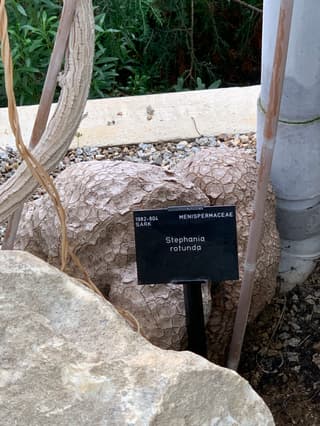
Stephania Erecta
Stephania erecta
Stephania erecta is a fascinating tropical plant native to Thailand and Southeast Asia, prized for its unique potato-shaped woody caudex (bulb) from which elegant, slender stems and peltate (shield-shaped) leaves emerge. The plant goes through a natural dormancy cycle, dropping its leaves in winter and re-sprouting vigorously in spring, making it a captivating conversation piece for any plant collector.
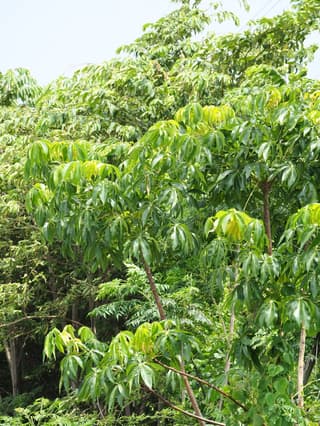
Tropical Chestnut
Sterculia
Sterculia is a genus of tropical and subtropical trees in the family Malvaceae, comprising over 150 species found across Africa, Asia, and Australia. Notable species include Sterculia foetida (Java Olive) and S. quadrifida, prized for their timber, medicinal properties, and ornamental value. Some species bear edible seeds and have been used in traditional medicine for centuries.
Crust fungi
Stereum
Stereum, commonly known as crust fungi, is a genus of wood-decay fungi that form flat or shelf-like fruiting bodies on deadwood. They are characterized by their smooth underside, lacking pores or gills. These fungi play a crucial role in forest ecosystems by breaking down lignin and returning nutrients to the soil. Visually, they often feature striking concentric zones in shades of brown, orange, or gray.

Stevia
Stevia rebaudiana
Stevia (Stevia rebaudiana) is a perennial subtropical herb from the Asteraceae family, native to Paraguay and Brazil. It grows to a height of approximately 60 cm, has small ovate to elliptical leaves with a finely serrated edge, and in summer produces small white tubular flowers in racemose inflorescences. The leaves contain steviol glycosides – a natural sweetener up to 300 times sweeter than sugar, which is why the plant is cultivated worldwide as a sugar alternative.
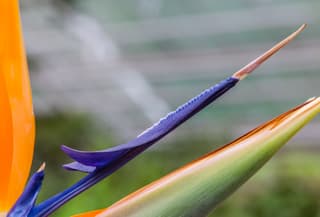
Bird of Paradise
Strelitzia
Strelitzia is a genus of striking tropical plants native to South Africa, celebrated for their dramatic paddle-shaped leaves and exotic flowers. The genus includes the popular Strelitzia reginae (orange Bird of Paradise) and Strelitzia nicolai (white Bird of Paradise), both widely grown as bold indoor statement plants.
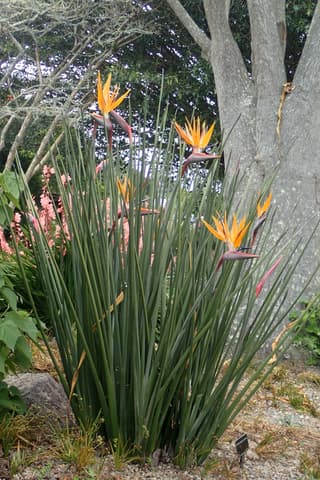
Narrow-Leaved Bird of Paradise
Strelitzia juncea
Strelitzia juncea is a striking South African native prized for its dramatic, rush-like cylindrical stems that replace traditional broad leaves. Unlike its famous relative Strelitzia reginae, this species produces upright, reed-like foliage giving it an architectural, minimalist appearance. It produces the iconic orange and yellow bird-of-paradise flowers, attracting sunbirds in its natural habitat in the Eastern Cape.
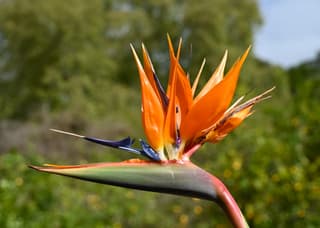
Bird of Paradise
Strelitzia reginae
Strelitzia reginae, commonly known as Bird of Paradise or Crane Flower, is a striking tropical plant native to South Africa. Famous for its spectacular orange and blue flowers that resemble an exotic bird in flight, it has become the official flower of the City of Los Angeles. This evergreen perennial forms clumps of banana-like grey-green leaves and produces long-lasting cut flowers that can survive up to 2 weeks in a vase.

Cape Primrose
Streptocarpus
Streptocarpus, also known as Cape Primrose, is a genus of ornamental plants native to South Africa, belonging to the Gesneriaceae family. Highly valued as an indoor plant, it produces vibrant tubular flowers in shades of purple, lilac, white, pink, red, and blue for much of the year. Its long, velvety, and slightly wrinkled leaves form an elegant rosette. It is an easy-to-grow and very rewarding plant for those seeking prolonged flowering in indoor environments.
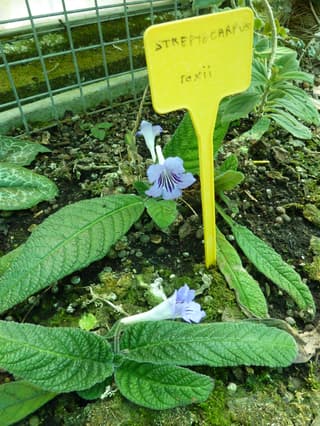
Cape Primrose
Streptocarpus rexii
Streptocarpus rexii, commonly known as Cape Primrose, is a stunning stemless herb native to the rocky coastal forests and stream banks of South Africa. It produces rosettes of long, strap-shaped leaves and bears delicate trumpet-shaped flowers in shades of white, blue, lilac, and violet from spring through autumn. It thrives as a houseplant in bright indirect light.
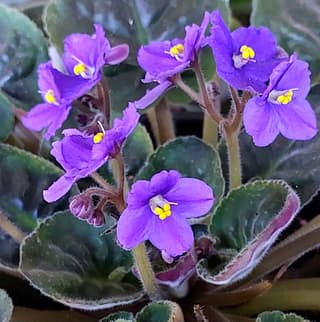
African violet
Streptocarpus sect. Saintpaulia
African violet (Streptocarpus sect. Saintpaulia, formerly genus Saintpaulia) is a compact, rosette-forming perennial from the Gesneriaceae family, native to the Eastern Arc Mountains and coastal forests of Tanzania and Kenya. Prized for its fuzzy, deep-green leaves and near-continuous clusters of purple, pink, blue, or white flowers, it is one of the most popular flowering houseplants worldwide.
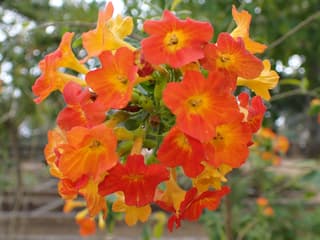
Marmalade bush
Streptosolen jamesonii
The marmalade bush (Streptosolen jamesonii) is an ornamental perennial, semi-woody, and scrambling shrub native to the Andean regions of Colombia, Ecuador, Peru, and Bolivia in South America. Belonging to the Solanaceae family, it can reach 1.5 to 2 meters in height, featuring long, flexible, and arching branches. Its leaves are ovate to elliptical, dark green, glossy, and deeply veined. The trumpet-shaped flowers bloom in clusters and change color as they mature—starting yellow and evolving into shades of orange and red—an effect reminiscent of orange marmalade, which gives the plant its popular name. It flowers intensely during spring and summer, attracting hummingbirds, bees, and butterflies to the garden.
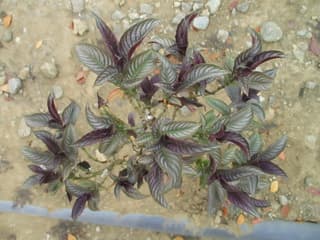
Persian shield
Strobilanthes dyeriana
Strobilanthes dyeriana, commonly known as Persian Shield, is a stunning tropical evergreen subshrub native to Myanmar. It is highly prized for its lance-shaped leaves that feature a brilliant iridescent purple sheen with silver highlights and dark green veins. The underside of the foliage is a deep maroon. While it can produce small violet flowers in winter, it is primarily grown for its spectacular foliage which adds a dramatic touch to any plant collection.
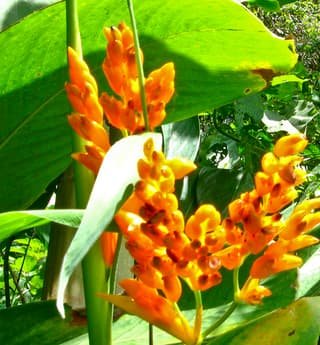
Stromanthe
Stromanthe
Stromanthe is a genus of approximately 13 tropical plant species in the family Marantaceae, native to the rainforests of South America, particularly Brazil. Celebrated for their stunning variegated foliage in shades of green, white, pink, and red, they are among the most visually spectacular houseplants available. The most famous species is Stromanthe sanguinea 'Triostar', whose tricolored leaves make it a standout specimen. Like other prayer plants, Stromanthe leaves move throughout the day in response to light.
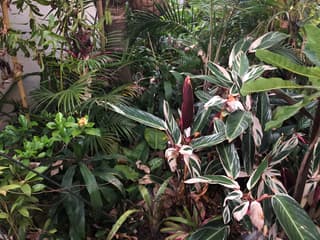
Tricolor Stromanthe
Stromanthe sanguinea
Stromanthe sanguinea, commonly known as the Tricolor Stromanthe or Triostar, is a stunning tropical plant native to the rainforests of Brazil. Its long, lance-shaped leaves display a breathtaking palette of dark green, pink, cream, and deep burgundy on the undersides, making it one of the most visually striking houseplants available. A member of the Marantaceae family and relative of Calathea and Maranta, this species exhibits nyctinastic leaf movements — folding its leaves upward at dusk in response to changing light conditions.
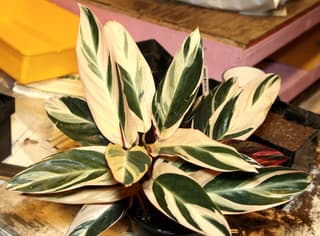
Tricolor Stromanthe
Stromanthe thalia
Tricolor Stromanthe (Stromanthe thalia) is a stunning Brazilian tropical plant from the Marantaceae family, celebrated for its spectacular tricolor foliage in shades of green, pink, and cream with deep magenta-purple undersides. As a prayer plant, its leaves fold upward at dusk and reopen at dawn. It thrives indoors with bright indirect light and high humidity.
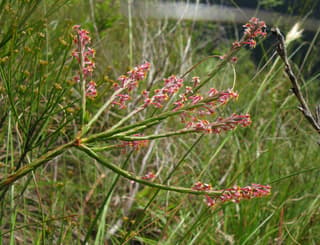
Cape Sprays
Struthiola
Struthiola is a genus of approximately 31 species of ericoid shrubs in the family Thymelaeaceae, native to the fynbos biome of South Africa's Cape Floral Region. These evergreen shrublets are renowned for their sweetly scented tubular flowers at dusk and their remarkable drought tolerance in sandy, well-drained soils.
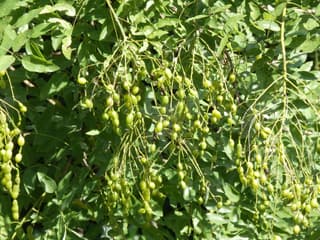
Japanese Pagoda Tree
Styphnolobium japonicum
The Japanese Pagoda Tree (Styphnolobium japonicum), formerly known as Sophora japonica, is a large deciduous tree native to China and widely cultivated across East Asia. Belonging to the Fabaceae family, it can reach up to 25 meters in height and is highly valued for its generous shade and fragrant creamy-white flowers produced in summer. It is a hardy tree, adaptable to poor soils and urban pollution, frequently used in parks, avenues, and historic gardens.
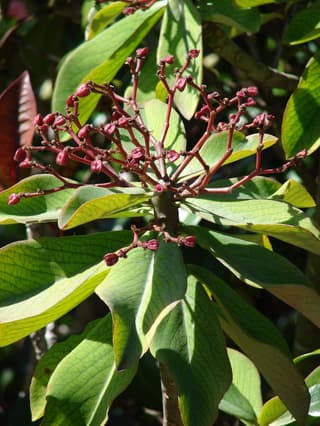
African Milk Bush
Synadenium grantii
The African Milk Bush (Synadenium grantii, synonym of Euphorbia umbellata) is a perennial succulent shrub native to East Africa—specifically the Great Lakes region, including the Democratic Republic of the Congo, Tanzania, Kenya, Uganda, Burundi, and Rwanda—where it grows on rocky slopes between 950 and 2,100 m in altitude. In Brazil, it is widely cultivated as an ornamental plant and in folk medicine, known primarily for the abundant milky latex that flows from any wound on the stem or leaves. In nature, it can reach 2 to 10 m in height, but in pots, it tends to remain much more compact. The leaves are fleshy, green or reddish-purple (as seen in the ornamental cultivar 'Rubra'), and the flowers are small, greenish, and inconspicuous, surrounded by purplish bracts. WARNING: All plant latex is toxic and extremely irritating—contact with skin or eyes can cause burning, dermatitis, and blisters, and ingestion is dangerous for humans and animals. Always cultivate with protective gloves and keep out of reach of children and pets.
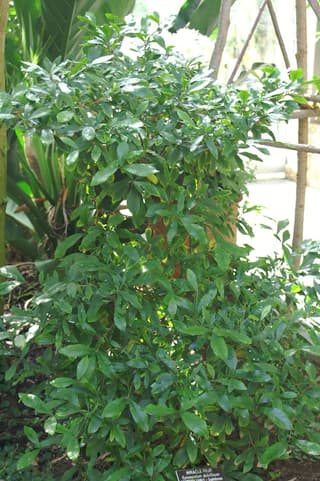
Miracle Berry
Synsepalum dulcificum
Synsepalum dulcificum, known as the Miracle Berry, is an evergreen shrub native to West Africa. Its most notable feature is the production of small red berries containing miraculin. This glycoprotein temporarily alters taste buds, causing sour or bitter foods to be perceived as extremely sweet. The plant has glossy dark green leaves and exhibits slow, elegant growth.
Medium Care Easy Care
Our selection of 1159 medium easy care combines the characteristics of this category with moderate care needs. Ideal for those with basic experience.
Why Choose Medium Easy Care?
Combining the beauty of easy care with medium difficulty level lets you enjoy this category with a balanced care commitment. Each plant was selected to offer the best characteristics of the category at the care level you are looking for.