Rosaceae
Yoshino cherry (Prunus × yedoensis)
Prunus × yedoensis
Plant it in full sun with room to spread, in moist, well-drained soil. Water young trees regularly, mulch the root zone and prune only when needed, in summer. Watch for borers, scale and deer damage.
Every 7 days
Direct sun
-26° - 35°C
% - %
Categories
What is Yoshino cherry?
Yoshino cherry (Prunus × yedoensis) is a medium-care plant from the Rosaceae family. Prunus × yedoensis is a flowering cherry in the rose family (Rosaceae), a Japanese hybrid between the Edo higan cherry (Prunus itosakura) and the Oshima cherry (Prunus speciosa). Its best-known form, 'Somei-yoshino', is the most planted cherry in Japan and the main tree around the Tidal Basin in Was...
Yoshino cherry grows up to 12.0m, spread of 1500cm, watering every 7 days, -26°C – 35°C. It is not suitable for indoor environments and not safe for pets.
Without precautions, ingestion can cause irritation in pets. Keep out of reach of cats and dogs.
How to Care for Yoshino cherry?
TLDR: Yoshino cherry needs Direct sun, watering every 7 days, and temperatures between -26-35°C with 40-70% humidity.
How Often Should You Water Yoshino cherry?
Water deeply once a week for the first two summers, more often in heat waves. Established trees need water only in prolonged drought. Avoid waterlogged soil.
How Much Light Does Yoshino cherry Need?
Full sun, at least 6 hours of direct light, for the best flowering. It tolerates light partial shade but flowers less.
What Is the Best Soil for Yoshino cherry?
Moist, well-drained loam rich in organic matter, slightly acidic to neutral (pH 5.5 to 7). It copes with clay or sand as long as water does not sit around the roots.
What Pot Should You Use for Yoshino cherry?
Best in the ground. A young tree can live a few years in a large, deep container (60 litres or more) with good drainage, then needs to be planted out.
Care Schedule
Fertilize
Every 90 days
What Is Yoshino cherry and Where Does It Come From?
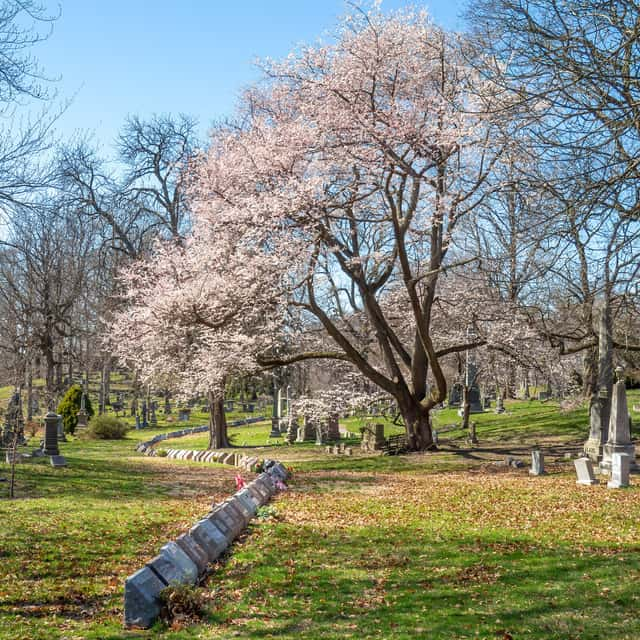
Prunus × yedoensis is a flowering cherry in the rose family (Rosaceae), a Japanese hybrid between the Edo higan cherry (Prunus itosakura) and the Oshima cherry (Prunus speciosa). Its best-known form, 'Somei-yoshino', is the most planted cherry in Japan and the main tree around the Tidal Basin in Washington, D.C. It grows into a fast-growing deciduous tree 9 to 12 m tall with a broad, spreading crown that can be wider than it is tall. In early spring, before the leaves, it covers its branches with white to pale pink, slightly almond-scented flowers for two to three weeks. The leaves turn yellow-gold in autumn, the small black fruits attract birds, and the glossy bark has bold horizontal lenticels.
How to Propagate Yoshino cherry?
Grafting
'Somei-yoshino' is a clone and does not come true from seed, so nurseries graft or root cuttings.
- 1 Take dormant scion wood from a healthy Yoshino cherry in late winter
- 2 Graft onto a vigorous cherry rootstock as buds swell in spring
- 3 Seal and tape the union
- 4 Remove shoots that grow from the rootstock
Materials needed:
Softwood cuttings
A mist system or a closed propagator greatly improves rooting.
- 1 Cut 10-15 cm tips of new growth in early summer
- 2 Remove the lower leaves and dip the base in rooting hormone
- 3 Insert in moist perlite and peat mix
- 4 Keep under high humidity in bright shade until rooted
Materials needed:
How Big Does Yoshino cherry Grow?
TLDR: Yoshino cherry can reach up to 12.0m tall with Fast growth rate.
Max height
12.0m
Spread
15.0m
Growth rate
Fast
Foliage
Deciduous
Warning: Toxic Plant
This plant can be toxic if ingested. Keep out of reach of:
Plant Uses
Ornamental
Great for decoration
Culinary Uses
- Salt-pickled cherry blossoms and leaves are used in Japanese sweets and tea (usually from other cherries such as the Oshima cherry)
Is your plant showing symptoms?
Click on the symptom to discover possible causes:
What Diseases Commonly Affect Yoshino cherry?
TLDR: Yoshino cherry is susceptible to 9 known diseases. Monitor regularly for early detection.
Scale Insects
Scale insects are small sap-sucking pests that appear as brown, shell-like bumps on plant stems and leaves. There are over 25 species, divided into armored (hard) and unarmored (soft) scales. They feed by piercing plant tissue and extracting sap, which weakens the plant and can lead to yellowing, stunted growth, and even death if left untreated. They also excrete honeydew, which attracts ants and promotes sooty mold growth.
Bacterial Canker
Serious bacterial disease affecting stone fruits and tomatoes caused by Pseudomonas syringae or Clavibacter michiganensis. Creates sunken lesions that ooze sap.
Cherry Leaf Spot
Cherry leaf spot (Blumeriella jaapii) is a fungal disease that primarily attacks cherries (sour and sweet cherries) and occasionally other Prunus species, such as ornamental cherries and plums. It thrives when the weather is cool and humid during spring and early summer. It is identified by small, round reddish-purple to brown spots on the leaves. Over time, these spots may drop out leaving small holes, while the leaves turn yellow and drop prematurely. On the underside of the leaves, small light to dark dots are sometimes visible where the fungus produces spores. The disease primarily overwinters in fallen leaves beneath the tree.
Brown Rot
Monilinia is a genus of ascomycete fungi that causes blossom blight and brown rot in fruit trees. It spreads most rapidly in cool, wet weather, particularly during the bloom period. Symptoms include flowers that turn brown and remain attached to the shoots, small tan spots on fruit that expand into gray-beige spore rings (sporodochia), twig dieback, and 'mummified' fruit that shrivels and often persists on the tree. It primarily affects stone fruits (peach, nectarine, apricot, plum, cherry) but can also infect pome fruits such as apple and pear.
Meaning & Symbolism
In Japan its brief, spectacular bloom symbolizes the beauty and transience of life and is the heart of hanami, the custom of picnicking under the blossoms.
Fun Facts
Its full genome was decoded in 2019, confirming its two parent species.
Most Yoshino cherries are clones of a single tree propagated by grafting.
Japan's cherry blossom forecasts are based on the opening of Somei-yoshino flowers.
Frequently asked questions
When does the Yoshino cherry bloom?
Is the Yoshino cherry toxic to pets?
Does the Yoshino cherry produce edible cherries?
When should I prune a Yoshino cherry?
Compare with similar plants
| Attribute | Difficulty | Light | Watering | Pet Safe |
|---|---|---|---|---|
| Dark Fieldcap | Medium | Low light | 2d | ⚠️ |
| Azalea | Medium | Partial shade | 3d | ⚠️ |
| Muriel's Bamboo | Medium | Partial shade | 3d | ✓ |
| Bougainvillea | Medium | Direct sun | 7d | ⚠️ |




