Rubiaceae
Hot Lips Plant (Psychotria elata): Complete Care Guide
Psychotria elata
The Hot Lips Plant thrives with high humidity (70-90%), bright indirect light, frequent watering to keep the soil consistently moist, and stable warm temperatures between 18-30°C (64-86°F). Fertilize monthly during spring and summer. Daily misting or a humidifier is essential to maintain proper humidity levels.
Every 4 days
Partial shade
18° - 30°C
70% - 90%
Categories
What is Hot Lips Plant?
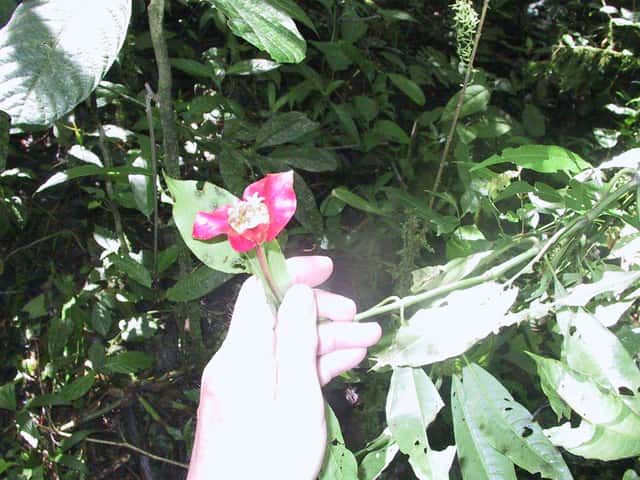
Hot Lips Plant (Psychotria elata) is a medium-care plant from the Rubiaceae family. Psychotria elata, commonly known as the Hot Lips Plant or Hooker's Lips, is a tropical shrub native to the rainforests of Central and South America. Its most striking feature is its vivid red bracts shaped like human lips, which appear before small white and yellow flowers bloom. Found growing as an...
Hot Lips Plant grows up to 3.0m, spread of 150cm, watering every 4 days, 18°C – 30°C, 70–90% humidity. It is suitable for indoor environments and not safe for pets.
Without precautions, ingestion can cause irritation in pets. Keep out of reach of cats and dogs. Without adequate drainage, root rot can develop within 8 days.
How to Care for Hot Lips Plant?
TLDR: Hot Lips Plant needs Partial shade, watering every 4 days, and temperatures between 18-30°C with 70-90% humidity.
How Often Should You Water Hot Lips Plant?
Water every 3-5 days, keeping the soil evenly moist but never waterlogged. Ensure the pot has adequate drainage holes. Reduce watering slightly in winter. Avoid getting water directly on the ornamental red bracts.
How Much Light Does Hot Lips Plant Need?
Provide bright, indirect light or dappled sunlight. Avoid prolonged direct sun exposure which can scorch the decorative red bracts and leaves. An east or west-facing window is ideal indoors. Positioning 1-2 meters from a sunny window works well.
What Is the Best Soil for Hot Lips Plant?
Use a rich, well-draining organic mix. Combine potting soil with compost, worm castings, and perlite for good aeration and drainage. A slightly acidic to neutral pH between 5.5 and 7.0 is ideal. Refresh soil when repotting.
What Pot Should You Use for Hot Lips Plant?
Clay or ceramic pot with a wide drainage hole. Clay promotes root breathability and helps regulate moisture. Ensure at least one large drainage hole.
Care Schedule
Fertilize
Every 30 days
Misting
Every 2 days
Rotate
Every 7 days
Repot
Every 365 days
What Is Hot Lips Plant and Where Does It Come From?
Psychotria elata, commonly known as the Hot Lips Plant or Hooker's Lips, is a tropical shrub native to the rainforests of Central and South America. Its most striking feature is its vivid red bracts shaped like human lips, which appear before small white and yellow flowers bloom. Found growing as an understory shrub in the tropical forests of Mexico, Costa Rica, Panama, Colombia, and Ecuador, this remarkable plant has become endangered due to deforestation in its native range.
How to Propagate Hot Lips Plant?
Stem Cuttings
Maintain temperature above 22°C during rooting. High humidity is key to success. Use powder or gel rooting hormone for best results.
- 1 Take a semi-woody stem cutting of 10-15 cm with 2-3 leaves
- 2 Remove lower leaves and dip the cut end in rooting hormone
- 3 Plant in moist substrate with perlite and cover with a plastic bag to retain humidity
- 4 Place in a warm location (22-26°C) with indirect light
- 5 Check substrate moisture every 2-3 days and open the bag periodically to ventilate
Materials needed:
Seeds
Use fresh seeds as they lose viability quickly. Maintain high humidity throughout germination.
- 1 Sow fresh seeds on moist, well-draining germination mix
- 2 Cover lightly with a thin layer of substrate
- 3 Keep moist and maintain temperature of 24-28°C
- 4 Place in indirect light location
- 5 Germination may take 2-6 weeks
Materials needed:
How Big Does Hot Lips Plant Grow?
TLDR: Hot Lips Plant can reach up to 3.0m tall with Medium growth rate.
Max height
3.0m
Spread
1.5m
Growth rate
Medium
Foliage
Evergreen
Warning: Toxic Plant
This plant can be toxic if ingested. Keep out of reach of:
Plant Uses
Ornamental
Great for decoration
Is your plant showing symptoms?
Click on the symptom to discover possible causes:
What Diseases Commonly Affect Hot Lips Plant?
TLDR: Hot Lips Plant is susceptible to 5 known diseases. Monitor regularly for early detection.
Root Rot
Root rot is a serious fungal disease that affects the root system of plants, causing them to decay and die. It is primarily caused by overwatering, poor drainage, or soil-borne fungi such as Pythium, Phytophthora, Rhizoctonia, and Fusarium. The disease thrives in waterlogged conditions where roots are deprived of oxygen, making them susceptible to fungal infection.
Overwatering
Overwatering occurs when plants receive too much water, depriving roots of oxygen and causing root rot. This environmental stress is one of the most common causes of houseplant death, as waterlogged soil prevents roots from breathing and functioning properly.
Aphids
Aphids are small, soft-bodied, pear-shaped insects (1/16 to 1/8 inch long) that feed by sucking nutrient-rich sap from plants. They reproduce rapidly and can quickly weaken plants, causing distorted growth and transmitting plant viruses. Aphids come in various colors including green, black, red, yellow, brown, and gray. They secrete honeydew, a sticky substance that attracts ants and encourages sooty mold growth.
Mealybugs
Mealybugs are small, soft-bodied insects covered with a white, waxy, cottony material. They are common pests of houseplants and outdoor plants in mild climates. These sap-sucking insects feed on plant tissue, causing damage, stunted growth, and can lead to plant death if left untreated. They produce sticky honeydew which attracts sooty mold.
Meaning & Symbolism
The vivid red lips of this plant symbolize love, sensuality, and the lush beauty of the tropical rainforest. In indigenous Amazonian communities, it represents the sacred connection between humanity and nature.
Fun Facts
The striking red bracts are not petals but modified leaves that protect the small white and yellow flowers inside
The nickname "Hot Lips" was popularized by tourists in Central America who noticed the plant's remarkable lip-like appearance
Psychotria elata is endangered in its native habitat due to deforestation across Central and South America
It is a distylous species: two flower forms exist to promote cross-pollination between individuals
Frequently asked questions
How often should I water the Hot Lips Plant?
Is Psychotria elata toxic to pets?
Why are the red bracts falling off my plant?
Can the Hot Lips Plant grow indoors?
When does Psychotria elata bloom?
Compare with similar plants
| Attribute | Difficulty | Light | Watering | Pet Safe |
|---|---|---|---|---|
| Dark Fieldcap | Medium | Low light | 2d | ⚠️ |
| Azalea | Medium | Partial shade | 3d | ⚠️ |
| Muriel's Bamboo | Medium | Partial shade | 3d | ✓ |
| Bougainvillea | Medium | Direct sun | 7d | ⚠️ |




