1159 Medium Easy Care | 2026 Guide - Page 29
Find 1159 medium easy care. Complete guide for your garden.
1159 Easy Care with medium level
Showing 1009-1044 of 1159
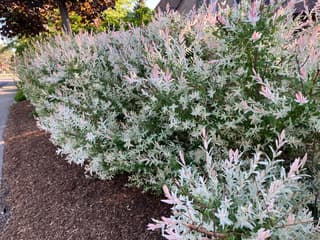
Dappled Willow 'Hakuro Nishiki'
Salix integra 'Hakuro Nishiki'
The Dappled Willow 'Hakuro Nishiki' (Salix integra) is an ornamental deciduous shrub from the Salicaceae family, renowned for its striking variegated foliage in shades of pink, white, and green. These colors are most vibrant on new growth during spring and early summer. In spring, it produces small, inconspicuous yellow-green catkins. It is a fast-growing plant, often pruned into a low shrub or grafted onto a trunk to create a 'standard' or 'lollipop' form. It is popular in gardens as a specimen plant or in mixed borders, particularly near water features, as it thrives in moist conditions.
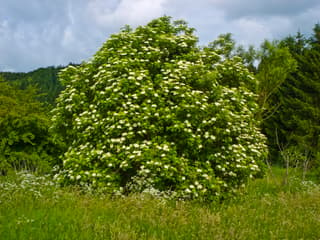
Black Elder
Sambucus nigra
Sambucus nigra, commonly known as Black Elder or European Elderberry, is a fast-growing deciduous shrub or small tree native to Europe, Western Asia, and Northwest Africa. It produces large, flat-topped clusters of fragrant creamy-white flowers in late spring, followed by drooping bunches of glossy dark purple-black berries in late summer and autumn. The plant is famous for its dual edible and medicinal uses — elderflower cordials and elderberry syrups are beloved across Europe. Important note: all green plant parts (leaves, stems, roots, unripe berries, and raw seeds) are toxic due to cyanogenic glycosides; only fully cooked ripe berries and fresh flowers are safe for consumption.
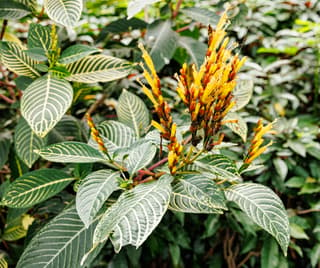
Shrubby Whitevein
Sanchezia speciosa
Sanchezia speciosa is a striking tropical shrub from the Acanthaceae family, native to tropical South America. Its standout feature is its large, glossy dark-green leaves boldly marked with vivid yellow-gold veins, creating a dramatic ornamental display. Under favorable conditions it produces tubular yellow-orange flowers in summer and fall.
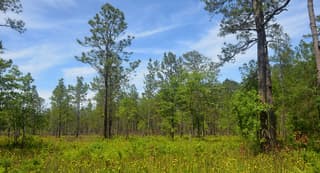
Pale Pitcher Plant
Sarracenia alata
Perennial carnivorous plant native to southeastern North America, characterized by tall, slender, tube-shaped traps (pitchers) in pale yellow to white. Thrives in saturated, nutrient-poor soils in longleaf pine savannas, capturing insects to supplement nutrients.
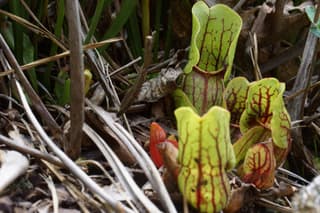
Purple Pitcher Plant
Sarracenia purpurea
Sarracenia purpurea, the purple pitcher plant, is a carnivorous perennial native to bogs and nutrient-poor wetlands across eastern North America. Its rosette of hollow, water-filled pitcher leaves traps and digests insects to supplement the poor soil it grows in. Pitchers range from green to deep red-purple, and the plant produces a single nodding red-purple flower each spring.
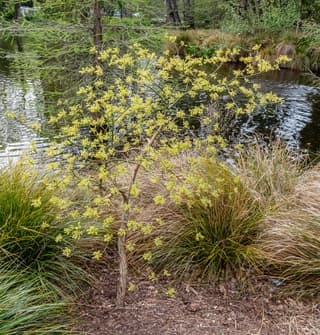
Sassafras
Sassafras albidum
Sassafras albidum is a deciduous tree native to eastern North America, ranging from southern Ontario and New England to Florida and Texas. It is recognized by its characteristic three-lobed leaves, which can have three different shapes on the same branch (entire, mitten-shaped with one lobe, and three-lobed), as well as its highly aromatic bark and roots. In spring, the tree bears small yellow-green flowers, and in autumn, the foliage turns brilliant orange, red, and purple. The species is seriously threatened by the fatal fungal disease "laurel wilt" (caused by Raffaelea lauricola), which is spread by the introduced Asian ambrosia beetle Xyleborus glabratus.
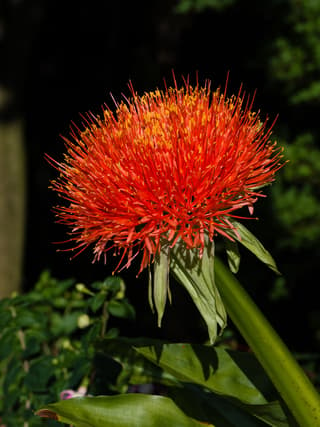
Fireball Lily
Scadoxus
Scadoxus is a small genus of bulbous perennials native to tropical and southern Africa, prized for dramatic globe-shaped flower heads made up of hundreds of tiny red florets with prominent yellow-tipped stamens, resembling a burst of fireworks or a paintbrush dipped in scarlet paint. Strap-shaped leaves emerge in a loose rosette from an underground bulb, and in several species the flowers appear on a bare stalk before the foliage unfurls. The plant dies back to the bulb during a dry dormant season, then re-emerges with fresh leaves and blooms the following year.
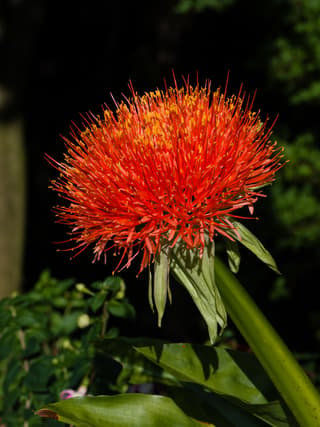
Blood Lily
Scadoxus multiflorus
The Blood Lily (Scadoxus multiflorus) is a spectacular bulbous plant native to sub-Saharan Africa, celebrated for its globe-shaped scarlet flower heads that can contain up to 200 individual blooms and reach 20 cm in diameter. It grows from a rhizomatous bulb, producing broad decorative leaves. The plant enters winter dormancy before putting on a striking floral display in spring and summer.
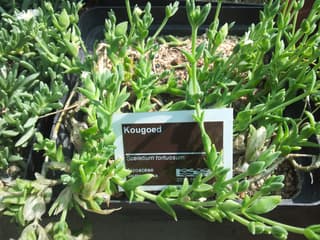
Kanna
Sceletium tortuosum
Kanna (Sceletium tortuosum) is a creeping, succulent plant with fleshy leaves native to the semi-desert, quartz-rich regions of South Africa. Its name (derived from the Greek 'skeletos', meaning skeleton) comes from the skeleton-like, veined patterns formed by dried leaves remaining on the stem. Its small, white, pale yellow, or pink flowers, measuring 20-30 mm in diameter, bloom in spring. Kanna is known in the centuries-old traditions of the Khoisan and San peoples as a mood-enhancing, calming plant, traditionally consumed by chewing or fermenting ('kougoed').
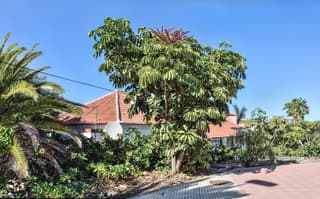
Queensland Umbrella Tree
Schefflera actinophylla
Schefflera actinophylla, commonly known as the Queensland Umbrella Tree or Australian Umbrella Tree, is a fast-growing tropical tree native to the rainforests of northern Queensland, Australia, New Guinea, and Java. Its large, glossy palmate leaves radiate from a central point like an umbrella, making it one of the most popular ornamental plants for both indoor and outdoor tropical landscapes.
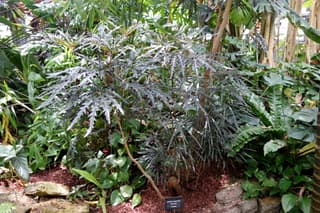
False Aralia
Schefflera elegantissima
False aralia (Schefflera elegantissima, syn. Dizygotheca elegantissima and Plerandra elegantissima) is a striking evergreen shrub from the Araliaceae family, native to New Caledonia in the South Pacific. It is prized as a houseplant for its dramatic, deeply serrated, coppery-bronze juvenile leaves that mature to a dark, glossy green with a leathery texture. Young plants have narrow, almost lacy leaflets arranged in a whorled, umbrella-like pattern, while mature specimens develop thicker leaflets and a woody, tree-like trunk that can reach 1.8-2.5 m indoors. False aralia has a reputation for being a bit temperamental compared to other Schefflera relatives, reacting quickly to drafts, sudden temperature swings, and inconsistent watering with leaf drop, so it rewards a stable spot and a steady care routine.
Schwantesia
Schwantesia pillansii
Schwantesia pillansii is a compact, dwarf succulent of the ice plant family (Aizoaceae) from the arid regions of South Africa and Namibia. It forms low tufts of pairs of opposite, boat-shaped, fleshy leaves that are erect to spreading. Like other Schwantesia species it is a winter grower that rests through the hot summer.
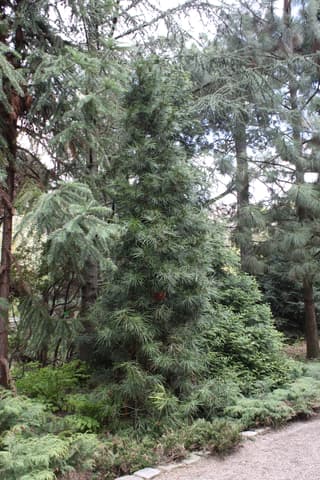
Japanese umbrella pine
Sciadopitys verticillata
The Japanese umbrella pine (Sciadopitys verticillata) is the only living species in the Sciadopityaceae family—a true "living fossil," as its closest relatives are known only from fossil records. Endemic to Japan, it is native to the mountain forests of Shikoku, Kyushu, and the Kii Peninsula, typically growing at altitudes of 700–1400 meters on rocky slopes and in river gorges. Its most distinctive feature is the umbrella-like whorls of flattened, 4–14 cm long needle-like structures (cladodes) at the tips of the shoots, from which its common name is derived. It is an extremely slow-growing evergreen tree: in its homeland, centuries-old specimens can reach 30–40 meters in height, while in garden cultivation, it may only reach a few meters even after several decades.

Sterling Silver Scindapsus
Scindapsus treubii
Scindapsus treubii, commonly known as Sterling Silver Scindapsus or Moonlight Scindapsus, is a stunning tropical aroid native to the rainforests of Southeast Asia. It is celebrated for its thick, waxy leaves adorned with a distinctive silvery-green sheen that shimmers under light. Two main cultivars are popular among collectors: 'Moonlight', which boasts brighter silver variegation, and 'Dark Form', with deeper, darker foliage. As a slow-growing climber, it rewards patient gardeners with breathtaking leaves that become more striking as the plant matures.
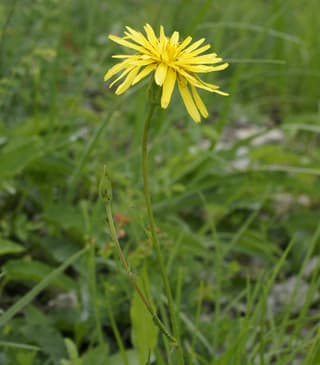
Black Salsify
Scorzonera
Scorzonera is a perennial root vegetable in the Asteraceae family, native to southern Europe and Central Asia. It produces long taproots with distinctive black skin and white flesh, prized for their delicate oyster-like flavor. In the second year, plants bear bright yellow dandelion-like flowers that are also edible.
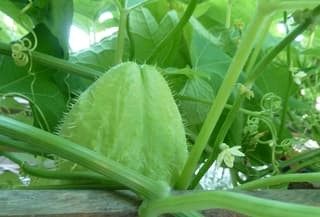
Chayote
Sechium edule
The chayote (Sechium edule) is a vigorous herbaceous climbing vine in the Cucurbitaceae family, native to Central America, whose vines can exceed 32 to 49 feet (10 to 15 meters) in length when well-supported by trellises, fences, or arbors. It produces light green fruits with smooth or prickly skin, heart-shaped leaves, and small greenish-white flowers. It is a fast-growing, highly productive plant that blooms between summer and fall and bears fruit just a few months after planting. All parts of the plant are edible—fruit, shoots, leaves, seeds, and even the tuberous root—making it both a versatile vegetable and an ornamental plant for pergolas and walls.
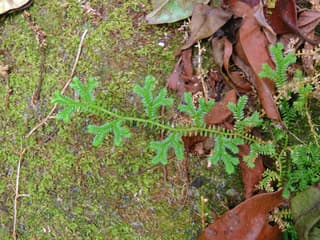
Spikemoss
Selaginella
Selaginella is a diverse genus of over 700 species of primitive vascular plants in the family Selaginellaceae, commonly known as spikemosses or little club mosses. Though not true mosses, they resemble them with their delicate, scale-like foliage and low, spreading growth habit. Found worldwide — predominantly in humid tropical and subtropical environments — they are prized as ornamental plants for terrariums, shaded gardens, and ground covers. Certain species, notably Selaginella lepidophylla (the resurrection plant), can survive near-complete desiccation and rehydrate fully when watered.

Krauss's Spikemoss
Selaginella kraussiana
Selaginella kraussiana, commonly known as Krauss's Spikemoss or African Clubmoss, is a primitive vascular plant that resembles a delicate moss. Native to Africa, it forms a dense, creeping mat of vibrant green, branching foliage. It is a popular choice for terrariums, indoor gardens, and as a groundcover in shady, damp areas where other plants might struggle to thrive.
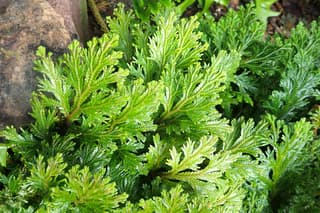
Martens' Spikemoss
Selaginella martensii
Selaginella martensii, known as Martens' Spikemoss, is a stunning lycophyte native to Mexico and Central America. Despite its fern-like appearance, it belongs to an ancient lineage of vascular plants — neither a true moss nor a fern, but a fern-ally or lycophyte. Its feathery, overlapping scale-like leaves create a lush, emerald carpet, with some varieties displaying striking white-tipped variegation. It thrives in high-humidity environments, making it a favorite for terrariums, paludariums, and moisture-rich indoor spaces.
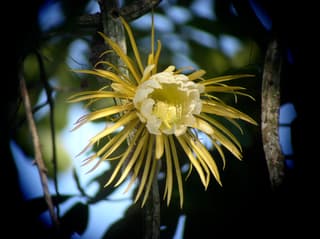
Night-Blooming Cereus
Selenicereus grandiflorus
Selenicereus grandiflorus is a climbing, epiphytic cactus native to Mexico, Central America, and the Caribbean, prized for its enormous, intensely fragrant white flowers that bloom for only one night each year. Its long, sprawling, ribbed stems climb trees and rocks using aerial roots, and by dusk on a single summer evening the plant unfurls a spectacular blossom up to 30 cm wide before it withers by morning.
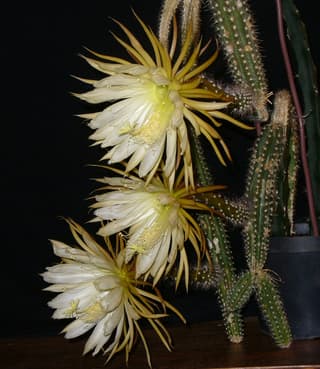
Moonlight Cactus
Selenicereus validus
The Moonlight Cactus (Selenicereus validus) is an epiphytic cactus native to Mexico and Central America, celebrated for its long, pendant cylindrical stems and spectacular nocturnal white and yellow flowers. It belongs to the family Cactaceae and thrives in tropical and subtropical forests, climbing trees and rocky outcrops.
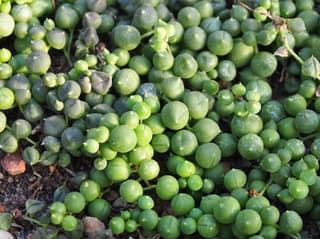
String of Pearls
Senecio rowleyanus
String of Pearls is a unique trailing succulent native to South Africa, featuring long, slender stems adorned with small, spherical bead-like leaves that resemble a string of green pearls. These modified leaves have evolved to store water, allowing the plant to thrive in arid conditions. It belongs to the Asteraceae family and is popular as a hanging houseplant.
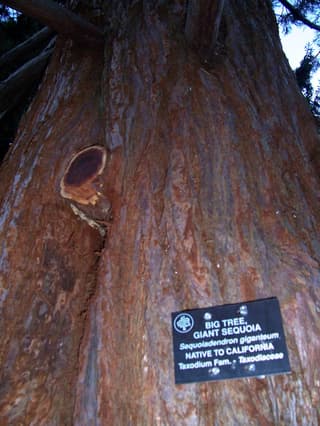
Giant Sequoia
Sequoiadendron giganteum
The Giant Sequoia (Sequoiadendron giganteum) is an evergreen conifer native to the western slopes of the Sierra Nevada in California. It is renowned as one of the largest and longest-lived trees on Earth, with bluish-green scale-like foliage and thick, fire-resistant reddish bark.
Sinningia
Sinningia
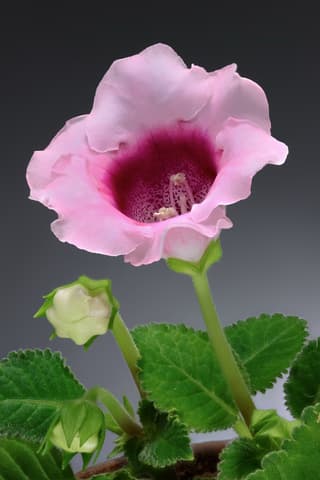
Sinningia is a genus of tuberous flowering plants native to Brazil, belonging to the family Gesneriaceae. Known for their stunning bell-shaped flowers in shades of purple, pink, red, and white, they are prized as ornamental houseplants worldwide. The most famous species, S. speciosa, is commonly called Florist's Gloxinia. Plants are deciduous, entering dormancy in winter and re-emerging each spring from their tubers.
Florist's Gloxinia
Sinningia speciosa
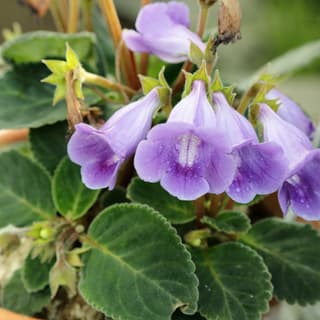
Sinningia speciosa, commonly known as Florist's Gloxinia or Brazilian Gloxinia, is a tuberous perennial native to the rocky slopes and forests of Brazil, in the family Gesneriaceae. It is celebrated for its large, velvety, trumpet-shaped flowers in shades of purple, violet, red, white, and pink. It blooms in spring and summer, then enters a dormancy period before returning the following season.

Yacon
Smallanthus sonchifolius
Yacon (Smallanthus sonchifolius) is a perennial herbaceous plant in the Asteraceae family, native to the Andean region. It reaches between 1.5 and 2 m in height and produces small, yellow, and discreet flowers at the end of the growing season. It forms two types of roots: propagation roots, similar to Jerusalem artichokes, and large, edible storage roots that can weigh up to 1 kg. These roots have a sweet flavor and a crunchy texture, containing inulin and fructooligosaccharides.
Cat Greenbrier
Smilax glauca
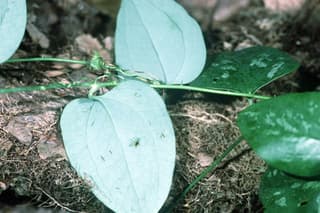
Smilax glauca, commonly known as Cat Greenbrier or Sawbrier, is a thorny deciduous climbing vine native to the woodlands and thickets of Eastern North America. It is recognized by its ovate to cordate leaves with a distinctive bluish-white waxy bloom on the undersides, giving the species its name "glauca". The stems are armed with sharp prickles. It produces small greenish-yellow flowers in spring to early summer, followed by clusters of dark blue-black berries that are an important wildlife food source.
Beautiful Sobralia
Sobralia decora
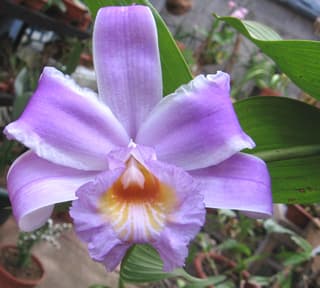
Sobralia decora is a medium-sized terrestrial or epiphytic orchid with bamboo-like reed-stem canes reaching up to 75 cm tall. Native to parts of Central America (Belize, Guatemala, Honduras, Nicaragua) and Mexico (Nayarit, Oaxaca, Veracruz), it grows on damp hillsides and shaded ravines in lower-elevation rainforests, between 50 and 1700 meters. It produces large, fragrant flowers ranging from pink to lavender, often with a white-tipped lip and a yellow-to-brown throat. Each flower lasts only a single day, but the plant blooms in succession for weeks.
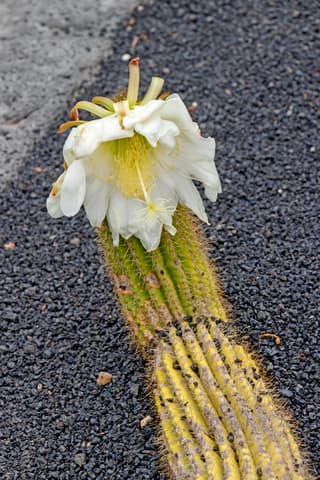
Golden Torch Cactus
Soehrensia spachiana
Soehrensia spachiana, formerly known as Echinopsis spachiana, is a columnar cactus that branches from the base and can reach up to 2 meters in height. It is famous for its spectacular, large white flowers that bloom at night. Its stems are lime green with well-defined ribs and golden-yellow spines that turn gray with age. It is a highly valued species in xeriscaping due to its hardiness and shrubby growth habit.
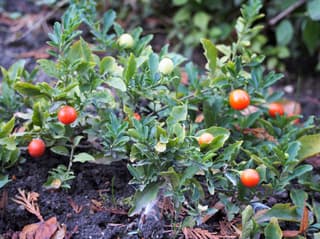
Nightshades
Solanum
Solanum is one of the largest and most diverse plant genera on Earth, comprising 1,500–2,000 species of herbs, shrubs, vines, and small trees in the family Solanaceae. It includes three of humanity's most economically important crops — potato (S. tuberosum), tomato (S. lycopersicum), and eggplant (S. melongena) — alongside hundreds of ornamental and wild species. Most green parts contain toxic alkaloids such as solanine, making this a genus of remarkable duality: life-sustaining food and potential danger, often in the same plant.
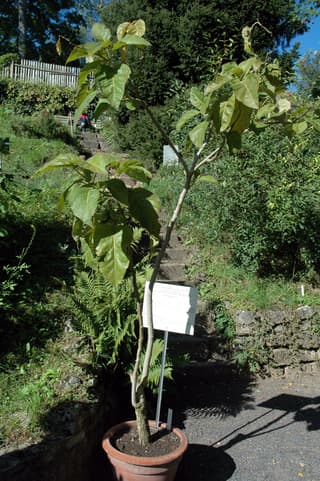
Tamarillo
Solanum betaceum
The tamarillo (Solanum betaceum) is a small tree or shrub native to the Andes of South America. It produces egg-shaped fruits ranging from orange to red or deep purple, with a tangy, bittersweet flavor. Highly valued both for its ornamental appeal and its edible fruits, which are rich in vitamins A, C, and E.
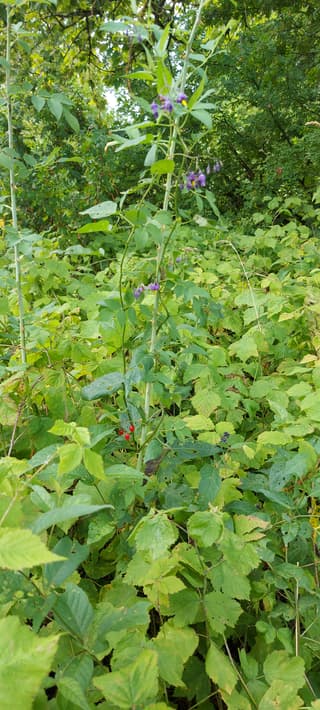
Bittersweet Nightshade
Solanum dulcamara
Bittersweet nightshade (Solanum dulcamara) is a semi-woody perennial climbing vine native to Europe, northern Africa, and Asia, belonging to the Solanaceae family. It produces charming star-shaped purple flowers with yellow stamens, followed by clusters of berries that ripen from green to orange to bright red. WARNING: All parts are SEVERELY TOXIC — containing solanine and other alkaloids that can cause serious poisoning in humans, cats, and dogs.
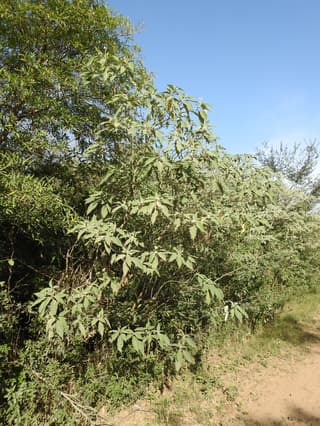
Granular Nightshade
Solanum granulosoleprosum
Solanum granulosoleprosum is a fast-growing shrub or small tree native to southern Brazil, Paraguay, Uruguay, and northern Argentina. A member of the Solanaceae family, it is a pioneer species that thrives in disturbed soils, forest edges, and arid terrain. Its cylindrical, granular stems are covered with dense hairs, and it produces white to pale purple flowers in terminal clusters, followed by globose yellow berries at maturity.
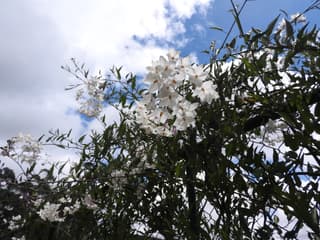
Potato Vine
Solanum laxum
Solanum laxum, commonly called potato vine or jasmine nightshade, is a fast-growing semi-evergreen climber native to southeastern Brazil, Paraguay, Argentina and Uruguay. Its twining, semi-woody stems can reach 6-9 m, quickly covering fences, trellises and arbors. From summer into fall it produces clusters of fragrant, star-shaped white flowers with yellow stamens, followed by small blue-black berries. All parts of the plant - leaves, stems, flowers and especially the unripe berries - contain solanine and other glycoalkaloids and are toxic if ingested by humans and pets; the sap can also irritate skin, so gloves are recommended when pruning.

Tomato
Solanum lycopersicum
Solanum lycopersicum, commonly known as the tomato plant, is a species in the Solanaceae family native to South America. It is widely cultivated worldwide for its edible fruits, which vary in size, color, and shape. Although it is a perennial plant in tropical climates, it is generally grown as an annual in home and commercial gardens due to its sensitivity to cold and its production cycle.

Cherry Tomato
Solanum lycopersicum var. cerasiforme
Cherry tomato (Solanum lycopersicum var. cerasiforme) is a small-fruited tomato variety native to the Andean region of Peru and Ecuador, believed to be the closest wild relative of cultivated tomatoes. It produces clusters of round, bite-sized fruits ranging from red to yellow, orange, and even black, on sprawling indeterminate vines (or compact determinate bushes in dwarf cultivars). Fast-growing and highly productive, it thrives in warm, sunny conditions and is one of the most popular vegetables for home gardens and containers.
Medium Care Easy Care
Our selection of 1159 medium easy care combines the characteristics of this category with moderate care needs. Ideal for those with basic experience.
Why Choose Medium Easy Care?
Combining the beauty of easy care with medium difficulty level lets you enjoy this category with a balanced care commitment. Each plant was selected to offer the best characteristics of the category at the care level you are looking for.