Acanthaceae
Purple False Eranthemum: Pet-Safe Plant
Pseuderanthemum carruthersii
A plant with moderate maintenance requirements that thrives in constant warmth, high humidity, and bright indirect light to maintain the vibrancy of its purple colors.
Every 7 days
Bright indirect
18° - 28°C
60% - 80%
Categories
What is Purple False Eranthemum?
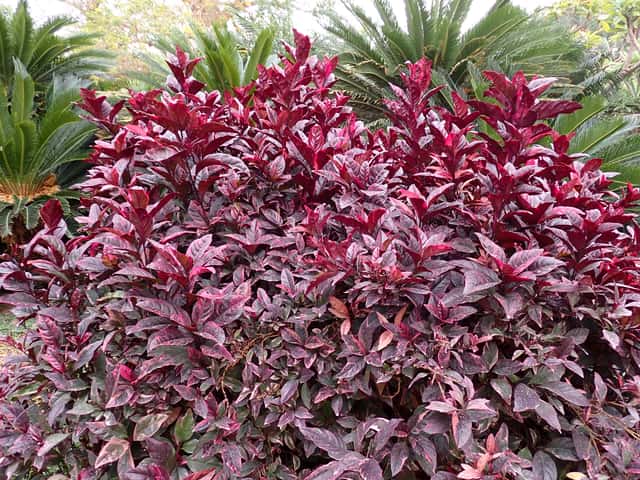
Purple False Eranthemum (Pseuderanthemum carruthersii) is a medium-care plant from the Acanthaceae family. Pseuderanthemum carruthersii, popularly known as Purple False Eranthemum, is a perennial tropical shrub native to the Pacific islands. It is notable for its lush ornamental foliage, featuring oval leaves with intense shades of purple, burgundy, and metallic green. Its flowers are small, white with p...
Purple False Eranthemum grows up to 1.2m, spread of 90cm, watering every 7 days, 18°C – 28°C, 60–80% humidity. It is suitable for indoor environments and safe for pets.
Unlike many popular species, Purple False Eranthemum is safe to keep around pets. Without adequate drainage, root rot can develop within 14 days.
How to Care for Purple False Eranthemum?
TLDR: Purple False Eranthemum needs Bright indirect, watering every 7 days, and temperatures between 18-28°C with 60-80% humidity.
How Often Should You Water Purple False Eranthemum?
Water whenever the topsoil feels dry to the touch, ensuring that water drains freely from the bottom of the pot to prevent root rot.
How Much Light Does Purple False Eranthemum Need?
Bright indirect light is ideal. If grown in overly shaded locations, the plant will lose its characteristic purple coloration, becoming predominantly green.
What Is the Best Soil for Purple False Eranthemum?
Mix potting soil, worm castings, and coarse sand or perlite to ensure nutrition and efficient drainage.
What Pot Should You Use for Purple False Eranthemum?
Ceramic or plastic pots with drainage holes, ensuring ample space for root development.
Care Schedule
Fertilize
Every 30 days
Misting
Every 3 days
Rotate
Every 30 days
Repot
Every 365 days
What Is Purple False Eranthemum and Where Does It Come From?
Pseuderanthemum carruthersii, popularly known as Purple False Eranthemum, is a perennial tropical shrub native to the Pacific islands. It is notable for its lush ornamental foliage, featuring oval leaves with intense shades of purple, burgundy, and metallic green. Its flowers are small, white with pinkish or purplish centers, appearing in terminal spikes. It is an excellent plant for creating color contrasts in tropical gardens or as a focal point in spacious, well-lit interiors.
How to Propagate Purple False Eranthemum?
Stem Cutting
- Maintain high humidity by covering the cutting with a clear plastic bag
- Using rooting hormone can speed up the process
- 1 Cutting the Stem
Cut a healthy, young branch about 10 to 15 cm long, preferably with a few nodes.
- 2 Preparation
Remove the leaves from the lower half of the cutting to prevent rot when in contact with the soil.
- 3 Planting
Insert the cutting into a light, moist substrate. Keep in a warm place with indirect light until rooting occurs.
Materials needed:
How Big Does Purple False Eranthemum Grow?
TLDR: Purple False Eranthemum can reach up to 1.2m tall with Medium growth rate.
Max height
1.2m
Spread
90cm
Growth rate
Medium
Foliage
Evergreen
Plant Uses
Ornamental
Great for decoration
Is your plant showing symptoms?
Click on the symptom to discover possible causes:
What Diseases Commonly Affect Purple False Eranthemum?
TLDR: Purple False Eranthemum is susceptible to 11 known diseases. Monitor regularly for early detection.
Spider Mites
Spider mites are tiny arachnids (less than 1/20 inch long) related to spiders and ticks that feed on plant sap. They thrive in hot, dry conditions and can cause significant damage to ornamental and vegetable plants. During severe infestations, crop losses can reach 14% or higher as these pests disrupt vital plant processes including photosynthesis, carbon dioxide absorption, and transpiration.
Mealybugs
Mealybugs are small, soft-bodied insects covered with a white, waxy, cottony material. They are common pests of houseplants and outdoor plants in mild climates. These sap-sucking insects feed on plant tissue, causing damage, stunted growth, and can lead to plant death if left untreated. They produce sticky honeydew which attracts sooty mold.
Aphids
Aphids are small, soft-bodied, pear-shaped insects (1/16 to 1/8 inch long) that feed by sucking nutrient-rich sap from plants. They reproduce rapidly and can quickly weaken plants, causing distorted growth and transmitting plant viruses. Aphids come in various colors including green, black, red, yellow, brown, and gray. They secrete honeydew, a sticky substance that attracts ants and encourages sooty mold growth.
Whiteflies
Whiteflies are small, soft-bodied, winged insects closely related to aphids and mealybugs. They are moth-like in appearance, about 1/16 inch long, triangular in shape, and gray-white in color. These sap-sucking pests feed on plant tissue, causing yellowing, stunted growth, and wilting. They also excrete honeydew, which attracts ants and promotes sooty mold growth. Whiteflies can transmit serious plant viruses.
Meaning & Symbolism
It represents nobility, mystery, and creativity due to its deep and changeable purple coloration.
Compare with similar plants
| Attribute | Difficulty | Light | Watering | Pet Safe |
|---|---|---|---|---|
| Dark Fieldcap | Medium | Low light | 2d | ⚠️ |
| Azalea | Medium | Partial shade | 3d | ⚠️ |
| Muriel's Bamboo | Medium | Partial shade | 3d | ✓ |
| Bougainvillea | Medium | Direct sun | 7d | ⚠️ |




