Complete Plant Guide
Explore plants by difficulty, season and more. Find the perfect plant for you.
Difficulty
Categories
Plants by City
🗺️ Plants by City3768 plants found
Showing 2773-2808 of 3768
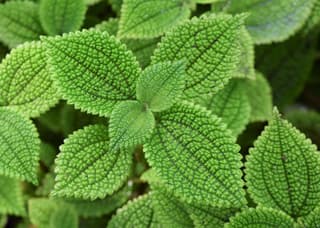
Pilea mollis
Pilea mollis
Pilea mollis, commonly known as Moon Valley, is a striking indoor plant known for its deeply textured, serrated leaves that resemble the craters of the moon. The foliage is typically a vibrant apple-green with dark bronze or burgundy veins, providing a unique tactile and visual appeal. It is a compact grower, making it perfect for terrariums or small tabletops.
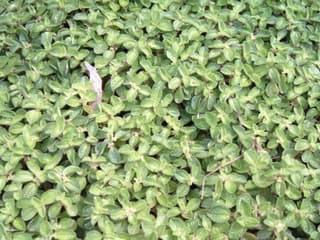
Creeping Charlie
Pilea nummulariifolia
Creeping Charlie (Pilea nummulariifolia) is a fast-growing, trailing perennial from the Urticaceae family, native to the Caribbean and tropical South America from Colombia to Peru. Its small, rounded, textured leaves grow on creeping stems that root at the nodes, making it an excellent choice for hanging baskets or as ground cover in warm climates.
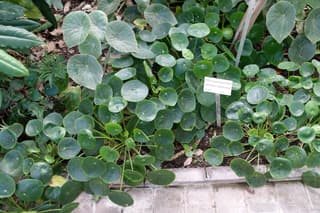
Chinese Money Plant
Pilea peperomioides
Pilea peperomioides is a popular houseplant native to the Yunnan province of China. It features distinctive round, coin-shaped leaves on long petioles that give it a unique architectural appearance. This easy-care plant became extremely popular through social media and is known for producing many baby plants (pups) that can be shared with friends.
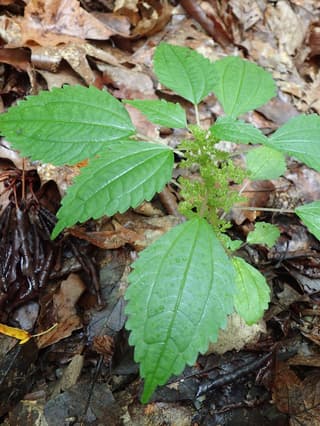
Clearweed
Pilea pumila
Clearweed is a delicate annual herb native to eastern North America and East Asia, prized for its translucent, glassy stems and bright green, coarsely toothed leaves. It thrives in the dappled shade of moist woodlands, where its tiny greenish-yellow flowers bloom from midsummer into fall.
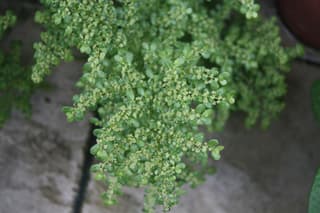
Red Brilliantine Pilea
Pilea serpyllacea
Red Brilliantine (Pilea serpyllacea) is a tiny creeping plant native to the Andes of Bolivia and Peru. It is prized for its small, glossy leaves with reddish tones, often confused with Pilea glauca. It thrives in terrariums, hanging pots, and as ground cover in humid indoor settings.

Silver Tree Pilea
Pilea spruceana
The Silver Tree Pilea is a small ornamental houseplant native to the Andean mountain regions of Colombia, Venezuela, and Peru in South America. It is prized for its textured, metallic silver-to-bronze foliage that shimmers under indirect light. It forms compact clumps, making it a great choice for pots and indoor terrariums.
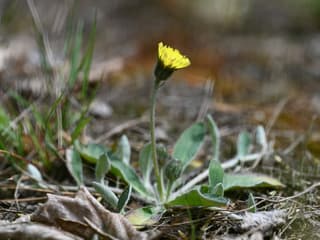
Mouse-ear hawkweed
Pilosella officinarum
Pilosella officinarum, commonly known as mouse-ear hawkweed, is a perennial herbaceous plant native to Europe and northern Asia. It forms basal rosettes of green leaves covered in distinct white hairs, which help conserve moisture. The plant spreads via creeping stolons, creating a dense mat. Its bright yellow flowers resemble small dandelions and emerge on single, upright stems.
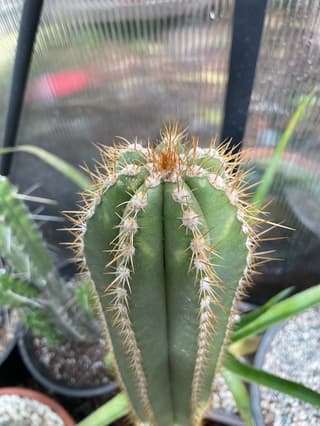
Pilosocereus (genus)
Pilosocereus
Pilosocereus is a genus of columnar cacti native to Brazil and the Caribbean, recognized by their striking blue-green waxy stems and dense white woolly hair. Many species grow several meters tall and produce nocturnal flowers.
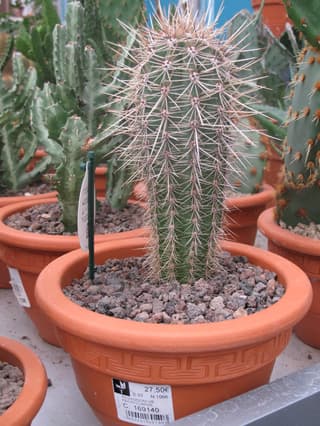
Brazilian Blue Cactus
Pilosocereus azureus
Pilosocereus azureus, commonly known as the Brazilian Blue Cactus, is a columnar cactus native to Brazil's rocky caatinga and cerrado scrublands. Its most striking feature is the blue-grey coloration of the stem, caused by a waxy epicuticular coating that shields it from intense sunlight. In habitat it can grow up to 10 meters tall, branching into clusters covered in golden-yellow spines. It produces large white, night-blooming flowers pollinated by bats and moths, typically appearing from spring into summer.

Caatinga Blue Pilosocereus
Pilosocereus catingicola
Pilosocereus catingicola is a columnar cactus endemic to the semi-arid Caatinga biome of northeastern Brazil. Known for its striking blue-green stems and nocturnal white to pink flowers, it can reach up to 10 meters tall in the wild. It is one of the most iconic cacti of the Brazilian Caatinga, highly adapted to drought and intense sun.
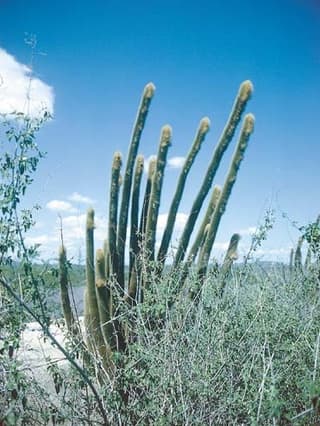
Brazilian Cactus
Pilosocereus chrysostele
Pilosocereus chrysostele is a columnar cactus native to the Caatinga, a seasonally dry tropical forest in northeastern Brazil (Ceará, Paraíba, Pernambuco and Rio Grande do Norte). It grows in clumps that branch only near the base, forming upright columns with a blue-green epidermis and pale yellow spines, reaching up to 3 m tall in the wild. Its flowers emerge at night from a woolly lateral structure called a cephalium and are pollinated mainly by bats.
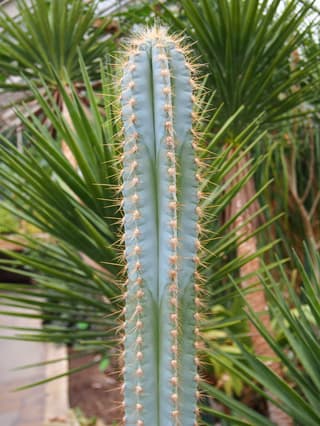
Blue Torch Cactus
Pilosocereus pachycladus
Pilosocereus pachycladus, commonly known as the Blue Torch Cactus or Blue Columnar Cactus, is a columnar cactus native to Brazil, specifically the Caatinga region. Its most striking feature is its intense, waxy blue epidermis, which serves as protection against solar radiation and water loss. It has well-defined ribs with areoles bearing yellowish spines. Its flowers are large, white, and bloom at night, being pollinated primarily by bats.
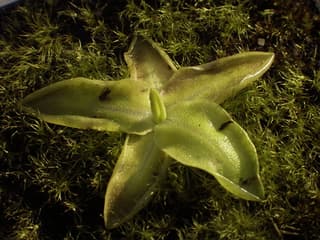
Butterwort
Pinguicula
Pinguicula, commonly known as butterwort, is a genus of over 100 species of carnivorous plants in the Lentibulariaceae family, native to temperate and tropical regions of America, Europe, and Asia. Their leaves form rosettes with a greasy, shiny surface (hence the common name) covered in mucilaginous glands that trap, digest, and absorb nutrients from small insects, supplementing the scarce nutrients of the peaty soil where they grow. Some Mexican species maintain succulent leaves year-round; others from temperate climates form a winter bud (hibernaculum) during dormancy.
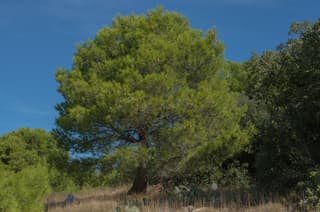
Aleppo pine
Pinus halepensis
The Aleppo pine is an evergreen Mediterranean conifer, recognizable by its often twisted and irregular habit, its fissured grayish bark, and its long, thin needles grouped in pairs of a pale, slightly bluish green. Native to the Mediterranean basin, it grows equally well on sandy coastal dunes as on the most arid rocky and limestone slopes, where it can reach 15 to 25 meters in height. Extremely resistant to heat, wind, and drought once established, it plays a major ecological role in soil stabilization and Mediterranean reforestation.
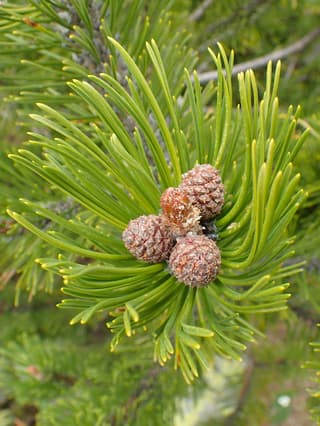
Mountain Pine
Pinus mugo
Pinus mugo, commonly known as Mountain Pine or Mugo Pine, is a hardy evergreen conifer native to the mountains of Central and Southern Europe, including the Alps, Carpathians, and Pyrenees. It typically grows as a spreading shrub or small tree up to 3 meters tall, featuring paired dark green needles and small dark brown ovoid cones. Exceptionally cold-hardy and wind-resistant, it thrives in poor, rocky, well-drained soils at high altitudes. Widely used in rock gardens, alpine landscaping, erosion control, and as a bonsai subject.

Austrian Pine
Pinus nigra
The Austrian pine (Pinus nigra) is a robust, fast-growing evergreen conifer native to the mountains of Central and Southern Europe, from Austria down through the Balkans and into parts of Turkey and North Africa. It forms a dense, broadly pyramidal crown with stiff, dark green needles borne in pairs and grey-brown, deeply fissured bark. Prized for its toughness, it tolerates poor, alkaline, and compacted soils, urban pollution, coastal salt spray, and strong winds, making it a favorite for windbreaks, reforestation, and street planting throughout temperate climates.
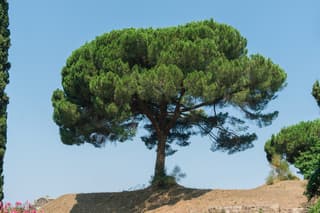
Stone Pine
Pinus pinea
Pinus pinea, the stone pine, is a large Mediterranean conifer famous for its broad, umbrella-shaped crown and for the edible pine nuts (pinoli) held in its rounded cones. It has stiff, dark green paired needles and reddish, fissured bark, and can reach 20 to 25 metres over a long, slow life. Its distinctive silhouette is a hallmark of the Italian and Iberian landscape.
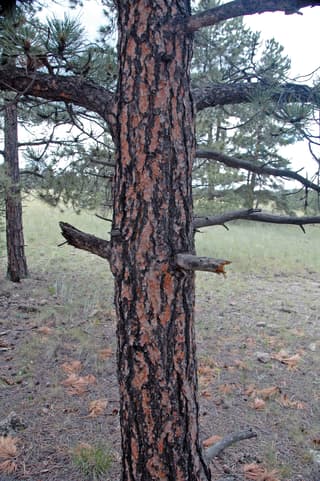
Ponderosa Pine
Pinus ponderosa
The Ponderosa Pine is a massive, iconic conifer of the American West. It is easily recognized by its long, dark-green needles that grow in bundles of three and its thick, plate-like bark that develops a beautiful orange-brown hue and a scent reminiscent of vanilla or butterscotch as the tree matures.
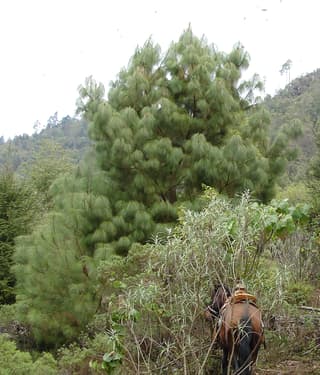
Smooth-bark Mexican Pine
Pinus pseudostrobus
The Smooth-bark Mexican Pine (Pinus pseudostrobus) is a large conifer native to the highlands of Mexico and Central America, where it grows in pine-oak forests between 850 and 3,250 meters in altitude. It is distinguished by its smooth, grayish bark in young specimens, which becomes rougher and cracked with age, and by its long, drooping needles grouped in fascicles of five. In its natural habitat, it can exceed 30 meters in height, with a dense, rounded crown. It is a fast-growing species, drought-tolerant once established, and valued both for its timber and its ornamental use in temperate to warm climates.
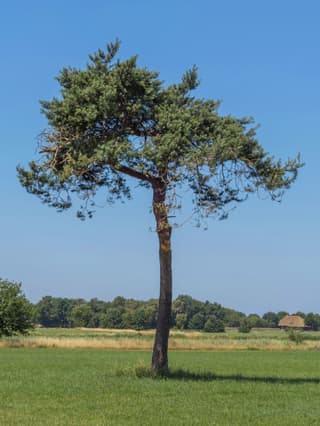
Scots Pine
Pinus sylvestris
Pinus sylvestris, known as the Scots Pine, is a majestic conifer native to Eurasia. It is easily recognizable by its bark, which becomes orange and flaky on the upper part of the trunk, and its blue-green needles arranged in pairs. It is one of the hardiest trees in the world, capable of thriving in Arctic climates and poor, sandy soils.
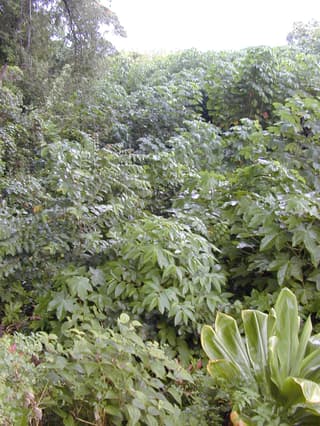
Matico
Piper aduncum
Piper aduncum, popularly known as matico or spiked pepper, is a perennial shrub or small tree native to Central and South America, common in Brazil, where it grows in secondary forests, forest edges, and riverbanks. It grows rapidly, reaching 2 to 8 meters in height, with aromatic, pungent-tasting leaves and elongated, white to pale-yellow floral spikes that can appear year-round. It is widely valued in traditional Amazonian medicine for its healing, antiseptic, and antimicrobial properties.
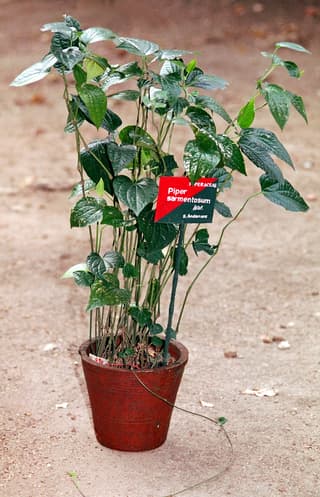
Wild Betel
Piper sarmentosum
Wild betel (Piper sarmentosum) is an evergreen perennial plant from the Piperaceae family, native to Southeast Asia. Its creeping stems root at the nodes and form a dense mat, with upright shoots reaching about 50 cm. Its heart-shaped, glossy green leaves with a peppery taste are widely used in cooking (la lot leaves, mieng kham) and traditional medicine.
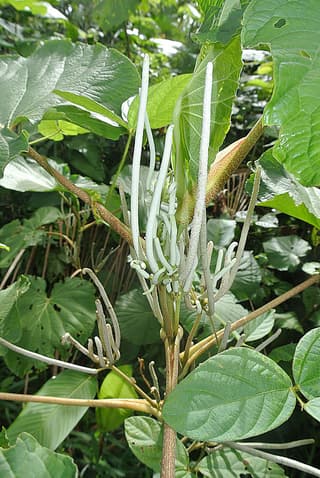
Cowfoot
Piper umbellatum
The Cowfoot (Piper umbellatum) is a perennial subshrub in the Piperaceae family, native to the tropical regions of the Americas, including nearly all of Brazil. It can reach 3 to 13 feet in height in its natural habitat, though it remains more compact when grown in pots. Its leaves are large, rounded to cordate (heart-shaped), with prominent palmate venation and long petioles that optimize light capture in shaded environments. The inflorescences appear as erect axillary spikes, yellowish-white in color, followed by brownish pyramidal fruits. It grows naturally at the edges of primary forests, secondary forests, riparian forests, and shaded riverside areas.
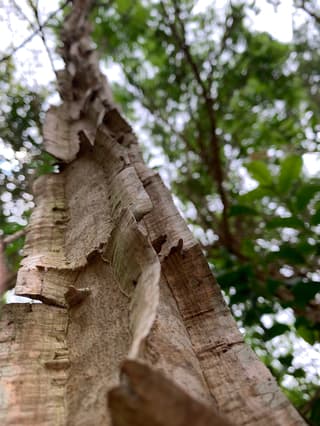
Alligator Tree
Piptadenia gonoacantha
The Alligator Tree is a native species of the Atlantic Forest, reaching 26 to 65 feet in height. It is easily recognized by its corky trunk featuring longitudinal and transverse ridges that resemble alligator skin—the origin of its common name. The leaves are bipinnate with dozens of pairs of leaflets, forming a wide and sparse canopy. Small white to cream-colored flowers gather in axillary spikes, attracting large numbers of bees during the flowering season. As a fast-growing pioneer species, it is essential for restoring degraded areas and reforestation due to its ability to fix nitrogen in the soil through bacteria associated with its roots.
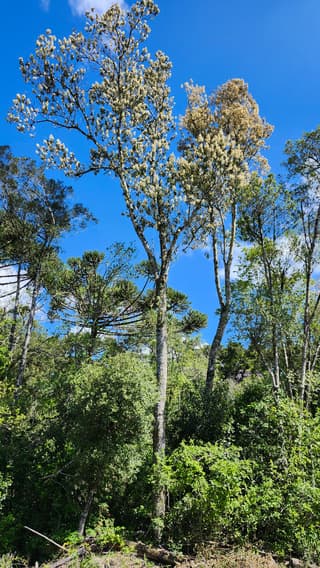
Vassourão-branco
Piptocarpha angustifolia
The Vassourão-branco (Piptocarpha angustifolia) is a tree native to Brazil, belonging to the Asteraceae family. It is found in the Atlantic Forest and Araucaria moist forests of the South and Southeast regions, ranging from Minas Gerais to Rio Grande do Sul. It is a pioneer, evergreen species that can reach up to 30 m in height and 60 cm in diameter at maturity, featuring a high, elongated canopy with characteristic grayish-green foliage visible from a distance. The trunk grows nearly straight, with smooth, whitish bark when young, becoming grayish, rough, and reticulated with age. Its leaves are narrow and lanceolate, and its cream-colored flowers, clustered in small heads, bloom from August to February depending on the region, serving as an important nectar source for native bees. It grows rapidly in clearings, secondary forests, and degraded areas, making it widely used in ecological restoration and soil recovery projects.
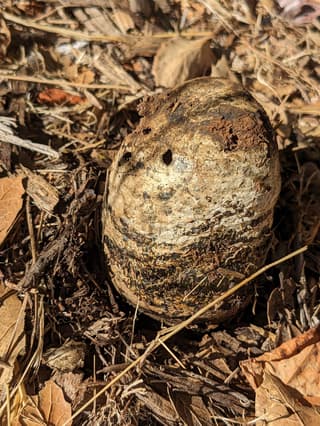
Dyeball
Pisolithus tinctorius
Pisolithus tinctorius is a fascinating ectomycorrhizal fungus, commonly known as the Dyeball or Dead Man's Foot. It is not a plant, but a fungus that forms a vital symbiotic relationship with the roots of trees such as pines and oaks. Its fruiting body has a globose, earthy appearance, similar to a stone or animal waste, which matures into a mass of dark brown spores. It is highly valued in forestry for its ability to help trees colonize poor, acidic, or mining-degraded soils.

Pull-and-hold
Pisonia aculeata
Pisonia aculeata, known as pull-and-hold or devil's claws, is a tropical thorny climber in the Nyctaginaceae family. Native to the tropical regions of the Americas and the Caribbean, this vigorous plant develops long branches armed with recurved thorns—like hooks—that cling to other plants and surfaces to climb. Its small, inconspicuous flowers appear in clusters during spring and summer, followed by sticky seeds that can trap small insects and birds. It is occasionally cultivated as an ornamental plant in tropical gardens and natural hedges.
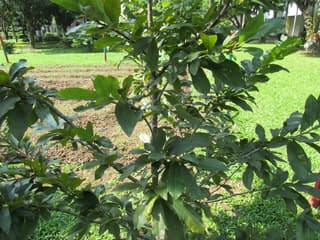
Pistachio
Pistacia
Pistacia is a genus of trees and shrubs in the family Anacardiaceae, native to Mediterranean regions, the Middle East, Central Asia, and parts of the Americas. The genus includes iconic species such as the edible pistachio (P. vera), the mastic tree (P. lentiscus), the terebinth (P. terebinthus), and the ornamental Chinese pistache (P. chinensis). Adapted to arid and semi-arid climates, Pistacia plants are celebrated for their exceptional drought tolerance, longevity, and versatile uses spanning food, medicine, and ornamentation.
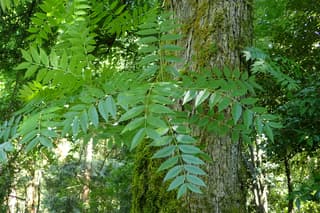
Chinese Pistache
Pistacia chinensis
Pistacia chinensis, commonly known as Chinese pistache, is a medium to large deciduous tree native to China and Taiwan. Renowned for its spectacular fiery fall foliage — turning vivid orange, red, and scarlet — it is one of the most reliable and showy ornamental trees for temperate climates. It grows 30–40 feet tall with a broad, rounded canopy, exfoliating bark that reveals salmon-colored inner layers, and small, inconspicuous spring flowers. Once established, it is exceptionally drought-tolerant, pollution-resistant, and largely pest-free, making it a low-maintenance landscape favorite.
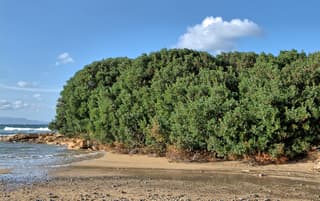
Mastic Tree
Pistacia lentiscus
Evergreen Mediterranean shrub or small tree with leathery leaves and a rounded, spreading form. It is dioecious, with tiny green or reddish flowers in spring. Female plants bear bright red berries that turn black when ripe. The bark yields the aromatic resin known as mastic.
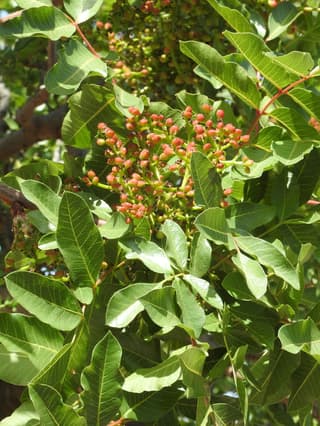
Terebinth
Pistacia terebinthus
The terebinth (Pistacia terebinthus) is a deciduous shrub or small tree in the Anacardiaceae family, native to the Mediterranean region. It thrives in rocky, calcareous soils and produces an aromatic resin historically harvested as "Chios turpentine". Reddish-purple flowers appear in spring, followed by small globose fruits that ripen from red to dark brown.
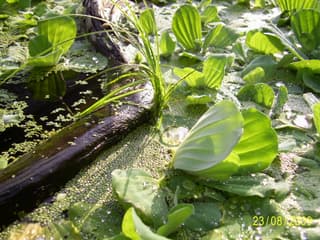
Water Lettuce
Pistia stratiotes
Water Lettuce (Pistia stratiotes) is a free-floating aquatic plant in the Araceae family, native to pantropical regions. Its velvety rosette leaves resemble a small head of lettuce, hence the common name. It is widely cultivated in ornamental ponds, aquariums, and water features where it plays a key role in natural water filtration by absorbing excess nutrients.
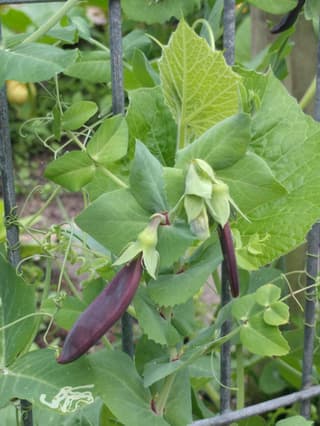
Garden pea
Pisum sativum
The garden pea (Pisum sativum) is an annual climbing herb from the legume family (Fabaceae), cultivated for thousands of years for its sweet, nutritious pods and seeds. It uses tendrils to attach itself to supports and can grow up to 2 meters in height under ideal conditions. Thanks to its ability to fix atmospheric nitrogen through Rhizobium root nodule bacteria, it enriches the soil and is a popular cover crop as well as a staple vegetable for gardeners.
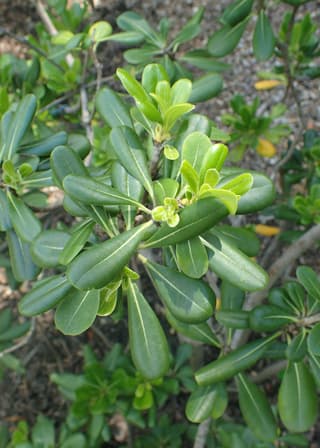
Pittosporum
Pittosporum
Pittosporum is a genus of evergreen shrubs and small trees prized for their glossy, whorled foliage and clusters of fragrant, orange-blossom-scented flowers that bloom in spring. Widely used for hedging, screening, and foundation plantings, it is tough, tolerant of coastal salt spray, and responds well to shaping, making it a staple of ornamental landscaping in mild climates.
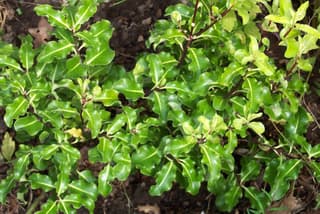
Kohuhu
Pittosporum tenuifolium
Kohuhu is a fast-growing evergreen shrub or small tree native to New Zealand, prized for its wavy-edged, glossy green leaves and near-black young stems. In late spring to early summer it bears small, honey-scented, deep purple flowers that release their fragrance most strongly in the evening. Naturally forming a dense, upright habit, it is widely planted as a windbreak, hedge, or specimen shrub in coastal and temperate gardens.
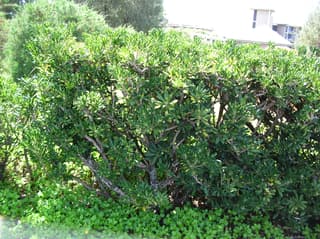
Japanese Pittosporum
Pittosporum tobira
Pittosporum tobira, commonly known as Japanese Pittosporum or Mock Orange, is an evergreen shrub native to Japan, China, and Korea. It features dense, glossy dark green foliage and produces clusters of fragrant creamy-white flowers in spring, with a scent reminiscent of orange blossoms. Highly valued for its adaptability, it thrives in coastal gardens, as hedges, privacy screens, and ornamental specimens.
Find the Perfect Plant
Our plant guide helps you find ideal species for your experience level and time of year.
Browse by Difficulty, Season & More
Use the filters below to narrow this catalog by care difficulty, season, environment, or search directly by name. Each filter leads to a focused list tailored to your specific growing conditions.