Piperaceae
Cowfoot: Edible Plant
Piper umbellatum
A hardy and easy-to-grow plant in locations protected from direct sunlight. It prefers soil rich in organic matter, kept consistently moist but well-drained, and a warm, humid environment typical of a tropical understory. Vigorous growth requires regular pruning to maintain its shape.
Every 7 days
Partial shade
10° - 26°C
50% - 70%
Categories
What is Cowfoot?
Cowfoot (Piper umbellatum) is a medium-care plant from the Piperaceae family. The Cowfoot (Piper umbellatum) is a perennial subshrub in the Piperaceae family, native to the tropical regions of the Americas, including nearly all of Brazil. It can reach 3 to 13 feet in height in its natural habitat, though it remains more compact when grown in pots. Its leaves are large, rounde...
Cowfoot grows up to 3.0m, watering every 7 days, 10°C – 26°C, 50–70% humidity. It is suitable for indoor environments and safe for pets.
Unlike many popular species, Cowfoot is safe to keep around pets. Without adequate drainage, root rot can develop within 14 days.
How to Care for Cowfoot?
TLDR: Cowfoot needs Partial shade, watering every 7 days, and temperatures between 10-26°C with 50-70% humidity.
How Often Should You Water Cowfoot?
Water when the top layer of soil begins to dry, maintaining constant moisture—the plant does not tolerate completely dry soil, but waterlogging promotes root rot.
How Much Light Does Cowfoot Need?
Prefers indirect light and partial shade, such as under a tree canopy; avoid prolonged direct sun, which can burn the large leaves.
What Is the Best Soil for Cowfoot?
Use a substrate rich in organic matter with good moisture retention and drainage—clay soil enriched with compost works well.
What Pot Should You Use for Cowfoot?
Medium to large-sized pot with good drainage holes, considering the plant's vigorous growth. Porous materials like terracotta help prevent excess moisture in the substrate.
Care Schedule
Fertilize
Every 30 days
Repot
Every 730 days
What Is Cowfoot and Where Does It Come From?
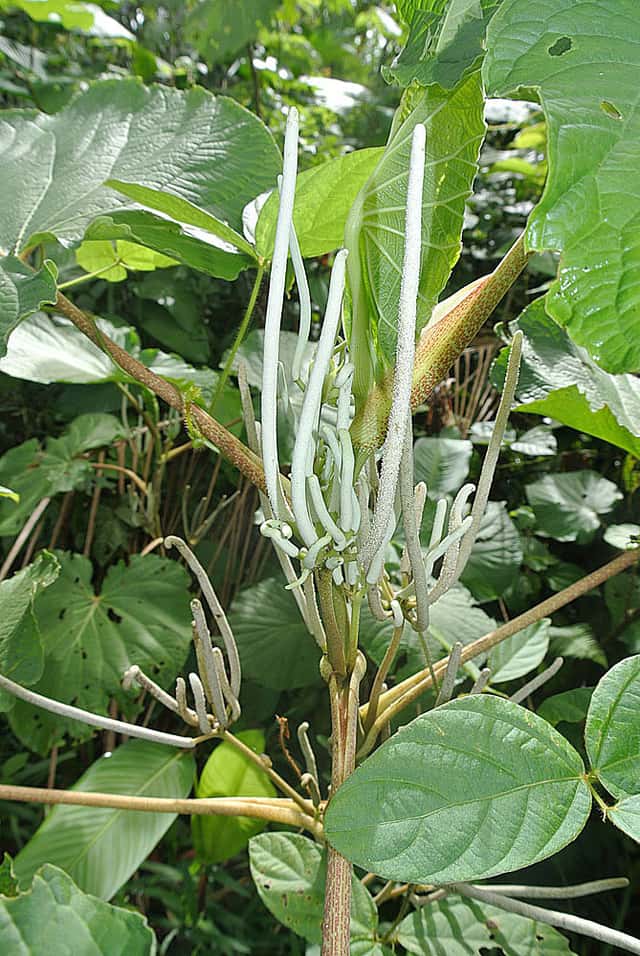
The Cowfoot (Piper umbellatum) is a perennial subshrub in the Piperaceae family, native to the tropical regions of the Americas, including nearly all of Brazil. It can reach 3 to 13 feet in height in its natural habitat, though it remains more compact when grown in pots. Its leaves are large, rounded to cordate (heart-shaped), with prominent palmate venation and long petioles that optimize light capture in shaded environments. The inflorescences appear as erect axillary spikes, yellowish-white in color, followed by brownish pyramidal fruits. It grows naturally at the edges of primary forests, secondary forests, riparian forests, and shaded riverside areas.
How Big Does Cowfoot Grow?
TLDR: Cowfoot can reach up to 3.0m tall with Fast growth rate.
Max height
3.0m
Growth rate
Fast
Foliage
Evergreen
Plant Uses
Ornamental
Great for decoration
Edible
Can be consumed
Medicinal
Medicinal properties
Medicinal Uses
- Antidyspeptic and hepatoprotective action
- Anti-inflammatory and analgesic
- Diuretic and healing properties
- Traditional treatment for coughs and bronchitis
- External use for boils and mild burns
Culinary Uses
- Young leaves and flowers consumed cooked as a vegetable
- Edible ripe fruits
- Bark used as a condiment in some traditional cuisines
Is your plant showing symptoms?
Click on the symptom to discover possible causes:
What Diseases Commonly Affect Cowfoot?
TLDR: Cowfoot is susceptible to 4 known diseases. Monitor regularly for early detection.
Spider Mites
Spider mites are tiny arachnids (less than 1/20 inch long) related to spiders and ticks that feed on plant sap. They thrive in hot, dry conditions and can cause significant damage to ornamental and vegetable plants. During severe infestations, crop losses can reach 14% or higher as these pests disrupt vital plant processes including photosynthesis, carbon dioxide absorption, and transpiration.
Mealybugs
Mealybugs are small, soft-bodied insects covered with a white, waxy, cottony material. They are common pests of houseplants and outdoor plants in mild climates. These sap-sucking insects feed on plant tissue, causing damage, stunted growth, and can lead to plant death if left untreated. They produce sticky honeydew which attracts sooty mold.
Whiteflies
Whiteflies are small, soft-bodied, winged insects closely related to aphids and mealybugs. They are moth-like in appearance, about 1/16 inch long, triangular in shape, and gray-white in color. These sap-sucking pests feed on plant tissue, causing yellowing, stunted growth, and wilting. They also excrete honeydew, which attracts ants and promotes sooty mold growth. Whiteflies can transmit serious plant viruses.
Root Rot
Root rot is a serious fungal disease that affects the root system of plants, causing them to decay and die. It is primarily caused by overwatering, poor drainage, or soil-borne fungi such as Pythium, Phytophthora, Rhizoctonia, and Fusarium. The disease thrives in waterlogged conditions where roots are deprived of oxygen, making them susceptible to fungal infection.
Meaning & Symbolism
In Afro-Brazilian culture, especially in Candomblé and Umbanda, the plant is known as "ewé iyá" (mother's leaf) and is consecrated to Yemanjá. It is associated with the water element and the feminine, used ritualistically to purify the soul and cleanse the environment.
Compare with similar plants
| Attribute | Difficulty | Light | Watering | Pet Safe |
|---|---|---|---|---|
| Dark Fieldcap | Medium | Low light | 2d | ⚠️ |
| Azalea | Medium | Partial shade | 3d | ⚠️ |
| Muriel's Bamboo | Medium | Partial shade | 3d | ✓ |
| Bougainvillea | Medium | Direct sun | 7d | ⚠️ |




