Complete Plant Guide
Explore plants by difficulty, season and more. Find the perfect plant for you.
Difficulty
Categories
Plants by City
🗺️ Plants by City3800 plants found
Showing 1909-1944 of 3800
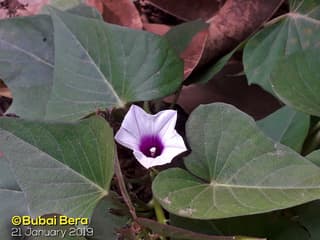
Sweet Potato
Ipomoea batatas
Sweet potato (Ipomoea batatas) is a vigorous trailing vine native to Central and South America, cultivated for over 5,000 years. It is prized both for its edible tuberous roots and its ornamental foliage, which comes in shades of lime green, deep purple, and bronze. One of the world's most important food crops, it thrives in warm climates and adapts well to gardens, raised beds, and large containers.
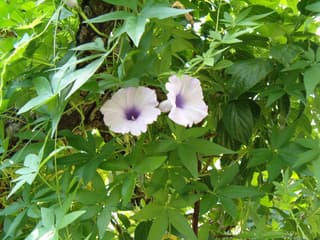
Mile-a-minute vine
Ipomoea cairica
Ipomoea cairica, commonly known as mile-a-minute vine or Cairo morning glory, is a vigorous perennial climbing vine from the Convolvulaceae family, native to tropical Africa. It produces abundant funnel-shaped flowers in shades of purple, lavender, and pink with a darker center, blooming almost year-round. Its distinctive palmate leaves have five finger-like lobes. Widely used in landscaping for rapid coverage of walls, fences, and trellises.
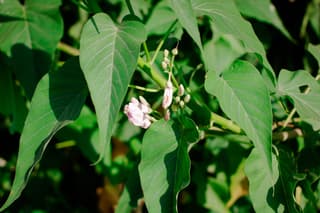
Bush Morning Glory
Ipomoea carnea
Ipomoea carnea, commonly known as Bush Morning Glory, is a fast-growing tropical shrub in the Convolvulaceae family. Native to tropical Americas, it stands out for its trumpet-shaped flowers in shades of pink and lavender, blooming abundantly from spring through fall. Unlike the climbing species of Ipomoea, this variety grows as an upright shrub reaching up to 5 meters tall. It is widely cultivated in warm climates for its ornamental value and is considered invasive in several regions worldwide.
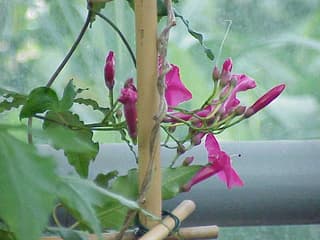
Cardinal Creeper
Ipomoea horsfalliae
Ipomoea horsfalliae, commonly known as Cardinal Creeper or Prince Kuhio Vine, is a vigorous tropical evergreen vine native to the Caribbean (West Indies). It produces stunning clusters of crimson to deep purple, funnel-shaped flowers year-round, attracting hummingbirds and butterflies. The palmate, glossy leaves create lush coverage on trellises, fences, and arbors.
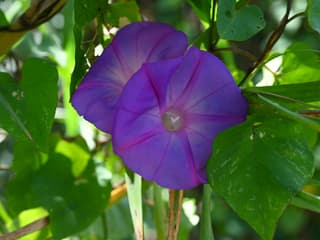
Blue Morning Glory
Ipomoea indica
Blue Morning Glory (Ipomoea indica) is a vigorous perennial climbing vine in the Convolvulaceae family, native to the tropical Americas and widely naturalized across the globe. It produces large trumpet-shaped flowers 6-8 cm across that dramatically shift color throughout the day — brilliant blue at dawn, transitioning to blue-violet and finally to deep pink by evening. Leaves are heart-shaped or three-lobed. It is classified as invasive in numerous regions worldwide.
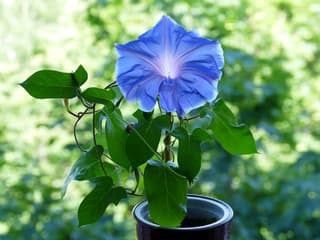
Japanese Morning Glory
Ipomoea nil
Ipomoea nil, commonly known as Japanese Morning Glory, is a vigorous annual climbing vine in the Convolvulaceae family, native to tropical Americas and now widely naturalized across Asia. It produces large, trumpet-shaped flowers in shades of blue, purple, and pink that open at dawn and close by midday. A popular ornamental plant for fences, trellises, and balconies, it is prized for its rapid growth and prolific summer-to-fall blooming.
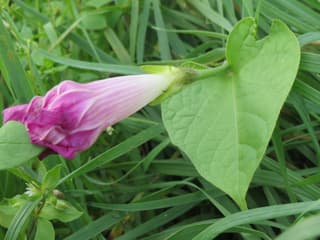
Common Morning Glory
Ipomoea purpurea
Common Morning Glory (Ipomoea purpurea) is a fast-growing annual vine native to Mexico and Central America. It produces trumpet-shaped flowers in shades of purple, pink, white, and blue that open at dawn and close by midday, creating a brief but spectacular daily display. Its twining stems can reach up to 10 feet (3 meters) in height, covering fences, pergolas, and walls with lush green foliage.
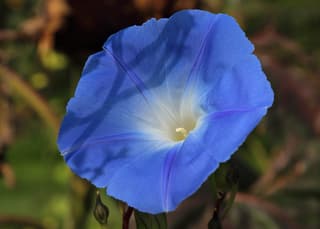
Mexican Morning Glory
Ipomoea tricolor
Ipomoea tricolor is a fast-growing annual (or tender perennial) twining vine native to the tropical regions of the Americas, particularly Mexico. It is best known through the cultivar 'Heavenly Blue', prized for its large, trumpet-shaped flowers in vivid blue with a white-to-golden throat that open in the morning and fade by afternoon. The heart-shaped leaves and twining stems can climb 4 meters or more given support. It is widely grown as an ornamental on trellises, fences, and arbors for its abundant summer and fall blooms. The seeds contain ergoline alkaloids (LSA) and are toxic if ingested.
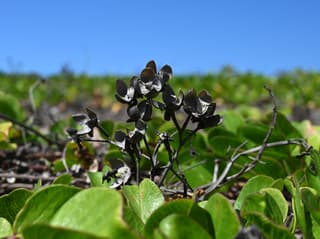
Beach Moonflower
Ipomoea violacea
Beach Moonflower (Ipomoea violacea) is a fast-growing perennial tropical vine native to pantropical coastal regions worldwide. Its large, trumpet-shaped white flowers open at dusk and release a delicate fragrance, closing by morning. Grown primarily as an ornamental climber for pergolas, fences, and coastal gardens. WARNING: Seeds contain ergoline alkaloids and are highly toxic to humans, cats, and dogs.
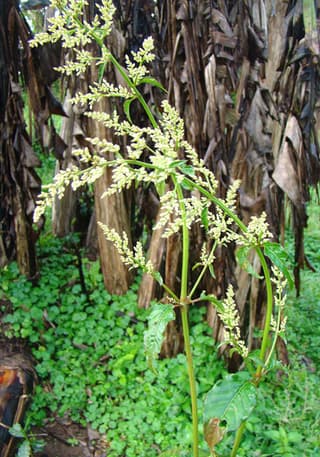
Bloodleaf
Iresine diffusa
Bloodleaf (Iresine diffusa) is a tropical shrub in the Amaranthaceae family, native to the tropical Americas. Celebrated for its vivid pinkish-red foliage, it is widely grown as an ornamental plant in gardens and indoors. It holds a significant place in Brazilian and Caribbean folk medicine, where it has been traditionally used as an analgesic, diuretic, and anti-inflammatory remedy.
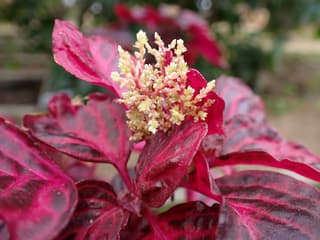
Bloodleaf
Iresine herbstii
Iresine herbstii is a stunning ornamental plant, famous for its oval and deeply colored leaves, ranging from crimson red to vibrant purple. Native to Brazil, it adds dramatic contrast to gardens and interiors. Its stems are also colored, creating a continuous visual effect. Although it produces small, greenish or whitish flowers, they are insignificant compared to the beauty of the foliage.
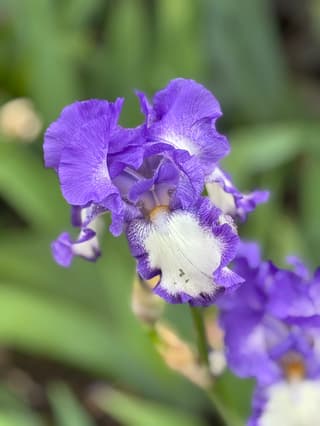
Iris (genus)
Iris
The genus Iris comprises over 300 species of rhizomatous or bulbous flowering plants native to temperate regions of the Northern Hemisphere. Celebrated for their striking trilobed blooms in shades of purple, blue, yellow, white, and orange, irises are among the most beloved garden perennials worldwide.
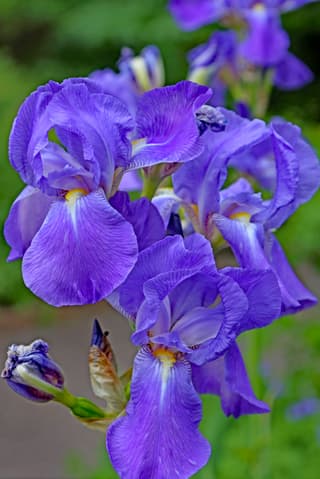
Bearded Iris
Iris × germanica
Bearded Iris (Iris × germanica) is a hybrid herbaceous perennial of ancient Mediterranean origin, belonging to the Iridaceae family. Renowned for its spectacular flowers featuring distinctive fuzzy "beards" on the lower petals (falls), this robust plant produces fragrant blooms in shades of purple, blue, white, yellow, pink, and bicolor. Its sword-shaped leaves form elegant clumps that persist through most of the year.

Blackberry Lily
Iris domestica
The Blackberry Lily (Iris domestica) is a rhizomatous perennial in the Iridaceae family, native to Asia (from the Himalayas to the Russian Far East, including China and Japan). Its sword-shaped leaves grow in flattened, iris-like fans, and in summer it produces orange flowers speckled with red spots resembling leopard markings. After flowering, pear-shaped seed pods split open to reveal shiny black seeds clustered like blackberries, giving the plant its common name.
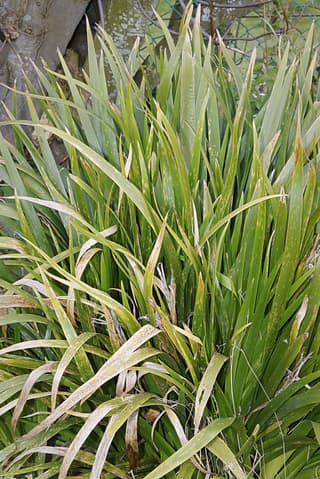
Stinking Iris
Iris foetidissima
Iris foetidissima, commonly called the stinking iris or roast-beef plant, is a tough evergreen perennial from the iris family (Iridaceae), native to woodlands and hedgerows across Europe and North Africa. Unlike most irises, which crave full sun, this shade-loving species thrives beneath trees and in the driest, poorest corners of the garden where little else survives. Its narrow, sword-shaped leaves release a pungent odor reminiscent of roasting beef when bruised or crushed, giving the plant its unusual common names. In late spring, dull purple flowers with a yellow flush appear, but the real spectacle comes in autumn, when large seed pods split open to reveal clusters of glossy, bright orange-red seeds that persist through winter, making it a favorite for dried flower arrangements and winter-interest borders.
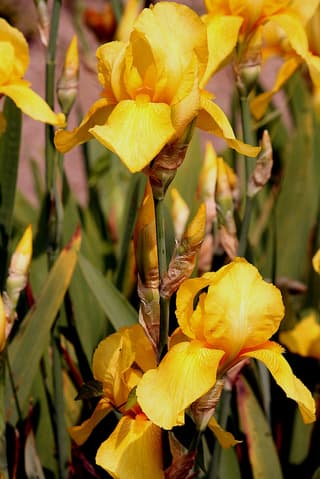
Bearded Iris
Iris germanica
Iris germanica, the bearded iris, is a robust rhizomatous perennial grown for its large, ruffled flowers in late spring. Each bloom carries three upright standard petals and three drooping falls marked with a fuzzy beard, in a huge range of colours from deep purple and blue to white, yellow and pink. Sword-shaped grey-green leaves stand in fans above thick surface rhizomes.
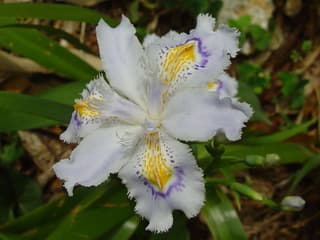
Fringed Iris
Iris japonica
Iris japonica, commonly known as the Fringed Iris or Butterfly Flower, is an elegant evergreen iris native to China and Japan. It features delicate fringed petals in pale blue, lavender, or white with distinctive orange or yellow crests, blooming in spring. The plant spreads through creeping rhizomes and makes an excellent ground cover in shaded garden areas.
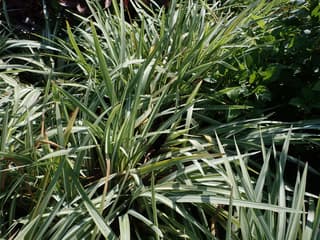
Variegated Japanese Water Iris
Iris laevigata 'Variegata'
Iris laevigata 'Variegata' is a perennial water/marsh iris, prized for its erect, sword-shaped foliage marked with striking creamy-white stripes on a green background. In late spring and early summer, it produces blue-violet flowers about 10 cm wide, featuring a white crest on the falls, and occasionally reblooms in autumn. It reaches between 60 and 90 cm in height and spreads to form compact clumps via rhizomes. It is an ideal marginal plant for pond edges, boggy areas, and water gardens, recognized with the RHS Award of Garden Merit for its reliability in cultivation.
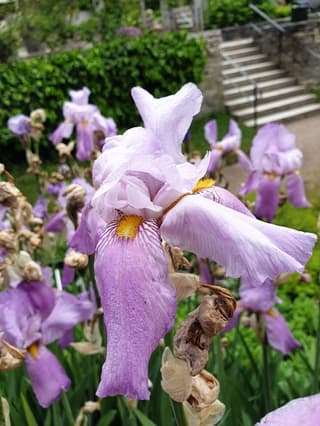
Sweet Iris
Iris pallida
Perennial rhizomatous plant of the Iridaceae family, native to the Dalmatian coast of Croatia. It forms fans of gray-green sword-shaped leaves and 50 to 80 cm stems carrying fragrant lavender to nearly white flowers in spring and early summer.
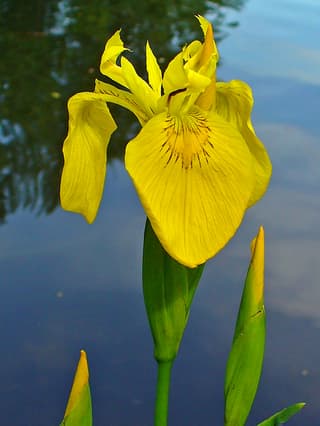
Yellow Flag Iris
Iris pseudacorus
Iris pseudacorus, commonly known as Yellow Flag Iris, is a vigorous aquatic perennial native to Europe and Western Asia. It thrives in wetlands, pond margins, and water gardens, producing striking bright yellow flowers in late spring to early summer. Its sword-like foliage and bold blooms make it a dramatic feature in water landscapes.
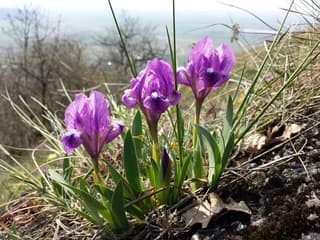
Dwarf Bearded Iris
Iris pumila
Iris pumila is a low-growing rhizomatous perennial native to the grasslands and rocky steppes of eastern Europe and western Asia. Reaching only 10-20 cm in height, it forms dense mats of sword-shaped, blue-green leaves and produces large, showy flowers in shades of purple, yellow, blue, cream, and white, often with a darker spot on the falls. One of the earliest bearded irises to bloom each spring, it has been extensively used to breed modern dwarf and median bearded iris cultivars.
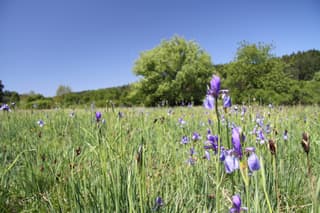
Siberian Iris
Iris sibirica
Iris sibirica, commonly known as Siberian Iris, is a graceful perennial flowering plant native to Central and Eastern Europe through Central Asia. It produces elegant, blue to violet blooms in late spring to early summer atop slender upright stems. Forming dense clumps of grass-like foliage, it is one of the most disease-resistant and low-maintenance irises available to gardeners. Its deciduous foliage turns attractive straw-yellow in autumn before dying back.
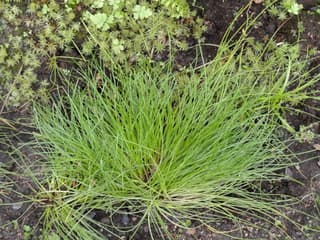
Fiber optic grass
Isolepis cernua
Isolepis cernua is a small sedge (family Cyperaceae) native to temperate regions across several continents, including parts of Europe, Africa, the Americas, and Oceania. It forms dense, delicate clumps of fine, thread-like, dark green leaves, tipped with tiny light brown to greenish spikelets that resemble illuminated fiber optic strands—hence its popular name. It naturally occurs in waterlogged soils, pond margins, marshes, and brackish areas, making it a plant that tolerates and even requires permanently moist soil.
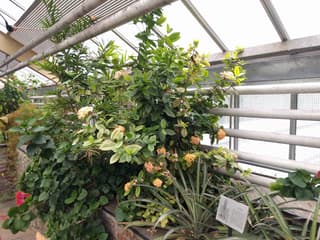
Chinese Ixora
Ixora chinensis
Ixora chinensis, commonly known as Chinese Ixora or Dwarf Ixora, is a tropical evergreen shrub in the Rubiaceae family, native to China and Southeast Asia. It produces dense clusters of small, vibrant flowers in shades of red, orange, pink, yellow, and white, blooming almost year-round in tropical climates. It is widely used in gardens, hedges, and ornamental beds, prized for its long flowering period and compact, dense growth habit.
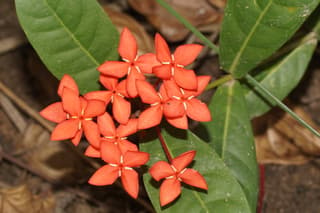
Jungle Geranium
Ixora coccinea
Ixora coccinea, commonly known as jungle geranium or flame of the woods, is a dense, multi-branched evergreen shrub in the family Rubiaceae. Native to Southern India, Bangladesh, and Sri Lanka, it has been widely cultivated across tropical and subtropical regions worldwide for centuries. The plant typically reaches 1.2–1.8 m (4–6 ft) in height under garden conditions, though it can grow to 3.7 m (12 ft) or more in ideal settings. Its glossy, leathery oblong leaves emerge bronzy before maturing to deep dark green, providing an attractive backdrop for its showy flowers. The plant produces spectacular rounded clusters (corymbs) of small, tubular, four-petaled flowers measuring 2–5 inches across. While the classic form bears brilliant scarlet-red blooms, cultivars exist in orange, yellow, pink, and white. In frost-free tropical climates, flowering is nearly continuous year-round, making it one of the most reliable and long-blooming tropical shrubs available. The flowers are mildly fragrant and attract butterflies, hummingbirds, and other pollinators, followed by small dark purple-black berry-like fruits. Ixora coccinea thrives in full sun with consistently moist, well-draining, acidic soil (pH 5.0–5.5) — it is notably sensitive to alkaline conditions, quickly developing iron and manganese chlorosis if soil pH rises above 6.0. It is frost-tender, suited only to USDA zones 10–11 outdoors, but can be grown as a container plant brought indoors in cooler climates. Beyond its ornamental value, Ixora holds significant cultural and medicinal importance — it is sacred in Hindu practice as an offering to Shiva, is the national flower of Suriname, and has a long history of use in Ayurvedic medicine.
Jabuticaba
Jaboticaba
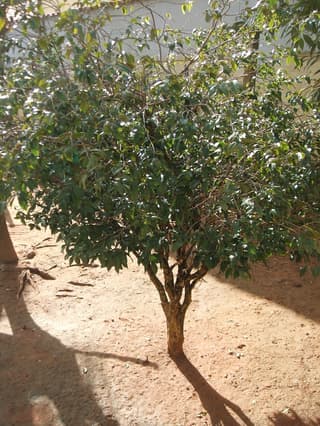
The jabuticabeira is a slow-growing, evergreen Brazilian fruit tree known for its cauliflory: white flowers and fruits emerge directly from the trunk and thick branches rather than just at the tips of the limbs. Native to the Atlantic Forest (primarily Minas Gerais, São Paulo, and Rio de Janeiro), it can take 8 to 10 years to bear fruit when grown from seed, but grafted seedlings or those obtained through air layering fruit much earlier, between 3 and 5 years. It is widely used as both a fruit-bearing and ornamental tree, including in pots and as bonsai.
Blue Jacaranda
Jacaranda mimosaefolia
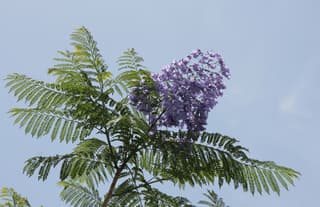
The Blue Jacaranda is one of the world's most spectacular flowering trees, native to northwestern Argentina and southern Bolivia. In spring, before the feathery fern-like leaves emerge, the tree erupts in a stunning display of violet-blue trumpet-shaped flowers that carpet entire streets and gardens. Growing up to 40 feet tall with a wide spreading canopy, it is a beloved ornamental tree planted across tropical and subtropical regions worldwide.
Hoary Ragwort
Jacobaea erucifolia
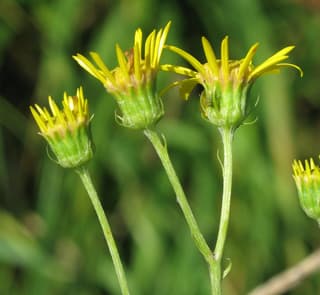
Hoary Ragwort (Jacobaea erucifolia, syn. Senecio erucifolius) is a rhizomatous perennial herb in the daisy family (Asteraceae), native to Europe and western Asia. It forms upright, branching stems up to 60cm tall covered in fine grey-white down that gives the plant its "hoary" look, with deeply pinnate, lobed leaves. From July to August it bears flat-topped clusters of small, bright-yellow daisy-like flower heads. It thrives in damp, calcareous grassland, field margins, roadsides and waste ground, spreading readily by seed and creeping rhizomes. Every part of the plant contains pyrrolizidine alkaloids that are toxic to humans and animals, especially livestock.
Silver Ragwort
Jacobaea maritima
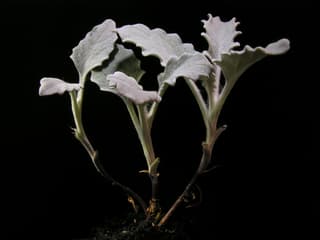
Jacobaea maritima, commonly known as Silver Ragwort or Dusty Miller, is a perennial subshrub prized for its striking silvery-white, felt-like foliage. The leaves are deeply lobed and covered in fine, matted hairs that give the plant a woolly appearance and help it conserve moisture. While it produces small, yellow daisy-like flowers in the summer, it is primarily grown for its decorative foliage which provides a brilliant contrast to green-leaved plants and colorful blooms in garden beds and containers.
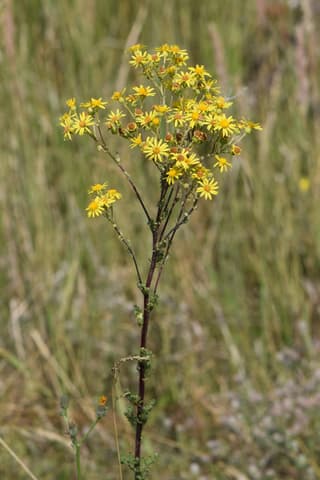
Common Ragwort
Jacobaea vulgaris
Common ragwort (Jacobaea vulgaris, syn. Senecio jacobaea) is a biennial herbaceous plant in the daisy family (Asteraceae), native to northern Eurasia and now naturalized worldwide. It forms a leaf rosette in its first year and a flowering stem up to 2 m tall in its second, bearing clusters of bright yellow daisy-like flowers from summer into autumn. It grows wild on wasteland, roadsides, and poor grazing pastures. WARNING: this plant is toxic, containing hepatotoxic pyrrolizidine alkaloids dangerous to horses, cattle, and humans, particularly when dried in hay.
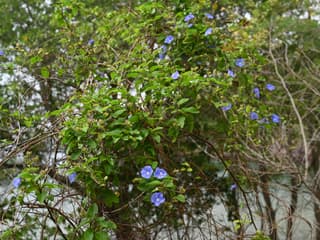
Skyblue Clustervine
Jacquemontia pentanthos
Skyblue Clustervine (Jacquemontia pentanthos) is an evergreen perennial vine from the Convolvulaceae family, native to Tropical Americas including Brazil. It produces an abundance of funnel-shaped, sky blue to pinkish-lavender flowers with white throats that open at dawn and close after dark. A fast-growing vine highly valued for covering fences, pergolas, and trellises in tropical gardens.
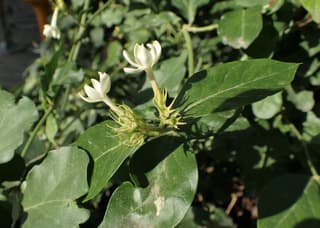
Jasmine
Jasminum
Jasminum is a genus of about 200 species of shrubs and vines in the olive family (Oleaceae), native to tropical and warm temperate regions of Asia, Africa, Australasia and Oceania. Grown for their intensely fragrant, star-shaped flowers, usually white or yellow, jasmines range from compact evergreen shrubs to vigorous climbing vines that can reach several meters with support. Popular garden and houseplant species include Jasminum officinale (common jasmine), Jasminum sambac (Arabian jasmine, used to scent jasmine tea) and Jasminum polyanthum (a fast-growing winter-flowering climber). Most jasmines bloom heaviest in spring and summer, filling gardens and homes with perfume especially in the evening. Because this entry covers the genus as a whole, care guidance below reflects typical requirements shared across common cultivated species; individual species can vary in hardiness, mature size and growth habit.
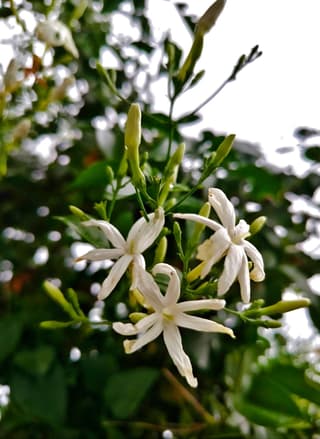
Azores Jasmine
Jasminum azoricum
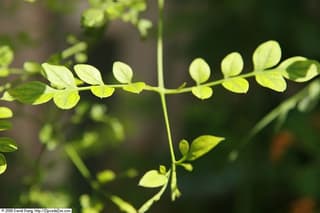
Azores jasmine (Jasminum azoricum) is an evergreen climbing shrub in the olive family (Oleaceae), prized for its fragrant white flowers with a subtle citrus scent that bloom from spring through fall. With woody stems at the base and trailing, semi-woody growth above, it can reach 2.5 to 6 meters in height when given support to climb. Its glossy, dark green trifoliate leaves keep the plant attractive year-round.
Common Jasmine
Jasminum officinale
Jasminum officinale, known as Common Jasmine or True Jasmine, is a vigorous semi-evergreen climbing vine native to Persia and the Himalayas. Celebrated worldwide for its intensely sweet, iconic fragrance, it produces clusters of delicate white flowers tinged pink in bud from late spring through autumn. A single plant can perfume an entire garden.
Pink Jasmine
Jasminum polyanthum
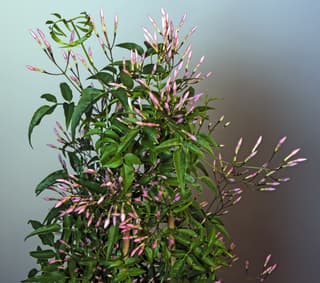
Jasminum polyanthum is a vigorous, twining evergreen climber native to China, prized for its profuse clusters of intensely fragrant, star-shaped white flowers with pink-tinged buds. Blooming from late winter through spring, it can reach up to 5 meters and is a popular choice for both indoor and outdoor growing. Its fast growth rate and ease of care make it ideal for trellises, arches, and hanging baskets.
Arabian Jasmine
Jasminum sambac
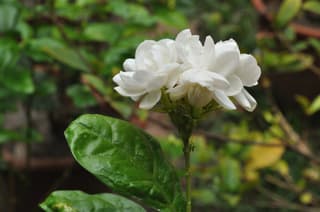
Arabian Jasmine (Jasminum sambac) is a tropical, evergreen climbing shrub native to South and Southeast Asia, particularly India. Celebrated for its intensely fragrant white flowers that bloom in the evening, it is one of the most culturally significant plants in Asia. It serves as the national flower of the Philippines (sampaguita) and one of Indonesia's three national flowers (melati putih). Widely grown as an ornamental, it is also treasured for jasmine tea production, perfumery, and traditional medicine.
Find the Perfect Plant
Our plant guide helps you find ideal species for your experience level and time of year.
Browse by Difficulty, Season & More
Use the filters below to narrow this catalog by care difficulty, season, environment, or search directly by name. Each filter leads to a focused list tailored to your specific growing conditions.