Complete Plant Guide
Explore plants by difficulty, season and more. Find the perfect plant for you.
Difficulty
Categories
Plants by City
🗺️ Plants by City3800 plants found
Showing 1945-1980 of 3800
Jatropha (genus)
Jatropha
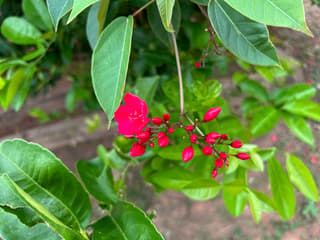
Jatropha is a genus of over 170 tropical and subtropical shrubs and small trees in the family Euphorbiaceae, native to the Americas, Africa, and Asia. Popular ornamental species include J. integerrima (peregrina/spicy jatropha), J. podagrica (buddha belly/gout plant), and J. multifida (coral plant). They produce vibrant red, coral, or pink flowers and feature a characteristic succulent-like swollen stem. All parts are severely toxic — seeds, leaves, and white latex contain toxalbumins curcin and jatrophin.
Leatherstem
Jatropha dioica
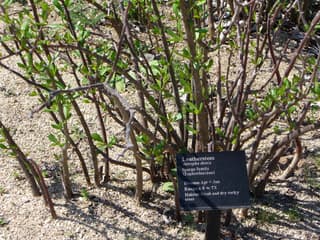
Leatherstem (Jatropha dioica) is a small succulent shrub in the spurge family (Euphorbiaceae), native to dry, rocky terrain from Texas south through Mexico to Oaxaca. Its arching, leathery, nearly leafless stems reach 30-90 cm tall and are flexible enough to be tied in a knot without snapping. The plant spreads slowly into low colonies via underground runners and produces small white flowers in spring and early summer. Its most distinctive trait is the milky sap, which is clear to pale yellow but turns blood red on contact with air, giving rise to the Spanish name "sangre de drago" (dragon's blood).
Peregrina
Jatropha integerrima
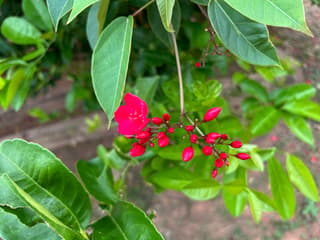
Peregrina (Jatropha integerrima) is an evergreen shrub or small tree in the spurge family (Euphorbiaceae), native to Cuba and Hispaniola in the Caribbean. It produces red, pink, or white flowers almost year-round, attracting hummingbirds and butterflies. Low-maintenance and drought-tolerant once established, it is nonetheless TOXIC: the milky sap irritates skin and eyes, and all plant parts are poisonous if ingested.
Buddha belly plant
Jatropha podagrica
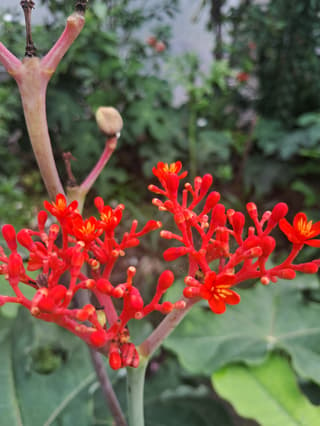
Jatropha podagrica is a striking caudex-forming succulent native to Central America and southern Mexico. Its characteristic swollen, bottle-like stem stores water and nutrients, granting exceptional drought tolerance. It produces vivid orange-red flowers in dense clusters on long peduncles almost year-round, creating a striking contrast with its large, deeply lobed leaves. WARNING: all parts of the plant are highly toxic to humans, cats, and dogs.
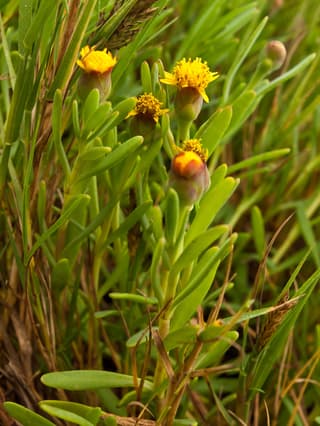
Marsh jaumea
Jaumea carnosa
Marsh jaumea (Jaumea carnosa) is a low perennial in the daisy family that grows in coastal salt marshes, tidal flats and at the base of sea cliffs, from British Columbia down to northern Baja California. It creeps along on underground rhizomes and sends up soft, pinkish-green stems usually 15 to 35 cm tall, lined with fleshy, narrow leaves that look a lot like ice plant. From late spring into fall it carries small yellow daisy-like flower heads, about 2 cm across. It can live on seawater by storing salt in its cells, so it holds ground where few other plants survive, and it is used in coastal restoration and erosion control.
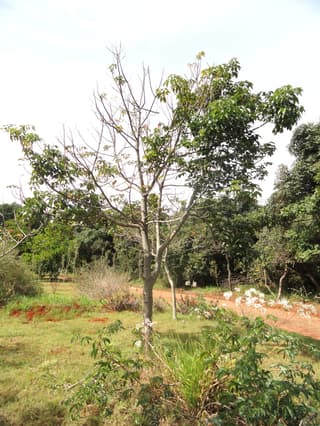
Anda-assu
Joannesia princeps
Joannesia princeps, popularly known as the Anda-assu or Cutieira, is a large deciduous tree in the Euphorbiaceae family, endemic to the Atlantic Forest of eastern Brazil, ranging from southern Bahia to Espírito Santo and Minas Gerais. It can exceed 20 meters in height, featuring a broad canopy, grayish bark, and alternate digitate leaves with 3 to 5 ovate to elliptical leaflets. It produces small white or purplish flowers between winter and early spring, followed by globose drupaceous fruits that house seeds of significant medicinal and industrial value. The species is classified as Vulnerable by the IUCN due to habitat loss.
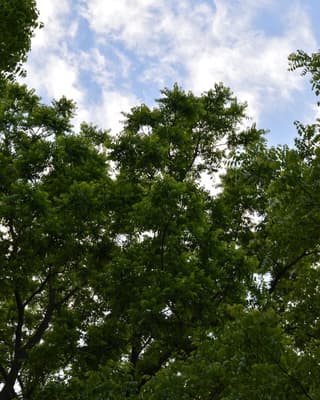
Eastern Black Walnut
Juglans nigra
Juglans nigra, the eastern black walnut, is a large deciduous tree native to the eastern and central United States, prized for its rich, dark, highly figured wood, its edible nuts, and its imposing shade canopy. Mature specimens typically reach 20-30 m tall with a broad, rounded crown and can live well over a century. The pinnately compound leaves, made up of 15-23 lance-shaped leaflets, turn a soft yellow in autumn before dropping early, and the deeply furrowed, dark gray-brown bark gives older trees a rugged, sculptural silhouette. In spring, inconspicuous green catkins appear alongside the emerging leaves, followed by round, thick-husked nuts that ripen in fall and stain hands and pavement a deep brown. One of the tree's most distinctive traits is allelopathy: its roots, leaf litter and nut husks release juglone, a chemical that suppresses or kills many nearby plants — including tomatoes, azaleas and blueberries — within its dripline, so it is best planted well away from vegetable gardens and ornamental beds. Juglone and other compounds in the shavings and hulls can also be irritating to dogs and, notably, toxic to horses if used as bedding. Despite these quirks, black walnut is a valuable wildlife tree, feeding squirrels and other mammals, and its lumber is among the most sought-after hardwoods in North America.
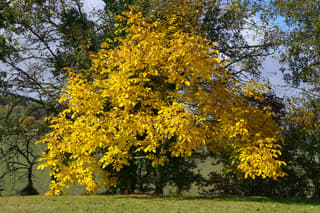
English walnut
Juglans regia
The English walnut (Juglans regia) is a deciduous tree in the Juglandaceae family, growing up to 20–30 meters tall. Originally native from the Balkans to Central Asia, it is now cultivated worldwide for its delicious, oil-rich nuts and valuable timber. It is characterized by a wide, spreading crown and fragrant, odd-pinnate leaves. In spring, its inconspicuous greenish flowers bloom in catkins and are wind-pollinated.
Rush
Juncus
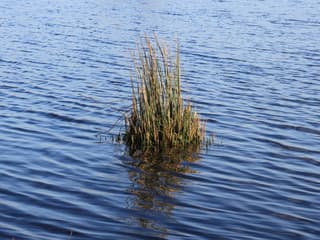
Rush is the common name for plants in the genus Juncus, a large group of grass-like, clump-forming perennials found in wet meadows, marshes and pond edges worldwide. Rushes are prized for their cylindrical, leafless, evergreen-to-semi-evergreen stems that form neat upright or arching tufts, and for their small brown or green flower clusters that appear along the stem in summer. Low-maintenance and slow-growing, rushes are a favorite for rain gardens, bog gardens and container water features.

Soft Rush
Juncus effusus
Juncus effusus, commonly known as soft rush, is a cosmopolitan wetland perennial in the Juncaceae family. It forms dense, upright clumps of smooth, cylindrical, evergreen stems that lack true leaves, giving the plant a distinctive tufted, rush-like silhouette. Found naturally along pond margins, marshes, ditches, and other saturated soils worldwide, soft rush is a true hydrophyte that tolerates standing water and is widely used in water gardens, rain gardens, and wetland restoration projects.
Juniper
Juniperus
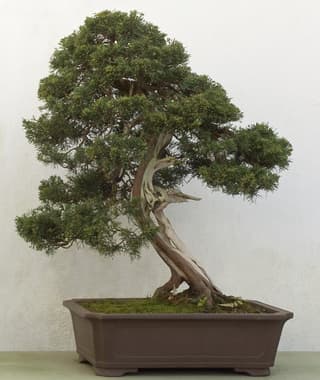
Juniper (Juniperus) is a genus of evergreen conifers in the Cupressaceae family, widely distributed across the Northern Hemisphere. It comprises 50–70 species ranging from ground-cover shrubs to tall trees. Junipers are exceptionally popular for bonsai cultivation, particularly J. chinensis, J. procumbens, J. rigida, and J. squamata.
Chinese Juniper
Juniperus chinensis
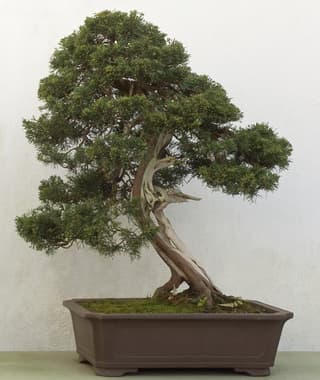
Juniperus chinensis, commonly known as Chinese Juniper, is an evergreen conifer native to China, Mongolia, Korea, and Japan. It is one of the most popular bonsai species worldwide, celebrated for its remarkable durability, adaptability to training, and striking foliage that can be either scale-like (adult) or needle-like (juvenile). Outdoor specimens can reach impressive heights, and the species offers hundreds of cultivars including Hetzii, Blue Point, Spartan, and the beloved dwarf Procumbens Nana.
Common Juniper
Juniperus communis
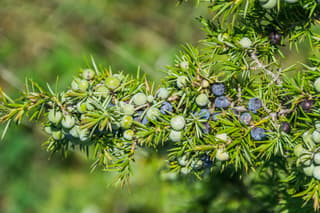
Common Juniper (Juniperus communis) is an evergreen coniferous shrub or small tree in the family Cupressaceae. It holds the distinction of having the widest natural range of any woody plant, spanning the circumboreal regions of Europe, Asia, and North America. It produces aromatic bluish-black berries (seed cones) widely used to flavor gin and as a culinary spice.
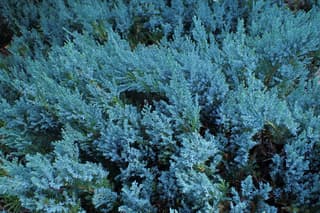
Creeping Juniper
Juniperus horizontalis
Juniperus horizontalis, commonly known as Creeping Juniper, is a hardy, low-spreading evergreen conifer native to North America. It forms a dense mat of blue-green to silver-blue foliage that hugs the ground, making it an outstanding groundcover for slopes, rock gardens, and open landscapes. Highly tolerant of cold, drought, salt, and poor soils, it is one of the most versatile and resilient conifers for temperate gardens.
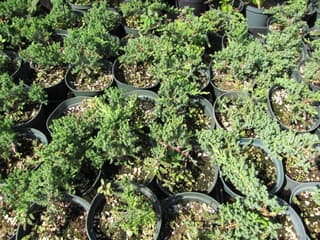
Japanese Garden Juniper
Juniperus procumbens
Juniperus procumbens, commonly known as Japanese Garden Juniper, is a low-spreading evergreen conifer native to southern Japan. It forms a dense, cascading mat of blue-green needle-like foliage and is highly prized in bonsai cultivation, especially the compact 'Nana' cultivar. Ideal for ground cover, rock gardens, and slope stabilization, it thrives in full sun with excellent drainage.
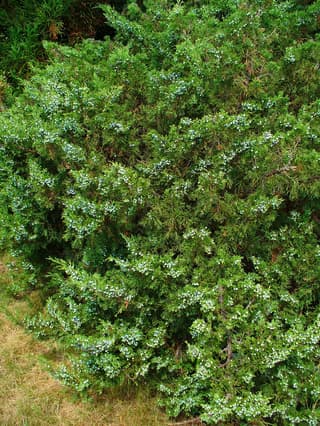
Savin Juniper
Juniperus sabina
Juniperus sabina, commonly known as Savin Juniper, is a low-growing, spreading evergreen conifer in the cypress family (Cupressaceae), native to the mountains of central and southern Europe, the Caucasus, and parts of western Asia and Siberia. It typically forms a dense, sprawling shrub reaching about 1 to 2 meters in height with a spread of 2 to 3 meters or more, though some forms can become semi-erect. The scale-like, blue-green foliage is aromatic when crushed, releasing a strong resinous scent from the essential oil sabinene. As a dioecious species, individual plants are either male or female; female plants produce small, berry-like blue-black seed cones. Extremely hardy and drought-tolerant once established, Savin Juniper is widely planted as a groundcover, on slopes, and in rock gardens for its low maintenance and tolerance of poor, rocky, or alkaline soils. All parts of the plant are toxic if ingested, so it should be sited away from children and pets.
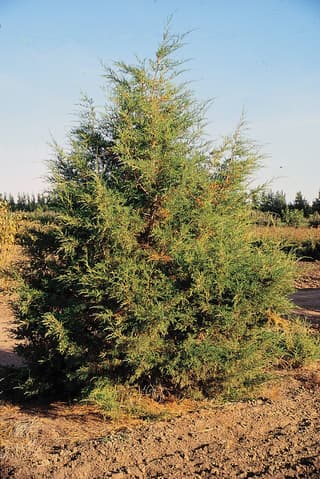
Rocky Mountain Juniper
Juniperus scopulorum
The Rocky Mountain juniper (Juniperus scopulorum) is a slow-growing, cold-hardy evergreen conifer native to the mountains and foothills of western North America, from British Columbia and Alberta south through the Rockies to Arizona, New Mexico, and western Texas. Depending on the cultivar, it grows as a narrow columnar tree or a broad shrub, reaching 9-12 m (30-40 ft) tall in the wild, with scale-like, blue-green to silvery foliage and small, berry-like blue-grey cones. Exceptionally drought-, wind-, and cold-tolerant, it thrives in rocky, well-draining soils and is a popular choice for windbreaks, hedges, and xeriscape gardens across USDA zones 3a-7b.
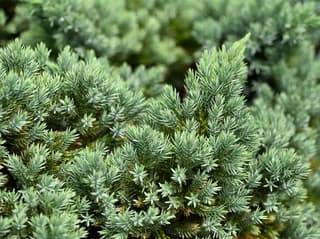
Flaky Juniper
Juniperus squamata
Juniperus squamata, commonly known as Flaky Juniper or Himalayan Juniper, is a low-growing coniferous shrub native to the mountain ranges of the Himalayas, China, and Taiwan. Its most popular cultivar, 'Blue Star', is prized for its striking blue-gray needle-like foliage and compact mounding form, making it a staple in rock gardens, foundation plantings, and landscape designs.
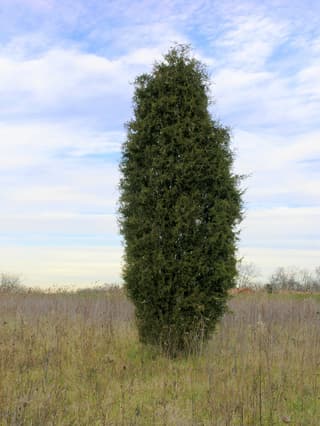
Eastern Red Cedar
Juniperus virginiana
Juniperus virginiana, commonly known as the Eastern Red Cedar, is an evergreen conifer native to eastern North America. This tree is famous for its aromatic, durable, and rot-resistant wood, often used in chests and closets. Its foliage is dense, consisting of scale-like leaves that remain green year-round, though they may take on bronze tones in winter. It produces small bluish cones that resemble berries, serving as a vital food source for various birds.
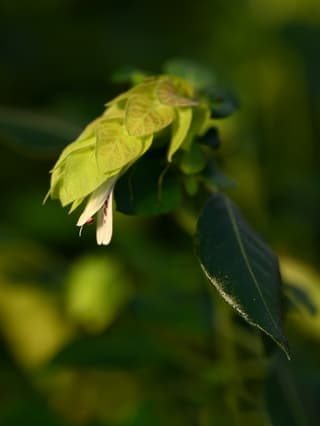
Water-willow / Shrimp Plant (genus)
Justicia
Justicia is a large genus of approximately 600 species in the family Acanthaceae, comprising tropical and subtropical herbs and shrubs. The most popular ornamentals are Justicia brandegeeana (Shrimp Plant) and Justicia carnea (Brazilian Plume Flower), beloved for their distinctive colorful bracts and flowers. They thrive as houseplants and in subtropical gardens.
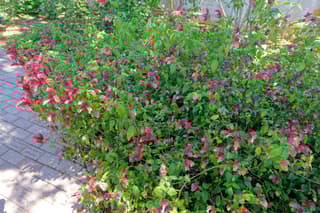
Shrimp Plant
Justicia brandegeeana
Justicia brandegeeana is a tropical evergreen shrub native to Mexico, belonging to the Acanthaceae family. It is widely grown as an ornamental plant for its distinctive shrimp-shaped bracts that range from red to pink and yellow, with small white flowers emerging from within. It can reach up to 90 cm tall and blooms nearly year-round in warm climates.
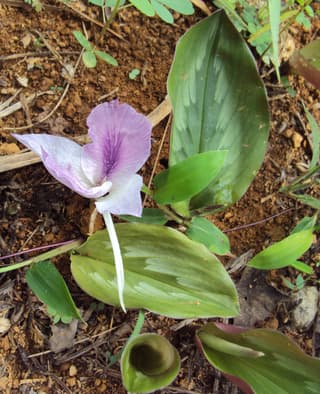
Resurrection Lily
Kaempferia rotunda
Kaempferia rotunda, commonly known as Resurrection Lily or Tropical Crocus, is a perennial herbaceous plant in the Zingiberaceae family, native to Southeast Asia including India and Myanmar. It is celebrated for its stunning purple and white flowers that emerge directly from the ground before the leaves appear each spring, creating a magical display reminiscent of a resurrection. The broad ornamental leaves feature decorative patterns in shades of green. During winter, the plant enters full dormancy, dying back completely to the rhizome, only to resurge vigorously the following season.
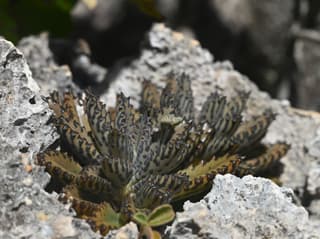
Mother of Millions Hybrid
Kalanchoe × houghtonii
Kalanchoe × houghtonii is a succulent hybrid between Kalanchoe daigremontiana and K. delagoensis, both native to Madagascar. Commonly called Mother of Millions Hybrid, it produces scores of tiny plantlets along its leaf margins that readily root wherever they land. A fast-growing, eye-catching ornamental, though severely toxic to pets and humans and potentially invasive in warm climates.
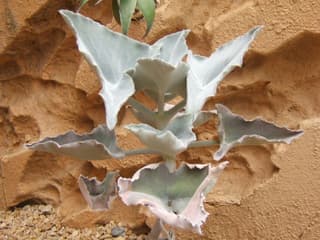
Velvet Elephant Ear
Kalanchoe beharensis
Kalanchoe beharensis is a striking succulent native to southern Madagascar, known for its large, velvety, triangular leaves covered in soft brown or silver hairs. In its natural habitat, it can grow into a tree-like shrub reaching up to 3 meters tall. The thick, felted leaves give this plant an almost otherworldly appearance, making it a favorite among succulent collectors. Despite its exotic looks, it is remarkably easy to care for, thriving on neglect and requiring minimal watering.
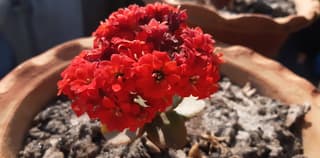
Flaming Katy
Kalanchoe blossfeldiana
Kalanchoe blossfeldiana is a flowering succulent native to Madagascar, known for its vibrant, long-lasting blooms that appear in fall and winter. It is an easy-care plant, perfect for beginners.
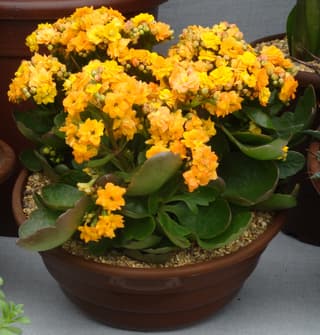
Calandiva
Kalanchoe calandiva
Calandiva is a double-flowered cultivar series of Kalanchoe blossfeldiana, native to Madagascar. Its lush, rose-like blooms with at least 8 petals make it one of the most decorative succulent houseplants available. Hardy and low-maintenance, it thrives with minimal care.
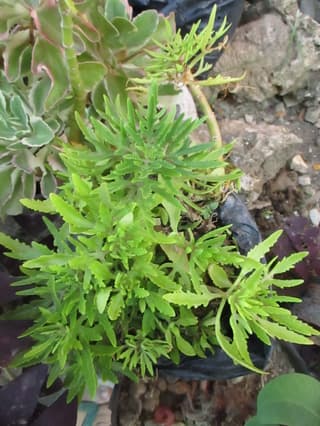
Horned-leaf Kalanchoe
Kalanchoe ceratophylla
Kalanchoe ceratophylla is a perennial succulent native to tropical Asia, ranging from the Indian subcontinent through southern China, Indochina, Taiwan to the Philippines. A member of the Crassulaceae family, it produces small yellow-green bell-shaped flowers in winter and spring. It is valued as an ornamental plant and for its traditional medicinal uses, being drought-tolerant and easy to grow.
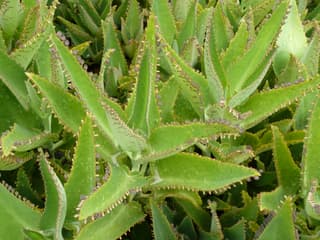
Mother of Thousands
Kalanchoe daigremontiana
Kalanchoe daigremontiana, known as Mother of Thousands, is a fascinating succulent native to Madagascar. It is famous for producing tiny plantlets along the margins of its fleshy, lance-shaped leaves — each one capable of falling off and rooting on its own. A resilient, low-maintenance plant that thrives with neglect, it is mildly toxic and can become invasive outdoors in warm climates.
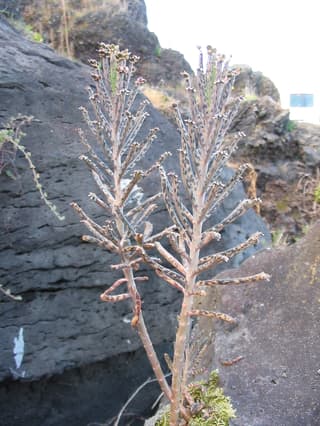
Mother of Millions
Kalanchoe delagoensis
Kalanchoe delagoensis, commonly known as Mother of Millions or Chandelier Plant, is a striking succulent native to Madagascar. Also known by its synonym Bryophyllum delagoense, this fast-growing plant is famous for producing tiny plantlets along the edges of its tubular, mottled leaves — a form of vegetative reproduction that makes it incredibly prolific. Upright stems can reach 120 cm, topped in winter and spring with clusters of pendant, tubular orange-red flowers. Because of its aggressive spread via these plantlets, it is classified as an invasive weed in Australia, Florida, South Africa, and several Pacific Islands.
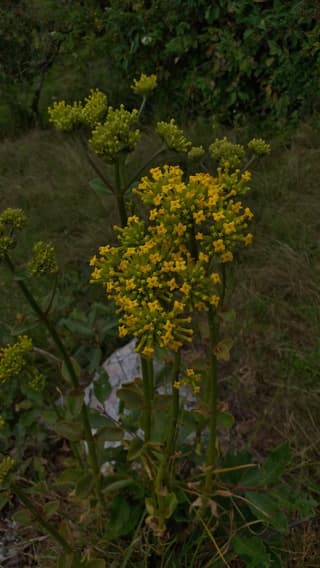
Dense-flowered Kalanchoe
Kalanchoe densiflora
Kalanchoe densiflora, commonly known as the dense-flowered kalanchoe, is an evergreen succulent native to southern Africa. It forms an upright, glabrous perennial with thick, fleshy oblong leaves and produces tall, densely packed clusters of tubular yellow-to-orange flowers in winter and spring. Valued for its drought tolerance and low-maintenance nature, it thrives in bright light and well-draining soil, making it a popular choice for sunny windowsills, rock gardens, and warm-climate landscaping.
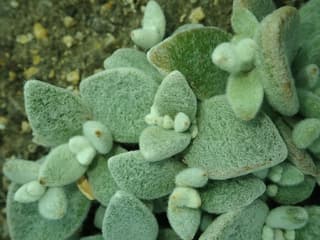
Snow white panda plant
Kalanchoe eriophylla
Kalanchoe eriophylla, known as the snow white panda plant, is a dwarf, densely branched succulent in the Crassulaceae family, native to Madagascar. Every part is cloaked in a thick coat of white, silvery hairs that shield the leaves from strong sun and water loss, forming a compact mat. In the cool season it bears small pink to violet flowers.
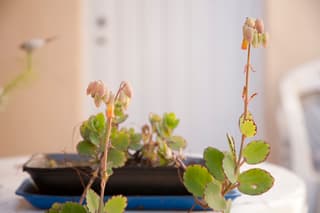
Lavender Scallops
Kalanchoe fedtschenkoi
A perennial shrubby succulent native to Madagascar, famous for its fleshy blue-gray leaves with scalloped edges that turn pink under intense sunlight. In winter, it produces beautiful clusters of bell-shaped, drooping flowers.
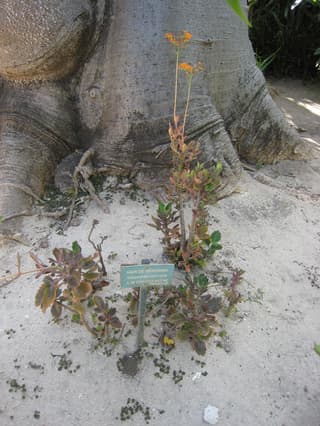
Christmas Tree Plant
Kalanchoe laciniata
Kalanchoe laciniata, commonly known as the Christmas Tree Plant, is a striking succulent native to tropical Africa and the Arabian Peninsula. It produces deeply dissected, fern-like green leaves that give it a tree-like silhouette, earning its festive common name. In spring and summer, it bears clusters of tubular yellow to orange flowers that attract pollinators.
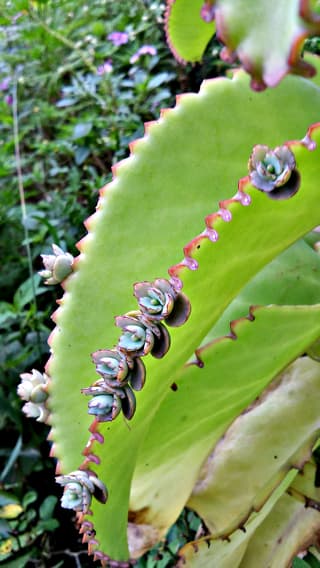
Big Mama Kalanchoe
Kalanchoe laetivirens
Kalanchoe laetivirens, commonly known as Big Mama or Mother of Thousands, is a succulent native to Madagascar in the family Crassulaceae. Its glossy green leaves produce countless tiny plantlets along their margins, which drop off and root readily — giving rise to its common name. It blooms in winter and early spring with small flowers in shades of pink, red, or orange.
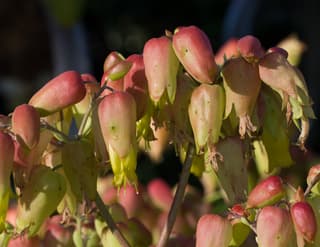
Milky Widow's Thrill
Kalanchoe laxiflora
Kalanchoe laxiflora, commonly known as Milky Widow's Thrill or Bell Kalanchoe, is a charming perennial succulent shrub native to central Madagascar. It produces clusters of delicate, pendulous bell-shaped flowers in shades of pink, coral, and orange on slender, arching stems. The fleshy blue-green leaves are often edged in red, and the plant freely produces tiny plantlets (bulbils) along leaf margins — a trait called vivipary — making it easy to propagate. This compact succulent thrives in bright light and dry conditions, making it an excellent choice for sunny windowsills, rock gardens, and xeriscaping.
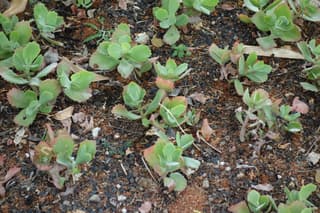
Tugela cliff-kalanchoe
Kalanchoe longiflora
Kalanchoe longiflora is a compact succulent shrublet from the Crassulaceae family, native to rocky cliffs and shale slopes of the Tugela River basin in KwaZulu-Natal, South Africa. It grows to about 40 cm tall, with sprawling, four-angled fleshy stems and limpet-shaped, bluish grey-green leaves that often blush pink to crimson-red in strong sun. From autumn into winter it produces clusters of tubular yellow flowers. As a cliff-dwelling (cremnophyte) species, its brittle stems readily snap and re-root from broken pieces, an adaptation to rockfall and erosion. It is drought and heat tolerant but sensitive to frost and overwatering.
Find the Perfect Plant
Our plant guide helps you find ideal species for your experience level and time of year.
Browse by Difficulty, Season & More
Use the filters below to narrow this catalog by care difficulty, season, environment, or search directly by name. Each filter leads to a focused list tailored to your specific growing conditions.