Complete Plant Guide
Explore plants by difficulty, season and more. Find the perfect plant for you.
Difficulty
Categories
Plants by City
🗺️ Plants by City3799 plants found
Showing 1873-1908 of 3799
Rooting Shank
Hymenopellis radicata
Hymenopellis radicata, also known as the Rooting Shank, is an edible mushroom characterized by its long, spindle-shaped stem that extends deep into the ground to decaying roots of deciduous trees. When wet, the cap is distinctly slimy, wrinkled, and colored in brownish to olive tones. It is a fascinating species that indicates the presence of old beech wood beneath the forest floor.
Nut Disco
Hymenoscyphus fructigenus
Hymenoscyphus fructigenus is a small saprophytic ascomycete fungus that develops specifically on decaying oak acorn cups, beech mast, or hazelnuts. It appears as tiny whitish to yellowish discs supported by a short stalk.
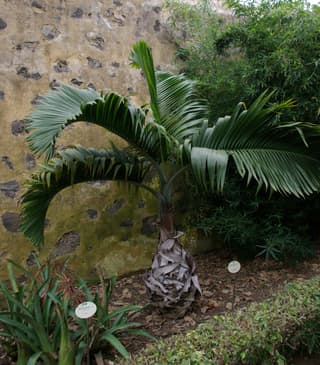
Bottle palm
Hyophorbe lagenicaulis
The bottle palm (Hyophorbe lagenicaulis) is a solitary palm from the Arecaceae family, endemic to Round Island in the Mascarene Islands (Mauritius). It is famous for its smooth, grayish trunk, which is swollen in a bottle shape at the base and tapers toward the crown, supporting a small canopy of 4 to 8 deep green pinnate leaves (young plants often show reddish or orange tones). A slow-growing species, fewer than 10 adult specimens remain in the wild, making it critically endangered, although its ornamental cultivation is widespread in tropical and subtropical climates worldwide.
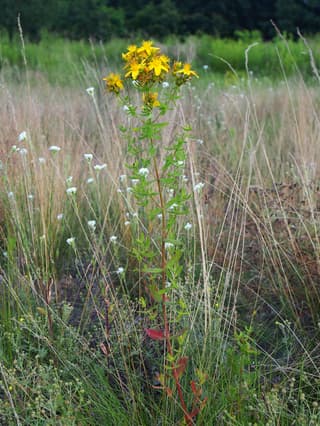
St. John's Wort
Hypericum
Hypericum is a large genus of herbaceous perennials and low shrubs prized for their bright golden, five-petaled flowers with a prominent burst of stamens. Blooming mainly through spring and summer, the genus is tough, drought-tolerant once established, and adaptable to a wide range of soils, making it equally popular as a garden ornamental and as a traditional medicinal herb.
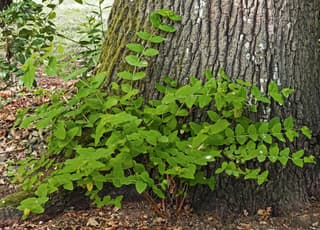
Tutsan
Hypericum androsaemum
Hypericum androsaemum, commonly called tutsan or sweet-amber, is a semi-evergreen shrub in the family Hypericaceae, native to Europe, North Africa, and western Asia. It grows 0.5-1 m tall with paired oval leaves and golden-yellow, star-shaped flowers that bloom from late spring through summer. The berry-like fruits mature from red to purplish-black and are ornamental but not edible.
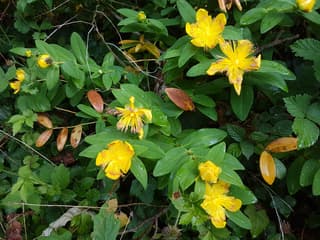
Aaron's Beard
Hypericum calycinum
Aaron's Beard (Hypericum calycinum) is a low-growing, semi-evergreen shrub in the St. John's Wort family (Hypericaceae), native to southeastern Europe and Asia Minor. Valued as a tough, spreading groundcover, it forms dense mats 30-60 cm tall via underground stolons and bears large, cup-shaped golden-yellow flowers with prominent bushy stamens from early to late summer.

St. John's Wort
Hypericum perforatum
St. John's Wort is a hardy, sun-loving perennial herb native to Europe and Asia, now naturalized across temperate regions worldwide. It forms upright, multi-stemmed clumps with slender oblong leaves dotted with tiny translucent oil glands, and produces abundant star-shaped yellow flowers with black-dotted petal margins in early to late summer. Low-maintenance and largely pest- and disease-free, it spreads readily by seed and rhizome, making it valuable for erosion control on banks and slopes but also a listed noxious weed in some regions. It is best known as a traditional medicinal herb, though all parts contain hypericin, a compound that can cause photosensitivity in people, pets, and livestock.
Shrubby St. John's Wort
Hypericum prolificum
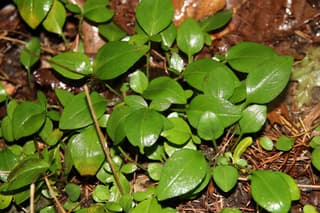
Hypericum prolificum, commonly known as shrubby St. John's wort, is a compact, deciduous shrub native to the eastern and central United States. Its dense, upright stems are adorned with bright yellow, five-petaled flowers from June to October, which are distinguished by their numerous prominent stamens. Its dark green, lance-shaped leaves drop during the winter season. It is an extremely adaptable plant: it tolerates drought, compacted soil, and various soil types. It is popular in naturalistic gardens, butterfly gardens, and rain gardens, where it is utilized as a perennial ornamental shrub.
Brick Cap
Hypholoma lateritium
Hypholoma lateritium, commonly known as the Brick Cap, is a wood-decaying fungus that forms dense clusters on hardwood stumps. It features a characteristic brick-red cap that is darker in the center and lighter toward the edges. Unlike its toxic relative (the Sulphur Tuft), the flesh of this mushroom is milder, though sometimes slightly bitter.

Cypress-leaved plait-moss
Hypnum cupressiforme
Cypress-leaved plait-moss (Hypnum cupressiforme) is one of the most widespread creeping mosses of the temperate zone. It forms dense, soft carpets with creeping, regularly branched stems resembling tiny cypress branches—hence its specific name. It grows on soil, tree bark, stones, walls, and decaying wood, in both shade and sunnier spots, easily adapting to a wide range of conditions. Due to its low maintenance and attractive appearance, it is popular as an ornamental and groundcover element in gardens, terrariums, and vivariums.
Catsear
Hypochaeris radicata
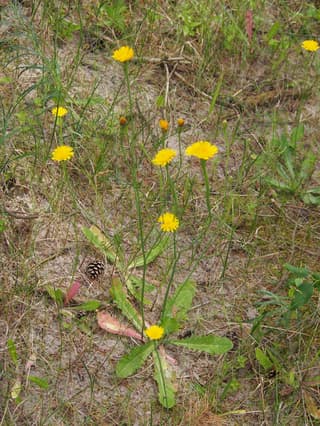
Catsear (Hypochaeris radicata) is a perennial herbaceous plant in the Asteraceae family, native to Europe and now naturalized in the Americas, Australia, and New Zealand. It forms a basal rosette of rough, hairy, lobed leaves, from which leafless branched stems emerge, ending in golden-yellow flower heads very similar to those of the dandelion. The entire plant exudes a milky latex when cut. It is extremely hardy, tolerating poor and compacted soils, and commonly grows spontaneously in lawns, roadsides, and vacant lots.
Polka Dot Plant (genus)
Hypoestes
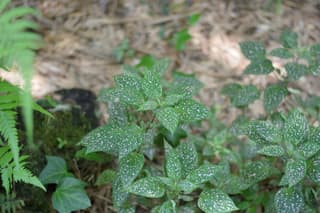
Hypoestes is a genus of ornamental plants in the Acanthaceae family, renowned for their vibrantly spotted and splashed foliage. The most cultivated species, H. phyllostachya (Polka Dot Plant), is a popular houseplant prized for its striking pink, red, white, and green patterned leaves.
White Ribbon Bush
Hypoestes forskaolii
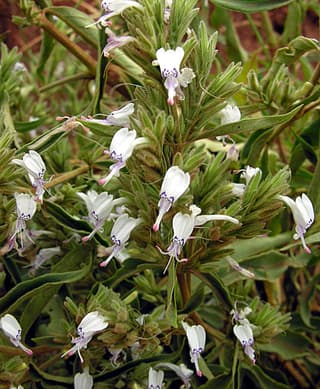
Hypoestes forskaolii, commonly known as White Ribbon Bush, is a perennial or annual herb native to tropical Africa and the Arabian Peninsula. It belongs to the family Acanthaceae and is prized both as an ornamental plant and for its remarkable medicinal properties. The plant produces smooth, oval leaves forming dense, vivid green foliage, with delicate small flowers that range from white to pale pink. In its natural habitat, it grows under shrubs and trees, thriving in filtered shade and well-drained tropical soils. Of particular scientific interest are its diterpene compounds, which have demonstrated antimicrobial, anticancer, and antioxidant properties in laboratory studies.
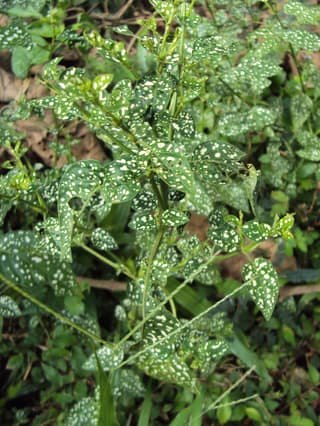
Polka Dot Plant
Hypoestes phyllostachya
The Polka Dot Plant (Hypoestes phyllostachya) is a charming tropical perennial native to Madagascar, prized for its strikingly spotted foliage. Its oval leaves are splashed with vivid pink, red, or white spots against a dark green background, making it one of the most colorful houseplants available. Compact and bushy, it thrives in warm, humid environments and adds a playful pop of color to any indoor space.
Monk's-hood lichen
Hypogymnia physodes
Hypogymnia physodes, commonly known as monk's-hood lichen, is one of the most widespread lichens. It features a foliose thallus characterized by its inflated (puffed) lobe tips. The upper surface is grayish to whitish, while the lower surface is black and lacks attachment fibers (rhizines). It is a very resilient species; however, it reacts sensitively to air pollution from sulfur dioxide, making it an important bioindicator of air quality.
Rusty Crust
Hypoxylon rubiginosum
Hypoxylon rubiginosum is a saprophytic ascomycete fungus that develops primarily on the dead wood of broadleaf trees. It is characterized by forming thin, flattened stromata with a distinctive brick-red or rust color that turns black with age. It is not a plant, but a fungus that plays a crucial role in the decomposition of organic matter in forest ecosystems.
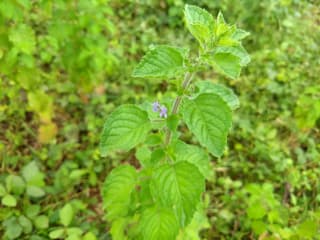
Pignut
Hyptis suaveolens
Pignut (Hyptis suaveolens) is an aromatic annual to short-lived perennial herb belonging to the Lamiaceae family (the same family as mint and basil). Native to the tropical regions of Mexico, the Caribbean, and South America, it is now naturalized throughout almost the entire tropical belt of the planet. It grows as a robust pioneer plant with a quadrangular stem, reaching up to 2.5 m in height, featuring ovate, aromatic, and serrated leaves, and small blue flowers in spikes. It is extremely resilient, spontaneously colonizing roadsides, pastures, and degraded lands, and blooms almost year-round in the tropics.
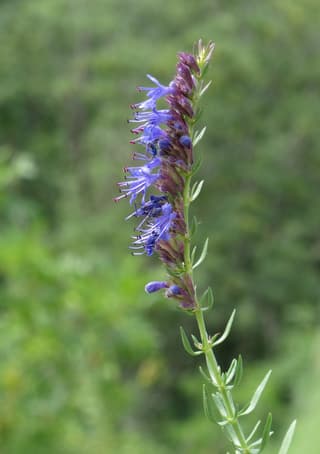
Hyssop
Hyssopus officinalis
Hyssop (Hyssopus officinalis) is a perennial, highly aromatic subshrub in the Lamiaceae family, native to the Mediterranean and Southern Europe. It grows to a height of 16–24 inches (40–60 cm) with a width of about 20 inches (50 cm), featuring narrow lanceolate leaves and blooming from July to September with small blue-violet, purple, pink, or white flowers in dense spikes that strongly attract bees and butterflies. The plant is frost-hardy (zones 4–9) and very drought-tolerant, making it a popular low-maintenance ornamental and culinary herb for gardens and containers.
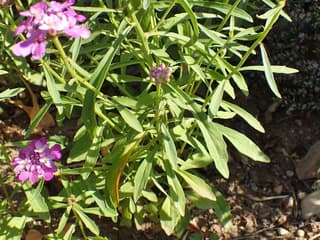
Globe Candytuft
Iberis umbellata
Iberis umbellata, commonly known as globe candytuft, is a fast-growing annual flowering plant in the mustard family (Brassicaceae), native to southern Europe. It forms a low, bushy mound of slender green leaves topped with dense, flattened clusters of small, four-petaled flowers in white, pink, purple, or crimson from late spring through summer. Valued for its sweetly scented blooms and drought tolerance, it thrives in poor, well-drained soil and is a popular choice for cottage gardens, rock gardens, borders, and containers, where it also attracts bees, moths, and butterflies.
Holly
Ilex
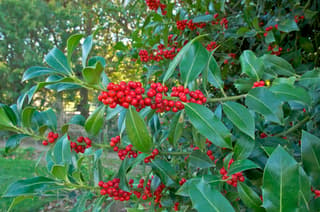
Holly (Ilex) is a large genus of over 400 species of flowering plants in the family Aquifoliaceae, found across temperate and tropical regions worldwide. Most commonly cultivated species are evergreen shrubs or trees with glossy, spine-edged leaves and bright red berries that have become synonymous with Christmas decorations. The genus is remarkably diverse, encompassing both ornamental garden shrubs and large specimen trees reaching 15 meters or more.
English Holly
Ilex aquifolium
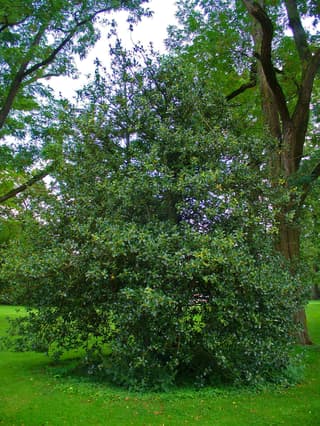
English Holly is a slow-growing evergreen shrub or small tree prized for its glossy, spiny dark-green leaves and bright red winter berries. Native to western and southern Europe, it forms a dense pyramidal habit and is a classic feature of winter gardens and holiday decoration, though its berries are toxic if eaten.
Chinese Holly
Ilex cornuta
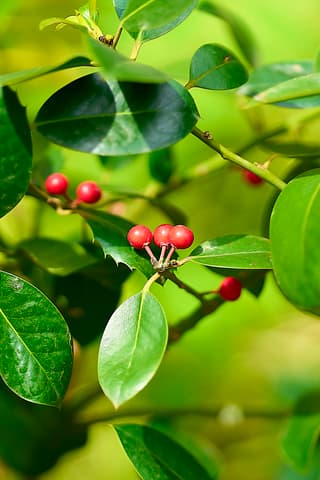
Ilex cornuta, commonly known as Chinese holly, is a dense, spiny-leaved evergreen shrub native to eastern China and Korea. Prized for its glossy, leathery foliage and bright red winter berries on female plants, it forms an excellent hedge, screen, or specimen shrub. The rectangular, spine-tipped leaves give it a distinctive, architectural look year-round.
Japanese Holly
Ilex crenata
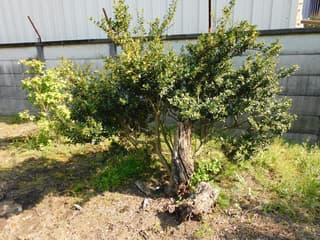
Ilex crenata, commonly known as Japanese holly, is a dense, slow-growing broadleaf evergreen shrub native to Japan, Korea, and eastern China. Prized as a boxwood substitute, it features small, glossy, spineless leaves and a fine, compact texture that responds beautifully to shearing into hedges, topiary, and bonsai forms. In late spring it produces tiny, inconspicuous greenish-white flowers, followed on female plants by small black berries that persist into winter.
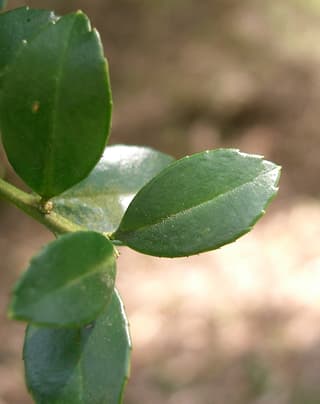
Japanese Holly 'Helleri'
Ilex crenata 'Helleri'
Japanese Holly 'Helleri' is a dwarf, evergreen cultivar of the Japanese holly (Ilex crenata) native to East Asia. It forms a dense, mounded shrub reaching 2 to 4 feet (60-120 cm) in height and width, with small, glossy, dark green leaves that resemble boxwood. Inconspicuous greenish-white flowers appear in spring, followed occasionally by black drupes in the fall. Due to its compact habit and high tolerance for pruning, it is an excellent choice for topiary, low hedges, or garden borders.
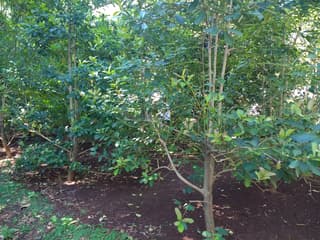
Yerba Mate
Ilex paraguariensis
Yerba mate (Ilex paraguariensis) is an evergreen tree or shrub in the Aquifoliaceae family, native to the subtropical regions of southern Brazil, Paraguay, Argentina, and Uruguay. Its leathery, dark green leaves are the base for chimarrão and tereré, traditional South American beverages rich in caffeine and antioxidants. In the wild, it can reach up to 15 meters in height, but in cultivation, it is generally maintained as a pruned shrub between 3 and 8 meters.
Bay bolete
Imleria badia
Imleria badia, commonly known as the bay bolete, is one of the most popular edible mushrooms in the Czech Republic. It is characterized by a chestnut-brown cap, which is slightly sticky when wet, and yellow pores that turn blue when bruised. It grows primarily in coniferous forests, forming mycorrhizal associations with spruces and pines. It is valued for its firm flesh and excellent taste.
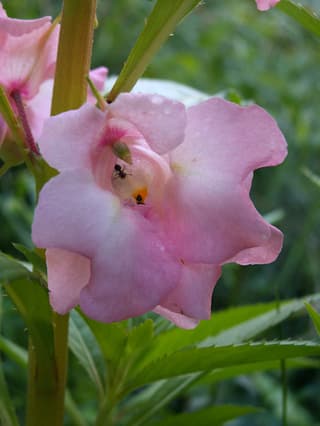
Garden Balsam
Impatiens balsamina
Impatiens balsamina, commonly known as Garden Balsam or Rose Balsam, is an annual herbaceous plant native to Southeast Asia. Its vibrant flowers grow along succulent stems, and the plant is famous for its seed pods that explode when touched once mature—a fascinating dispersal mechanism.
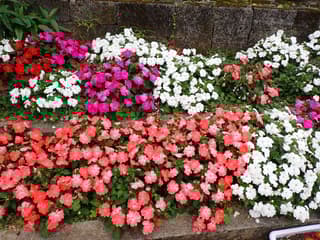
New Guinea Impatiens
Impatiens hawkeri
New Guinea Impatiens (Impatiens hawkeri) is a vibrant flowering plant native to Papua New Guinea, prized for its large, colorful blooms in shades of red, orange, pink, white, and purple. Unlike common impatiens, this hybrid tolerates more sun and produces larger flowers, making it ideal for containers, hanging baskets, and garden borders.
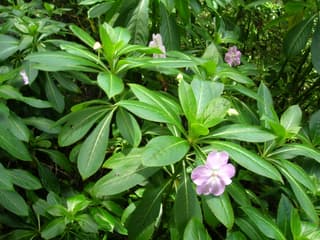
Poor Man's Rhododendron
Impatiens sodenii
Impatiens sodenii, commonly known as Poor Man's Rhododendron, is a perennial subshrub native to Kenya and Tanzania. It grows up to 2.5 meters tall with whorled leaves and produces pink or white flowers year-round. It has received the Royal Horticultural Society's Award of Garden Merit and is widely cultivated as an ornamental plant in tropical and subtropical gardens.
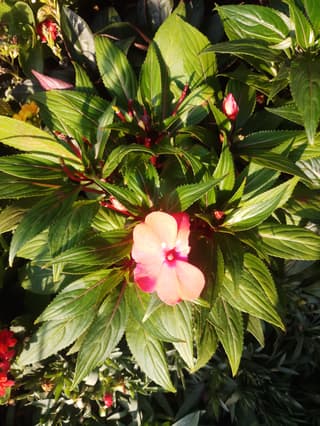
Busy Lizzie
Impatiens walleriana
Impatiens walleriana, commonly known as Busy Lizzie, is a beloved shade-loving annual native to East Africa. Prized for its prolific, colorful blooms that brighten shaded garden beds and containers from spring through fall. Available in a wide palette of colors including white, pink, red, orange, purple, and coral, making it one of the most popular bedding plants worldwide.
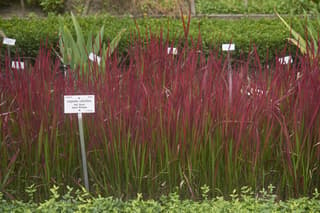
Japanese blood grass
Imperata cylindrica 'Red Baron'
Japanese blood grass 'Red Baron' is a decorative ornamental grass cultivar of Imperata cylindrica, known for its slender blades that transition from green at the base to an intense blood-red toward the tips, especially in full sun. This sterile cultivar forms dense, upright clumps 12-18 inches (30-45 cm) in height with a spread of up to 3 feet (90 cm) and is often used as a groundcover or edging plant. While 'Red Baron' itself is not considered invasive, the species Imperata cylindrica is listed as one of the world's most problematic weeds, so gardeners should remove any solid green shoots that the cultivar may occasionally revert to.
Shaggy Bracket
Inonotus hispidus
Inonotus hispidus, commonly known as the Shaggy Bracket or Hairy Bracket, is a parasitic fungus that primarily preys on deciduous trees such as apple, ash, and oak. When young, it is succulent and orange-brown in color, with a surface covered in dense, coarse hairs from which it derives its name. As it ages, its color darkens, eventually becoming black and brittle. It plays a vital role in the ecosystem by decomposing wood, but it can be fatal to the host tree as it causes white rot.
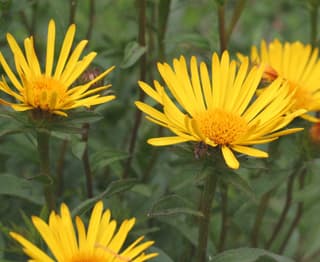
Hairy Inula
Inula hirta
Hairy Inula (Inula hirta) is a perennial herbaceous plant in the daisy family (Asteraceae) that reaches heights of 15 to 50 cm. The leaves and stems are conspicuously hairy, and the narrow-elliptical leaves are arranged alternately. From June to August, bright golden-yellow flower heads appear. The species grows in clumps with short rhizomes on nutrient-poor dry and semi-dry grasslands, preferring locations near open oak or pine forests on calcareous soils. Its distribution range extends from Central Asia and Siberia through Southeast Europe to Central Europe, where it is rare and protected at its western range limit. As a valuable bee pasture, it is visited by numerous species of wild bees and butterflies.
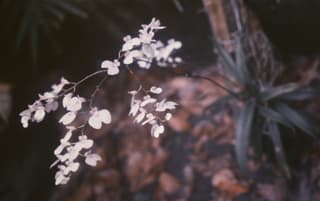
Delicate violet orchid
Ionopsis utricularioides
Ionopsis utricularioides is a small epiphytic orchid native to the Neotropics, from Florida and the Caribbean through Central and South America. It forms compact fans of stiff leaves and sends up airy, branched sprays of many small white-to-violet flowers, each with a broad, veined lower lip.
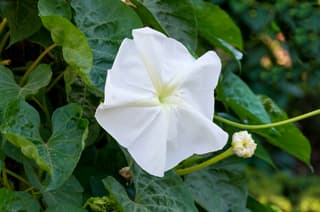
Moonflower
Ipomoea alba
Moonflower (Ipomoea alba) is a vigorous tropical vine in the Convolvulaceae family, prized for its large, fragrant white flowers that open at dusk and close by morning. Native to tropical regions of the Americas, it climbs rapidly over trellises and fences, reaching several meters in a single growing season.
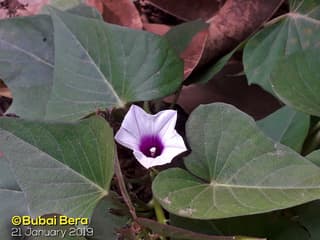
Sweet Potato
Ipomoea batatas
Sweet potato (Ipomoea batatas) is a vigorous trailing vine native to Central and South America, cultivated for over 5,000 years. It is prized both for its edible tuberous roots and its ornamental foliage, which comes in shades of lime green, deep purple, and bronze. One of the world's most important food crops, it thrives in warm climates and adapts well to gardens, raised beds, and large containers.
Find the Perfect Plant
Our plant guide helps you find ideal species for your experience level and time of year.
Browse by Difficulty, Season & More
Use the filters below to narrow this catalog by care difficulty, season, environment, or search directly by name. Each filter leads to a focused list tailored to your specific growing conditions.