Iridaceae
Variegated Japanese Water Iris: Perfect Plant for Beginners
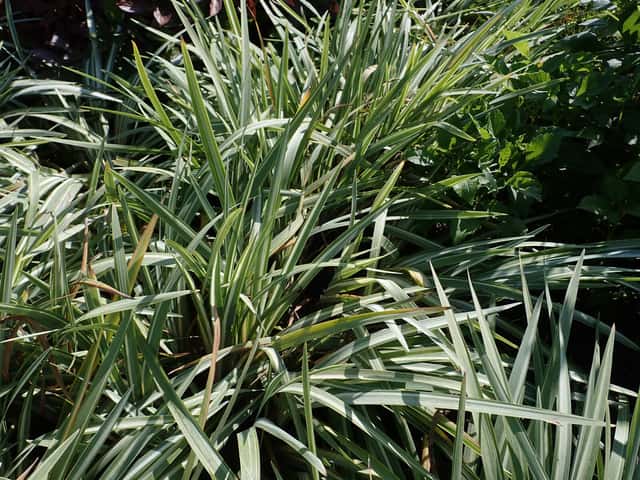
Iris laevigata 'Variegata'
Requires permanently moist or waterlogged soil, with up to 5-20 cm of water over the crown. Prefers full sun (tolerates partial shade) and a substrate rich in organic matter, clayey or loamy, with an acidic to neutral pH (5.5-6.5). It is easy to grow and low maintenance once established.
Every 1 days
Bright indirect
4° - 32°C
60% - 95%
Categories
What is Variegated Japanese Water Iris?
Variegated Japanese Water Iris (Iris laevigata 'Variegata') is a easy-care plant from the Iridaceae family. Iris laevigata 'Variegata' is a perennial water/marsh iris, prized for its erect, sword-shaped foliage marked with striking creamy-white stripes on a green background. In late spring and early summer, it produces blue-violet flowers about 10 cm wide, featuring a white crest on the falls, and occasio...
Variegated Japanese Water Iris grows up to 90cm, spread of 60cm, watering every 1 days, 4°C – 32°C, 60–95% humidity. It is not suitable for indoor environments and not safe for pets.
Unlike many tropical plants, Variegated Japanese Water Iris tolerates watering mistakes. Best for beginners. Without precautions, ingestion can cause irritation in pets. Keep out of reach of cats and dogs.
How to Care for Variegated Japanese Water Iris?
TLDR: Variegated Japanese Water Iris needs Bright indirect, watering every 1 days, and temperatures between 4-32°C with 60-95% humidity.
How Often Should You Water Variegated Japanese Water Iris?
Never allow the substrate to dry out: keep the pot or rhizome submerged in 5-20 cm of water year-round, including winter.
How Much Light Does Variegated Japanese Water Iris Need?
Grow in full sun to achieve maximum flowering; it tolerates partial shade, but intense sun highlights the contrast of the variegated leaves.
What Is the Best Soil for Variegated Japanese Water Iris?
Use a heavy, clayey, or loamy substrate rich in humus; avoid light potting mixes that may float. The ideal pH is acidic to neutral (5.5-6.5).
What Pot Should You Use for Variegated Japanese Water Iris?
Watertight basket or pot for aquatic plants, without drainage, partially submerged in a pond or water container.
Care Schedule
Fertilize
Every 30 days
Repot
Every 730 days
What Is Variegated Japanese Water Iris and Where Does It Come From?
Iris laevigata 'Variegata' is a perennial water/marsh iris, prized for its erect, sword-shaped foliage marked with striking creamy-white stripes on a green background. In late spring and early summer, it produces blue-violet flowers about 10 cm wide, featuring a white crest on the falls, and occasionally reblooms in autumn. It reaches between 60 and 90 cm in height and spreads to form compact clumps via rhizomes. It is an ideal marginal plant for pond edges, boggy areas, and water gardens, recognized with the RHS Award of Garden Merit for its reliability in cultivation.
How to Propagate Variegated Japanese Water Iris?
Rhizome division
- Trim the leaves by half after dividing to reduce water loss while rooting.
- It can also be propagated by seed, although germination is slow and irregular (3-4 weeks or more).
- 1 Extraction
Carefully dig up or remove the pot from the water after flowering or in early spring.
- 2 Cutting
Cut the rhizome with a sharp, disinfected knife, ensuring each section has at least one fan of leaves and healthy roots.
- 3 Planting
Plant each division in moist, humus-rich substrate, submerging it in 5-20 cm of water, with a spacing of 45-60 cm.
Materials needed:
How Big Does Variegated Japanese Water Iris Grow?
TLDR: Variegated Japanese Water Iris can reach up to 90cm tall with Medium growth rate.
Max height
90cm
Spread
60cm
Growth rate
Medium
Foliage
Deciduous
Warning: Toxic Plant
This plant can be toxic if ingested. Keep out of reach of:
Plant Uses
Ornamental
Great for decoration
Is your plant showing symptoms?
Click on the symptom to discover possible causes:
What Diseases Commonly Affect Variegated Japanese Water Iris?
TLDR: Variegated Japanese Water Iris is susceptible to 5 known diseases. Monitor regularly for early detection.
Root Rot
Root rot is a serious fungal disease that affects the root system of plants, causing them to decay and die. It is primarily caused by overwatering, poor drainage, or soil-borne fungi such as Pythium, Phytophthora, Rhizoctonia, and Fusarium. The disease thrives in waterlogged conditions where roots are deprived of oxygen, making them susceptible to fungal infection.
Crown Rot
Crown rot is a serious fungal disease that attacks the crown (base) of the plant where the stem meets the soil. It is caused by various fungal pathogens including Phytophthora, Fusarium, and Rhizoctonia. The disease thrives in waterlogged conditions and can quickly spread to kill the entire plant if not addressed promptly.
Leaf Spot
Leaf spot is a common fungal disease caused by various pathogens including Alternaria, Ascochyta, Colletotrichum, Septoria, and Venturia. It primarily affects leaves, causing discolored spots that can lead to premature leaf drop if left untreated.
Aphids
Aphids are small, soft-bodied, pear-shaped insects (1/16 to 1/8 inch long) that feed by sucking nutrient-rich sap from plants. They reproduce rapidly and can quickly weaken plants, causing distorted growth and transmitting plant viruses. Aphids come in various colors including green, black, red, yellow, brown, and gray. They secrete honeydew, a sticky substance that attracts ants and encourages sooty mold growth.
Meaning & Symbolism
In Japan, irises (kakitsubata) symbolize purity and are associated with protection against negative energies; in Western culture, the Iris genus represents wisdom, hope, and messages, in honor of the Greek goddess Iris.
Compare with similar plants
| Attribute | Difficulty | Light | Watering | Pet Safe |
|---|---|---|---|---|
| Field Maple | Easy | Bright indirect | 14d | ✓ |
| Silver Birch | Easy | Direct sun | 14d | ✓ |
| Common Blanketflower | Easy | Direct sun | 10d | ✓ |
| Cushion Bush | Easy | Direct sun | 14d | ✓ |





