Iridaceae
Sweet Iris (Iris pallida)
Iris pallida
Grow in full sun in well-drained soil with rhizomes partly exposed. Water sparingly as it is drought tolerant. Divide clumps every 3 to 4 years and clear old foliage in autumn.
Every 10 days
Bright indirect
° - °C
% - %
Categories
What is Sweet Iris?
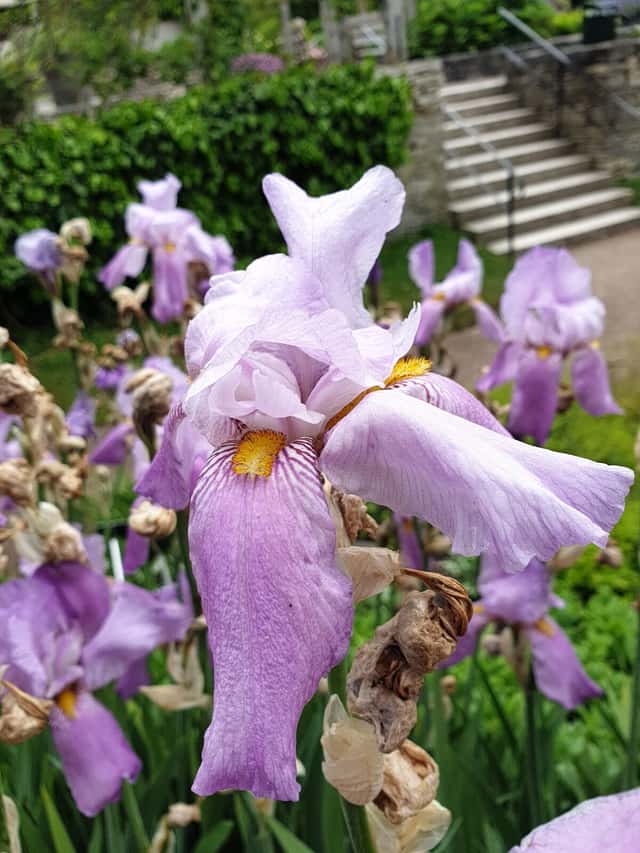
Sweet Iris (Iris pallida) is a easy-care plant from the Iridaceae family. Perennial rhizomatous plant of the Iridaceae family, native to the Dalmatian coast of Croatia. It forms fans of gray-green sword-shaped leaves and 50 to 80 cm stems carrying fragrant lavender to nearly white flowers in spring and early summer.
Sweet Iris grows up to 80cm, watering every 10 days. It is not suitable for indoor environments and not safe for pets.
Unlike many tropical plants, Sweet Iris tolerates watering mistakes. Best for beginners. Without precautions, ingestion can cause irritation in pets. Keep out of reach of cats and dogs.
How to Care for Sweet Iris?
TLDR: Sweet Iris needs Bright indirect, watering every 10 days, and temperatures between 15-30°C with 40-70% humidity.
How Often Should You Water Sweet Iris?
Water about every 10 days or less; let soil dry between waterings to prevent rhizome rot.
How Much Light Does Sweet Iris Need?
Full sun; tolerates part shade but blooms less.
What Is the Best Soil for Sweet Iris?
Well-drained, neutral to slightly alkaline soil (pH 6 to 7.5). Never bury rhizomes completely.
What Pot Should You Use for Sweet Iris?
Garden planting or a wide, shallow pot with drainage holes.
Care Schedule
Rotate
Every 7 days
Repot
Every 365 days
What Is Sweet Iris and Where Does It Come From?
Perennial rhizomatous plant of the Iridaceae family, native to the Dalmatian coast of Croatia. It forms fans of gray-green sword-shaped leaves and 50 to 80 cm stems carrying fragrant lavender to nearly white flowers in spring and early summer.
How to Propagate Sweet Iris?
Rhizome division
Use clean tools and discard soft or foul-smelling rhizomes.
- 1 Lift the clump after flowering
- 2 Separate rhizomes with healthy leaves and roots
- 3 Trim leaves by half
- 4 Plant with the top of the rhizome at soil level
Materials needed:
How Big Does Sweet Iris Grow?
TLDR: Sweet Iris can reach up to 80cm tall with Medium growth rate.
Max height
80cm
Growth rate
Medium
Warning: Toxic Plant
This plant can be toxic if ingested. Keep out of reach of:
Plant Uses
Ornamental
Great for decoration
Aromatic
Pleasant fragrance
Medicinal
Medicinal properties
Is your plant showing symptoms?
Click on the symptom to discover possible causes:
What Diseases Commonly Affect Sweet Iris?
TLDR: Sweet Iris is susceptible to 2 known diseases. Monitor regularly for early detection.
Bacterial Soft Rot
Bacterial soft rot is a destructive plant disease caused primarily by bacteria from the genera Pectobacterium (formerly Erwinia) and Dickeya. These bacteria produce enzymes that break down plant cell walls, causing rapid and foul-smelling tissue decomposition. It mainly affects succulent tissues such as tubers, fruits, stems, and bulbs, being especially problematic in warm and humid conditions.
Leaf Spot
Leaf spot is a common fungal disease caused by various pathogens including Alternaria, Ascochyta, Colletotrichum, Septoria, and Venturia. It primarily affects leaves, causing discolored spots that can lead to premature leaf drop if left untreated.
Meaning & Symbolism
Linked to royalty, wisdom and hope; the dried rhizome (orris root) is prized in perfumery.
Fun Facts
Dried rhizomes yield orris oil, used in perfumes, gin and flavorings.
Native to the Dalmatian coast of Croatia.
The Variegata cultivar holds the RHS Award of Garden Merit.
Frequently asked questions
How often should I water sweet iris?
Is it toxic to pets?
When should I divide it?
Compare with similar plants
| Attribute | Difficulty | Light | Watering | Pet Safe |
|---|---|---|---|---|
| Field Maple | Easy | Bright indirect | 14d | ✓ |
| Silver Birch | Easy | Direct sun | 14d | ✓ |
| Common Blanketflower | Easy | Direct sun | 10d | ✓ |
| Cushion Bush | Easy | Direct sun | 14d | ✓ |





