Complete Plant Guide
Explore plants by difficulty, season and more. Find the perfect plant for you.
Difficulty
Categories
Plants by City
🗺️ Plants by City3783 plants found
Showing 1549-1584 of 3783
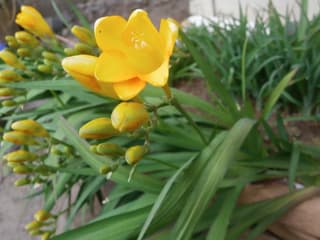
Freesia
Freesia refracta
Freesia refracta is a bulbous (cormous) perennial native to South Africa (Cape Province) belonging to the iris family (Iridaceae). Its highly fragrant, funnel-shaped flowers bloom in one-sided clusters on thin, arched stems, typically in shades of cream, white, and yellow, sometimes with purple tints on the reverse of the petals. Sword-shaped, bright green leaves emerge from near the ground. It is primarily grown as a cut flower, garden ornamental, and fragrant potted plant; it blooms in winter and spring before entering a dormant period.
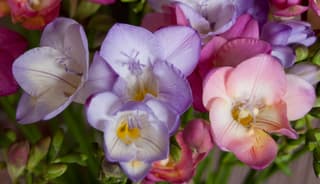
Freesia
Freesia x hybrida
Freesia (Freesia x hybrida) is a bulbous plant native to South Africa, celebrated worldwide for its stunning spike-shaped flowers and intensely sweet, powdery fragrance. Hybrid Freesias produce blooms in a wide range of colors — white, yellow, pink, purple, red, and orange — and are beloved in gardens, wedding arrangements, and cut flower displays.
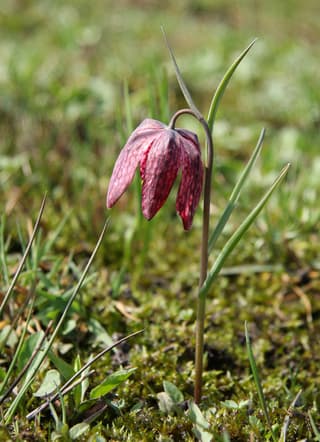
Fritillary
Fritillaria
Fritillaria is a genus of spring-flowering bulbous plants in the Liliaceae family, comprising over 100 species native to temperate regions of the Northern Hemisphere. Known for their nodding, bell-shaped flowers in shades of purple, white, yellow, orange, and red—often with distinctive checkered patterns—these elegant plants bring drama to spring gardens.
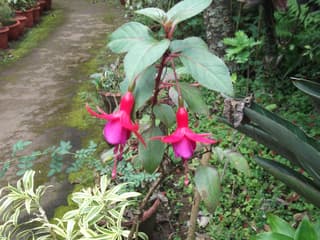
Fuchsia
Fuchsia
Fuchsia, also known as Lady's Eardrops, is an iconic ornamental plant recognized for its pendulous flowers that display vibrant and contrasting colors. Primarily originating from Central and South America, this plant has become a symbol of elegance in gardens and on balconies. Its flowers have a tubular shape with sepals that open to reveal inner petals, often in shades of purple, pink, red, and white.
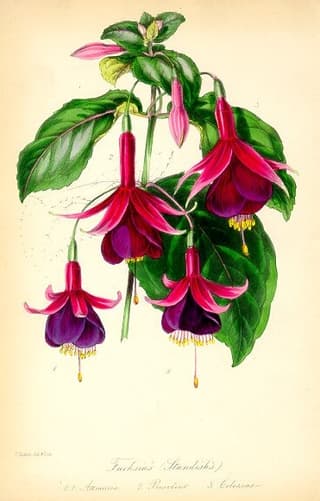
Standish's Fuchsia
Fuchsia × standishii
Fuchsia × standishii is a historic 19th-century hybrid resulting from the cross between F. lycioides and F. magellanica. It produces pendulous tubular flowers in shades of red, purple, and pink, blooming abundantly in spring and summer. A classic choice for hanging baskets and ornamental pots.
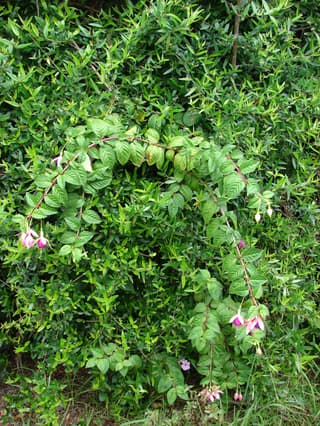
Garden Fuchsia
Fuchsia hybrida
Garden fuchsia (Fuchsia hybrida) is a deciduous ornamental shrub in the Onagraceae family, prized for its pendulous, tubular flowers in shades of pink, purple, red, and white, often bicolored. Bred from South American species, it blooms continuously from spring until the first frost and is a favorite of hummingbirds. It is widely grown in hanging baskets and part-shade borders.
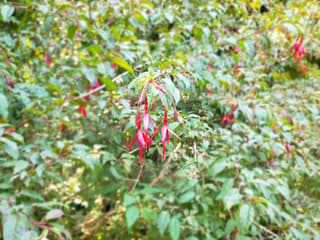
Hardy Fuchsia
Fuchsia magellanica
Fuchsia magellanica, commonly known as Hardy Fuchsia or Hummingbird Fuchsia, is a deciduous shrub native to southern South America (Chile and Argentina). It produces elegant pendulous flowers in red and purple tones that attract hummingbirds and butterflies. It is one of the most cold-hardy fuchsias, tolerating temperatures well below freezing.
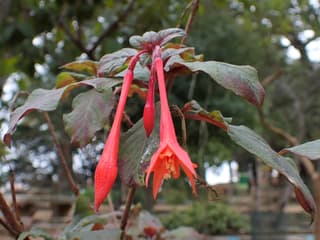
Honeysuckle Fuchsia
Fuchsia triphylla
Honeysuckle Fuchsia (Fuchsia triphylla) is a striking ornamental plant native to the Caribbean island of Hispaniola. It produces long, tubular orange-red flowers in pendant clusters that are irresistible to hummingbirds. The dark green leaves with bronze undertones provide an elegant backdrop for its vivid blooms, making it a prized choice for hanging baskets, containers, and shaded garden borders.
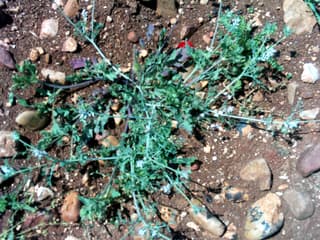
White ramping fumitory
Fumaria capreolata
Fumaria capreolata, known as white ramping fumitory or climbing fumitory, is a scrambling annual herb in the poppy family (Papaveraceae), native to Europe, western Asia, and North Africa and naturalized in parts of Australia, New Zealand, South America, and elsewhere. Its finely divided, blue-green leaves and slender stems, reaching up to a metre long, clamber over walls, hedgerows, and low vegetation using twining leaf-stalks. From spring through summer, and into autumn in milder climates, it bears loose spikes of up to twenty tubular white-to-cream flowers tipped with deep maroon, which fade to pink once pollinated. Though valued in traditional herbal medicine, it is regarded as an environmental weed in several regions, where it can smother low-growing native plants.
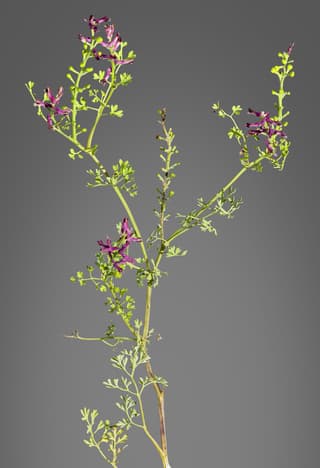
Common fumitory
Fumaria officinalis
Common fumitory is an annual herbaceous plant reaching a height of 10–50 cm, native to Europe and North Africa, and a common weed in fields, gardens, and fallow lands. It is characterized by bluish-grey-green, finely divided, bipinnate leaves and clusters of pale pinkish-purple, spurred flowers with dark crimson tips. Its fruit is a nutlet that is wider than it is long, with a truncated apex.
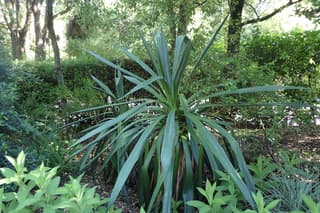
Mauritius Hemp
Furcraea foetida
Mauritius Hemp (Furcraea foetida) is a perennial succulent plant native to the Caribbean and northern Central America, belonging to the Asparagaceae family. Recognized by its dramatic rosette of long sword-shaped leaves, it is a remarkably hardy plant widely grown as an ornamental in tropical and subtropical gardens. Its strong leaf fibers have historically been used to produce rope, textiles, and craft materials.
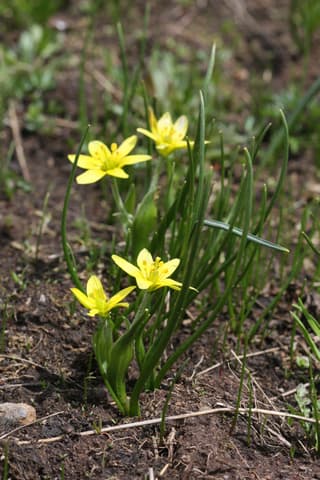
Liotard's Gagea
Gagea fragifera
Gagea fragifera is a small perennial bulbous plant, native to the alpine and subalpine regions of Europe and Asia. It is distinguished by its bright yellow star-shaped flowers that emerge shortly after the snow melts. Its leaves are linear and basal, adapted to the short growing seasons of high mountain environments.
Platero
Gaiadendron punctatum
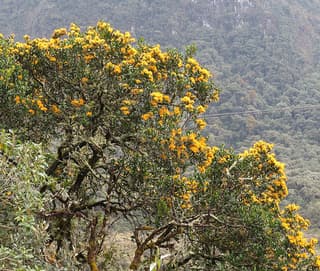
Gaiadendron punctatum, known as platero or field violet, is a hemiparasitic shrub or small tree in the Loranthaceae family, native to Andean forests and páramos from Nicaragua to Bolivia, at elevations between 1,330 and 3,950 meters above sea level. Unlike most plants in its family, which parasitize tree branches, the platero usually grows terrestrially, parasitizing the roots of other plants and reaching up to 10 meters in height. Its leaves are opposite, leathery, lanceolate or obovate in shape, dark green and glossy on the upper surface, with characteristic black dots on a yellowish underside. It produces clusters of tubular white or golden-yellow flowers and orange globose fruits approximately 1 cm in diameter.

Common Blanketflower
Gaillardia aristata
Common blanketflower is a hardy perennial wildflower native to the prairies and foothills of central North America. It forms low mounds of grayish-green, lance-shaped leaves topped from late spring through fall by daisy-like blooms in fiery combinations of yellow, red, orange and copper. Extremely drought tolerant once established, it thrives in poor, well-drained soil and full sun, making it a favorite for xeriscapes, pollinator gardens and cottage borders.

Indian Blanket
Gaillardia pulchella
Gaillardia pulchella, commonly called Indian Blanket or Firewheel, is a fast-growing annual (sometimes short-lived perennial) wildflower native to the central and southern United States and Mexico. Its daisy-like flower heads display concentric rings of red, orange, and yellow, resembling the patterned blankets woven by Native American peoples. Reaching 30-60 cm tall, it thrives in poor, sandy soils and blooms from summer through the first frost, attracting butterflies and pollinators.
Blanket Flower
Gaillardia x grandiflora
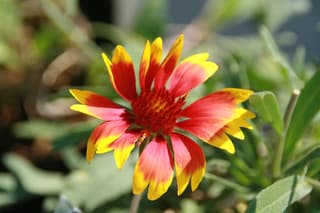
Gaillardia x grandiflora, commonly known as blanket flower, is a vigorous hybrid perennial native to North America. Its bold, daisy-like flowers in shades of red, orange, and yellow bloom from late spring through fall, making it one of the most colorful and low-maintenance ornamentals for sunny gardens. It is highly tolerant of heat, drought, and poor soils, thriving where many other plants struggle.
Hemp-nettles
Galeopsis
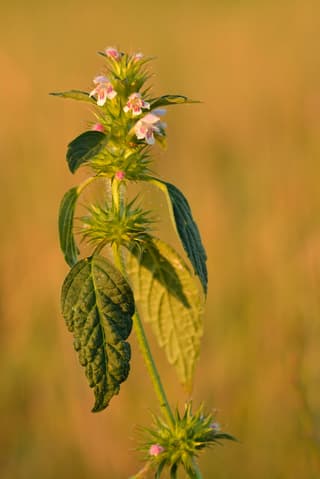
Hemp-nettles are the plants of the genus Galeopsis in the mint family (Lamiaceae), annuals native to Europe and Asia and naturalized in North America. They have square stems, usually bristly and swollen below the nodes, opposite toothed leaves that look like nettle leaves but do not sting, and from summer into autumn whorls of two-lipped flowers in pink, purple, white or pale yellow with a violet lip, as in G. speciosa. They grow in woodland clearings, field margins and damp waste ground, and several species are common weeds.
Splitlip Hempnettle
Galeopsis bifida
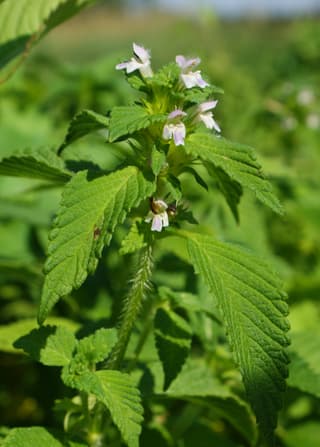
Splitlip hempnettle is a fast-growing annual wildflower in the mint family (Lamiaceae), native across Europe and temperate Asia and now widely naturalized in Canada, the northern United States, and Alaska. It grows as an erect, bristly-haired herb up to about a meter tall, with square stems noticeably swollen below the leaf nodes and opposite, serrated, ovate leaves. From midsummer into autumn it produces small, two-lipped tubular flowers in shades of purple, pink, or white, clustered densely near the stem tips -- the notched lower lip is what distinguishes it from its close relative, brittlestem hempnettle (Galeopsis tetrahit). A true colonizer, it thrives on disturbed ground, roadsides, field margins, and damp waste areas, producing thousands of long-lived seeds per plant. It has a history of use in Tibetan and Buryat folk medicine and is being studied for antioxidant phenolic compounds, though reports on its toxicity are mixed.
Gallant soldier
Galinsoga parviflora
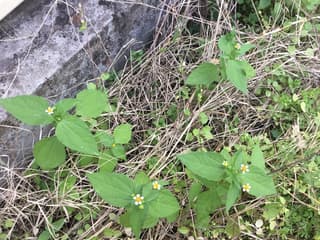
Galinsoga parviflora is an annual herb in the Asteraceae family, native to South and Central America and now naturalized worldwide as a weed in gardens, crops, and disturbed soils. It reaches between 30 and 75 cm in height, featuring opposite leaves with serrated edges and small flowers with 3 to 8 white petals surrounding a yellow central disk. It is a very fast grower, completing its life cycle in just 50 days and producing thousands of seeds per plant. Despite being considered a weed, it is entirely edible and used as a culinary and medicinal herb in various cultures, most notably in Colombia (guascas for ajiaco).
White Bedstraw
Galium album
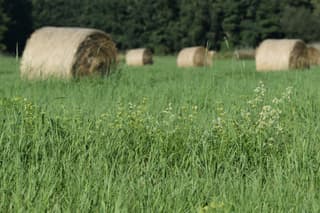
White bedstraw is a scrambling, perennial wildflower native to Europe and western Asia, from the same family as coffee (Rubiaceae). It forms sprawling mats of square, four-angled stems clothed in narrow, glossy leaves arranged in whorls, topped in early summer with airy clusters of tiny, honey-scented white flowers. Common in meadows, hedgerows, and calcareous grassland, it is valued in wildflower plantings for its long bloom period and value to pollinating insects.
Cleavers
Galium aparine
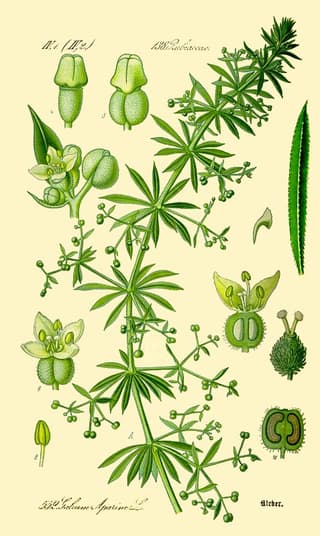
Galium aparine, commonly known as Cleavers, is a scrambling annual herbaceous plant. It is easily recognized by its whorled leaves and stems which are covered in tiny hooked bristles (trichomes), allowing it to 'stick' to surfaces, animals, and clothing. It produces tiny, star-shaped white or greenish flowers followed by small, burr-like fruits that also cling to fur and fabric for seed dispersal.
Hedge Bedstraw
Galium mollugo
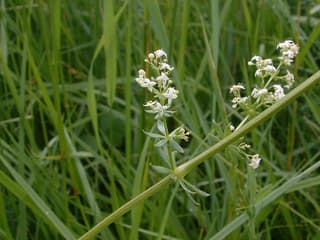
Hedge bedstraw is a sprawling European perennial found along hedgebanks, woodland edges and grassy, calcareous slopes. Its square stems scramble through neighboring vegetation, bearing whorls of narrow leaves and airy clusters of tiny star-shaped white flowers from late spring through summer.
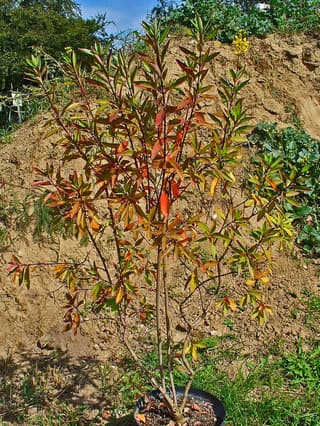
Mexican Goldshower
Galphimia glauca
Galphimia glauca, commonly known as Mexican Goldshower or Thryallis, is a compact evergreen shrub native to Mexico and Central America. It produces masses of small, bright yellow star-shaped flowers from spring through fall, creating a stunning display that attracts hummingbirds and butterflies. Unlike Galphimia gracilis, this species features more rounded leaves with a distinctive blue-green underside. It is valued both as an ornamental garden shrub and for its use in traditional Mexican medicine.
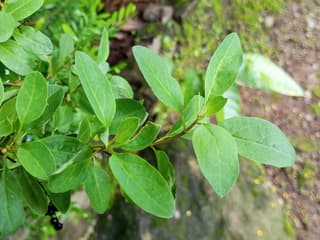
Thryallis
Galphimia gracilis
Thryallis is a perennial and highly floriferous shrub, native to Mexico and Central America. Its vibrant yellow flowers emerge in terminal racemes and attract pollinators such as bees and butterflies. It is an extremely hardy and fast-growing plant, ideal for hedges or as a specimen plant in sunny gardens.
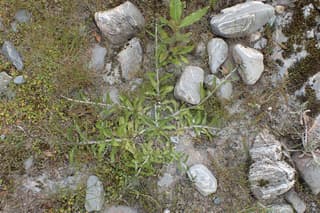
Gray Everlasting
Gamochaeta coarctata
Gamochaeta coarctata is an annual or biennial winter herbaceous herb, native to South America (from Colombia to Uruguay), and naturalized in parts of Eurasia, Australia, and North America. It is a low-growing plant (15-50 cm) with decumbent-ascending stems covered in dense white pubescence. The basal leaves form a rosette and are spatulate to oblanceolate. The flowers are arranged in a dense spike, with cylindrical heads containing a few yellow disc florets and no ray florets.
Polychrome Reishi
Ganoderma polychromum
Ganoderma polychromum is a basidiomycete fungus belonging to the Ganoderma lucidum species complex. It is characterized by its cap with a lacquered, glossy surface that displays a color gradation ranging from pale yellow at the margin to dark reddish-brown near the base. Unlike plants, this fungus is a decomposer that grows primarily on decaying hardwood, playing a vital role in the forest ecosystem.
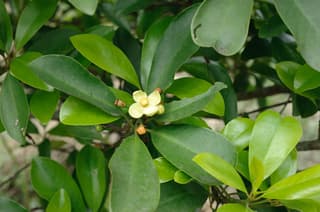
Garcinia
Garcinia
The Garcinia genus comprises tropical evergreen trees and shrubs, world-renowned for the Mangosteen, considered the 'queen of fruits'. Its leaves are dark green, glossy, and leathery. They are slow-growing plants that require patience but reward with dense foliage and highly nutritious and medicinal fruits.
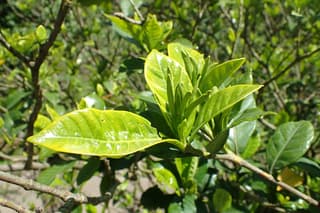
Gardenia
Gardenia
Gardenia is a genus of roughly 140 species of evergreen shrubs and small trees in the coffee family (Rubiaceae), native to tropical and subtropical regions of Africa, Asia, and Oceania. The most widely cultivated ornamental species is Gardenia jasminoides (Cape Jasmine), prized for its intensely fragrant, waxy white flowers and glossy dark-green foliage. A classic garden and container plant in mild climates, gardenia has a reputation for being finicky about its growing conditions.
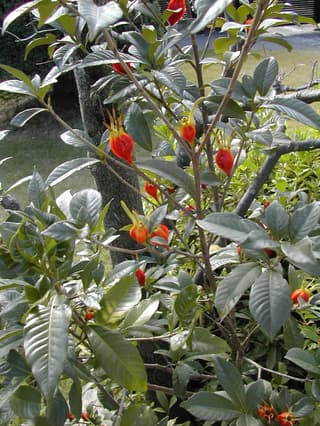
Gardenia
Gardenia jasminoides
Gardenia jasminoides is a beloved evergreen shrub from the coffee family (Rubiaceae), native to southern China and Japan. Renowned for its intensely fragrant, waxy white flowers and glossy dark green foliage, it has been cultivated for centuries in Asian gardens. The double-petaled blooms appear from late spring through summer, filling the air with one of the most iconic floral fragrances in horticulture. While demanding in its care requirements, the gardenia rewards attentive gardeners with unmatched beauty and scent.
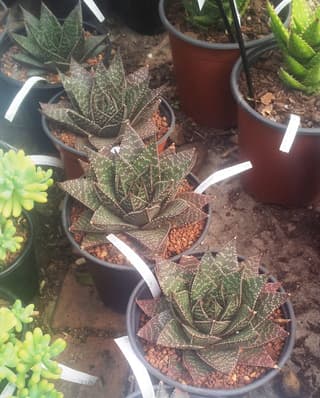
Gasteraloe
Gasteraloe
xGasteraloe is an intergeneric hybrid nothogenus produced by crossing Gasteria with Aloe (most often Gonialoe variegata or Aristaloe aristata). The result is a stemless to almost-stemless succulent that forms compact rosettes of thick, tongue-shaped leaves, usually spotted or marked and edged with small teeth. It combines Gasteria's slow, clustering growth habit with Aloe's vigor, and in spring and summer sends up tall spikes of tubular orange, red, or pink flowers that attract pollinators.
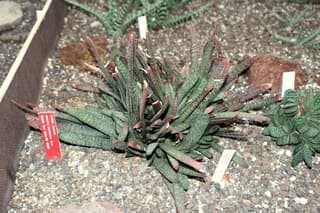
Gasteria (genus)
Gasteria
Gasteria is a genus of compact South African succulents, highly tolerant of drought and partial shade. Their thick, fleshy leaves form symmetrical rosettes or fan-like arrangements, often with spotted or mottled patterns.
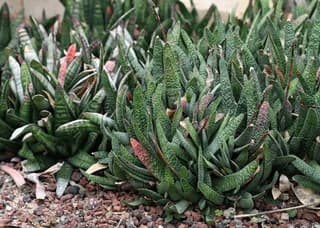
Knoppies Oxtongue
Gasteria batesiana
Gasteria batesiana, known as the Knoppies Oxtongue, is a small, slow-growing succulent native to the hot, rocky river valleys of northern KwaZulu-Natal, Eswatini, and Mpumalanga in South Africa. Its thick, dark green leaves are covered in raised white tubercles arranged in transverse bands, giving the plant a distinctively bumpy, "knoppies" (knobby) texture. The stemless rosettes slowly form small clumps as they produce offsets from the base, and in spring arching stems bear tubular, soft pink flowers with pale green tips that attract sunbirds.
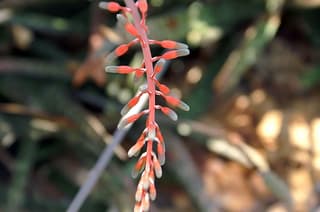
Ox tongue
Gasteria bicolor
Gasteria bicolor is a low-growing rosette succulent native to South Africa, prized for its thick, tongue-shaped, white-spotted leaves. It is an easy, slow-growing houseplant that tolerates low light better than most succulents and is safe for pets.
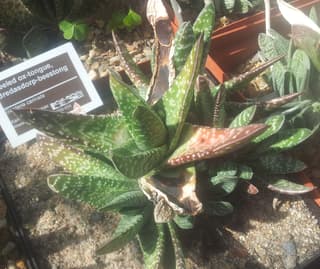
Bredasdorp Gasteria
Gasteria carinata
Gasteria carinata, commonly known as the Bredasdorp gasteria, is a stemless rosette-forming succulent native to the Western Cape region of South Africa. Its thick, hard, tongue-shaped leaves are dark green and often marked with pale warty tubercles, giving rise to common names like ox tongue and lawyer's tongue. In spring and summer it sends up slender flower spikes bearing tubular, stomach-shaped pink-and-orange blooms that attract sunbirds.

Great Karoo Ox-tongue
Gasteria disticha
Gasteria disticha is a small, clump-forming succulent native to the Robertson Karoo of South Africa's Western Cape. Its thick, strap-shaped leaves grow in two opposite rows (a distichous arrangement) when young, giving the rosette a striking fan-like symmetry. In the wild it nestles under rocks and spiny karoo shrubs, which shelter it from harsh midday sun. Slow-growing and long-lived, it produces pendent, tubular pink to reddish-pink flowers on tall spikes mostly in spring and early summer.
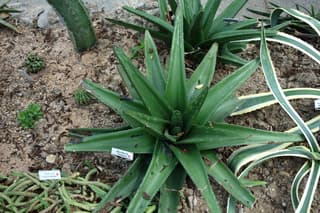
Thicket Ox-tongue
Gasteria excelsa
Gasteria excelsa is a striking, large-growing succulent native to the Eastern Cape province of South Africa, where it clings to shaded, south-facing cliffs and rocky thickets from sea level up to 1,500 m. One of the biggest species in the genus, it forms a single, robust rosette of stiff, triangular leaves up to 40 cm long, dark green and mottled with pale spots, edged with sharp, heavily serrated white margins. In summer it sends up a tall flower spike, sometimes over a meter high, carrying clusters of stomach-shaped, light pink blooms that attract sunbirds.
Find the Perfect Plant
Our plant guide helps you find ideal species for your experience level and time of year.
Browse by Difficulty, Season & More
Use the filters below to narrow this catalog by care difficulty, season, environment, or search directly by name. Each filter leads to a focused list tailored to your specific growing conditions.