Papaveraceae
White ramping fumitory: Ground Cover Plant
Fumaria capreolata
An unfussy, fast-growing annual that thrives with little intervention: give it well-drained but moisture-retentive soil, average garden humidity, and a spot ranging from partial shade to full sun. It self-sows readily from seed and needs no feeding or staking, though its scrambling habit means it will lean on or climb over nearby plants and structures if not kept in check.
Every 7-10 days
Partial shade
° - °C
% - %
Categories
What is White ramping fumitory?
White ramping fumitory (Fumaria capreolata) is a easy-care plant from the Papaveraceae family. Fumaria capreolata, known as white ramping fumitory or climbing fumitory, is a scrambling annual herb in the poppy family (Papaveraceae), native to Europe, western Asia, and North Africa and naturalized in parts of Australia, New Zealand, South America, and elsewhere. Its finely divided, blue-green...
White ramping fumitory grows up to 1.0m. It is not suitable for indoor environments and not safe for pets.
Unlike many tropical plants, White ramping fumitory tolerates watering mistakes. Best for beginners. Without precautions, ingestion can cause irritation in pets. Keep out of reach of cats and dogs.
How to Care for White ramping fumitory?
TLDR: White ramping fumitory needs Partial shade, watering every 7 days, and temperatures between 15-30°C with 40-70% humidity.
How Often Should You Water White ramping fumitory?
Keep soil lightly moist, especially during establishment, but let the surface dry between waterings - this plant dislikes sitting in waterlogged ground.
How Much Light Does White ramping fumitory Need?
Grows well anywhere from partial shade to full sun; in hot climates, some afternoon shade helps it through summer.
What Is the Best Soil for White ramping fumitory?
Ordinary, well-draining garden soil suits it best; it tolerates poor or disturbed ground and does not need rich, fertile beds to perform well.
What Pot Should You Use for White ramping fumitory?
Rarely grown in containers, but if attempted, use a wide, shallow pot with generous drainage holes and a free-draining mix to mimic the disturbed, well-drained ground it favors in the wild; avoid deep pots that stay wet at the base.
What Is White ramping fumitory and Where Does It Come From?
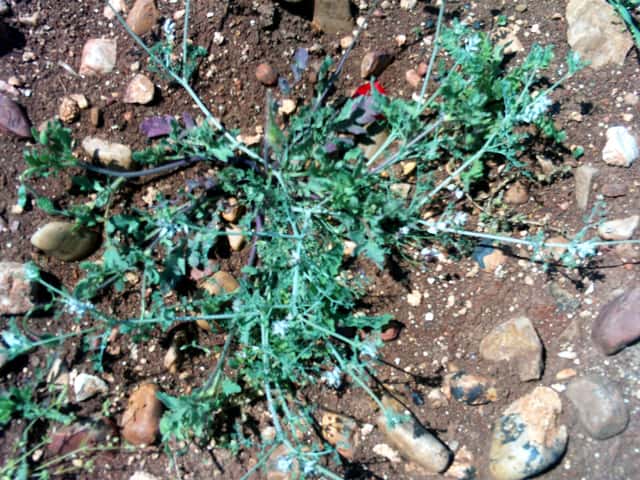
Fumaria capreolata, known as white ramping fumitory or climbing fumitory, is a scrambling annual herb in the poppy family (Papaveraceae), native to Europe, western Asia, and North Africa and naturalized in parts of Australia, New Zealand, South America, and elsewhere. Its finely divided, blue-green leaves and slender stems, reaching up to a metre long, clamber over walls, hedgerows, and low vegetation using twining leaf-stalks. From spring through summer, and into autumn in milder climates, it bears loose spikes of up to twenty tubular white-to-cream flowers tipped with deep maroon, which fade to pink once pollinated. Though valued in traditional herbal medicine, it is regarded as an environmental weed in several regions, where it can smother low-growing native plants.
How Big Does White ramping fumitory Grow?
TLDR: White ramping fumitory can reach up to 1.0m tall with Fast growth rate.
Max height
1.0m
Growth rate
Fast
Foliage
Deciduous
Warning: Toxic Plant
This plant can be toxic if ingested. Keep out of reach of:
Plant Uses
Medicinal
Medicinal properties
Ground Cover
Soil coverage
Medicinal Uses
- Traditional digestive and liver/gallbladder tonic in European herbal medicine
- Historically used as a mild diuretic and laxative
- Applied topically in folk medicine for skin conditions such as eczema and blemishes
- Fumaria officinalis is approved in Germany (Commission E) for digestive and biliary colic complaints
- Alkaloid extracts from F. capreolata have been studied for antinociceptive and anti-inflammatory activity
Culinary Uses
- Fresh or dried herb traditionally added to soured plant milk to impart a tangy flavor and help preserve it
Is your plant showing symptoms?
Click on the symptom to discover possible causes:
What Diseases Commonly Affect White ramping fumitory?
TLDR: White ramping fumitory is susceptible to 5 known diseases. Monitor regularly for early detection.
Aphids
Aphids are small, soft-bodied, pear-shaped insects (1/16 to 1/8 inch long) that feed by sucking nutrient-rich sap from plants. They reproduce rapidly and can quickly weaken plants, causing distorted growth and transmitting plant viruses. Aphids come in various colors including green, black, red, yellow, brown, and gray. They secrete honeydew, a sticky substance that attracts ants and encourages sooty mold growth.
Powdery Mildew
Powdery mildew is a common fungal disease caused by various fungi species including Erysiphe, Podosphaera, Oïdium, and Leveillula. It affects over 10,000 plant species worldwide. The disease thrives in warm, dry climates with high humidity and appears as a distinctive white powdery coating on plant surfaces.
Downy Mildew
Downy mildew is a fungal-like disease caused by oomycetes (water molds) that thrives in cool, wet conditions. It affects a wide range of plants, causing yellowing leaves with fuzzy white-gray growth underneath, leading to defoliation and reduced yields if left untreated.
Slugs and Snails
Slugs and snails are mollusks that feed on plant tissue, causing irregular holes in leaves and damage to young seedlings. They are most active at night and in moist conditions, leaving characteristic silvery slime trails. These pests can quickly devastate gardens, especially during wet seasons.
Meaning & Symbolism
Fumitory's genus name derives from the Latin fumus terrae, "smoke of the earth" - a nod to the hazy, blue-grey cast of its foliage at a distance, or, in old herbal lore, to smoke seeming to rise from ground where no fire burns. Long connected with cleansing and purification in European folk medicine, it has come to symbolize quiet resilience and the overlooked value of common wayside plants.
Compare with similar plants
| Attribute | Difficulty | Light | Watering | Pet Safe |
|---|---|---|---|---|
| Field Maple | Easy | Bright indirect | 14d | ✓ |
| Silver Birch | Easy | Direct sun | 14d | ✓ |
| Common Blanketflower | Easy | Direct sun | 10d | ✓ |
| Cushion Bush | Easy | Direct sun | 14d | ✓ |
Choose & Compare
Sources & References
- Fumaria capreolata - Wikipedia
- Fumaria capreolata, White Ramping-fumitory - First Nature
- Fumaria capreolata L. - Plants of the World Online (Kew)
- Fumaria (Fumitory) - Uses, Safety, Composition - Drugs.com
- Plants Poisonous to Livestock and Pets - Families (Fumariaceae) - NCSU Herbarium
- Antinociceptive and Anti-Inflammatory Effects of Total Alkaloid Extract from Fumaria capreolata - PMC
- Fumitory (Fumaria officinalis and F. capreolata) - Ligaya Garden
- White Ramping Fumitory Plant Care - PlantIn





