Lamiaceae
Hemp-nettles (Galeopsis)
Galeopsis
An easy outdoor annual for sun or partial shade in fertile soil that stays moist. Sow direct; it completes its life cycle in one season and self-seeds freely.
Every 3 days
Partial shade
-5° - 30°C
50% - 85%
Categories
What is Hemp-nettles?
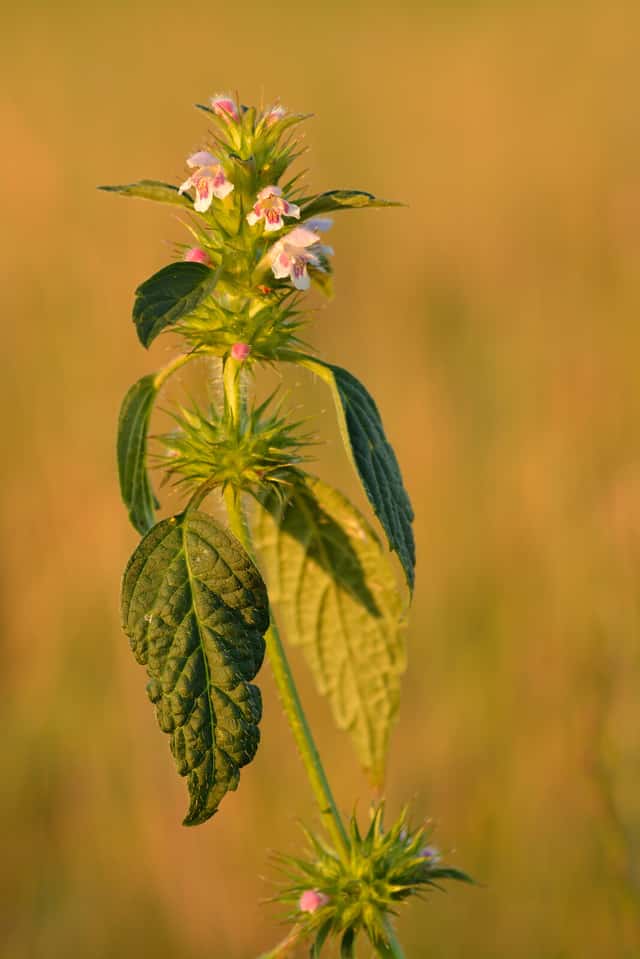
Hemp-nettles (Galeopsis) is a easy-care plant from the Lamiaceae family. Hemp-nettles are the plants of the genus Galeopsis in the mint family (Lamiaceae), annuals native to Europe and Asia and naturalized in North America. They have square stems, usually bristly and swollen below the nodes, opposite toothed leaves that look like nettle leaves but do not sting, and from...
Hemp-nettles grows up to 1.0m, spread of 40cm, watering every 3 days, -5°C – 30°C, 50–85% humidity. It is not suitable for indoor environments and safe for pets.
Unlike many tropical plants, Hemp-nettles tolerates watering mistakes. Best for beginners. Unlike many popular species, Hemp-nettles is safe to keep around pets.
How to Care for Hemp-nettles?
TLDR: Hemp-nettles needs Partial shade, watering every 3 days, and temperatures between -5-30°C with 50-85% humidity.
How Often Should You Water Hemp-nettles?
Keep the soil lightly moist, watering every 2 to 4 days in hot, dry weather. It does not tolerate long dry spells, but it does not need waterlogged soil either.
How Much Light Does Hemp-nettles Need?
Grows in full sun or light partial shade, like a woodland edge. In deep shade it gets leggy and flowers poorly.
What Is the Best Soil for Hemp-nettles?
Takes sandy, loamy or clay soil as long as it is fertile and holds moisture, with a slightly acidic to slightly alkaline pH (5.5 to 7.5). Rich, peaty soils also suit it.
What Pot Should You Use for Hemp-nettles?
Best grown straight in the ground. In a container, use a pot at least 25 cm deep with drainage holes and a moisture-retentive mix.
What Is Hemp-nettles and Where Does It Come From?
Hemp-nettles are the plants of the genus Galeopsis in the mint family (Lamiaceae), annuals native to Europe and Asia and naturalized in North America. They have square stems, usually bristly and swollen below the nodes, opposite toothed leaves that look like nettle leaves but do not sting, and from summer into autumn whorls of two-lipped flowers in pink, purple, white or pale yellow with a violet lip, as in G. speciosa. They grow in woodland clearings, field margins and damp waste ground, and several species are common weeds.
How to Propagate Hemp-nettles?
Direct sowing
The seed is strongly dormant and germinates well only after a cold period; for spring sowing, keep it moist in the fridge for 4 to 6 weeks first. Once established it self-seeds and can become a weed in vegetable beds.
- 1 In autumn or late winter, sow directly in the bed, 0.5-2 cm deep
- 2 Let the seed go through winter cold, which breaks dormancy
- 3 Keep the soil moist until seedlings appear in spring
- 4 Thin seedlings to 20 to 30 cm apart
Materials needed:
How Big Does Hemp-nettles Grow?
TLDR: Hemp-nettles can reach up to 1.0m tall with Fast growth rate.
Max height
1.0m
Spread
40cm
Growth rate
Fast
Plant Uses
Medicinal
Medicinal properties
Medicinal Uses
- Traditional use of G. segetum and G. tetrahit as an expectorant for coughs, bronchitis and whooping cough
- Folk use as an astringent and diuretic in European herbalism
Is your plant showing symptoms?
Click on the symptom to discover possible causes:
What Diseases Commonly Affect Hemp-nettles?
TLDR: Hemp-nettles is susceptible to 5 known diseases. Monitor regularly for early detection.
Powdery Mildew
Powdery mildew is a common fungal disease caused by various fungi species including Erysiphe, Podosphaera, Oïdium, and Leveillula. It affects over 10,000 plant species worldwide. The disease thrives in warm, dry climates with high humidity and appears as a distinctive white powdery coating on plant surfaces.
Septoria Leaf Spot
Septoria leaf spot is a destructive fungal disease caused by Septoria lycopersici, particularly devastating during seasons of moderate temperature and abundant rainfall. The disease starts on lower leaves and progresses upward, causing small circular spots with tan to gray centers and dark brown margins. If left untreated, it can dramatically reduce plant yields and cause complete leaf blight.
Phyllosticta Leaf Spot
Phyllosticta is a genus of fungi responsible for leaf spot diseases in a wide range of garden and indoor plants. These pathogens thrive in warm, humid conditions, spreading primarily through water splash and prolonged leaf wetness. Symptoms typically include small, circular lesions that transition from tan or light brown to having distinct dark brown or black margins. As the disease progresses, these spots may coalesce, leading to chlorosis (yellowing) and premature abscission (leaf drop). Characteristic pycnidia—tiny, black, pinhead-sized fruiting bodies—often develop within the lesions. Phyllosticta commonly affects ornamentals like hydrangeas, irises, peonies, lilacs, maples, and roses, as well as citrus and various fruit trees.
Curculionidae
Curculionidae (weevils) are small beetles that feed on plants. Adults chew leaf margins, leaving crescent-shaped notches, primarily at night. The larvae live in the substrate and consume roots, causing decline, yellowing, and wilting even when the substrate is moist, and in severe cases, plant death. They frequently affect ornamentals and garden plants such as strawberries, citrus, roses, hydrangeas, azaleas, blueberries, begonias, and many potted plants.
Meaning & Symbolism
Hemp-nettles carry no strong folk symbolism; in botany they stand for evolution in action, since Arne Müntzing recreated G. tetrahit in 1930 by crossing G. pubescens and G. speciosa.
Fun Facts
G. tetrahit was one of the first wild species recreated by experiment: Arne Müntzing produced it in 1930 by crossing two other hemp-nettles.
A single G. tetrahit plant can produce up to 2,800 seeds, and seed buried for decades has still germinated.
The powdery mildew Neoerysiphe galeopsidis, which attacks many mint-family plants, is named after the genus Galeopsis.
Frequently asked questions
Do hemp-nettles sting like nettles?
How often should I water hemp-nettle?
Why won't my hemp-nettle seeds germinate?
Is hemp-nettle poisonous?
Compare with similar plants
| Attribute | Difficulty | Light | Watering | Pet Safe |
|---|---|---|---|---|
| Field Maple | Easy | Bright indirect | 14d | ✓ |
| Iberian Houseleek | Easy | Direct sun | 14d | ✓ |
| Silver Birch | Easy | Direct sun | 14d | ✓ |
| Common Blanketflower | Easy | Direct sun | 10d | ✓ |
Choose & Compare
Sources & References
- PFAF - Galeopsis tetrahit (Common Hemp Nettle)
- PFAF - Galeopsis speciosa (Large Flowered Hemp Nettle)
- PFAF - Galeopsis segetum (Downy Hemp Nettle)
- Wikipedia - Galeopsis
- Wikipedia - Galeopsis tetrahit
- Garden Organic - Common hemp nettle weed datasheet
- BSBI Fermanagh - Galeopsis tetrahit, Common Hemp-nettle
- BioInfo UK - Galeopsis tetrahit agg. feeders
- Wikipedia - Neoerysiphe galeopsidis (powdery mildew)