Liliaceae
Liotard's Gagea: Edible Plant
Gagea fragifera
Requires a mandatory winter chilling period and soil with excellent drainage. It is ideal for rock gardens in temperate or cold climates.
Every 14 days
Partial shade
-15° - 22°C
40% - 70%
Categories
What is Liotard's Gagea?
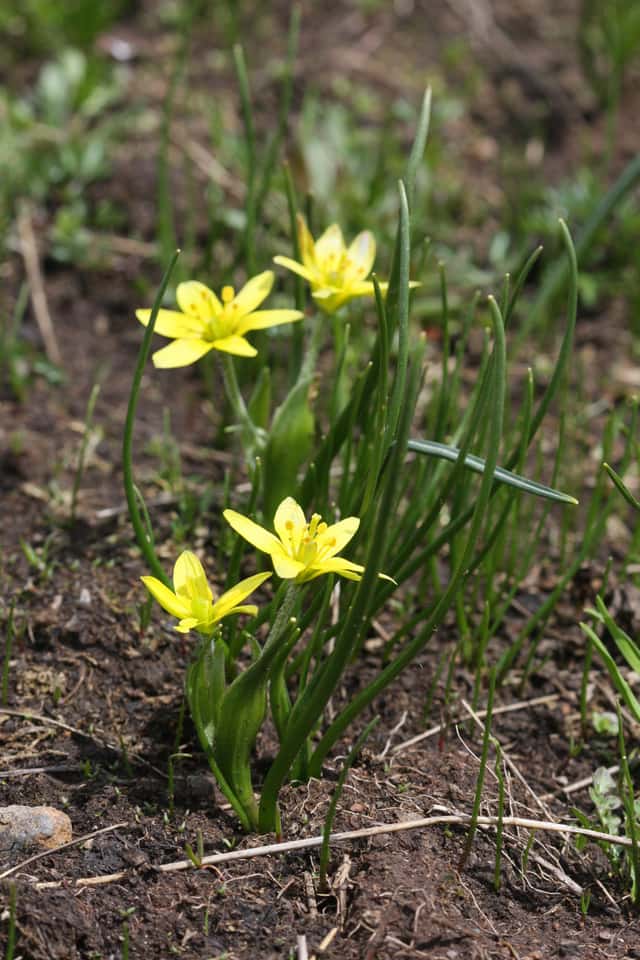
Liotard's Gagea (Gagea fragifera) is a easy-care plant from the Liliaceae family. Gagea fragifera is a small perennial bulbous plant, native to the alpine and subalpine regions of Europe and Asia. It is distinguished by its bright yellow star-shaped flowers that emerge shortly after the snow melts. Its leaves are linear and basal, adapted to the short growing seasons of high moun...
Liotard's Gagea grows up to 30cm, spread of 15cm, watering every 14 days, -15°C – 22°C, 40–70% humidity. It is not suitable for indoor environments and safe for pets.
Unlike many tropical plants, Liotard's Gagea tolerates watering mistakes. Best for beginners. Unlike many popular species, Liotard's Gagea is safe to keep around pets.
How to Care for Liotard's Gagea?
TLDR: Liotard's Gagea needs Partial shade, watering every 14 days, and temperatures between -15-22°C with 40-70% humidity.
How Often Should You Water Liotard's Gagea?
Water moderately during spring flowering and almost completely suspend watering when the plant enters dormancy in summer.
How Much Light Does Liotard's Gagea Need?
Requires full sun exposure for the flowers to open completely and for the plant to thrive.
What Is the Best Soil for Liotard's Gagea?
Prefers poor, stony soils; avoid substrates with too much organic matter that retain excessive moisture.
What Pot Should You Use for Liotard's Gagea?
Terracotta pots with large drainage holes or direct cultivation in stony rock gardens.
Care Schedule
Fertilize
Every 30 days
What Is Liotard's Gagea and Where Does It Come From?
Gagea fragifera is a small perennial bulbous plant, native to the alpine and subalpine regions of Europe and Asia. It is distinguished by its bright yellow star-shaped flowers that emerge shortly after the snow melts. Its leaves are linear and basal, adapted to the short growing seasons of high mountain environments.
How to Propagate Liotard's Gagea?
Bulbil division
- Do not overwater after planting to prevent bulb rot during dormancy.
- Ensure the soil is well-loosened to facilitate root growth in spring.
- 1 Bulb extraction
Carefully dig up the bulbs once the foliage has completely dried out in summer.
- 2 Separation
Manually separate the small bulbils growing around the main bulb.
- 3 Replanting
Plant the bulbils at a depth of about 5 cm in a sandy substrate before the frost arrives.
Materials needed:
How Big Does Liotard's Gagea Grow?
TLDR: Liotard's Gagea can reach up to 30cm tall with Slow growth rate.
Max height
30cm
Spread
15cm
Growth rate
Slow
Foliage
Deciduous
Plant Uses
Ornamental
Great for decoration
Edible
Can be consumed
Is your plant showing symptoms?
Click on the symptom to discover possible causes:
What Diseases Commonly Affect Liotard's Gagea?
TLDR: Liotard's Gagea is susceptible to 9 known diseases. Monitor regularly for early detection.
Root Rot
Root rot is a serious fungal disease that affects the root system of plants, causing them to decay and die. It is primarily caused by overwatering, poor drainage, or soil-borne fungi such as Pythium, Phytophthora, Rhizoctonia, and Fusarium. The disease thrives in waterlogged conditions where roots are deprived of oxygen, making them susceptible to fungal infection.
Overwatering
Overwatering occurs when plants receive too much water, depriving roots of oxygen and causing root rot. This environmental stress is one of the most common causes of houseplant death, as waterlogged soil prevents roots from breathing and functioning properly.
Gray Mold (Botrytis Blight)
Gray mold, caused by the fungus Botrytis cinerea, is one of the most common fungal diseases in plants. It affects over 200 plant species, including ornamentals, vegetables, fruits, and houseplants. The disease thrives in cool, humid conditions with poor air circulation, causing grayish spots and soft rot on infected tissues.
Fusarium Wilt
Fusarium wilt is a serious fungal disease caused by the soil-borne fungus Fusarium oxysporum. The fungus invades roots and blocks the water-conducting vessels (xylem) of the plant, causing progressive wilting and eventual death. Host-specific forms of the pathogen exist that attack different plant species.
Meaning & Symbolism
Represents the tenacity of life in extreme conditions and the announcement of the alpine spring.
Compare with similar plants
| Attribute | Difficulty | Light | Watering | Pet Safe |
|---|---|---|---|---|
| Field Maple | Easy | Bright indirect | 14d | ✓ |
| Silver Birch | Easy | Direct sun | 14d | ✓ |
| Common Blanketflower | Easy | Direct sun | 10d | ✓ |
| Cushion Bush | Easy | Direct sun | 14d | ✓ |





