Complete Plant Guide
Explore plants by difficulty, season and more. Find the perfect plant for you.
Difficulty
Categories
Plants by City
🗺️ Plants by City3797 plants found
Showing 1585-1620 of 3797
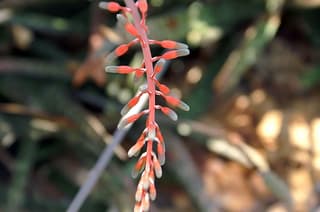
Ox tongue
Gasteria bicolor
Gasteria bicolor is a low-growing rosette succulent native to South Africa, prized for its thick, tongue-shaped, white-spotted leaves. It is an easy, slow-growing houseplant that tolerates low light better than most succulents and is safe for pets.
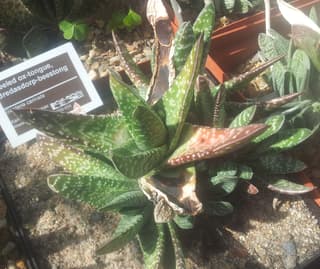
Bredasdorp Gasteria
Gasteria carinata
Gasteria carinata, commonly known as the Bredasdorp gasteria, is a stemless rosette-forming succulent native to the Western Cape region of South Africa. Its thick, hard, tongue-shaped leaves are dark green and often marked with pale warty tubercles, giving rise to common names like ox tongue and lawyer's tongue. In spring and summer it sends up slender flower spikes bearing tubular, stomach-shaped pink-and-orange blooms that attract sunbirds.

Great Karoo Ox-tongue
Gasteria disticha
Gasteria disticha is a small, clump-forming succulent native to the Robertson Karoo of South Africa's Western Cape. Its thick, strap-shaped leaves grow in two opposite rows (a distichous arrangement) when young, giving the rosette a striking fan-like symmetry. In the wild it nestles under rocks and spiny karoo shrubs, which shelter it from harsh midday sun. Slow-growing and long-lived, it produces pendent, tubular pink to reddish-pink flowers on tall spikes mostly in spring and early summer.
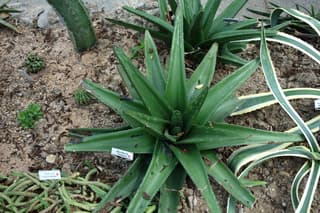
Thicket Ox-tongue
Gasteria excelsa
Gasteria excelsa is a striking, large-growing succulent native to the Eastern Cape province of South Africa, where it clings to shaded, south-facing cliffs and rocky thickets from sea level up to 1,500 m. One of the biggest species in the genus, it forms a single, robust rosette of stiff, triangular leaves up to 40 cm long, dark green and mottled with pale spots, edged with sharp, heavily serrated white margins. In summer it sends up a tall flower spike, sometimes over a meter high, carrying clusters of stomach-shaped, light pink blooms that attract sunbirds.
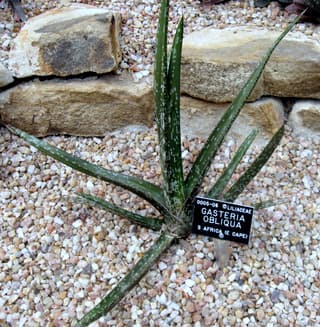
Ox Tongue
Gasteria obliqua
Gasteria obliqua, commonly known as Ox Tongue, is a slow-growing succulent native to South Africa. It features thick, tongue-shaped leaves with white spots that grow in a characteristic two-ranked (distichous) arrangement. Named for its resemblance to an ox's tongue, this compact plant is exceptionally forgiving and well-suited to low-light indoor environments.
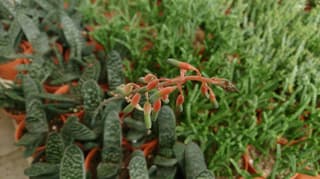
Namaqua Ox Tongue
Gasteria pillansii
Gasteria pillansii, commonly known as the Namaqua Ox Tongue, is a slow-growing succulent native to the arid winter-rainfall regions of Namaqualand in southwestern South Africa and southern Namibia. It produces thick, strap-shaped leaves arranged in two opposite rows (distichous), mottled with white tubercles. In summer, it sends up tall racemes of tubular pink to red-orange flowers with greenish tips, beloved by nectar-feeding birds. It is one of the hardiest Gasteria species and thrives with minimal care.
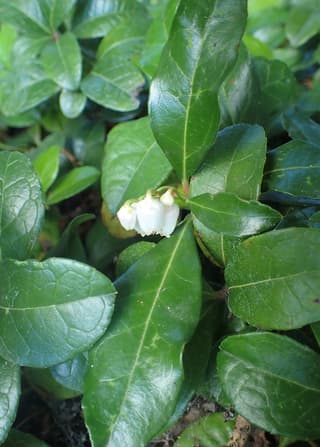
American Wintergreen
Gaultheria procumbens
American Wintergreen (Gaultheria procumbens) is an evergreen, creeping dwarf shrub from the heath family (Ericaceae), native to the open woodlands of eastern North America. It forms dense groundcover mats only about 4-8 inches high, consisting of leathery, dark green leaves that often turn a reddish-bronze color in winter. From May to September, small, bell-shaped white-to-pink flowers appear, developing into bright red berries that often remain on the shrub well into winter. The leaves and fruit have an unmistakable scent and taste of wintergreen—giving the plant its name—and it was historically a major source of essential wintergreen oil (methyl salicylate).
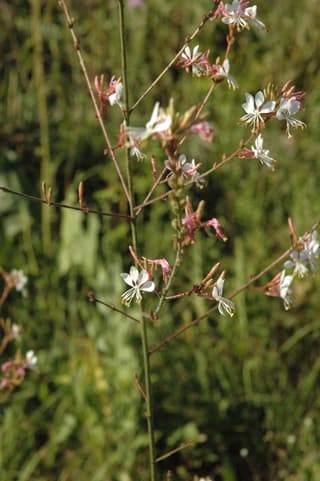
Biennial Gaura
Gaura biennis
Gaura biennis, commonly known as Biennial Gaura or Biennial Beeblossom, is a tall native wildflower from the eastern United States in the family Onagraceae. It grows up to 6 feet (1.8 m) tall, producing delicate white to pink flowers that open in the evening and flutter gracefully in the breeze. Though each plant lives only two years, it self-seeds prolifically, ensuring a lasting presence in the garden.
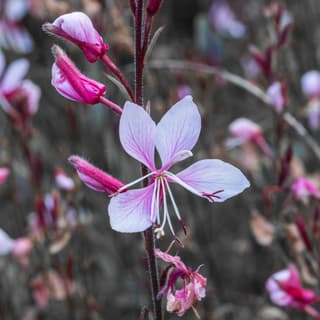
White Gaura
Gaura lindheimeri
Gaura lindheimeri is a graceful perennial native to south-central United States and Mexico, celebrated for its airy white-to-pink flowers that flutter on wiry stems like dancing butterflies. It forms loose, arching clumps 50–150 cm tall, blooming abundantly from spring through first fall frosts.
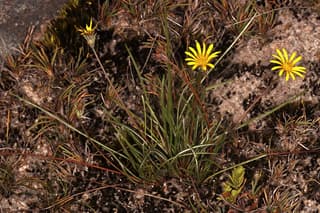
Treasure Flower
Gazania linearis
Gazania linearis, commonly known as the Treasure Flower or Narrow-leaved Treasure Flower, is a fast-growing perennial herb native to South Africa, belonging to the family Asteraceae. It produces striking, solitary daisy-like flower heads in vivid shades of yellow and orange with a contrasting dark center disk. The flowers open in full sunlight and close at night or on overcast days. It forms low, compact clumps ideal for borders, rock gardens, and ground cover in sunny, low-water landscapes.
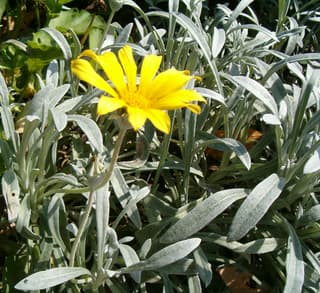
Treasure Flower
Gazania rigens
Gazania rigens, commonly known as Treasure Flower, is a vibrant daisy-like flowering plant native to South Africa. It produces stunning blooms in shades of yellow, orange, red, pink, and white, often with bold contrasting centers. A cheerful, drought-tolerant annual or short-lived perennial, it thrives in full sun and well-draining sandy soils.
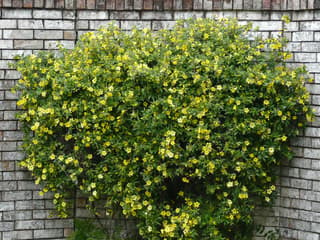
Carolina Jessamine
Gelsemium sempervirens
Carolina jessamine (Gelsemium sempervirens) is a twining evergreen climber native to the southeastern United States, Mexico, and Central America as far as Guatemala. Its slender stems, reddish when young, wrap around supports and reach 13–20 ft (4–6 m); without support, they form a bush or groundcover. The leaves are opposite, lanceolate, glossy, 1–3 in (3–8 cm) long, and take on bronze or yellowish tints in winter. Between late winter and early spring (February–April, or as early as December in mild climates), it produces clusters of golden-yellow funnel-shaped flowers, 1–1.5 in (2.5–4 cm) long and highly fragrant, visited by hummingbirds, butterflies, and native bees. Despite the name, it is not a true jasmine: the genus name is derived from the Italian 'gelsomino'. It has been the state flower of South Carolina since 1924. All parts of the plant are poisonous.
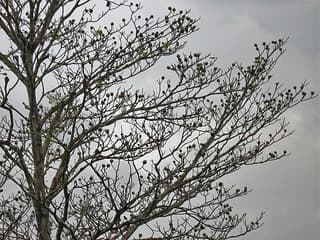
Genipap
Genipa americana
The genipap tree (Genipa americana) is a fruit-bearing tree native to tropical Americas, belonging to the Rubiaceae family. It can reach up to 15 meters in height, with a dense canopy and large, shiny leaves. It produces fragrant white flowers that turn yellow over time, and globose fruits with aromatic pulp, widely used in cuisine and traditional medicine. It is also valued for the traditional use of its sap by indigenous Amazonian peoples to produce body paint.
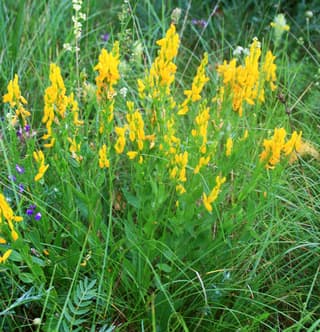
Dyer's Broom
Genista
Genista is a genus of leguminous shrubs in the family Fabaceae, commonly called broom, with roughly 90 species native to Europe, North Africa, and western Asia. The genus is characterized by slender, often nearly leafless green stems and butterfly-shaped (papilionaceous) yellow flowers that cover the plant through spring and summer. It is a tough, drought-tolerant plant adapted to poor, well-drained soils, widely used in rock gardens, banks, and ornamental borders. The English royal House of Plantagenet takes its name from the Latin planta genista, as its founders wore a sprig of the plant as an emblem.
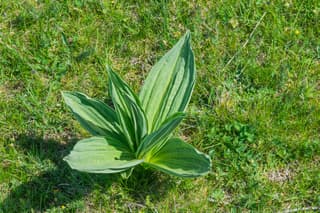
Gentian
Gentiana
Gentiana is a large genus of roughly 400 flowering plant species in the Gentianaceae family, prized for their intensely blue, trumpet- or bell-shaped blooms. Native to alpine meadows, mountain slopes and cool temperate grasslands across Europe, Asia, the Americas and East Africa, gentians range from tiny cushion-forming alpines only a few centimeters tall to taller woodland species over a metre high. They are cool-climate perennials that thrive in humus-rich, well-drained soil and struggle in hot, humid summers. Long cultivated in rock gardens and used medicinally (gentian root is a classic bittering agent), the genus is celebrated for its vivid color and resilience in harsh mountain conditions.
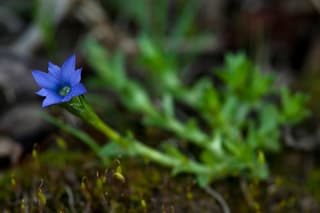
Pygmy Gentian
Gentiana prostrata
Pygmy gentian (Gentiana prostrata) is a tiny alpine and arctic herb in the gentian family, forming loose cushions of prostrate to erect stems just 1-10 cm tall. Its small oval leaves hug the ground, and each stem bears a single, tubular, light blue flower with four spreading lobes that only fully opens under strong midday sun, twisting closed when shaded, touched or cloudy. Widely distributed across the alpine and subalpine zones of Eurasia, North America and the Andes, it grows in bogs, moist meadows, snowmelt-fed tundra and gravelly rock ledges, flowering from June to August depending on elevation.
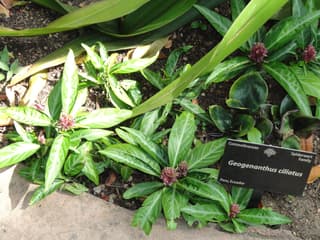
Geo Plant
Geogenanthus ciliatus
Geogenanthus ciliatus is a low-growing, rhizomatous herb from the Commelinaceae family, native to the rainforest understory of Peru, Ecuador, and Colombia. Its thick, fleshy stems carry glossy, deeply textured leaves in dark green to near-purple tones, sometimes patterned with darker mottling. Small three-petaled purple flowers occasionally appear on mature plants but are rarely seen in cultivation. As an understory dweller adapted to filtered light and constant humidity, it makes a striking but demanding terrarium or humidity-cabinet specimen. Its compact, spreading habit and dramatic foliage color make it popular among collectors of rare aroids and Commelinaceae relatives.

Geonoma Palm
Geonoma
Geonoma is a genus of small, delicate palms that grow in the shaded understory of tropical Central and South American rainforests. With finely textured pinnate fronds and slender stems, they form elegant clumps that rarely exceed a few meters in height, adapted to life beneath the dense forest canopy.
Cedar Cup
Geopora sumneriana
Geopora sumneriana, commonly known as the Cedar Cup, is an ascomycete fungus that forms a strictly mycorrhizal symbiotic relationship with trees of the genus Cedrus. The fruiting body begins its development underground, emerging in spring as a hollow sphere that breaks open into a cup or star shape, revealing a smooth, cream-colored interior, while the exterior is densely covered with brownish hairs.
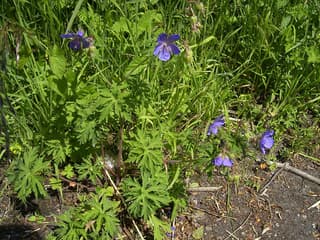
Cranesbill
Geranium
Geranium (cranesbill) is a large genus of about 430 species of flowering perennials and annuals in the family Geraniaceae. Unlike the tender Pelargonium commonly sold as "geranium" in shops, true Geraniums are hardy perennials that die back in winter and reliably regrow each spring. They are beloved in temperate gardens for their delicate saucer-shaped flowers in shades of blue, purple, pink and white, and their attractive deeply-lobed foliage that often turns vivid shades in autumn. Cranesbills are remarkably adaptable, thriving in sun or partial shade and a wide range of soil types.

Dove's-foot Crane's-bill
Geranium molle
Dove's-foot crane's-bill is a low-growing annual (occasionally biennial) wildflower in the Geraniaceae family, native to the Mediterranean and sub-Mediterranean regions and now naturalized across much of Europe, North Africa, temperate Asia and North America. It forms a soft, hairy, branching mat of grey-green, deeply lobed leaves topped with small pink to purple-pink flowers with notched petals, blooming from April to September. It thrives in dry meadows, hedgebanks, lawns and disturbed, nutrient-poor ground, readily self-seeding.

Meadow Crane's-bill
Geranium pratense
Meadow crane's-bill (Geranium pratense) is a hardy herbaceous perennial native to Europe and Asia, widely grown in borders, cottage gardens, and wildflower meadows. It forms neat clumps of deeply cut foliage and bears large, saucer-shaped blue to violet flowers from late spring through summer.
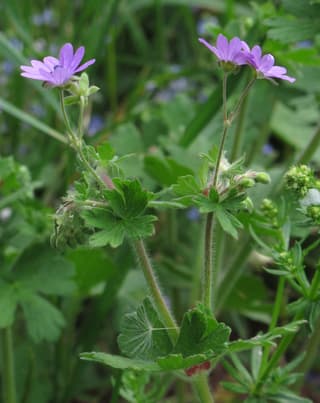
Hedgerow Cranesbill
Geranium pyrenaicum
Geranium pyrenaicum, commonly known as Hedgerow Cranesbill, is a semi-evergreen hardy perennial native to southern Europe and the Pyrenees. It produces a profusion of small, vivid purple-pink to blue flowers with deeply notched petals from late spring through autumn. The plant forms a bushy, spreading mound of rounded, lobed leaves and is prized for its long flowering season, tolerance of varied soils, and wildlife value as a pollinator plant.
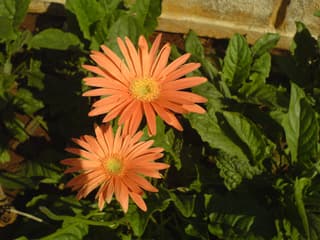
Hybrid Gerbera Daisy
Gerbera hybrid cultivar
The Hybrid Gerbera Daisy (Gerbera hybrid cultivar) is one of the world's most beloved flowering plants, bred from crosses between Gerbera jamesonii and Gerbera viridifolia, both native to South Africa. Celebrated for their large, vivid blooms in white, yellow, orange, pink, red, and purple, hybrid gerberas dominate the global cut-flower trade and bring lasting color to gardens and indoor spaces alike.

Gerbera Daisy
Gerbera hybrida
Gerbera hybrida, commonly known as the Gerbera Daisy, is a cheerful and vibrant flowering plant originating from South Africa. It produces large, showy blooms in an extraordinary range of colors including white, yellow, pink, salmon, red, orange, and lavender. A popular choice for both indoor containers and outdoor garden beds, Gerbera Daisies bloom prolifically from spring through fall and are celebrated for their air-purifying properties.
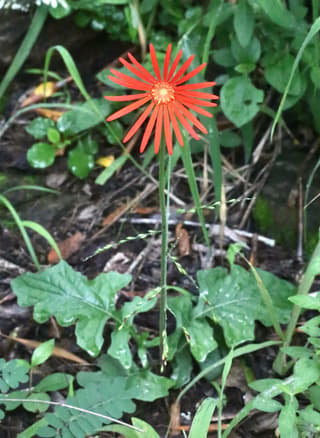
Barberton Daisy
Gerbera jamesonii
The Barberton Daisy (Gerbera jamesonii) is a vibrant flowering plant native to South Africa, belonging to the Asteraceae family. Celebrated for its long-lasting blooms in shades of white, yellow, pink, salmon, orange, and red, it is one of the world's most popular ornamental plants. Perfect for pots and gardens, it delights with its exuberant beauty throughout spring and summer.
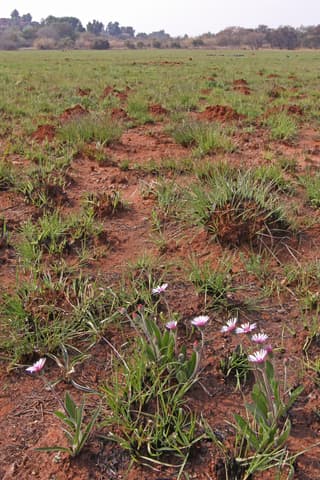
Blushing Barberton Daisy
Gerbera viridifolia
Gerbera viridifolia, commonly known as the Blushing Barberton Daisy, is a wild perennial daisy native to the grasslands and mountain slopes of Southern Africa. It produces delicate white to lilac daisy-like flowers on upright stems rising from a rosette of dark green, deeply veined leaves. Unlike its commercially bred cousins, this species thrives in natural rocky and grassy habitats, making it a charming choice for naturalistic and wildlife gardens.
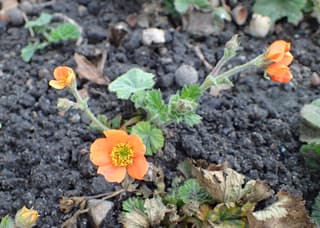
Avens
Geum
Geum is a genus of over 50 herbaceous perennial plants in the Rosaceae family, celebrated for their cheerful cup-shaped flowers in shades of red, orange, yellow, pink, and white. Native across Europe, Asia, and the Americas, Geums are tough, adaptable garden plants beloved in cottage gardens, borders, and rock gardens.
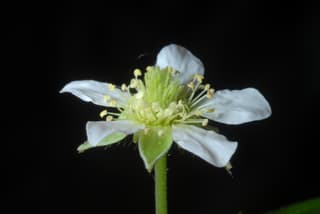
White Avens
Geum canadense
White avens is a native North American woodland perennial in the rose family, forming low clumps of semi-evergreen, lobed foliage. From late spring into early summer it sends up wiry stems tipped with small, five-petaled white flowers that draw in bees and other pollinators. Once flowering ends, the seed heads develop hooked bristles that cling readily to fur and clothing, aiding seed dispersal. It spreads gently as a shade-tolerant ground cover in woodland gardens and naturalized borders.
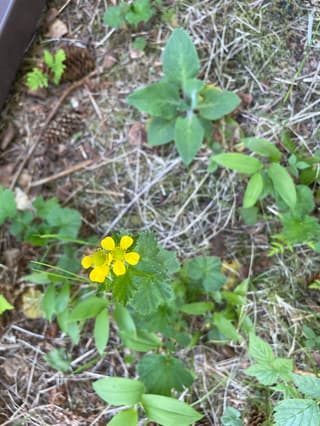
Largeleaf Avens
Geum macrophyllum
Geum macrophyllum, or largeleaf avens, is a herbaceous perennial in the rose family (Rosaceae) native to North America, Kamchatka, and Japan. It forms a basal rosette of long-stalked, pinnately compound leaves with a large, rounded terminal lobe and smaller toothed leaflets beneath. From spring to summer, branching stems 30-100 cm tall carry small, five-petaled yellow flowers with numerous stamens, followed by distinctive bur-like seed heads whose hooked, reddish styles catch on fur and clothing to aid dispersal. It grows in moist woods, meadows, streambanks, and disturbed damp ground from low to subalpine elevations, ranging from Alaska south to California and Mexico, east across Canada and the northern United States.
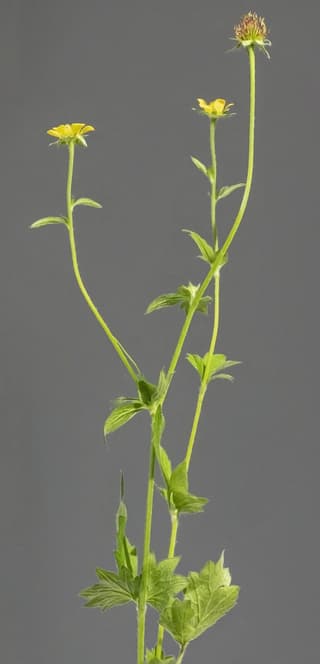
Wood Avens
Geum urbanum
Wood Avens (Geum urbanum) is a herbaceous perennial in the Rosaceae family, native to the temperate regions of Europe and Asia. It grows naturally along woodland edges, hedgerows, and shaded, moist ground, reaching up to 60 cm in height. It produces glossy compound basal leaves and small five-petaled yellow flowers from May through August. When cut, the root releases a clove-like scent due to its eugenol content, earning it the folk name "Clove Root." Historically it was one of the most valued medicinal herbs in medieval Europe, used as a digestive tonic and in herbal infusions.
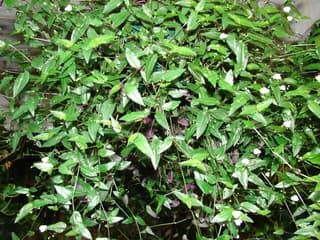
Tahitian Bridal Veil
Gibasis geniculata
Gibasis geniculata is an evergreen perennial from the Commelinaceae family (spiderworts), native to tropical America (from Mexico to northern South America), where it grows as a groundcover in moist, shady habitats. It is grown as a very popular hanging houseplant due to its dense, fleshy shoots with small dark green leaves and tiny white three-petaled flowers, resembling a lacy veil, which gives it its name. It grows quickly and spreads easily, and is considered an invasive species in some tropical regions.
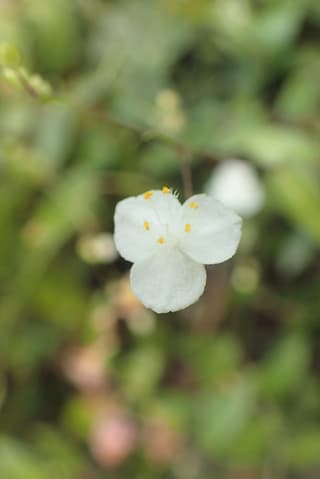
Tahitian Bridal Veil
Gibasis pellucida
A trailing or hanging plant from the Commelinaceae family, native to Mexico and Central America. It forms cascades of thin stems with narrow green leaves and purple undersides, producing small white three-petaled flowers almost year-round. Widely used in hanging baskets and as groundcover in warm climates. It is often mislabeled in the trade as Gibasis geniculata.

Maidenhair Tree
Ginkgo biloba
Ginkgo biloba is one of the oldest living tree species on Earth, a true living fossil unchanged for over 200 million years. Native to China, it is the sole surviving member of the division Ginkgophyta, making it unique in the plant kingdom. Its distinctive fan-shaped leaves turn a spectacular golden-yellow in autumn before dropping simultaneously — a breathtaking display. Female trees produce foul-smelling seeds that have been used in traditional East Asian cuisine and medicine for centuries. The tree famously survived the Hiroshima atomic bombing in 1945 and continues to symbolize resilience and endurance.
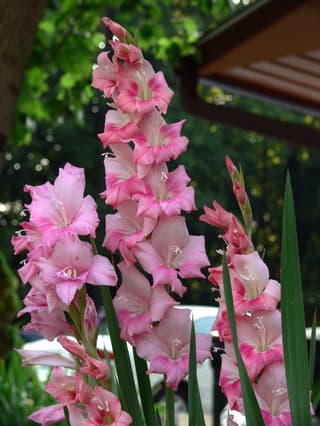
Gladiolus
Gladiolus
Gladiolus is a genus of about 260 species in the iris family (Iridaceae), most of them native to southern Africa, with others from tropical Africa, the Mediterranean and western Asia. Plants grow from a flattened corm and produce fans of stiff, sword-shaped leaves and a tall spike of funnel-shaped flowers that open from the bottom up. The gladiolus sold in garden centres and florists are mostly large-flowered hybrids (Gladiolus x hortulanus), 60 to 180 cm tall, in almost every colour except true blue; the care on this page is based on them.
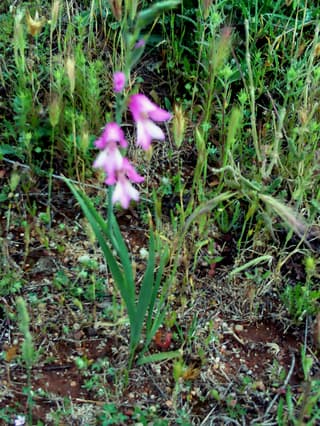
Eastern Gladiolus
Gladiolus communis
Gladiolus communis, known as the Eastern Gladiolus or Common Gladiolus, is a cormous perennial in the family Iridaceae, native to the Mediterranean basin and South Africa. It produces tall, elegant flower spikes bearing trumpet-shaped blooms in shades of pink, purple, red, orange, white, and yellow during spring and summer. Widely grown as a cut flower and garden accent plant.
Find the Perfect Plant
Our plant guide helps you find ideal species for your experience level and time of year.
Browse by Difficulty, Season & More
Use the filters below to narrow this catalog by care difficulty, season, environment, or search directly by name. Each filter leads to a focused list tailored to your specific growing conditions.