Complete Plant Guide
Explore plants by difficulty, season and more. Find the perfect plant for you.
Difficulty
Categories
Plants by City
🗺️ Plants by City4380 plants found
Showing 3997-4032 of 4380
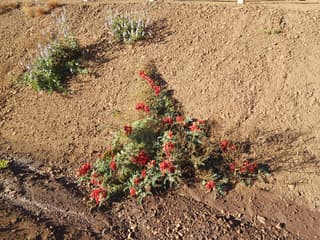
Sturt's Desert Pea
Swainsona formosa
Sturt's Desert Pea is one of Australia's most striking wildflowers, a low, sprawling groundcover native to the arid interior of every mainland state except Victoria. Its trailing stems of soft grey-green, pinnate leaves are studded with large, waxy blood-red blooms, each marked with a glossy black boss at the base of the standard petal. Adopted as the official floral emblem of South Australia in 1961, it thrives in harsh, sun-baked, well-drained conditions and is famously difficult to keep alive in humid or overly generous garden settings.
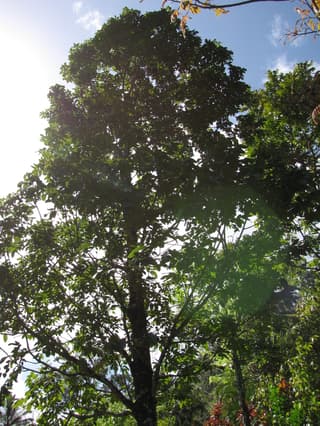
Big-leaf mahogany
Swietenia macrophylla
Big-leaf mahogany (Swietenia macrophylla) is a large tropical tree in the Meliaceae family, native to Mexico, Central America and the Amazon. In the wild it reaches 30–40 m, with a straight trunk, buttressed base and compound leaves up to 60 cm long, glossy and dark green. The flowers are small, greenish-white and fragrant, and the fruits are upright, club-shaped woody capsules that release wind-borne winged seeds. Its reddish timber is among the most valuable in the world, and illegal logging led to its listing in CITES Appendix II.
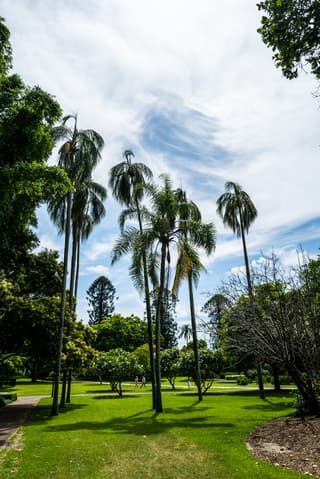
Syagrus Palm
Syagrus
Syagrus is a genus of about 60 to 80 palms from South America, with one species in the Lesser Antilles, closely related to the coconut. Best known are the queen palm (S. romanzoffiana) and the licuri palm (S. coronata). Most have a single smooth, spineless trunk from 2 to over 30 m tall and feather-shaped leaves. Small cream-yellow flowers hang in clusters between the leaves, followed by small coconut-like fruits in green, orange or brown; in many species the kernel is edible. There are also nearly trunkless dwarf species and the small S. weddelliana, grown as a pot plant.
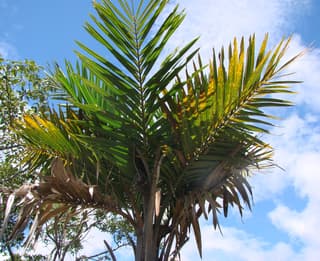
Catole Palm
Syagrus comosa
Syagrus comosa is a palm of the cerrado savanna and rocky highland grasslands of central, eastern and northern Brazil, reaching into Bolivia. It grows in open areas and on rocky slopes up to 1,200 m. It has a single slender trunk 6-12 cm thick, often covered by old leaf bases, and usually stands 1-7 m tall, typically about 5 m. The crown holds 6-12 feathery leaves up to 1.5 m long. Its clusters bear cream flowers and small coconuts with edible pulp, gathered from the wild by local people. It grows slowly and is rare in cultivation.

Queen Palm
Syagrus romanzoffiana
The Queen Palm (Syagrus romanzoffiana) is a stately feather palm native to Brazil and South America, belonging to the family Arecaceae. Prized for its graceful arching fronds and slender trunk, it is one of the most popular landscape palms in subtropical and tropical regions worldwide. It can reach heights of 10-15 meters and produces clusters of bright orange fruits that attract wildlife.
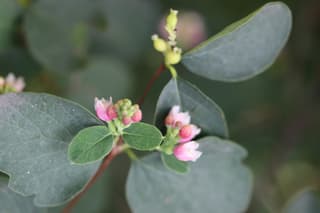
Common Snowberry
Symphoricarpos albus
Common snowberry (Symphoricarpos albus) is a deciduous shrub in the honeysuckle family (Caprifoliaceae), native to North America. It is known for its characteristic snow-white berries that cling to the branches long into the winter season after the leaves have fallen. The shrub grows up to 6 feet (180 cm) tall and wide, forming dense thickets through root suckers, and is extremely hardy down to -40 °F (-40 °C). The flowers are small, bell-shaped, and whitish-pink, blooming in the summer. Snowberry is an excellent garden and wildlife plant that attracts birds, bumblebees, and butterflies.
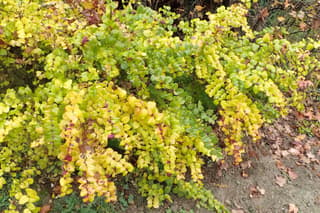
Coralberry
Symphoricarpos orbiculatus
Symphoricarpos orbiculatus is a deciduous shrub from the central and eastern United States. It grows 0.6-1.8 m tall and spreads by roots and by stems that root where they touch the ground, forming dense thickets. Leaves are small, oval and dark green. In late spring and summer it bears tiny bell-shaped flowers, greenish-white or pinkish, not very showy. The show comes in autumn: clusters of coral-pink to purple-red berries, about 6 mm across, that stay on the branches for much of the winter.
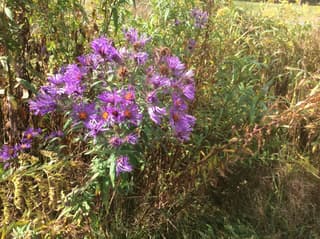
American Asters (genus)
Symphyotrichum
Symphyotrichum is a genus of about 100 species of annual and perennial herbs in the daisy family (Asteraceae), almost all native to North America, with a few in the Caribbean, Central and South America. They were long included in Aster and gardeners still call them asters. The flowers look like small daisies, with purple, blue, lavender, pink or white rays around a yellow centre that turns reddish with age, and they come in masses from late summer into autumn, when most of the garden has stopped flowering. The best-known garden plants are New England aster (S. novae-angliae) and New York aster or Michaelmas daisy (S. novi-belgii), along with smooth aster (S. laeve), heath aster (S. ericoides) and dwarf forms of S. dumosum. Height ranges from 20 cm to 2.4 m depending on the species, and the flowers draw many bees and butterflies.
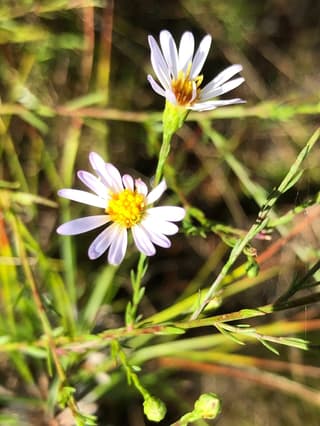
Rice Button Aster
Symphyotrichum dumosum
Symphyotrichum dumosum is a herbaceous perennial native to eastern North America. It forms bushy, branching clumps about 60 to 90 cm tall, covered in late summer and fall with masses of small daisy-like flowers with white to pale lilac rays and yellow centers that age to reddish purple. It is a valuable late-season nectar source for bees, butterflies and skippers.
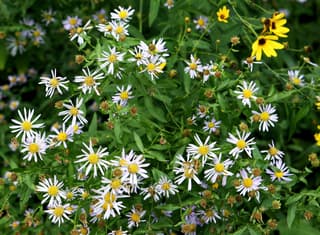
White Panicle Aster
Symphyotrichum lanceolatum
Symphyotrichum lanceolatum, commonly known as White Panicle Aster, is a native North American perennial wildflower in the Asteraceae family. Formerly classified as Aster lanceolatus, it produces masses of small daisy-like white flowers with yellow disc centers from mid-summer through fall, reaching up to 1.5 meters tall. A vital late-season pollinator plant, it thrives in moist, sunny conditions and spreads via rhizomes.
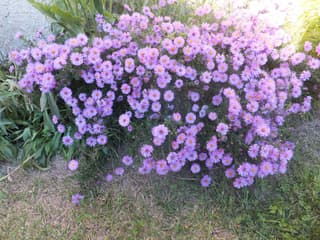
New England Aster
Symphyotrichum novae-angliae
New England aster is a perennial wildflower of moist meadows and prairies in central and eastern North America. It forms clumps of upright, hairy stems, usually 1 to 1.2 m tall and sometimes over 1.8 m. From late summer into autumn it bears masses of deep purple, occasionally pink or white, daisies with up to 100 narrow rays around a yellow centre. The top dies back in winter and regrows in spring. Its flowers are one of the last nectar sources of the year for bees and migrating monarch butterflies.

New York Aster
Symphyotrichum novi-belgii
Symphyotrichum novi-belgii, commonly called the New York aster or Michaelmas daisy, is a hardy herbaceous perennial native to eastern Canada and the northeastern United States, often found in wet meadows and abandoned fields near the coast. Valued for its abundant daisy-like flower heads in shades of purple, pink, and white surrounding bright yellow centers, it blooms from late summer through fall, often peaking around Michaelmas (September 29). Growing 3-5 feet (90-150cm) tall, it thrives in sunny garden borders and wildlife gardens, attracting bees, butterflies -- including Pearl Crescents, for which it is a host plant -- and seed-eating songbirds.
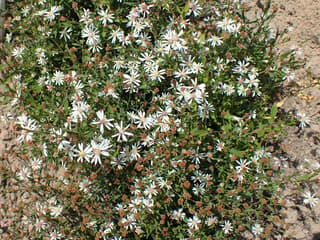
Shore Aster
Symphyotrichum tradescantii
Symphyotrichum tradescantii, commonly known as Shore Aster or Tradescant's Aster, is a native perennial wildflower of northeastern North America. This deciduous herbaceous plant produces an abundance of small, daisy-like flowers with white ray florets and pale yellow to purple disk florets in late summer and fall. It grows naturally along rocky shores, riverbanks, and freshwater estuaries, thriving in full sun to partial shade and moist soils. An excellent choice for naturalistic gardens, rain gardens, and native plant landscapes.
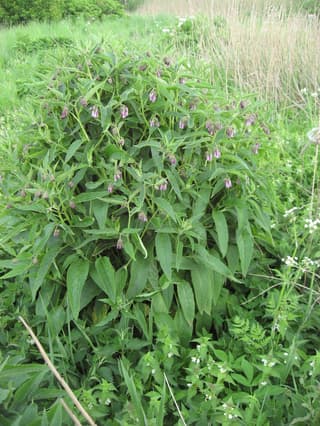
Russian Comfrey
Symphytum × uplandicum
Russian comfrey (Symphytum × uplandicum) is a vigorous, hardy herbaceous perennial in the borage family (Boraginaceae), arising as a natural hybrid between common comfrey (Symphytum officinale) and rough comfrey (Symphytum asperum). It forms large clumps of coarse, bristly, lance-shaped leaves and sends up branching stems topped with nodding, bell-shaped flowers that open pink-blue and mature to violet-purple, blooming from late spring through summer. Prized by organic gardeners as a "dynamic accumulator," its deep taproot draws potassium and other minerals up from the subsoil, making the leaves an excellent source material for compost activators, liquid feeds, and mulch. Note that comfrey contains pyrrolizidine alkaloids that are toxic to the liver if ingested, so its historical internal medicinal use has been discouraged in favor of external, topical applications only.
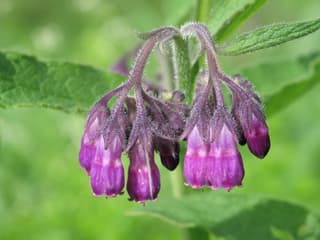
common comfrey
Symphytum officinale
Symphytum officinale, commonly known as comfrey, is a robust perennial herb famous for its large, hairy, lanceolate leaves and clusters of bell-shaped flowers. It is a 'dynamic accumulator' with a deep taproot that mines minerals from the subsoil, making its foliage an excellent organic fertilizer and compost activator.
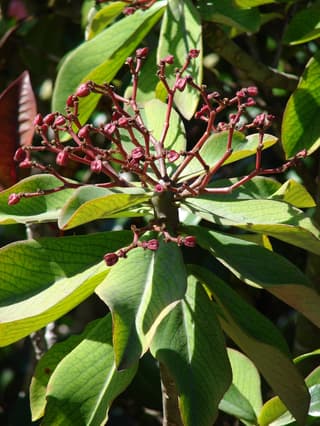
African Milk Bush
Synadenium grantii
The African Milk Bush (Synadenium grantii, synonym of Euphorbia umbellata) is a perennial succulent shrub native to East Africa—specifically the Great Lakes region, including the Democratic Republic of the Congo, Tanzania, Kenya, Uganda, Burundi, and Rwanda—where it grows on rocky slopes between 950 and 2,100 m in altitude. In Brazil, it is widely cultivated as an ornamental plant and in folk medicine, known primarily for the abundant milky latex that flows from any wound on the stem or leaves. In nature, it can reach 2 to 10 m in height, but in pots, it tends to remain much more compact. The leaves are fleshy, green or reddish-purple (as seen in the ornamental cultivar 'Rubra'), and the flowers are small, greenish, and inconspicuous, surrounded by purplish bracts. WARNING: All plant latex is toxic and extremely irritating—contact with skin or eyes can cause burning, dermatitis, and blisters, and ingestion is dangerous for humans and animals. Always cultivate with protective gloves and keep out of reach of children and pets.
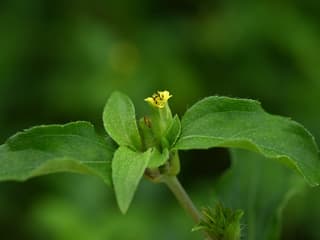
Nodeweed
Synedrella nodiflora
Synedrella nodiflora is an annual herb in the daisy family (Asteraceae) and the only species in its genus. Native to the tropical Americas, it now grows as a spontaneous plant throughout almost all tropical regions. It reaches 25 to 90 cm in height, featuring a quadrangular, hairy stem that sometimes roots at the lower nodes. It has opposite, oval, and serrated leaves with three prominent veins, and small yellow flower heads (5 to 10 mm) that grow in clusters near the leaf axils. It flowers and fruits year-round, completing its cycle in two to three months and releasing thousands of seeds with bristles that cling to clothing and animal fur.
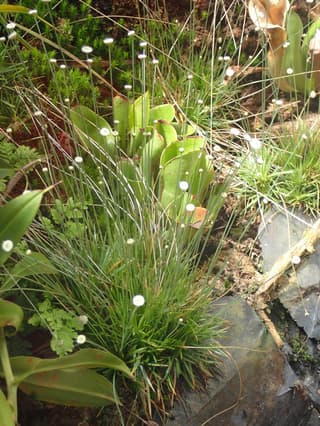
Yellow hatpins
Syngonanthus flavidulus
Syngonanthus flavidulus, commonly known as yellow hatpins, is a small, perennial herb in the pipewort family (Eriocaulaceae), endemic to the southeastern United States (Alabama, Florida, Georgia, Mississippi, North Carolina, and South Carolina). It grows in moist, sandy pine savannas, pond margins, bogs, and ditches, in areas with constant groundwater seepage maintained by natural fires. It forms dense tufts of narrow, grass-like leaves from which thin stems (scapes) emerge, topped with tiny, spherical, white-to-yellowish inflorescences resembling pinheads—hence the name "yellow hatpins." It blooms from spring to early summer.
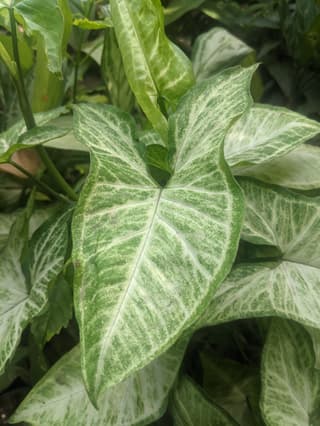
Arrowhead Vines
Syngonium
Syngonium is a genus of tropical climbing and trailing plants in the family Araceae, native to the rainforests of Central and South America. Its young leaves display a distinctive arrowhead shape that gradually transforms into multi-lobed forms as the plant matures. Widely grown as a houseplant for its lush ornamental foliage, Syngonium comes in dozens of cultivars with green, variegated, pink, and silvery leaves. Important: the plant is toxic to cats, dogs, and humans due to calcium oxalate crystals present throughout its tissues.
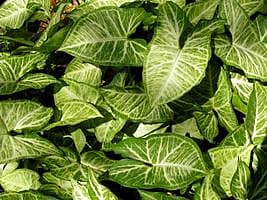
Five Fingers
Syngonium angustatum
Syngonium angustatum, commonly known as Five Fingers or Climbing Arrowhead Vine, is a tropical climbing plant native to Mexico and Central America. It belongs to the Araceae family and is prized for its distinctive foliage that transforms dramatically as the plant matures — juvenile leaves are simple arrowhead-shaped, while adult leaves develop deep lobes resembling spread fingers, hence the name Five Fingers. It is a versatile houseplant that thrives as a trailing vine or trained climber.
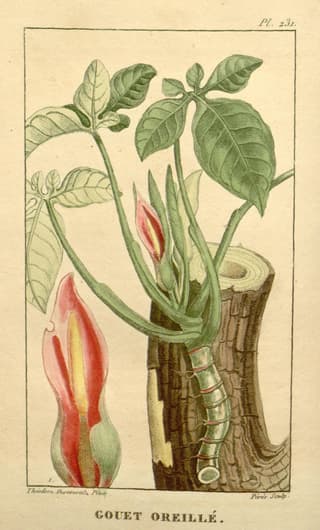
Five-Fingered Philodendron
Syngonium auritum
Syngonium auritum, commonly known as Five-Fingered Philodendron or Five Fingers, is a tropical climbing plant from the Araceae family, native to the Caribbean and Central America. Its juvenile leaves are arrow-shaped, but as the plant matures, they develop into divided leaflets resembling an open hand with five fingers — hence the popular name. It is a vigorous climber widely used in interior decoration and tropical gardens.
Red Arrow Syngonium
Syngonium erythrophyllum
Syngonium erythrophyllum, commonly known as the Red Arrow Syngonium, is a climbing aroid native to the tropical rainforests of Central America, particularly Panama. Its young arrow-shaped leaves display striking reddish to copper tones that mature into a deeper green as the plant ages. A versatile vine, it can be grown trailing or trained up a moss pole, and is highly prized by aroid collectors for its unusual foliage coloration.
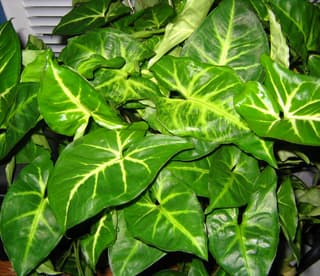
Arrowhead Plant
Syngonium podophyllum
Syngonium podophyllum is a tropical climbing plant from the Araceae family, native to the humid forests of Central America. Known for its arrow-shaped leaves that change form as they mature, it is an extremely popular houseplant due to its ease of care and ornamental beauty.
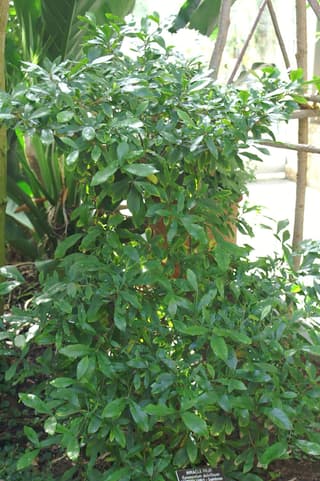
Miracle Berry
Synsepalum dulcificum
Synsepalum dulcificum, known as the Miracle Berry, is an evergreen shrub native to West Africa. Its most notable feature is the production of small red berries containing miraculin. This glycoprotein temporarily alters taste buds, causing sour or bitter foods to be perceived as extremely sweet. The plant has glossy dark green leaves and exhibits slow, elegant growth.
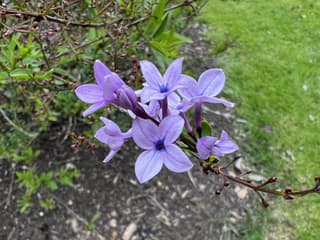
Persian lilac
Syringa persica
Persian lilac (Syringa × persica) is a deciduous shrub in the olive family (Oleaceae), more compact than common lilac. It is an old hybrid, probably between Syringa × laciniata and Syringa afghanica, from China and Afghanistan. It forms a rounded mound wider than tall, 1.2 to 2.5 m high and 1.5 to 3 m or more across, with slender arching branches and narrow dark green leaves. In late spring last year's shoots are covered in 5 to 8 cm clusters of very fragrant pale lilac flowers; a white form exists. It tolerates heat and drought better than many lilacs and holds the Royal Horticultural Society's Award of Garden Merit. Crossed with common lilac it gave rise to Syringa × chinensis. The name "Persian lilac" is also used for chinaberry (Melia azedarach), an unrelated plant.
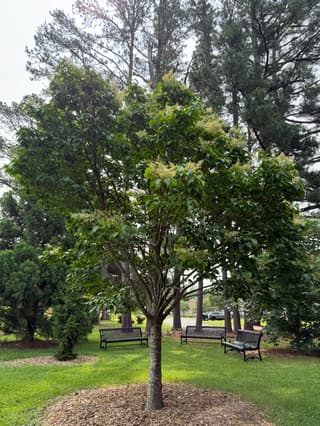
Japanese Tree Lilac
Syringa reticulata
Japanese Tree Lilac (Syringa reticulata) is a small to medium-sized ornamental tree native to Japan and northeastern Asia. It stands out for its enormous creamy-white fragrant flower panicles that appear in early summer, blooming up to six weeks after most other lilacs have finished. With cherry-like bark and exceptional urban tolerance, it is one of the most versatile and low-maintenance ornamental trees for gardens and streetscaping.
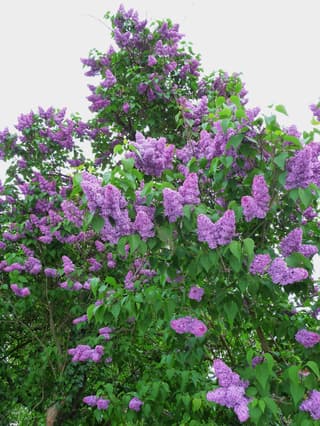
Common Lilac
Syringa vulgaris
Syringa vulgaris, the common lilac, is a hardy deciduous shrub native to the Balkans and widely cultivated for its spectacular spring display of highly fragrant flower clusters. Growing up to 5 meters tall, it produces dense panicles in shades ranging from classic purple-lavender to white, pink, and magenta. It is a beloved garden staple in temperate climates and thrives in cold winters with full sun exposure.
Syzygites megalocarpus
Syzygites megalocarpus
Syzygites megalocarpus is a zygomycete fungus known for its distinct, large-spored zygosporangia. It is primarily a necrotrophic parasite that grows on the decaying fruiting bodies of various mushrooms, particularly those in the Agaricales and Russulales orders. It forms a fuzzy, grayish-white to yellowish mycelial mat over its host, eventually producing complex, dichotomously branched sporangiophores.
Syzygium (genus)
Syzygium
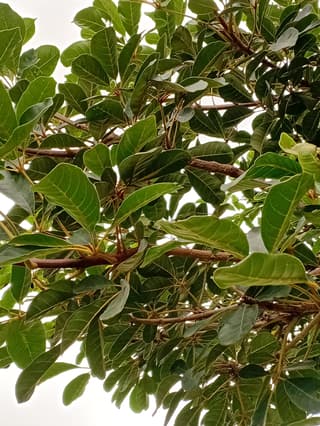
Syzygium is a large genus of tropical and subtropical evergreen trees and shrubs in the family Myrtaceae, comprising over 1,000 species native to Asia, Australia, and Africa. The genus includes economically and culturally significant species such as clove (S. aromaticum), jambolan (S. cumini), and rose apple (S. samarangense). These are hardy plants with dense, glossy foliage that produce edible fruits and aromatic flowers.
Java plum
Syzygium cumini
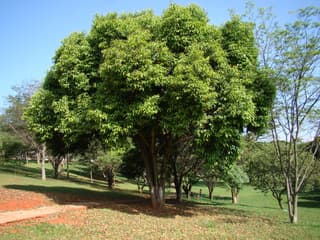
Java plum (Syzygium cumini), also called jamun or jambolan, is an evergreen tree in the myrtle family native to India, Myanmar and Sri Lanka. It grows fast and can reach 30 m, with a dense crown and thick, glossy leaves that are pinkish when young and smell of turpentine when crushed. Fragrant white to pinkish flowers attract bees and butterflies. The oval fruits turn from green to purple and then nearly black, stain hands and taste sweet with an astringent edge. It is widely planted in the tropics for fruit and shade, and has become invasive in South Florida, Hawaii and South Africa.
Rose Apple
Syzygium jambos
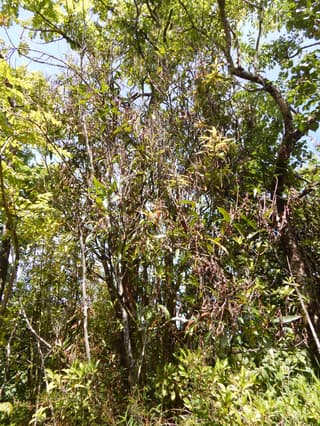
Syzygium jambos, popularly known as Rose Apple or Wax Apple, is a tropical fruit tree native to Southeast Asia. It features evergreen foliage, fragrant white to cream-colored flowers, and rounded fruits that range from yellow to pale pink, with a rose-like aroma. It is widely cultivated for its edible fruits and also as an ornamental plant.
Magenta Cherry
Syzygium paniculatum
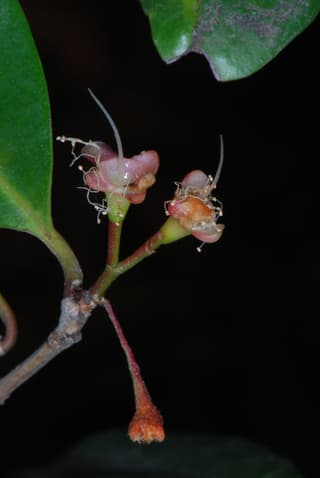
Syzygium paniculatum, known as Magenta Cherry or Brush Cherry, is an evergreen shrub and small tree native to the rainforests of eastern Australia (New South Wales). It bears glossy dark green leaves with attractive bronze-red new growth, clusters of white flowers in spring and summer, and distinctive magenta-coloured edible berries. Formerly classified as Eugenia paniculata, it is widely grown as a hedging plant, topiary subject, and ornamental specimen across subtropical and warm temperate regions worldwide.
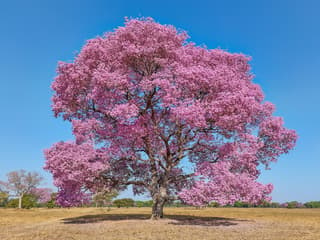
Pink Trumpet Tree
Tabebuia impetiginosa
Tabebuia impetiginosa, commonly known as the Pink Trumpet Tree or Pau d'Arco, is one of South America's most spectacular flowering trees. Native to the tropical and subtropical forests of Brazil and neighboring countries, it produces breathtaking displays of purple to pink trumpet-shaped flowers in late winter and early spring, typically when the tree is leafless. A member of the Bignoniaceae family, it can reach up to 30 meters tall in the wild and is widely planted as an ornamental street and garden tree in warm climates worldwide.
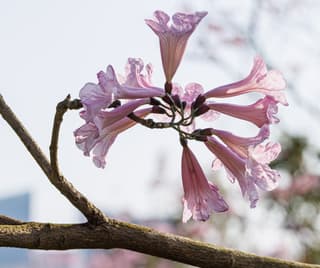
Pink Trumpet Tree
Tabebuia rosea
The Pink Trumpet Tree (Tabebuia rosea) is a majestic tropical tree native from Mexico to Colombia and Venezuela.
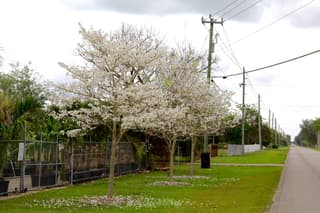
White Ipe
Tabebuia roseoalba
Tabebuia roseoalba is a Brazilian ornamental flowering tree native to the Cerrado and Pantanal biomes, in the family Bignoniaceae. It grows 7-16 m tall with a 40-50 cm trunk diameter and fissured, cork-like bark. Leaves are compound and trifoliate, with a blue-green tone. In late winter to early spring (roughly August-October in its native Southern Hemisphere range), the tree drops its leaves entirely and bursts into a canopy of white to pale-pink trumpet-shaped flowers with yellow markings in the throat -- a striking but brief display that lasts only a few days. It is a hardy, drought-tolerant pioneer species widely planted along streets and used in the restoration of degraded land.
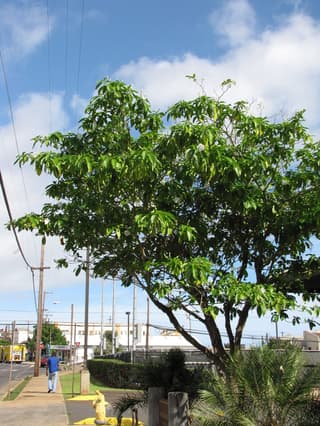
Crepe Jasmine
Tabernaemontana
Tabernaemontana is a genus of evergreen shrubs and small trees in the dogbane family (Apocynaceae), native to the tropics and subtropics of Asia, Africa and the Americas. Best known through the widely cultivated species Tabernaemontana divaricata (crepe jasmine), plants in this genus have glossy dark-green leaves and clusters of waxy, pinwheel-shaped white flowers that are especially fragrant at night. Like other Apocynaceae, every part of the plant exudes a milky latex sap when cut.
Find the Perfect Plant
Our plant guide helps you find ideal species for your experience level and time of year.
Browse by Difficulty, Season & More
Use the filters below to narrow this catalog by care difficulty, season, environment, or search directly by name. Each filter leads to a focused list tailored to your specific growing conditions.