Euphorbiaceae
African Milk Bush: Medicinal Uses & Care Tips
Synadenium grantii
Grow the African Milk Bush in full sun to bright partial shade, using well-drained soil and moderate watering—allow it to dry out thoroughly between waterings, as the plant is very sensitive to overwatering. It is heat and drought-tolerant but suffers in temperatures below 50°F (10°C). Always handle with gloves: the white latex released from any cut is toxic and irritating to the skin, eyes, and mucous membranes.
Every 12 days
Bright indirect
10° - 32°C
30% - 60%
Categories
What is African Milk Bush?
African Milk Bush (Synadenium grantii) is a medium-care plant from the Euphorbiaceae family. The African Milk Bush (Synadenium grantii, synonym of Euphorbia umbellata) is a perennial succulent shrub native to East Africa—specifically the Great Lakes region, including the Democratic Republic of the Congo, Tanzania, Kenya, Uganda, Burundi, and Rwanda—where it grows on rocky slopes between 950...
African Milk Bush grows up to 5.0m, spread of 300cm, watering every 12 days, 10°C – 32°C, 30–60% humidity. It is suitable for indoor environments and not safe for pets.
Without precautions, ingestion can cause irritation in pets. Keep out of reach of cats and dogs. Without adequate drainage, root rot can develop within 24 days.
How to Care for African Milk Bush?
TLDR: African Milk Bush needs Bright indirect, watering every 12 days, and temperatures between 10-32°C with 30-60% humidity.
How Often Should You Water African Milk Bush?
Water only when the substrate is almost completely dry—on average every 10 to 15 days, and even less frequently in winter. Never allow water to sit in the pot's saucer: excess moisture is the primary cause of root rot in this species.
How Much Light Does African Milk Bush Need?
Prefers full sun to well-lit partial shade. It tolerates direct outdoor sun well; indoors, keep it near a bright window—low light causes the stem to become leggy and weak.
What Is the Best Soil for African Milk Bush?
Use a light, well-drained substrate, mixing equal parts garden soil, coarse sand, and perlite (or a ready-made cactus and succulent mix). The ideal pH is neutral to slightly acidic (6.0 to 7.5). Avoid compacted or waterlogged soils.
What Pot Should You Use for African Milk Bush?
Choose unglazed clay or ceramic pots with generous drainage holes, which help evaporate excess moisture from the substrate. Wide, shallow pots favor the stability of the plant, as the upper part can become heavy over time.
Care Schedule
Fertilize
Every 60 days
Rotate
Every 15 days
Repot
Every 730 days
What Is African Milk Bush and Where Does It Come From?
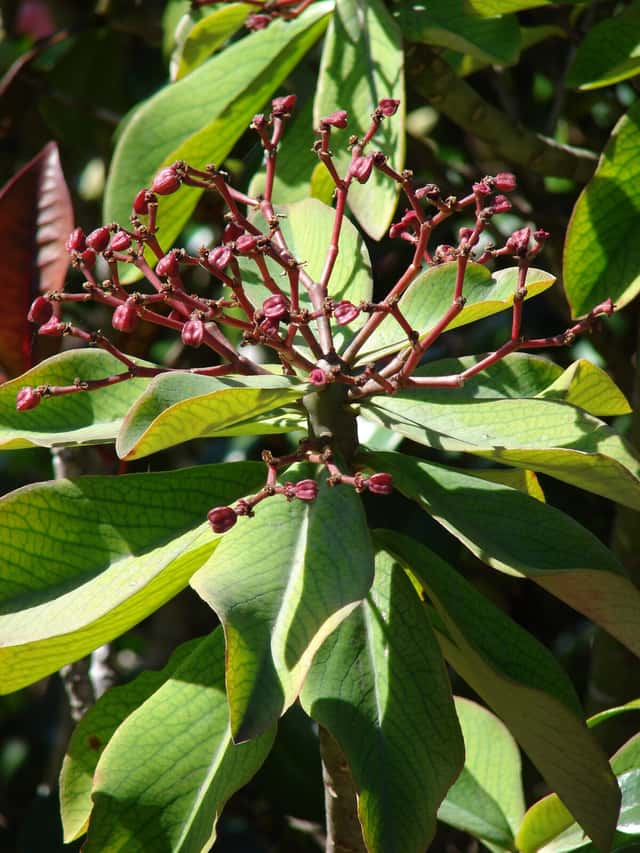
The African Milk Bush (Synadenium grantii, synonym of Euphorbia umbellata) is a perennial succulent shrub native to East Africa—specifically the Great Lakes region, including the Democratic Republic of the Congo, Tanzania, Kenya, Uganda, Burundi, and Rwanda—where it grows on rocky slopes between 950 and 2,100 m in altitude. In Brazil, it is widely cultivated as an ornamental plant and in folk medicine, known primarily for the abundant milky latex that flows from any wound on the stem or leaves. In nature, it can reach 2 to 10 m in height, but in pots, it tends to remain much more compact. The leaves are fleshy, green or reddish-purple (as seen in the ornamental cultivar 'Rubra'), and the flowers are small, greenish, and inconspicuous, surrounded by purplish bracts. WARNING: All plant latex is toxic and extremely irritating—contact with skin or eyes can cause burning, dermatitis, and blisters, and ingestion is dangerous for humans and animals. Always cultivate with protective gloves and keep out of reach of children and pets.
How to Propagate African Milk Bush?
How Big Does African Milk Bush Grow?
TLDR: African Milk Bush can reach up to 5.0m tall with Medium growth rate.
Max height
5.0m
Spread
3.0m
Growth rate
Medium
Foliage
Evergreen
Warning: Toxic Plant
This plant can be toxic if ingested. Keep out of reach of:
Plant Uses
Ornamental
Great for decoration
Medicinal
Medicinal properties
Medicinal Uses
- In Brazilian folk medicine, highly diluted latex is traditionally used against gastric disorders and as a purgative, but this practice is dangerous and not recommended without professional guidance
- Leaf extracts are studied in scientific research for possible anti-inflammatory and anti-tumor activity, though without proven or safe therapeutic use yet
- Home use of the latex is discouraged due to the high risk of chemical burns on the skin, eyes, and mucous membranes
Culinary Uses
- Not an edible plant—all parts contain toxic latex and consumption is dangerous; it has no culinary use
Is your plant showing symptoms?
Click on the symptom to discover possible causes:
What Diseases Commonly Affect African Milk Bush?
TLDR: African Milk Bush is susceptible to 13 known diseases. Monitor regularly for early detection.
Root Rot
Root rot is a serious fungal disease that affects the root system of plants, causing them to decay and die. It is primarily caused by overwatering, poor drainage, or soil-borne fungi such as Pythium, Phytophthora, Rhizoctonia, and Fusarium. The disease thrives in waterlogged conditions where roots are deprived of oxygen, making them susceptible to fungal infection.
Overwatering
Overwatering occurs when plants receive too much water, depriving roots of oxygen and causing root rot. This environmental stress is one of the most common causes of houseplant death, as waterlogged soil prevents roots from breathing and functioning properly.
Mealybugs
Mealybugs are small, soft-bodied insects covered with a white, waxy, cottony material. They are common pests of houseplants and outdoor plants in mild climates. These sap-sucking insects feed on plant tissue, causing damage, stunted growth, and can lead to plant death if left untreated. They produce sticky honeydew which attracts sooty mold.
Spider Mites
Spider mites are tiny arachnids (less than 1/20 inch long) related to spiders and ticks that feed on plant sap. They thrive in hot, dry conditions and can cause significant damage to ornamental and vegetable plants. During severe infestations, crop losses can reach 14% or higher as these pests disrupt vital plant processes including photosynthesis, carbon dioxide absorption, and transpiration.
Meaning & Symbolism
In Brazilian popular culture, the African Milk Bush carries ambiguous symbolism: on one hand, it is associated with protection and healing due to its traditional use in home remedies; on the other, its regional nickname 'cancerosa' refers both to the folk use of the latex against tumors and the danger of mishandling it. It is common to see it planted as a hedge or 'guardian plant' in backyards, as it is believed to ward off negative energies—though its cultivation requires respect and care due to its actual toxicity.
Compare with similar plants
| Attribute | Difficulty | Light | Watering | Pet Safe |
|---|---|---|---|---|
| Dark Fieldcap | Medium | Low light | 2d | ⚠️ |
| Azalea | Medium | Partial shade | 3d | ⚠️ |
| Muriel's Bamboo | Medium | Partial shade | 3d | ✓ |
| Bougainvillea | Medium | Direct sun | 7d | ⚠️ |




