Bignoniaceae
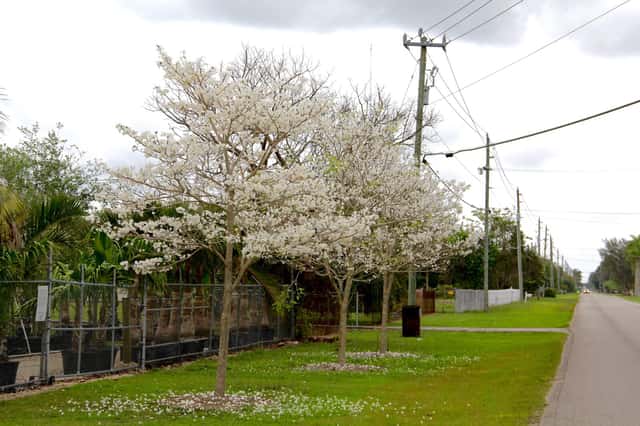
White Ipe (Tabebuia roseoalba)
Tabebuia roseoalba
Grow in full sun with well-draining soil. Water regularly during the first year to establish the root system; once established, the tree is drought-tolerant and needs little maintenance. Avoid waterlogged soil, which encourages root rot.
Every 14 days
Direct sun
20° - 35°C
% - %
Categories
What is White Ipe?
White Ipe (Tabebuia roseoalba) is a medium-care plant from the Bignoniaceae family. Tabebuia roseoalba is a Brazilian ornamental flowering tree native to the Cerrado and Pantanal biomes, in the family Bignoniaceae. It grows 7-16 m tall with a 40-50 cm trunk diameter and fissured, cork-like bark. Leaves are compound and trifoliate, with a blue-green tone. In late winter to early spr...
White Ipe grows up to 16.0m, watering every 14 days, 20°C – 35°C. It is not suitable for indoor environments and safe for pets.
Unlike many popular species, White Ipe is safe to keep around pets.
How to Care for White Ipe?
TLDR: White Ipe needs Direct sun, watering every 14 days, and temperatures between 20-35°C with 40-70% humidity.
How Often Should You Water White Ipe?
Water regularly during the first year (soil moist but not soggy). Once established, reduce frequency -- this tree tolerates dry spells well and prefers the soil to dry out between waterings.
How Much Light Does White Ipe Need?
Needs full sun (at least 6-8 hours of direct light daily) to grow vigorously and flower well.
What Is the Best Soil for White Ipe?
Tolerates poor, sandy or rocky soils as long as they drain well. Fertile, organic-rich soil speeds growth but is not required.
What Pot Should You Use for White Ipe?
Not suitable for permanent pot culture -- this is a large tree. Use nursery pots or planting bags only at the seedling stage, then transplant to open ground after 3-4 months.
What Is White Ipe and Where Does It Come From?
Tabebuia roseoalba is a Brazilian ornamental flowering tree native to the Cerrado and Pantanal biomes, in the family Bignoniaceae. It grows 7-16 m tall with a 40-50 cm trunk diameter and fissured, cork-like bark. Leaves are compound and trifoliate, with a blue-green tone. In late winter to early spring (roughly August-October in its native Southern Hemisphere range), the tree drops its leaves entirely and bursts into a canopy of white to pale-pink trumpet-shaped flowers with yellow markings in the throat -- a striking but brief display that lasts only a few days. It is a hardy, drought-tolerant pioneer species widely planted along streets and used in the restoration of degraded land.
How to Propagate White Ipe?
Seed propagation
Germination rate is typically around 40%; use fresh seeds for best results.
- 1 Collect the winged seeds soon after the seed pods open
- 2 Sow in seed trays or planting bags with a light, well-draining substrate
- 3 Keep the substrate moist until germination, which takes 8-18 days
- 4 Transplant seedlings to their final location after 3-4 months, once well developed
Materials needed:
How Big Does White Ipe Grow?
TLDR: White Ipe can reach up to 16.0m tall with Fast growth rate.
Max height
16.0m
Growth rate
Fast
Foliage
Deciduous
Plant Uses
Ornamental
Great for decoration
Medicinal
Medicinal properties
Medicinal Uses
- Bark and leaves traditionally used in teas with anti-inflammatory, antipyretic and expectorant properties
- Traditional topical use on wounds and burns
Is your plant showing symptoms?
Click on the symptom to discover possible causes:
What Diseases Commonly Affect White Ipe?
TLDR: White Ipe is susceptible to 5 known diseases. Monitor regularly for early detection.
Aphids
Aphids are small, soft-bodied, pear-shaped insects (1/16 to 1/8 inch long) that feed by sucking nutrient-rich sap from plants. They reproduce rapidly and can quickly weaken plants, causing distorted growth and transmitting plant viruses. Aphids come in various colors including green, black, red, yellow, brown, and gray. They secrete honeydew, a sticky substance that attracts ants and encourages sooty mold growth.
Spider Mites
Spider mites are tiny arachnids (less than 1/20 inch long) related to spiders and ticks that feed on plant sap. They thrive in hot, dry conditions and can cause significant damage to ornamental and vegetable plants. During severe infestations, crop losses can reach 14% or higher as these pests disrupt vital plant processes including photosynthesis, carbon dioxide absorption, and transpiration.
Mealybugs
Mealybugs are small, soft-bodied insects covered with a white, waxy, cottony material. They are common pests of houseplants and outdoor plants in mild climates. These sap-sucking insects feed on plant tissue, causing damage, stunted growth, and can lead to plant death if left untreated. They produce sticky honeydew which attracts sooty mold.
Root Rot
Root rot is a serious fungal disease that affects the root system of plants, causing them to decay and die. It is primarily caused by overwatering, poor drainage, or soil-borne fungi such as Pythium, Phytophthora, Rhizoctonia, and Fusarium. The disease thrives in waterlogged conditions where roots are deprived of oxygen, making them susceptible to fungal infection.
Meaning & Symbolism
Associated with peace, purity and serenity. It flowers while completely leafless, briefly covering the canopy in pale blossoms -- one of the visual signals of late winter in the Cerrado. Also known as a "honey plant" for its importance as a nectar source for bees.
Fun Facts
The name "Tabebuia" comes from Tupi and roughly means "wood that does not sink"
White ipe bloom lasts only 2-3 days, covering the entirely leafless canopy
It is known as a "honey plant" for being a key nectar source for bees in the Cerrado
Its hard, dense wood is used for interior construction finishing
Frequently asked questions
Is white ipe toxic to pets?
How long does it take for a white ipe to flower?
Can white ipe be grown in a pot?
What are the main problems affecting white ipe?
Compare with similar plants
| Attribute | Difficulty | Light | Watering | Pet Safe |
|---|---|---|---|---|
| Dark Fieldcap | Medium | Low light | 2d | ⚠️ |
| Azalea | Medium | Partial shade | 3d | ⚠️ |
| Muriel's Bamboo | Medium | Partial shade | 3d | ✓ |
| Bougainvillea | Medium | Direct sun | 7d | ⚠️ |
Choose & Compare
Sources & References
- Tabebuia roseoalba (Ridl.) Sandwith - POWO Kew Science
- Ipe-branco - Wikipedia (pt)
- Tabebuia roseo-alba - Wikipedia (en)
- Tabebuia roseoalba - Useful Tropical Plants
- Ipe-branco - Tabebuia roseoalba - Jardineiro.net
- Tabebuia Hardiness Zones Ultimate Guide (genus-level reference)
- Tabebuia Trumpet Tree Care - Gardening Know How (genus-level reference)
- Tabebuia Tree: Growing The Flowering Pink Yellow Tree




