Arecaceae
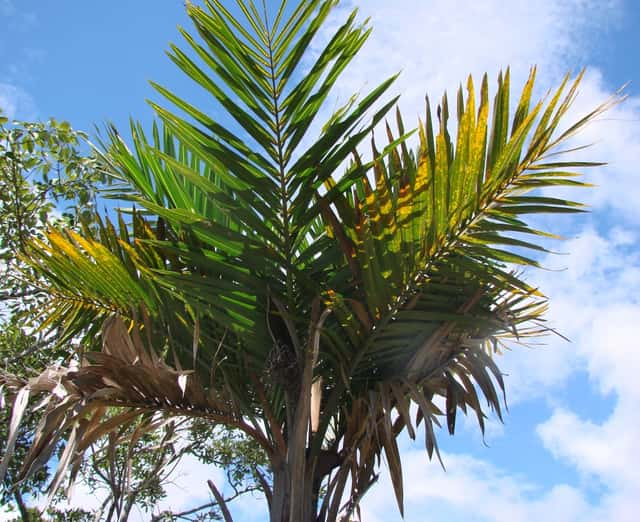
Catole Palm (Syagrus comosa)
Syagrus comosa
A full-sun palm for well-drained soil. Needs regular water while young, but once established it handles the cerrado dry season. Does not tolerate waterlogging.
Every 10 days
Direct sun
-2° - 40°C
30% - 70%
Categories
What is Catole Palm?
Catole Palm (Syagrus comosa) is a medium-care plant from the Arecaceae family. Syagrus comosa is a palm of the cerrado savanna and rocky highland grasslands of central, eastern and northern Brazil, reaching into Bolivia. It grows in open areas and on rocky slopes up to 1,200 m. It has a single slender trunk 6-12 cm thick, often covered by old leaf bases, and usually stands 1-7...
Catole Palm grows up to 5.0m, spread of 300cm, watering every 10 days, -2°C – 40°C, 30–70% humidity. It is not suitable for indoor environments and safe for pets.
Unlike many popular species, Catole Palm is safe to keep around pets.
How to Care for Catole Palm?
TLDR: Catole Palm needs Direct sun, watering every 10 days, and temperatures between -2-40°C with 30-70% humidity.
How Often Should You Water Catole Palm?
Water when the top few centimeters of soil dry out, about every 7-10 days in warm weather, for the first two years. Mature plants in the ground get through the dry season with little water. Never leave the roots in standing water.
How Much Light Does Catole Palm Need?
Full sun. It grows in open country in the wild and turns weak and leggy in shade.
What Is the Best Soil for Catole Palm?
Sandy or gravelly, well-drained, slightly acidic soil like that of the cerrado. In clay, mix in coarse sand and plant on a slight mound.
What Pot Should You Use for Catole Palm?
While small, a deep pot with drainage holes and sandy mix. Since it forms a deep root and outgrows pots, its permanent home is in the ground in full sun.
Care Schedule
Fertilize
Every 90 days
What Is Catole Palm and Where Does It Come From?
Syagrus comosa is a palm of the cerrado savanna and rocky highland grasslands of central, eastern and northern Brazil, reaching into Bolivia. It grows in open areas and on rocky slopes up to 1,200 m. It has a single slender trunk 6-12 cm thick, often covered by old leaf bases, and usually stands 1-7 m tall, typically about 5 m. The crown holds 6-12 feathery leaves up to 1.5 m long. Its clusters bear cream flowers and small coconuts with edible pulp, gathered from the wild by local people. It grows slowly and is rare in cultivation.
How to Propagate Catole Palm?
Seed
Germination is slow and uneven, as in other cerrado palms. Fresh seed works best. Seedlings form a deep root: use a deep container and transplant early without breaking the root ball.
- 1 Collect ripe fruits and remove the pulp
- 2 Soak the seeds in water for 2-3 days, changing the water daily
- 3 Sow in a deep container of sandy mix, half burying the seed
- 4 Keep moist and warm, above 25 °C
Materials needed:
How Big Does Catole Palm Grow?
TLDR: Catole Palm can reach up to 5.0m tall with Slow growth rate.
Max height
5.0m
Spread
3.0m
Growth rate
Slow
Foliage
Evergreen
Plant Uses
Ornamental
Great for decoration
Edible
Can be consumed
Culinary Uses
- The small fruits have edible pulp and are gathered from the wild for local use
Is your plant showing symptoms?
Click on the symptom to discover possible causes:
What Diseases Commonly Affect Catole Palm?
TLDR: Catole Palm is susceptible to 6 known diseases. Monitor regularly for early detection.
Root Rot
Root rot is a serious fungal disease that affects the root system of plants, causing them to decay and die. It is primarily caused by overwatering, poor drainage, or soil-borne fungi such as Pythium, Phytophthora, Rhizoctonia, and Fusarium. The disease thrives in waterlogged conditions where roots are deprived of oxygen, making them susceptible to fungal infection.
Scale Insects
Scale insects are small sap-sucking pests that appear as brown, shell-like bumps on plant stems and leaves. There are over 25 species, divided into armored (hard) and unarmored (soft) scales. They feed by piercing plant tissue and extracting sap, which weakens the plant and can lead to yellowing, stunted growth, and even death if left untreated. They also excrete honeydew, which attracts ants and promotes sooty mold growth.
Spider Mites
Spider mites are tiny arachnids (less than 1/20 inch long) related to spiders and ticks that feed on plant sap. They thrive in hot, dry conditions and can cause significant damage to ornamental and vegetable plants. During severe infestations, crop losses can reach 14% or higher as these pests disrupt vital plant processes including photosynthesis, carbon dioxide absorption, and transpiration.
Potassium Deficiency
Potassium deficiency is a nutritional disorder that affects a plant's ability to regulate stomatal opening and closing, resulting in characteristic leaf edge burn. Potassium is a mobile nutrient, so symptoms first appear on older, lower leaves.
Fun Facts
The German botanist Martius described it in 1847 as Cocos comosa
In Brazil the name "catolé" is also used for other Syagrus palms
It is very rare in collections, though common on some cerrado ranges such as Chapada dos Veadeiros
Frequently asked questions
Does the catole palm need full sun?
How often should I water it?
Is it cold hardy?
How long do the seeds take to sprout?
Compare with similar plants
| Attribute | Difficulty | Light | Watering | Pet Safe |
|---|---|---|---|---|
| Dark Fieldcap | Medium | Low light | 2d | ⚠️ |
| Azalea | Medium | Partial shade | 3d | ⚠️ |
| Muriel's Bamboo | Medium | Partial shade | 3d | ✓ |
| Bougainvillea | Medium | Direct sun | 7d | ⚠️ |




