Complete Plant Guide
Explore plants by difficulty, season and more. Find the perfect plant for you.
Difficulty
Categories
Plants by City
🗺️ Plants by City3782 plants found
Showing 2485-2520 of 3782
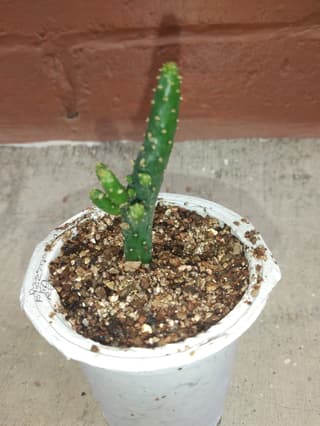
Tuna Prickly Pear
Opuntia tuna
Opuntia tuna, commonly known as tuna prickly pear or Caribbean prickly pear cactus, is a robust columnar cactus native to the Caribbean and tropical Americas. Its flattened pads (cladodes) are armed with spines and glochids, and it produces showy yellow-to-orange flowers in spring and summer, followed by edible reddish fruits.
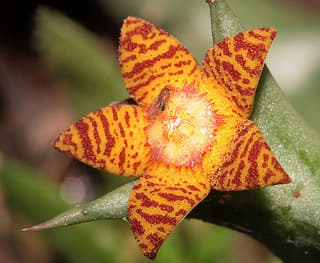
Schweinfurth's Carrion Flower
Orbea schweinfurthii
Orbea schweinfurthii is a low, mat-forming succulent in the milkweed subfamily of the Apocynaceae, native to the savannas and rocky grasslands of eastern and southern Africa -- from Botswana and Namibia through Zimbabwe, Zambia, Malawi, the Democratic Republic of Congo, Tanzania, Rwanda and Uganda. Its leafless, four- to five-angled stems creep and branch along the ground, rarely exceeding 15 cm, with widely spaced tubercles that taper to a small conical tooth and often blush purple-red under strong sun or stress. In summer and autumn it produces star-shaped flowers with a deep yellow, densely papillate corolla marked with dark maroon spots and a cream corona flecked with purple. Unlike most of its carrion-flower relatives, its scent is mild and fruity rather than foul, resembling overripe orange, pineapple or red wine, and it draws small fruit flies rather than blowflies as pollinators.
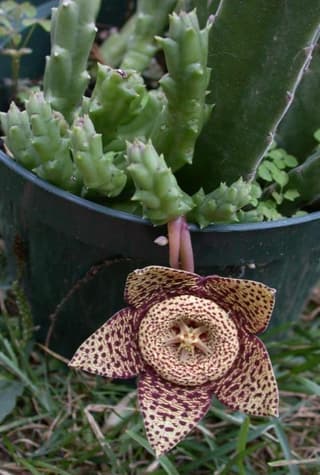
Carrion Flower
Orbea variegata
Orbea variegata, commonly known as Carrion Flower or Starfish Plant, is a low-growing succulent native to the Cape Province of South Africa. It produces striking star-shaped flowers up to 8 cm across, yellow or off-white with dark maroon spots, that emit a carrion odor to attract fly pollinators.
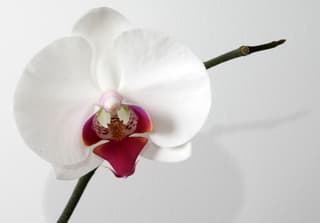
Orchid
Orchidaceae
Orchidaceae is one of the largest families of flowering plants, with over 25,000 species of mostly epiphytic and terrestrial perennials prized for their intricate, long-lasting blooms. The Phalaenopsis, or moth orchid, is the most widely grown houseplant representative of the family, valued for its arching sprays of waxy flowers that can stay open for months. Most cultivated orchids are epiphytes native to tropical and subtropical forests, where they cling to tree bark and absorb moisture and nutrients through thick, exposed aerial roots rather than soil.
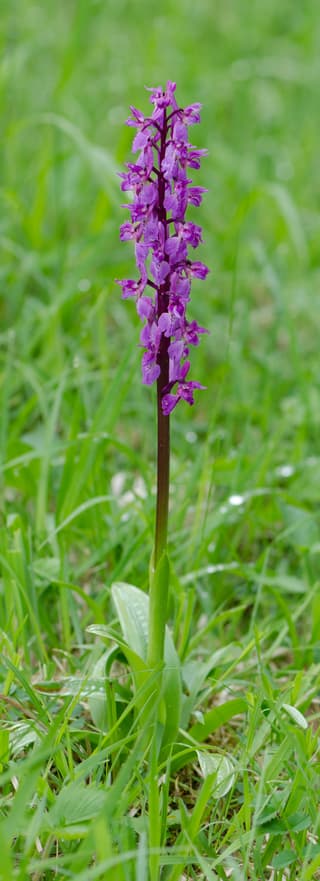
Early-purple orchid
Orchis mascula
Orchis mascula is a tuberous terrestrial orchid native to Europe, North Africa, and parts of Asia. It produces dense spikes of purple to pinkish flowers in the spring, rising above a rosette of leaves that are often spotted with dark purple. Unlike tropical orchids grown as houseplants, this is a wild species of woodlands and meadows that relies on a symbiotic soil fungus (mycorrhiza) to survive, making it notoriously difficult to cultivate outside its natural habitat. In many European countries, it is a protected wildflower and should never be removed from the wild.

Old Man of the Andes
Oreocereus celsianus
A slow-growing columnar cactus native to the Andes of Bolivia, Peru, and Argentina, where it grows at altitudes between 2,900 and 3,600 meters. Its upright stems, which branch at the base, are covered in dense white wool and long yellowish spines. They can reach up to 3 meters in height in the wild, though they rarely exceed 1 meter in cultivation. The white 'beard' covering the top of the stems protects the plant from intense solar radiation and the extreme temperature fluctuations of its high-altitude habitat, giving it its popular names. In spring, it produces tubular pinkish-purple flowers, usually pollinated by hummingbirds, followed by small globose fruits.
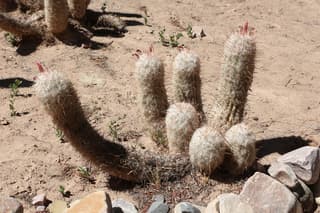
Old Man of the Andes
Oreocereus trollii
Oreocereus trollii is a woolly cactus from the high Andes of southern Bolivia and northern Argentina, where it grows on dry mountain slopes between about 2,900 and 4,300 m. It branches from the base into small clumps of short, thick stems 6-10 cm across. Young stems are almost round; older ones become columnar and can reach 1 m in the wild, though in pots they usually stay under 50 cm. Each stem has 15-25 low, knobbly ribs and is wrapped in dense white wool, which is really a mass of fine, hair-like radial spines up to 7 cm long. Through this wool push 3-5 stout central spines up to 5 cm long, in yellow, orange, red or brown with darker tips. The wool shields the plant from strong mountain sun and light night frosts. Mature plants produce pink to crimson, tube-shaped flowers up to 4 cm long in summer, followed by round fruits. It grows slowly and takes 5-10 years to reach full size.
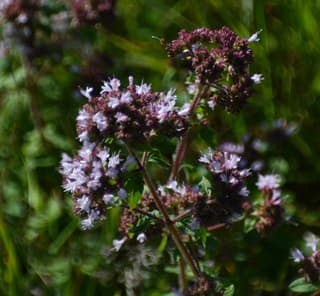
Oregano
Origanum
Origanum is a genus of aromatic Mediterranean herbs in the Lamiaceae family, widely known for culinary and medicinal use. This entry covers the most common species of the genus, including O. vulgare (common oregano), O. majorana (sweet marjoram), and O. dictamnus (Cretan dittany). These are hardy, drought-tolerant, fragrant plants well-suited for herb gardens, containers, and sunny borders.
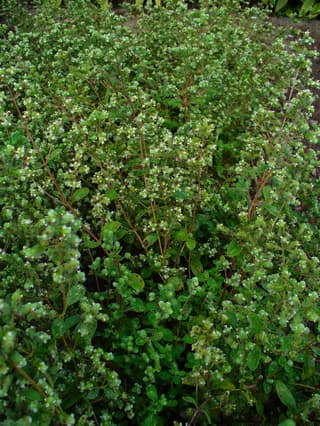
Sweet Marjoram
Origanum majorana
Sweet marjoram (Origanum majorana) is a fragrant Mediterranean herb in the Lamiaceae family, prized for over 4,000 years for its culinary and medicinal value. It features small, oval, grayish-green velvety leaves and produces tiny white to pale pink flowers in compact knot-like clusters during summer. While technically a tender perennial in warm climates (USDA zones 9–11), it is commonly grown as an annual in temperate regions. Sweet marjoram is milder and sweeter than its close relative oregano, with a warm, slightly floral, and spicy aroma.
Oregano
Origanum vulgare
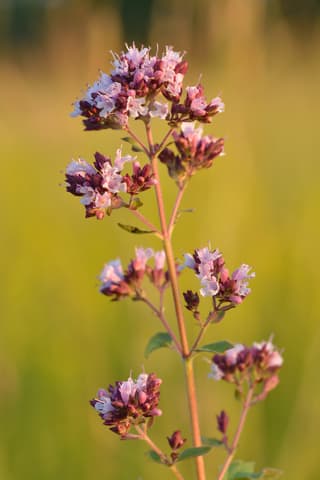
Oregano (Origanum vulgare) is an aromatic perennial herb native to the Mediterranean region, belonging to the Lamiaceae family. Known for its intensely fragrant leaves, it is one of the most widely used culinary herbs worldwide, essential in Italian, Greek, and Mexican cuisines. It forms low, bushy mounds and produces small pink, white, or purple flowers in summer.
Ornithogalum
Ornithogalum
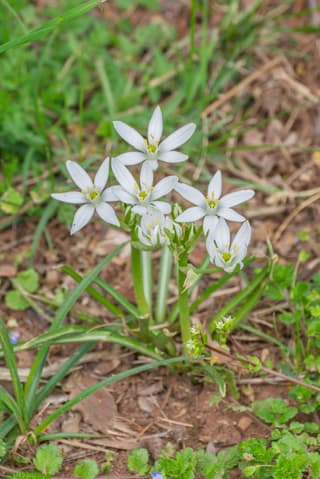
Ornithogalum is a genus of about 200 bulbous plants in the asparagus family (Asparagaceae), native to Europe, the Mediterranean, western Asia and especially southern Africa. Each bulb produces a tuft of narrow, strap-shaped leaves and stems topped with clusters or spikes of star-shaped flowers, usually white with a green stripe on the back, and orange or yellow in some species. The most grown species are O. umbellatum (Star of Bethlehem, a hardy garden bulb), O. thyrsoides (chincherinchee, a long-lasting cut flower), O. dubium (sun star, sold as a pot plant) and O. arabicum; the care on this page is valid for them.
Sun Star
Ornithogalum dubium
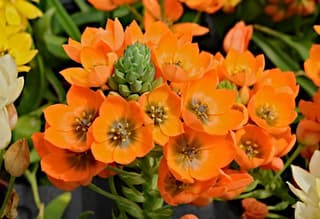
Ornithogalum dubium, popularly known as the sun star or orange star plant, is a bulbous perennial native to South Africa prized for its clusters of vivid orange to yellow star-shaped flowers held above strap-like leaves. A favorite of florists and potted gift plants, it blooms from late winter through spring before entering a summer dormancy.
Chincherinchee
Ornithogalum thyrsoides
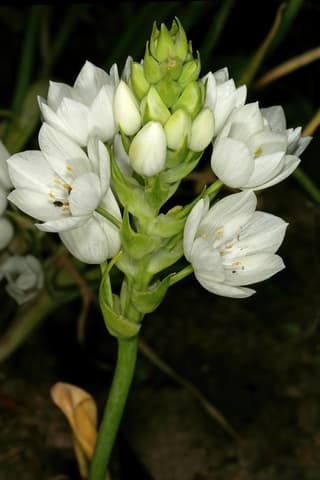
Chincherinchee (Ornithogalum thyrsoides) is an ornamental bulb native to South Africa, prized for its immaculate white or cream flowers arranged in dense pyramidal clusters. Highly valued as a cut flower for its exceptional longevity — blooms remain fresh for weeks after cutting. WARNING: all parts of the plant, especially the bulb, are toxic to humans and pets.
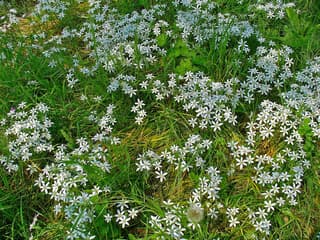
Star-of-Bethlehem
Ornithogalum umbellatum
Star-of-Bethlehem (Ornithogalum umbellatum) is a small bulbous perennial native to Europe, the Mediterranean, and southwestern Asia. It produces star-shaped white flowers with green stripes on the outer petals, blooming in spring in umbel-shaped clusters. The plant goes dormant in summer after flowering. WARNING: All parts, especially the bulbs, are highly toxic to humans, cats, and dogs due to cardiac glycosides.
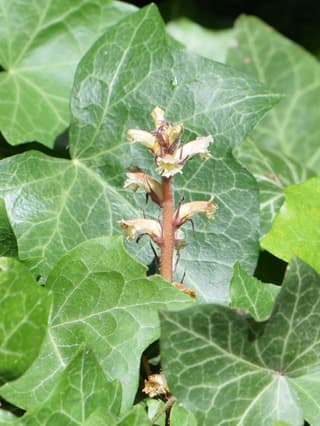
Ivy Broomrape
Orobanche hederae
Ivy broomrape (Orobanche hederae) is a holoparasitic plant that lacks chlorophyll. It grows exclusively on the roots of ivies (Hedera spp.), from which it absorbs all its necessary water, nutrients, and carbohydrates. The stem ranges from yellowish to purple in color, reaching up to 60 cm in height, and the flowers are cream-colored with reddish-brown veins. The plant blooms from spring to summer and produces a vast number of tiny seeds. It is native to Central and Northern Europe as well as parts of Asia.
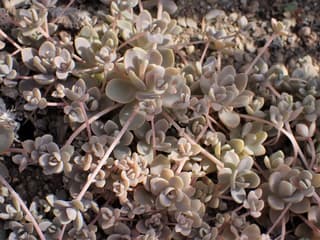
Green Dunce Cap
Orostachys malacophylla
Orostachys malacophylla is a hardy, monocarpic succulent from the Crassulaceae family (the same family as stonecrops and sedums). The plant forms dense rosettes of fleshy, bluish-green to green leaves with a diameter of 4-15 cm and spreads via runners (stolons), forming dense mats of rosettes. In the autumn, mature rosettes produce a conical inflorescence up to approximately 20 cm with white to greenish flowers and yellow stamens—after which the specific flowering rosette dies, while the numerous offsets ensure the colony lives on. The species is very hardy (USDA zones 3a-8b) and tolerates heavy frost, and the plant is not considered toxic to humans or pets.
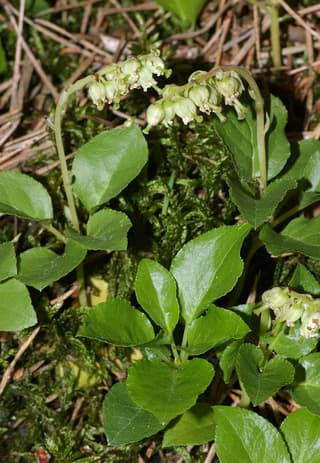
sidebells wintergreen
Orthilia secunda
Sidebells wintergreen (Orthilia secunda) is the only species in its genus within the heath family (Ericaceae), occurring widely across the coniferous and mixed forests of the Northern Hemisphere from Europe to Asia and North America. It is a low-growing, evergreen, rosette-forming forest floor plant with serrated leaves that remain green year-round. In July and August, it produces a curved flower stalk 10–20 cm high, featuring small, greenish-white, bell-shaped flowers that hang from only one side of the stem—a characteristic reflected in both its common and scientific names. Sidebells wintergreen is a partial mycoheterotroph (mixotroph), obtaining part of its carbon from tree roots via a mycorrhizal fungal network, which makes it extremely demanding and slow-growing to cultivate outside its natural habitat.
Rice
Oryza sativa
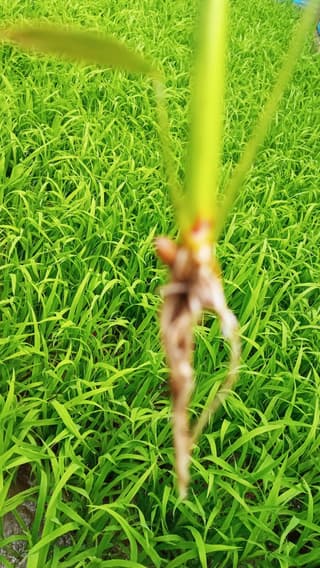
Rice (Oryza sativa) is an annual grass in the Poaceae family, native to Asia, where it has been cultivated for thousands of years as the dietary staple for more than half of the world's population. The plant forms clumps of slender stalks and long, narrow leaves, producing panicles with hundreds of small flowers that give rise to the grains. It is traditionally grown in flooded fields (paddies), where the water level controls weeds and maintains the constant moisture required by the species.
Deltoid Pumpkin
Oscularia deltoides
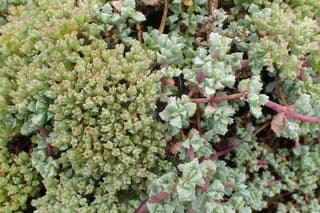
Oscularia deltoides is a succulent groundcover from the Aizoaceae family, native to the rocky and arid areas of the Western Cape in South Africa. It forms creeping cushions of triangular (deltoid) blue-green leaves, often with pinkish tints, edged with tiny translucent teeth that give it a frost-covered appearance. In spring and summer, it produces an abundant bloom of daisy-like flowers in magenta-pink or lavender hues, which are lightly scented and open during the day. Due to its extreme drought tolerance and ease of cultivation, it is highly valued as a groundcover, in rock gardens, and in containers.
Sweet Olive
Osmanthus fragrans
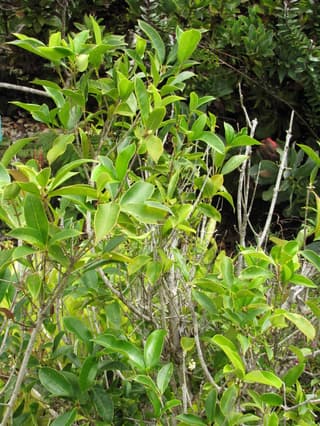
Osmanthus fragrans, commonly known as Sweet Olive or Tea Olive, is an evergreen shrub or small tree native to China and parts of Asia. Renowned for its intensely fragrant, tiny white or yellow flowers, it is one of the most celebrated ornamental plants in Chinese culture. The flowers are used to scent teas, wines, and perfumes, and the plant holds deep cultural significance in China, where it is associated with the Mid-Autumn Festival.
Goshiki False Holly
Osmanthus heterophyllus 'Goshiki'
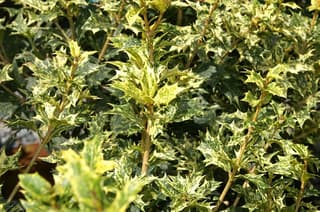
Osmanthus heterophyllus 'Goshiki' is an evergreen shrub in the Oleaceae family, native to Japan and Taiwan. The cultivar 'Goshiki' (literally meaning "five colors" in Japanese) is distinguished by its variegated foliage: the leathery, spiny leaves, similar to those of holly, emerge in shades of bronze-pink before maturing into green mottled with cream, yellow, and pink. In autumn, it produces small white flowers that are discreet but highly fragrant, often hidden among the leaves. Slow-growing with a compact habit, it is prized as a specimen plant, in informal hedges, or in mixed borders.
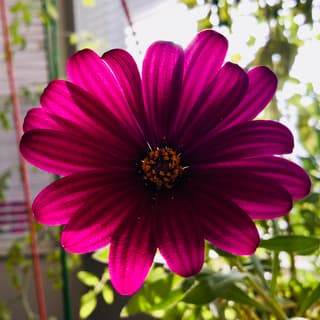
African Daisy
Osteospermum
Osteospermum, commonly called African daisy or Cape daisy, is a genus of roughly 70 species of daisy-like flowering plants native to South Africa and the surrounding region, belonging to the sunflower family (Asteraceae). Grown as mounding, spreading subshrubs or herbaceous perennials, they produce abundant 5 cm blooms in white, yellow, orange, red, coral, pink and purple, often with a striking dark or iridescent-blue center disc. In warm climates (USDA zones 9-11) they behave as tender perennials that flower nearly year-round; in cooler regions they are grown as fast-growing annuals or overwintered indoors. Prized for heat and drought tolerance once established, African daisies are popular as border edging, container spillers and ground cover in sunny, well-drained garden beds.
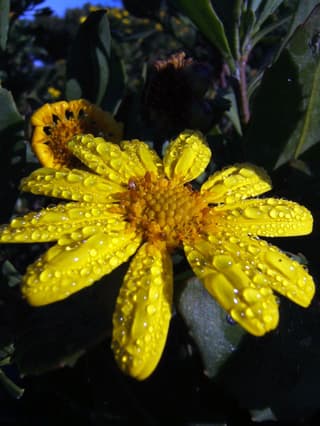
Bietou
Osteospermum moniliferum
Bietou (Osteospermum moniliferum) is a fast-growing, evergreen shrub in the Asteraceae family, native to the coastal regions of southern Africa—from the Cape Peninsula through KwaZulu-Natal to Mozambique and Zimbabwe. The plant grows up to 2 meters tall and equally wide, forming a compact, rounded growth habit with dark green, slightly serrated leaves. The characteristic yellow flower heads, with a diameter of up to 40 mm, bloom primarily in late autumn and winter, and are highly attractive to bees and other pollinators. After flowering, berry-like fruits develop that ripen into dark brown or black spheres, which are a favorite for birds. The plant is extremely drought-tolerant due to its semi-succulent nature and thrives in well-drained, sandy soil in full sun. It is easy to grow, grows rapidly, and has a lifespan of 8–12 years.
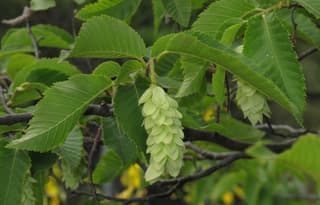
European hop-hornbeam
Ostrya carpinifolia
The European hop-hornbeam (Ostrya carpinifolia) is a deciduous tree of the Betulaceae family, widespread in the hilly and sub-mountainous areas of Southern Europe, the Balkans, and Southwestern Asia. It grows wild from sea level up to about 1300 m, often on calcareous soils and arid slopes, where it acts as a pioneer species capable of colonizing poor and degraded soils. It typically reaches 15-20 meters in height, with an oval crown, reddish-brown bark that flakes into thin plates, ovate serrated leaves similar to those of the common hornbeam but with more pronounced veins, and fruits enclosed in membranous bracts gathered in infructescences resembling hop cones, from which its English name "hop-hornbeam" is derived.
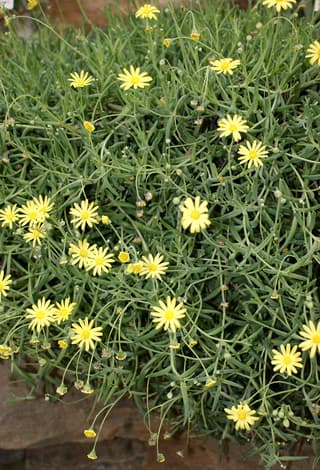
Ruby Necklace
Othonna capensis
Othonna capensis, popularly known as Ruby Necklace, is a creeping and trailing succulent native to the arid regions of the Eastern Cape, South Africa. Its cylindrical, finger-shaped leaves are grayish-green and develop intense ruby tones at the tips when exposed to plenty of sun and little water. In winter and early spring, it produces small, yellow, daisy-like flowers on thin, elongated stems. It belongs to the Asteraceae family and is widely used in hanging baskets, rock gardens, and compositions with other succulents.
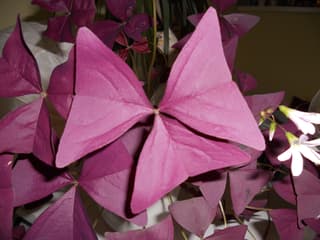
Wood Sorrel
Oxalis
Oxalis is a large genus of about 570 species of herbaceous plants in the family Oxalidaceae, recognizable by their clover-like trifoliate leaves and delicate flowers in shades of pink, yellow, and white. Popular as ornamental houseplants and garden ground covers, with O. triangularis (purple shamrock) and O. articulata being especially beloved. Contains oxalic acid — mildly toxic to pets and humans if ingested in large quantities.
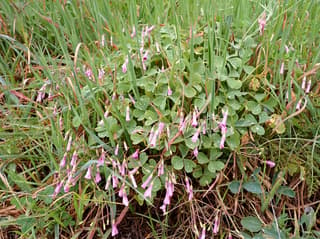
Pink-sorrel
Oxalis articulata
Oxalis articulata, commonly known as Pink-sorrel or Windowbox Woodsorrel, is a charming perennial herb native to South America. It features attractive clover-like leaves, often with a purplish tint, and produces abundant clusters of small, vibrant pink flowers. These flowers bloom profusely, creating a cheerful display. It's a popular choice for both indoor pots and outdoor garden beds, known for its relatively easy care and vigorous growth.
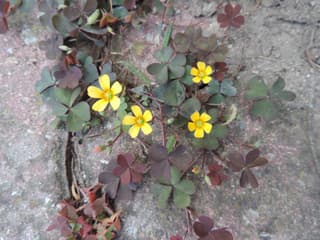
Creeping Woodsorrel
Oxalis corniculata
Oxalis corniculata, commonly known as Creeping Woodsorrel, is a low-growing cosmopolitan weed in the Oxalidaceae family. It produces delicate five-petalled yellow flowers and trifoliate heart-shaped leaves that close at night. Found worldwide in gardens, pots, and disturbed soils, it spreads aggressively via stolons, rhizomes, and seeds that can be catapulted up to 5 meters. It contains soluble calcium oxalates, making it mildly toxic to cats and dogs in large quantities.
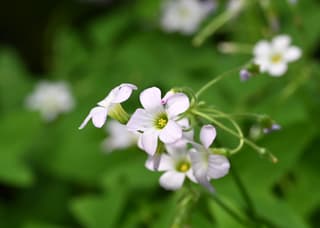
Garden Pink-Sorrel
Oxalis latifolia
Oxalis latifolia, commonly known as Garden Pink-Sorrel or Broadleaf Wood Sorrel, is a perennial bulbous plant native to Mexico and Central America, now naturalized across much of the world. It produces distinctive trifoliate leaves with fish-tail shaped leaflets and delicate pink to pinkish-mauve flowers in spring and summer. Although considered an invasive weed in many regions, it is also cultivated as an ornamental in pots and garden borders.
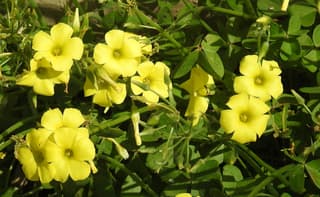
Bermuda Buttercup
Oxalis pes-caprae
Oxalis pes-caprae, commonly known as Bermuda Buttercup or Soursob, is a bulbous perennial native to South Africa that produces bright yellow flowers from fall through spring. It forms dense carpets and is considered one of the most invasive weeds in Mediterranean climates, California, and Australia. The trifoliate leaves contain oxalic acid — toxic to pets in significant quantities and potentially harmful to livestock.
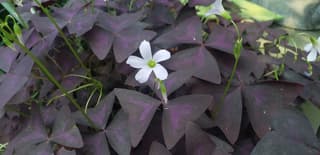
False Shamrock
Oxalis regnellii
Oxalis regnellii, commonly known as false shamrock or purple shamrock, is a perennial bulbous plant native to South America — particularly Brazil, Bolivia, Argentina, and Paraguay. A member of the Oxalidaceae family, it is beloved for its striking trifoliate leaves, which range from rich green to deep purple, and its delicate white or pale pink five-petaled flowers that bloom from spring through autumn. One of its most charming traits is photonasty: the leaves fold closed at night and in low light, reopening with morning brightness through turgor pressure changes. The plant grows from small corms and may enter a brief dormancy period after flowering or during hot summer months.
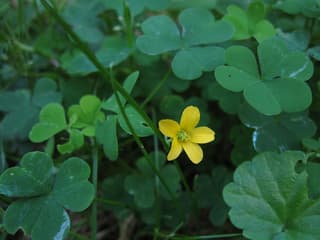
Common Yellow Woodsorrel
Oxalis stricta
Common Yellow Woodsorrel (Oxalis stricta) is a perennial herbaceous plant in the family Oxalidaceae, native to North America and Eurasia. Recognized by its cheerful yellow flowers and heart-shaped trifoliate leaves, it is an exceptionally adaptable plant that thrives in a wide range of habitats including gardens, lawns, roadsides, and woodland edges.

Iron Cross Oxalis
Oxalis tetraphylla
Iron Cross Oxalis (Oxalis tetraphylla) is a perennial bulbous plant native to central Mexico, prized for its distinctive four-lobed leaves adorned with deep burgundy markings at the center that form a striking iron cross pattern. It produces cheerful pink to rose-red flowers in spring and summer, going dormant in winter.
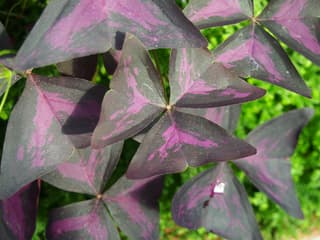
Purple Shamrock
Oxalis triangularis
Oxalis triangularis, commonly known as Purple Shamrock, is a charming perennial plant native to Brazil. Distinguished by its deep purple, triangular leaves arranged in groups of three like clover, and its delicate pink-white flowers. The leaves exhibit photonasty - opening during the day and closing at night like butterfly wings. This plant can live for over 100 years, often becoming a treasured heirloom passed through generations.
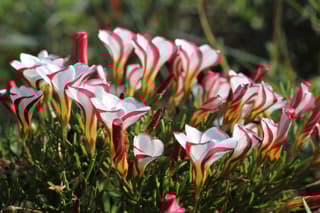
Candy Cane Sorrel
Oxalis versicolor
Oxalis versicolor, commonly known as Candy Cane Sorrel, is a charming bulbous perennial native to South Africa. It is celebrated for its stunning flowers with white petals edged in deep crimson, which spiral into a candy cane pattern when closed. Growing to just 10–15 cm tall, this compact plant thrives in sunny spots and follows an autumn-winter flowering cycle. It enters dormancy in summer, making it a delightful seasonal gem for pots and rock gardens.
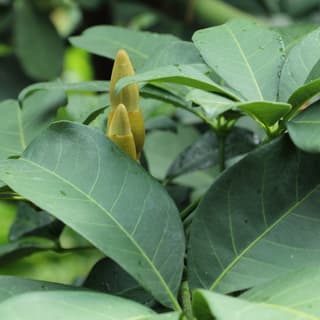
Money Tree
Pachira aquatica
Pachira aquatica is a tropical plant native to Central America, known for its distinctive braided trunk and umbrella-shaped leaves. Popular in feng shui as a symbol of prosperity and good luck.
Find the Perfect Plant
Our plant guide helps you find ideal species for your experience level and time of year.
Browse by Difficulty, Season & More
Use the filters below to narrow this catalog by care difficulty, season, environment, or search directly by name. Each filter leads to a focused list tailored to your specific growing conditions.