Ericaceae
sidebells wintergreen: Edible Plant
Orthilia secunda
An extremely demanding plant that is generally unsuitable for conventional garden or pot cultivation due to its reliance on specific mycorrhizal fungal partners in the soil. It thrives best in shady, cool locations with consistently moist, humus-rich, and acidic soil, mimicking its natural coniferous forest environment. The root system does not tolerate disturbance or overwatering; therefore, the substrate must be well-draining to prevent root rot.
Every 4 days
Low light
5° - 20°C
60% - 90%
Categories
What is sidebells wintergreen?
sidebells wintergreen (Orthilia secunda) is a hard-care plant from the Ericaceae family. Sidebells wintergreen (Orthilia secunda) is the only species in its genus within the heath family (Ericaceae), occurring widely across the coniferous and mixed forests of the Northern Hemisphere from Europe to Asia and North America. It is a low-growing, evergreen, rosette-forming forest floor plant...
sidebells wintergreen grows up to 20cm, spread of 30cm, watering every 4 days, 5°C – 20°C, 60–90% humidity. It is not suitable for indoor environments and safe for pets.
Unlike easy-care plants, sidebells wintergreen demands constant attention to humidity and light. Not recommended for beginners. Unlike many popular species, sidebells wintergreen is safe to keep around pets.
How to Care for sidebells wintergreen?
TLDR: sidebells wintergreen needs Low light, watering every 4 days, and temperatures between 5-20°C with 60-90% humidity.
How Often Should You Water sidebells wintergreen?
Keep the substrate consistently moist but never soggy or sitting in standing water—excessive moisture predisposes the plant to root rot. Water moderately and ensure excellent drainage.
How Much Light Does sidebells wintergreen Need?
Prefers full shade or partial shade, mirroring the conditions of a coniferous forest understory. Avoid direct sunlight and hot, open locations.
What Is the Best Soil for sidebells wintergreen?
Requires acidic, humus-rich, peaty, and well-drained soil. Successful cultivation practically requires using soil taken from around an established specimen to ensure the transfer of necessary mycorrhizal fungal partners.
What Pot Should You Use for sidebells wintergreen?
Not recommended for conventional pot cultivation due to its mycorrhizal dependency. If cultivation is attempted, choose a deep, well-draining pot with a peaty, acidic soil mix, and place it in a shady, cool location.
What Is sidebells wintergreen and Where Does It Come From?
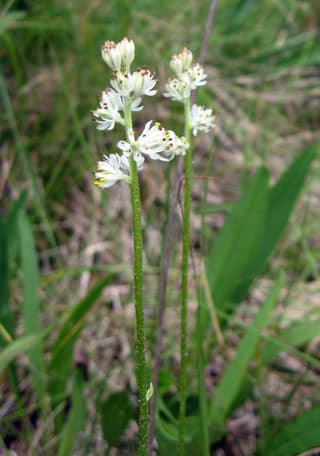
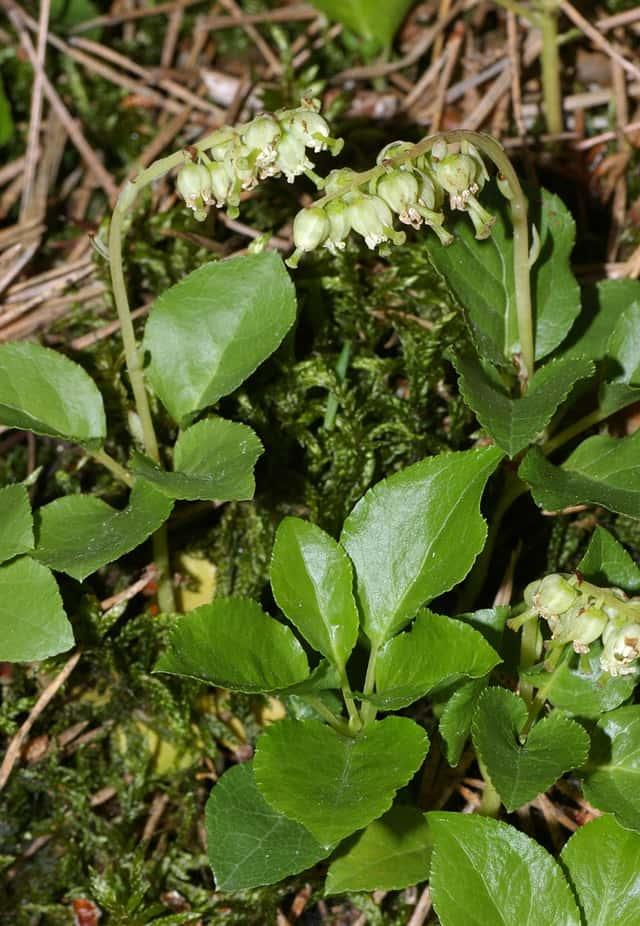
Sidebells wintergreen (Orthilia secunda) is the only species in its genus within the heath family (Ericaceae), occurring widely across the coniferous and mixed forests of the Northern Hemisphere from Europe to Asia and North America. It is a low-growing, evergreen, rosette-forming forest floor plant with serrated leaves that remain green year-round. In July and August, it produces a curved flower stalk 10–20 cm high, featuring small, greenish-white, bell-shaped flowers that hang from only one side of the stem—a characteristic reflected in both its common and scientific names. Sidebells wintergreen is a partial mycoheterotroph (mixotroph), obtaining part of its carbon from tree roots via a mycorrhizal fungal network, which makes it extremely demanding and slow-growing to cultivate outside its natural habitat.
How Big Does sidebells wintergreen Grow?
TLDR: sidebells wintergreen can reach up to 20cm tall with Slow growth rate.
Max height
20cm
Spread
30cm
Growth rate
Slow
Foliage
Evergreen
Plant Uses
Medicinal
Medicinal properties
Edible
Can be consumed
Ornamental
Great for decoration
Medicinal Uses
- Traditionally, a strong decoction made from the root has been used as an eye wash.
Culinary Uses
- The seeds are edible.
- The leaves have occasionally been used to prepare herbal tea.
Is your plant showing symptoms?
Click on the symptom to discover possible causes:
What Diseases Commonly Affect sidebells wintergreen?
TLDR: sidebells wintergreen is susceptible to 1 known diseases. Monitor regularly for early detection.
Meaning & Symbolism
Sidebells wintergreen symbolizes quiet resilience and invisible connection—an evergreen forest understory plant that lives year-round and draws part of its vitality from hidden underground fungal networks.
Compare with similar plants
| Attribute | Difficulty | Light | Watering | Pet Safe |
|---|---|---|---|---|
| Azalea | Medium | Partial shade | 3d | ⚠️ |
| Sticky false asphodel | Hard | Bright indirect | 1d | ✓ |
| Truckee lewisia | Hard | Bright indirect | 10d | ✓ |
| Creeping bentgrass | Hard | Direct sun | 3d | ✓ |