Complete Plant Guide
Explore plants by difficulty, season and more. Find the perfect plant for you.
Difficulty
Categories
Plants by City
🗺️ Plants by City3782 plants found
Showing 2449-2484 of 3782

Red Bartsia
Odontites vernus
Red Bartsia (Odontites vernus) is an annual, hemi-parasitic meadow plant in the broomrape family. It features an upright, branched, and finely hairy stem with narrow, toothed leaves and small, pink to reddish tubular flowers that bloom from June to September. The plant partially parasitizes grass roots and thrives in nutrient-poor meadows, pastures, and along field margins.
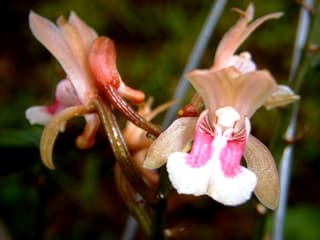
Monk Orchid
Oeceoclades maculata
Oeceoclades maculata, commonly known as the monk orchid or African spotted orchid, is a terrestrial orchid in the family Orchidaceae native to tropical Africa and Madagascar. It grows from small, clustered pseudobulbs, each topped with a single mottled, dark-green leaf marked with pale spots. In spring it sends up slender flower spikes bearing small white-and-pink blooms. Remarkably adaptable, the species has naturalized widely across the Neotropics -- from Brazil and the Caribbean to Florida -- since the 19th century, and is now considered one of the most successful invasive orchids outside its native range.
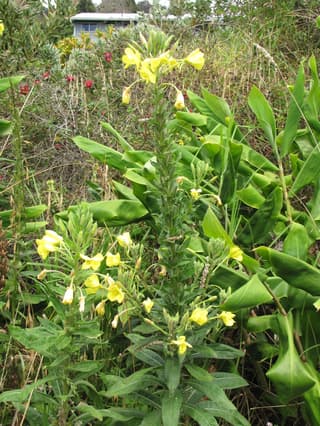
Evening Primrose
Oenothera
Evening Primrose (Oenothera) is a genus of roughly 145 herbaceous wildflowers in the Onagraceae family, native to the Americas. Depending on the species, plants may be annuals, biennials, or perennials, typically forming rosettes of lance-shaped leaves topped by four-petaled cup-shaped flowers in yellow, pink, or white. Many species open their blooms in the evening or at dusk and close by midday, a trait that gives the genus its common name and its symbolic ties to twilight and hidden beauty.
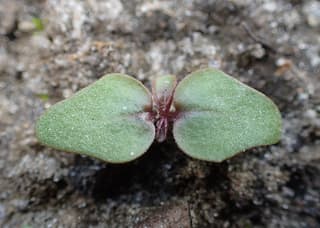
Evening Primrose
Oenothera biennis
Oenothera biennis, known as Evening Primrose, is a biennial plant native to North America. It is famous for its vibrant yellow flowers that open rapidly at dusk and emit a mild fragrance to attract nocturnal pollinators. In its first year, the plant forms a rosette of low-growing leaves, and in its second year, it develops a tall, flowering stalk. It is widely recognized in the herbal medicine industry for the oil extracted from its seeds, which is rich in gamma-linolenic acid.
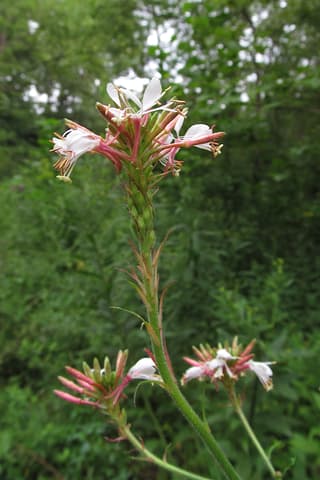
Biennial Gaura
Oenothera gaura
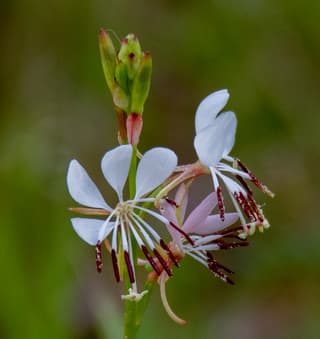
Kisses
Oenothera suffulta
Oenothera suffulta, commonly known as Kisses or Roadside Gaura, is a small annual to short-lived perennial native to south-central Texas, Oklahoma, and northern Mexico. Its delicate pink, white, and red flowers open at dusk. Formerly classified as Gaura suffulta, it belongs to the family Onagraceae and thrives in poor sandy soils, being highly drought tolerant.
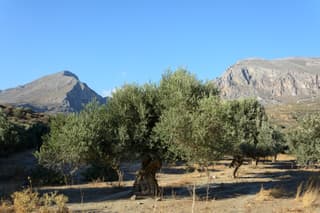
Olive tree
Olea europaea
The Olive tree (Olea europaea) is a medium-sized evergreen tree native to the Mediterranean region, Asia, and Africa. It is widely cultivated for its fruit, olives, and the oil extracted from them, olive oil. It features distinct silvery-green leaves and a gnarled, gray bark that becomes rougher with age. It is a universal symbol of peace, longevity, and prosperity.
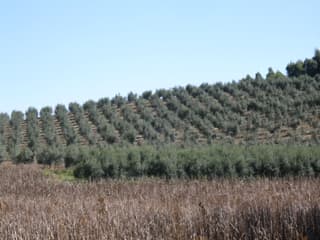
Arbequina Olive
Olea europaea 'Arbequina'
The Arbequina Olive (Olea europaea 'Arbequina') is a Spanish olive cultivar originating from the Arbeca region in Catalonia. It is recognized for its compact size, self-fertility, and early fruiting, characteristics that have made it one of the most popular varieties for cultivation in pots, small gardens, and hedges. Its leaves are evergreen, featuring a silvery underside, and the plant produces small creamy white flowers in spring, followed by green olives that ripen to a purplish hue, used for both gourmet olive oil production and table olives.
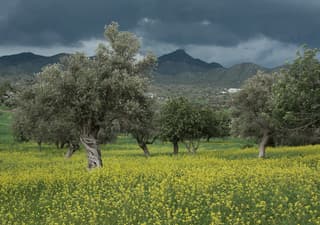
Little Ollie
Olea europaea 'Montra'
Little Ollie is a compact, non-fruiting cultivar of the Mediterranean olive tree, prized for its dense, rounded form and silvery-green evergreen foliage. Bred by Monrovia, this sterile selection produces the classic olive look without the mess of dropped fruit, making it a popular choice for hedges, containers, and topiary. Extremely drought-, heat-, and salt-tolerant once established, it thrives in full sun with minimal care.
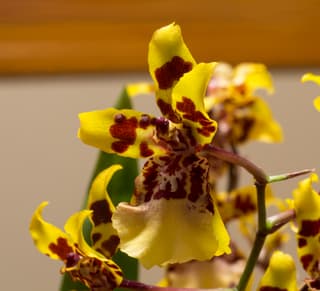
Dancing Lady Orchid (genus)
Oncidium
Oncidium is a large genus of epiphytic Neotropical orchids renowned for their abundant yellow, butterfly-like flowers that sway gracefully in the breeze. Native from Central America to South America, the genus encompasses hundreds of species widely grown as ornamentals.
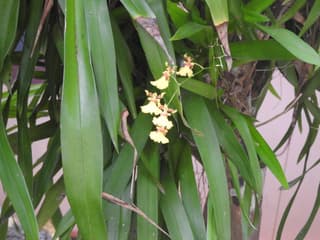
Tall Oncidium
Oncidium altissimum
Oncidium altissimum is a large epiphytic orchid native to the Caribbean islands of Cuba, Hispaniola, Puerto Rico, and the Lesser Antilles. It produces dramatically tall, branching flower spikes reaching 5–6 feet (150–180 cm) in length, adorned with hundreds of small yellow and brown flowers. This majestic species blooms in spring and fall, making it a spectacular addition to any orchid collection. Like all epiphytes, it thrives when its roots can breathe freely in well-draining bark-based media.
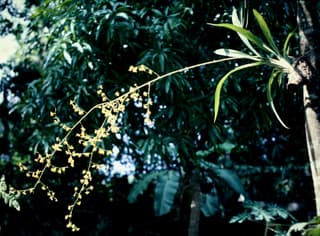
Bauer's Dancing Lady Orchid
Oncidium baueri
Oncidium baueri is an epiphytic orchid native to South America, celebrated for its graceful sprays of yellow and brown dancing-lady flowers that sway gently in the breeze. First described by Lindley in 1833, it is widely prized in orchid collections worldwide for its reliable flowering and elegant form.
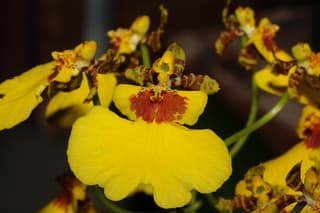
Dancing Lady Orchid
Oncidium Celtic Sun x Burgundian
The Oncidium Celtic Sun x Burgundian is a captivating sympodial orchid hybrid known for its 'Dancing Lady' appearance. It produces branched sprays of numerous small flowers that feature a large, ruffled labellum, typically in shades of golden yellow with intricate burgundy or reddish-brown markings. The plant grows from pseudobulbs that store water, with long, strap-like evergreen leaves.

Dancing Doll Orchid
Oncidium flexuosum
Oncidium flexuosum, commonly known as the Dancing Doll Orchid or Bent Oncidium, is an epiphytic orchid native to eastern and southern Brazil, extending into northern Argentina, Paraguay and Uruguay. It forms compact clumps of oval pseudobulbs bearing narrow, glossy leaves. From fall through winter it produces long, arching, branched flower spikes—up to 1.5 m (5 ft)—carrying dozens of small golden-yellow flowers marked with reddish-brown blotches at the base and lip, which flutter in the breeze and give the plant its playful common name.
Dancing Lady Orchid
Oncidium leleui
Oncidium leleui is an epiphytic orchid native to southwestern Mexico, found across the states of Nayarit, Jalisco, Colima, Michoacán, Oaxaca, and Guerrero in seasonally dry tropical forests at elevations of 250 to 950 meters. It produces spectacular arching flower spikes that can exceed two meters in length, bearing over 270 small yellow and brown flowers resembling graceful dancing figures. It is a slow-growing species prized by orchid collectors for its extraordinary floral displays each spring.
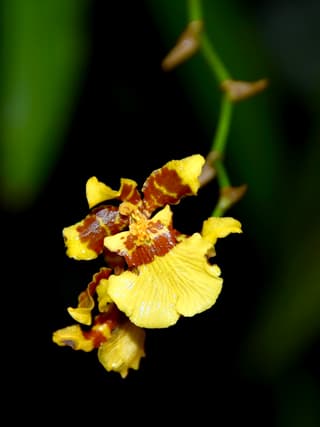
Golden Shower Orchid
Oncidium sphacelatum
Oncidium sphacelatum, commonly known as the Golden Shower Orchid, is a large epiphytic orchid native to Mexico and Central America. It produces spectacular arching flower spikes up to 1.5 meters long, adorned with masses of bright yellow and brown flowers. A vigorous grower, it forms impressive clumps over time and is considered one of the easiest oncidiums to cultivate.
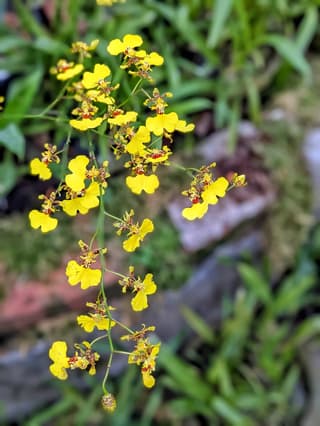
Golden Shower Orchid
Oncidium varicosum
Epiphytic orchid native to Brazil, known for its long sprays of small yellow flowers resembling a cascade of gold. Features pseudobulbs for water and nutrient storage, typical of orchids. One of the most popular orchids in Brazil due to its exuberant blooming and relatively easy cultivation.
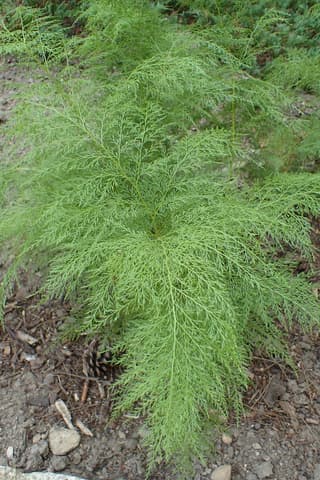
Carrot Fern
Onychium japonicum
Onychium japonicum, the carrot fern, is a clump-forming, deciduous fern native to central and eastern China, Japan, the Himalayas, the Philippines and Vietnam, where it grows in humid forests, shaded banks and rocky slopes. Its wiry, glossy black stems carry arching, feathery fronds cut two to three times into fine, thread-like segments that closely resemble carrot-top foliage -- the source of its common name. Slow to mature (often taking 5-10 years to reach full size), it forms neat mounds around 45 cm tall and wide and is prized in shade gardens and containers for its delicate, lacy texture.
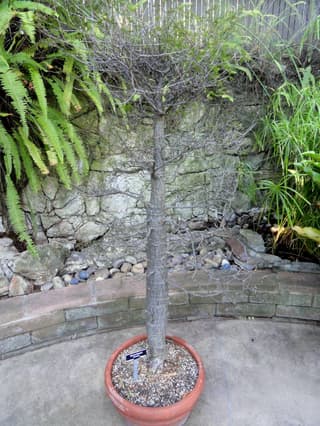
Elephant Tree
Operculicarya decaryi
Operculicarya decaryi is a slow-growing, thick-stemmed succulent tree endemic to the spiny thickets of southern Madagascar. Prized in bonsai culture for its swollen caudex, corky bark, and intricate branching pattern, it produces tiny fernlike compound leaves and clusters of small red flowers in winter. In cultivation it is grown both as an ornamental caudiciform houseplant and as a classic subject for tropical bonsai.
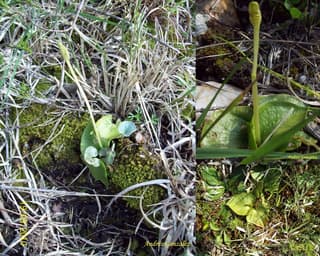
Bulbous Adder's-tongue
Ophioglossum crotalophoroides
Ophioglossum crotalophoroides is a tiny primitive fern (2 to 10 cm tall), with a single oval sterile leaf and a bulbous underground base (rather than a common cylindrical rhizome). It produces an elongated fertile spike resembling a rattlesnake's rattle, the origin of the epithet "crotalophoroides". It is ephemeral, appearing in spring (sporulating from March to June in the Northern Hemisphere) and disappearing shortly after. It occurs in disturbed lawns, open fields, and sandy soils of the southeastern United States. Like the entire Ophioglossaceae family, it depends closely on soil mycorrhizal fungi to germinate and develop, making it virtually impossible to cultivate outside its natural habitat.

Dwarf Lilyturf
Ophiopogon
Ophiopogon is a genus of evergreen, grass-like perennials in the family Asparagaceae, native to East and Southeast Asia, with Ophiopogon japonicus as the most widely cultivated species. It forms dense clumps of thin, arching, linear leaves resembling a coarse turf grass, creating a uniform dark-green mat. It is widely used as a shade groundcover, border edging, and filler between stepping stones, precisely because it tolerates spots where regular lawn grass fails from lack of sun. In summer it produces small, understated white-to-pale-lilac flowers, followed by ornamental cobalt-blue berries.
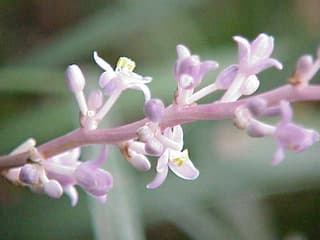
White Lilyturf
Ophiopogon jaburan
White lilyturf (Ophiopogon jaburan) is an evergreen perennial native to Japan and southern Korea, prized as a shade-tolerant groundcover and border plant. It forms dense clumps of long, arching, strap-like leaves — plain green or variegated with cream stripes — and sends up spikes of small white to pale lavender flowers in summer, followed by ornamental violet-black berries in fall. Low-maintenance and adaptable, it handles partial shade to full coastal sun and light frost.
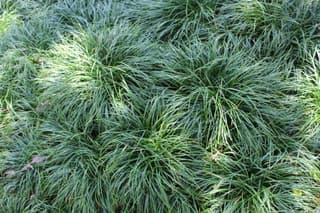
Mondo Grass
Ophiopogon japonicus
Ophiopogon japonicus, commonly known as mondo grass or dwarf lilyturf, is an evergreen perennial groundcover native to Japan and East Asia. It forms dense, low-growing mats of dark green, grass-like foliage and is widely used in shaded gardens. In summer it produces small white to pale lilac flowers followed by ornamental cobalt-blue berries.
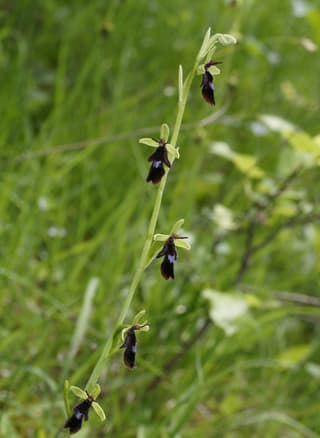
Fly Orchid
Ophrys insectifera
Ophrys insectifera, commonly known as the fly orchid, is a European terrestrial species notable for its pollination strategy. Its flowers have evolved to visually and chemically mimic the females of certain wasp and fly species, tricking males into performing pseudocopulation, which ensures pollen transfer. It is a small plant with a rosette of basal leaves and a slender inflorescence.
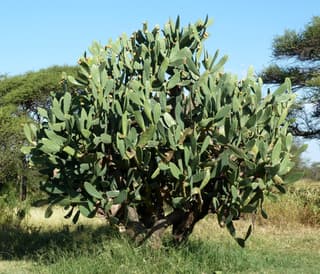
Prickly Pear Cactus
Opuntia
Opuntia, commonly known as prickly pear or nopal, is a genus of cacti native to the Americas, especially Mexico. Its flattened pads (cladodes), spines, and showy flowers make it one of the most recognizable plants in the world. It produces edible fruits (tunas) and pads (nopales) that have been used in Mexican cuisine for millennia.
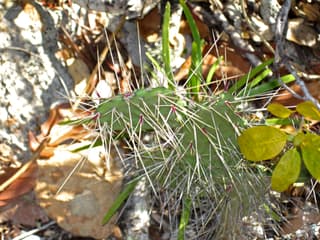
Sweet Prickly Pear
Opuntia dillenii
Opuntia dillenii, commonly known as the Sweet Prickly Pear, is a robust cactus native to the Caribbean and coastal Americas. Its oval, spine-covered pads produce vibrant yellow flowers in spring and summer, followed by edible reddish-purple fruits. Exceptionally drought-tolerant and heat-resistant, it thrives in poor, sandy soils with minimal care.
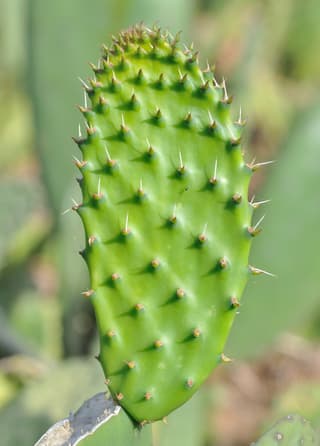
Prickly Pear
Opuntia ficus-indica
Opuntia ficus-indica, commonly known as prickly pear or Indian fig, is a large tree-like cactus native to Mexico. It features flattened stem segments called cladodes (pads) armed with clusters of tiny glochids. It produces showy yellow to orange-red flowers in spring and summer, followed by edible fruits called tunas or prickly pears. One of the most economically important cacti in the world.
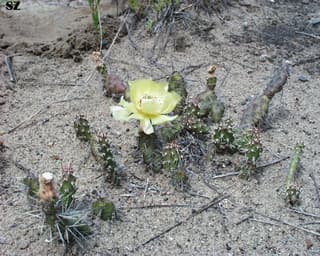
Brittle Prickly Pear
Opuntia fragilis
Opuntia fragilis, known as the brittle prickly pear, is a low-growing, mat-forming cactus native to prairies and rocky outcrops across western North America, from British Columbia to Texas. It is the most cold-hardy cactus species in North America, surviving winter temperatures below -30 C. Its small, easily detached stem segments (cladodes) break off at the slightest touch and root readily wherever they land, giving the plant its "fragilis" name and its efficient means of vegetative spread.
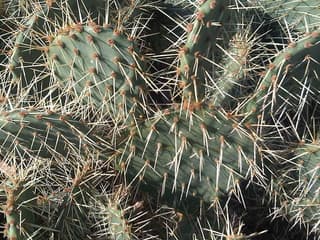
Eastern Prickly Pear
Opuntia humifusa
Opuntia humifusa, the Eastern Prickly Pear, is a low-growing, mat-forming cactus native to the eastern and central United States. It produces flat, paddle-shaped pads armed with glochids and occasional spines, stunning yellow flowers up to 4 inches wide in late spring and early summer, and edible red-purple fruits in late summer. One of the most cold-hardy cacti in the world, it thrives in USDA zones 4–9 and can survive temperatures as low as -12°C (10°F).

Twistspine Pricklypear
Opuntia macrorhiza
Opuntia macrorhiza is a low-growing, mat-forming prickly pear cactus native to the central and southern United States and northern Mexico, from Colorado and Utah east to Wisconsin and Missouri and south into Texas. One of the most cold-hardy Opuntia species, it survives winters down to USDA zone 3a. Its flattened, blue-green pads (cladodes) are armed with twisted, often reflexed spines, and in early summer it produces bright yellow flowers with a red-orange eye, followed by fleshy edible fruit.
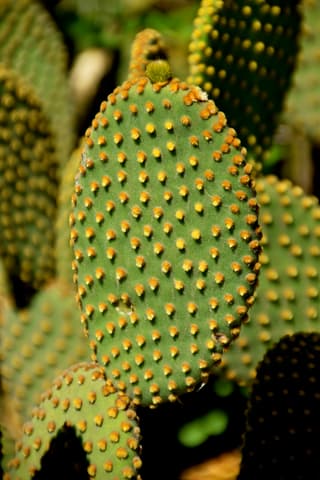
Bunny Ears Cactus
Opuntia microdasys
Native cactus from central and northern Mexico, known for its characteristic oval pads covered with white or yellow glochids that give it a velvety appearance. Forms dense bushes up to 60 cm tall and is highly valued as an ornamental plant both indoors and outdoors.
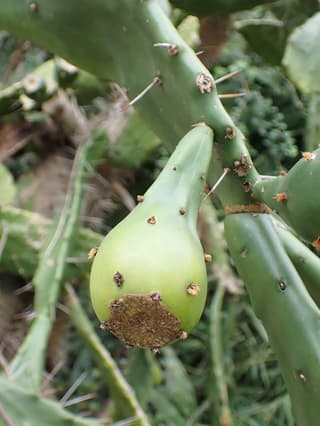
Drooping Prickly Pear
Opuntia monacantha
Opuntia monacantha, commonly known as the Drooping Prickly Pear, is a cactus native to South America (Brazil, Argentina, Uruguay, and Paraguay). It features flat, bright-green pads with yellow flowers and colorful edible fruits. A tough, drought-tolerant species, it thrives in full sun and well-draining sandy soil, making it an excellent choice for low-maintenance gardens and sunny interiors.
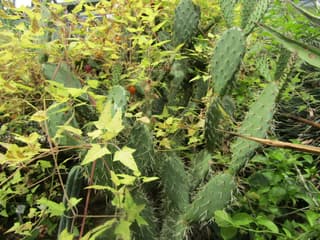
Prickly Pear
Opuntia orbiculata
Opuntia orbiculata is a paddle-type cactus belonging to the Cactaceae family, native to arid and semi-arid regions of the Americas. It forms shrubby clumps with flattened, succulent segments (pads) covered in glochids—tiny, fine, barbed spines that detach easily when touched. It is a hardy plant that grows in stacked segments, blooming in late spring and early summer with large, showy flowers followed by edible fruits (known as 'tunas').

Blind Prickly Pear
Opuntia rufida
Opuntia rufida is a shrubby, many-branched cactus native to the Chihuahuan Desert of Big Bend, Texas and northern Mexico. Its flattened, blue-green pads (cladodes) are spineless but densely covered in reddish-brown glochid clusters that give the plant its cinnamon-colored look and its common name, since livestock that brush against the glochids can be blinded. In summer it produces yellow flowers that fade to apricot or red, followed by reddish edible fruit.
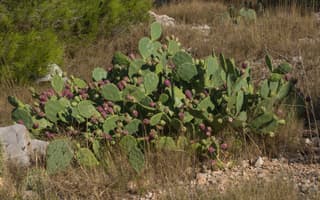
Erect Prickly Pear
Opuntia stricta
Opuntia stricta is an upright to spreading succulent shrub from the Cactaceae family, native to tropical and subtropical America including Florida, Cuba, and eastern Mexico. Typically 50-100 cm tall but can reach 2 m in height. The plant bears flat, paddle-shaped stems (cladodes) 10-35 cm long covered in sharp spines and microscopic barbed glochids. It produces bright yellow flowers in spring and summer, followed by edible red or purple fruits. Now classified as one of the 100 worst invasive species globally, it has spread throughout Africa, Australia, Mediterranean regions, and Asia.
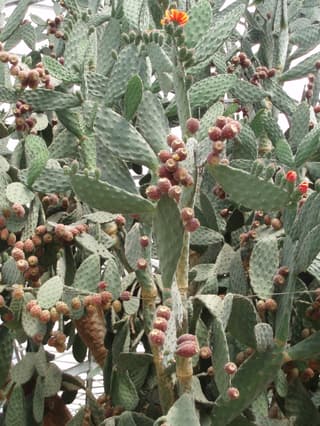
Woollyjoint Prickly Pear
Opuntia tomentosa
Opuntia tomentosa, the woollyjoint prickly pear, is a tree-forming cactus native to central Mexico's semi-arid highlands. Over years it develops a short, thick trunk topped with broad, velvety green pads covered in fine, felt-like hairs (hence 'tomentosa'), eventually reaching 3-6 m and occasionally up to 8 m in the wild. In spring and summer it bears yellow-to-orange, sometimes red-tinged flowers followed by sweet, edible reddish-purple fruit ('tunas'). Extremely drought tolerant once established, it thrives in full sun and sandy, fast-draining soil, and is grown both ornamentally and for its edible pads and fruit.
Find the Perfect Plant
Our plant guide helps you find ideal species for your experience level and time of year.
Browse by Difficulty, Season & More
Use the filters below to narrow this catalog by care difficulty, season, environment, or search directly by name. Each filter leads to a focused list tailored to your specific growing conditions.