Asparagaceae
Ornithogalum Care Guide
Ornithogalum
Easy bulb for a sunny spot. Plant bulbs about 10 cm deep in loose, well-drained soil, keep the soil lightly moist while the plant is in leaf and flower, and let it dry out as the leaves yellow after flowering. Feed with bulb fertilizer at planting and after flowering. Hardy species stay in the ground (zones 4-10); South African species need protection from frost or are grown in pots. All parts are toxic.
Every 7 days
Bright indirect
5° - 28°C
% - %
Categories
What is Ornithogalum?
Ornithogalum (Ornithogalum) is a easy-care plant from the Asparagaceae family. Ornithogalum is a genus of about 200 bulbous plants in the asparagus family (Asparagaceae), native to Europe, the Mediterranean, western Asia and especially southern Africa. Each bulb produces a tuft of narrow, strap-shaped leaves and stems topped with clusters or spikes of star-shaped flowers, usua...
Ornithogalum grows up to 90cm, spread of 15cm, watering every 7 days, 5°C – 28°C. It is suitable for indoor environments and not safe for pets.
Unlike many tropical plants, Ornithogalum tolerates watering mistakes. Best for beginners. Without precautions, ingestion can cause irritation in pets. Keep out of reach of cats and dogs. Without adequate drainage, root rot can develop within 14 days.
How to Care for Ornithogalum?
TLDR: Ornithogalum needs Bright indirect, watering every 7 days, and temperatures between 5-28°C with 40-70% humidity.
How Often Should You Water Ornithogalum?
Water about once a week during growth and flowering, when the top few centimetres of soil are dry. Never leave the soil soggy: the bulbs rot easily. After flowering, when the leaves start to yellow, reduce watering and keep the bulb almost dry during dormancy.
How Much Light Does Ornithogalum Need?
Needs a bright spot with at least 4-6 hours of sun a day; full sun or light shade outdoors. Indoors, place the pot at a sunny window in a cool room. With too little light the stems stretch and flower poorly.
What Is the Best Soil for Ornithogalum?
Loose, well-drained soil enriched with compost; sandy loam is ideal. In clay soil add sand or grit, or grow in raised beds or pots, because wet soil rots the bulbs. In pots use a well-draining bulb or cactus mix with a drainage layer.
What Pot Should You Use for Ornithogalum?
Terracotta pot with drainage holes, at least 15 cm deep, filled with well-draining bulb mix.
What Is Ornithogalum and Where Does It Come From?
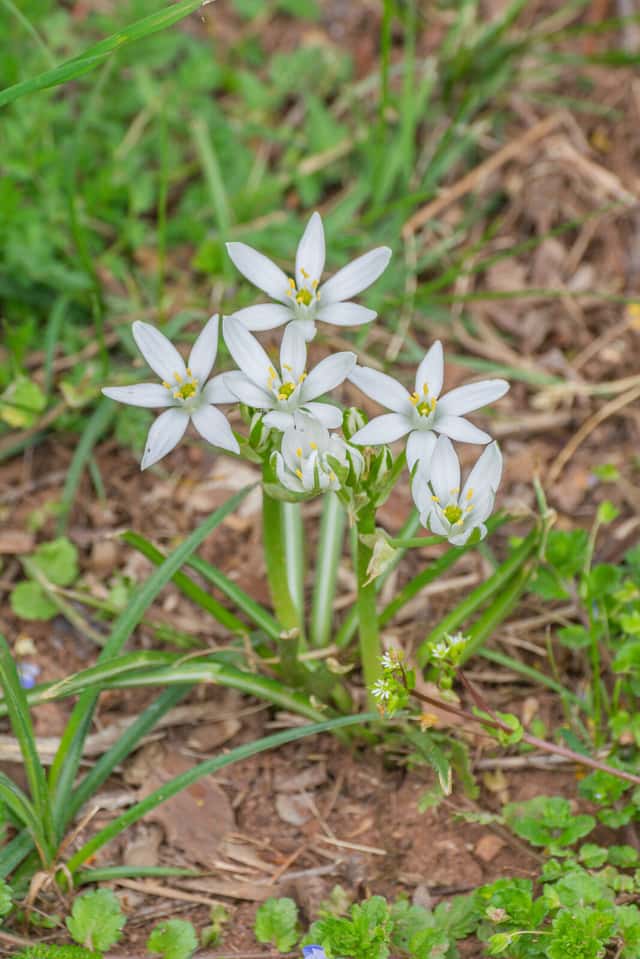
Ornithogalum is a genus of about 200 bulbous plants in the asparagus family (Asparagaceae), native to Europe, the Mediterranean, western Asia and especially southern Africa. Each bulb produces a tuft of narrow, strap-shaped leaves and stems topped with clusters or spikes of star-shaped flowers, usually white with a green stripe on the back, and orange or yellow in some species. The most grown species are O. umbellatum (Star of Bethlehem, a hardy garden bulb), O. thyrsoides (chincherinchee, a long-lasting cut flower), O. dubium (sun star, sold as a pot plant) and O. arabicum; the care on this page is valid for them.
How to Propagate Ornithogalum?
Bulb offsets
Lift and divide crowded clumps every 3-4 years. Discard soft or rotten bulbs.
- 1 After the leaves have died back, lift the clump of bulbs
- 2 Gently separate the small offset bulbs from the mother bulb
- 3 Replant them about 10 cm deep in well-drained soil
- 4 Water lightly and keep the soil just moist once growth starts
Materials needed:
Seed
Seed-grown plants take several years to flower; offsets are much faster.
- 1 Collect ripe seed from dry capsules
- 2 Sow on the surface of a well-drained seed mix and cover thinly
- 3 Keep lightly moist in a bright, cool place
- 4 Grow the seedlings on for two seasons before planting out
Materials needed:
How Big Does Ornithogalum Grow?
TLDR: Ornithogalum can reach up to 90cm tall with Medium growth rate.
Max height
90cm
Spread
15cm
Growth rate
Medium
Foliage
Deciduous
Warning: Toxic Plant
This plant can be toxic if ingested. Keep out of reach of:
Plant Uses
Ornamental
Great for decoration
Is your plant showing symptoms?
Click on the symptom to discover possible causes:
What Diseases Commonly Affect Ornithogalum?
TLDR: Ornithogalum is susceptible to 6 known diseases. Monitor regularly for early detection.
Root Rot
Root rot is a serious fungal disease that affects the root system of plants, causing them to decay and die. It is primarily caused by overwatering, poor drainage, or soil-borne fungi such as Pythium, Phytophthora, Rhizoctonia, and Fusarium. The disease thrives in waterlogged conditions where roots are deprived of oxygen, making them susceptible to fungal infection.
Mosaic Virus
Mosaic virus is a group of plant viruses that cause mottled, patchy patterns on leaves and can affect a wide variety of plants. The virus creates characteristic yellow, white, and green mosaic patterns, often accompanied by stunted growth and deformed plant parts. This highly contagious disease spreads rapidly through insect vectors and contaminated tools.
Aphids
Aphids are small, soft-bodied, pear-shaped insects (1/16 to 1/8 inch long) that feed by sucking nutrient-rich sap from plants. They reproduce rapidly and can quickly weaken plants, causing distorted growth and transmitting plant viruses. Aphids come in various colors including green, black, red, yellow, brown, and gray. They secrete honeydew, a sticky substance that attracts ants and encourages sooty mold growth.
Leaf Spot
Leaf spot is a common fungal disease caused by various pathogens including Alternaria, Ascochyta, Colletotrichum, Septoria, and Venturia. It primarily affects leaves, causing discolored spots that can lead to premature leaf drop if left untreated.
Meaning & Symbolism
The name Star of Bethlehem, given to O. umbellatum, comes from the star-shaped flowers, compared to the star of the Nativity. The flower is associated with purity, hope and reconciliation.
Fun Facts
The genus name comes from Greek ornis (bird) and gala (milk), "bird's milk".
The flowers of many species close at night and in cloudy weather.
Chincherinchee (O. thyrsoides) cut stems can last for weeks in a vase.
O. umbellatum has naturalized in North America and is considered a weed in lawns there.
Frequently asked questions
How often should I water Ornithogalum?
Is Ornithogalum toxic to cats and dogs?
Why are the leaves of my Ornithogalum turning yellow?
Can I grow Ornithogalum indoors?
Compare with similar plants
| Attribute | Difficulty | Light | Watering | Pet Safe |
|---|---|---|---|---|
| Field Maple | Easy | Bright indirect | 14d | ✓ |
| Iberian Houseleek | Easy | Direct sun | 14d | ✓ |
| Silver Birch | Easy | Direct sun | 14d | ✓ |
| Common Blanketflower | Easy | Direct sun | 10d | ✓ |