Complete Plant Guide
Explore plants by difficulty, season and more. Find the perfect plant for you.
Difficulty
Categories
Plants by City
🗺️ Plants by City3798 plants found
Showing 1729-1764 of 3798
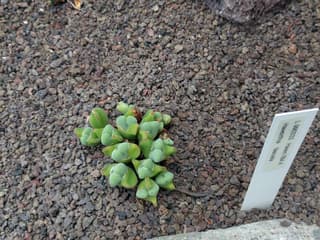
Zebra Haworthia
Haworthiopsis fasciata
Haworthiopsis fasciata, commonly known as Zebra Haworthia or Zebra Plant, is a popular compact succulent native to the Eastern Cape of South Africa. It forms tight rosettes of dark green, fleshy leaves adorned with distinctive white horizontal stripes or tubercles on the outer surface — a pattern reminiscent of a zebra. Formerly classified as Haworthia fasciata, this slow-growing gem is one of the most recognizable succulents in cultivation. It is often confused with its close relative Haworthiopsis attenuata, which has white bumps on both leaf surfaces rather than only on the underside.
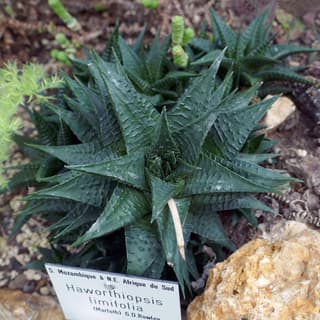
Fairy Washboard
Haworthiopsis limifolia
A fascinating and hardy succulent, characterized by its rigid triangular leaves arranged in a rosette. The most striking feature is the raised horizontal ridges on its dark green leaves, resembling an old-fashioned washboard or crocodile skin. It is a slow-growing plant, ideal for beginners due to its tolerance for neglect.
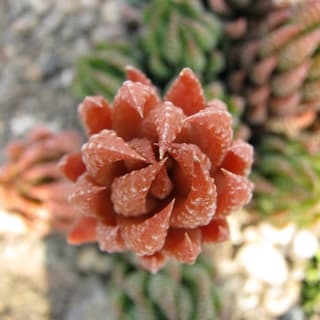
Zebra Wart
Haworthiopsis reinwardtii
Haworthiopsis reinwardtii, commonly known as zebra wart, is a compact succulent native to the Eastern Cape province of South Africa. It forms spiraling rosettes of fleshy, dark green leaves covered in raised white tubercles that resemble zebra stripes. This slow-growing succulent readily produces offsets, forming dense clumps over time. In spring it sends up slender stems bearing small tubular pinkish-white flowers.
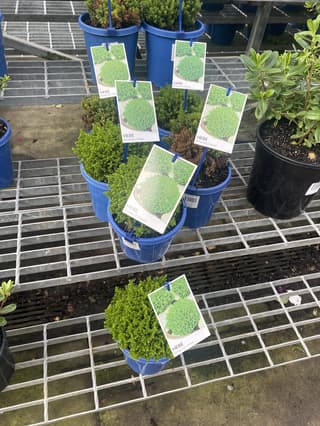
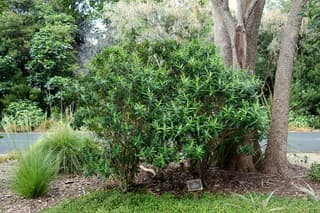
Emerald Gem hebe
Hebe 'Emerald Gem'
Hebe 'Emerald Gem' (also known as 'Emerald Green' or 'Green Globe') is a dwarf, evergreen shrub that naturally grows into a compact, spherical mound. Its upright stems are densely covered with tiny, pointed, glossy apple-green leaves, giving it the appearance of a small conifer from a distance. Discovered in the Ruahine Range of New Zealand, it is likely a hybrid of Hebe odora and Hebe subsimilis. It is slow-growing, reaching a height and width of 12–18 inches (30–45 cm) over 5–10 years. In summer, small white flowers bloom sporadically at the tips of the shoots, attracting pollinators. In 1993, it received the Royal Horticultural Society (RHS) Award of Garden Merit. Today, many experts classify it within the genus Veronica.
Hebe 'Magic Color'
Hebe 'Magic Color'
Hebe 'Magic Color' is an evergreen ornamental shrub from the plantain family (Plantaginaceae), belonging to the genus Hebe (formerly classified under Veronica), which is native to New Zealand. This cultivar is prized for its variegated foliage, where small opposite leaves display alternating shades of green, cream, and pinkish-purple. In late summer and autumn, the shrub is adorned with small clusters of purple to white flowers. It is a compact, densely branched shrub suitable for garden beds, containers, and low hedges.
Silver Dollar Hebe
Hebe 'Silver Dollar'
Hebe 'Silver Dollar' is a compact, evergreen, mound-forming ornamental shrub known for its grey-green leaves with creamy-white margins. The leaf edges turn burgundy in autumn and a vibrant pinkish-magenta shade during winter and spring, ensuring the plant remains spectacular even in the colder months. In summer, it produces small clusters of pale lilac or whitish flowers during a long-lasting blooming period. It possesses excellent drought tolerance once established and copes well with coastal, windy locations.
Hebe
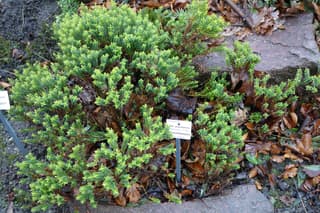
Hebe addenda
Hebe Addenda belongs to the group of ornamental shrubby hebes (genus Hebe, now classified under Veronica) from the Plantaginaceae family, originally from New Zealand. It is a low, compact, evergreen shrub primarily cultivated in series like Addenda® for its abundant and long-lasting blooms. It flowers from summer until the first frosts with small flowers in racemes that attract pollinators. Thanks to its compact growth, it is suitable for patios, containers, and garden beds.
Fragrant Hebe
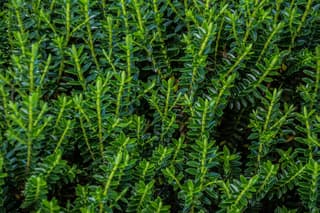
Hebe odora
Fragrant Hebe is a slow-growing evergreen shrub native to New Zealand, featuring small, glossy, dark green leaves. It blooms in late spring and early summer with short spikes of pure white flowers. It is very frost-hardy and suitable for coastal and rock gardens with minimal maintenance.
Hebe Quicksilver
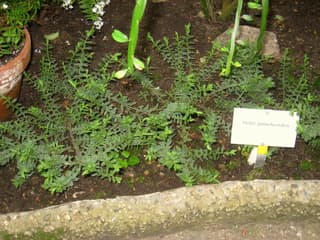
Hebe pimeleoides
Hebe pimeleoides is a low-growing, evergreen shrub native to New Zealand (dry Marlborough and Canterbury mountain ranges on the South Island). It is characterized by tiny, grey-blue (glaucous) leaves 7–10 mm long, arranged oppositely on dark, almost black stems. From spring to early summer, it produces small inflorescences with pale purple to white flowers that attract bees and other pollinating insects. The 'Quicksilver' cultivar is known for its compact, semi-prostrate growth habit and has received the Award of Garden Merit from the Royal Horticultural Society.
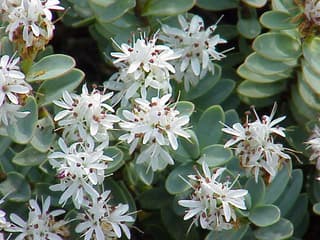
Hebe Pagei
Hebe pinguifolia
Hebe Pagei is a low-growing, prostrate variety of evergreen shrub from the Plantaginaceae family, originally native to New Zealand. It forms compact, dome-shaped mounds up to approximately 40 cm in height and 90 cm in spread, covered with small, oval, gray-blue leaves featuring a characteristic waxy coating (hence the epithet pinguifolia — thick-leaved). From late spring to early summer, small white flowers appear in short spikes, which are frequently visited by bees. The Pagei variety has earned the RHS Award of Garden Merit for its reliability and resistance to harsh conditions, including salty coastal air.
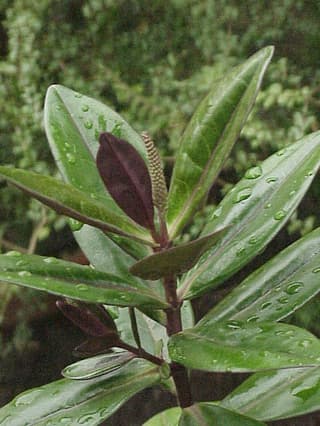
Showy Hebe
Hebe speciosa
Hebe speciosa, commonly known as Showy Hebe, is an evergreen shrub native to coastal New Zealand. It produces spectacular spikes of deep pinkish-red to purple flowers in summer and autumn, making it one of the most ornamental of the hebe species. With its glossy dark green foliage and vibrant blooms, it is a popular choice for coastal and temperate gardens.
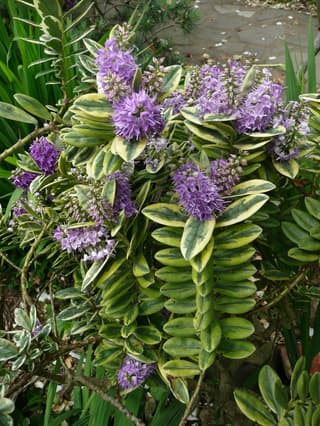
Franciscan hebe
Hebe x franciscana
Hebe × franciscana is a compact, rounded evergreen shrub, a garden hybrid between Hebe elliptica and Hebe speciosa, two species native to New Zealand. The first documented cross dates back to before 1859; the name was published in 1943 by Alice Eastwood, based on plants grown in San Francisco's Golden Gate Park. It features sturdy, glossy stems and oval, thick, somewhat fleshy leaves up to 5–6 cm long, arranged in four rows. From summer to autumn, it produces short spikes of violet-blue, pink-purple, or white flowers that are highly attractive to bees and butterflies. It reaches 0.5–1 m in height and width within 5–10 years. The most widespread cultivar is 'Blue Gem' (1868); the 'Variegata' form (also sold as 'Silver Queen') has green leaves edged in creamy white and is slightly less cold-hardy. It tolerates wind and salt spray exceptionally well, making it ideal for coastal hedges; today, many botanists classify it as Veronica × franciscana.
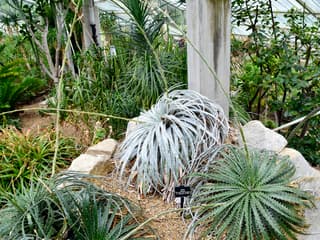
Hechtia
Hechtia
Hechtia is a genus of xerophytic terrestrial bromeliads native to Mexico and Central America, forming striking spiny rosettes adapted to arid, rocky environments. Prized for their dramatic appearance and exceptional drought tolerance, they are ideal for rock gardens and xeriscape plantings.
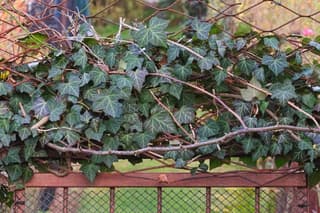
Ivy
Hedera
Hedera is a genus of about 15 species of evergreen climbing or ground-creeping woody plants in the family Araliaceae, native to western, central, and southern Europe, Macaronesia, northwestern Africa, and across central-southern Asia to Japan and Taiwan. The most widely cultivated species is Hedera helix (English Ivy), a popular trailing and climbing houseplant prized for its glossy, lobed leaves and vigorous growth. Ivy is frequently used in hanging baskets, as a trailing accent in containers, or trained on trellises and topiary frames. Important warning: all parts of Hedera are toxic to cats, dogs, and humans if ingested, containing triterpenoid saponins that cause gastrointestinal distress, skin irritation, and in severe cases respiratory difficulty.

North African Ivy
Hedera algeriensis
North African Ivy (Hedera algeriensis), also sold as Algerian Ivy, is a vigorous evergreen climber native to the coastal mountains of North Africa and the Canary Islands. Its large, glossy, leathery leaves and fast, self-clinging growth make it a striking backdrop for walls, trellises, and hanging baskets, or a lush trailing groundcover outdoors. A close relative of English ivy, it tolerates a wide range of light levels and rewards minimal care with dense, tropical-looking foliage year-round.
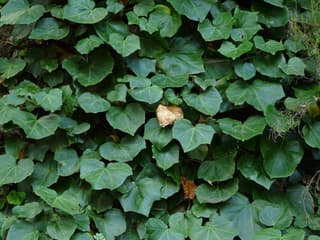
Algerian Ivy
Hedera canariensis
Hedera canariensis, commonly known as Algerian Ivy or Canary Island Ivy, is a vigorous evergreen climbing plant native to the Canary Islands and North Africa. Its large, glossy deep-green leaves — sometimes variegated with creamy-white edges — make it a popular choice for ground cover, trellises, walls, and indoor decoration. It grows rapidly and is valued for its adaptability to different light conditions.
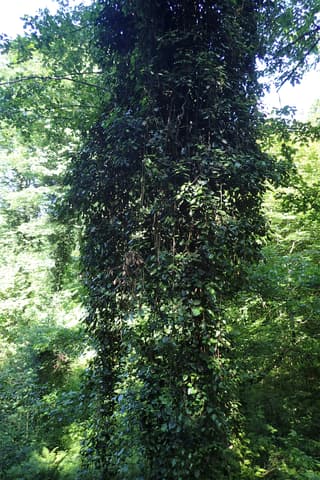
Persian Ivy
Hedera colchica
Hedera colchica, known as Persian Ivy, is a vigorous evergreen climbing vine native to the Caucasus region and northern Turkey. It features the largest leaves of all Hedera species -- thick, leathery, and often fragrant when crushed. As a mature climber it clings to walls, trees, and trellises using aerial rootlets, making it a popular choice for covering large vertical surfaces or serving as dense ground cover in shaded gardens.
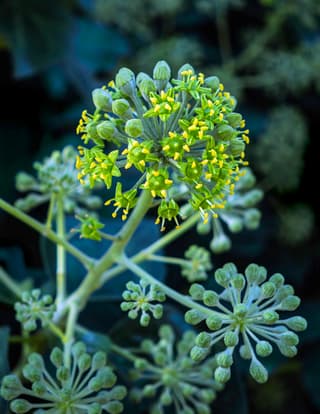
English Ivy
Hedera helix
English Ivy is a versatile and hardy evergreen climbing vine native to Europe, western Asia, and northern Africa. Known for its distinctive lobed leaves, it can grow as a ground cover or climb up to 30 meters using aerial rootlets. This fast-growing plant is excellent for hanging baskets, topiaries, or as a trailing houseplant.
Atlantic Ivy
Hedera hibernica
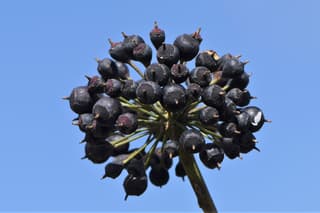
Hedera hibernica, commonly known as Atlantic Ivy or Irish Ivy, is a fast-growing, evergreen climbing plant native to the Atlantic regions of Western Europe, including Ireland, the United Kingdom, and the Iberian Peninsula. With glossy, dark green lobed leaves, this plant is widely used as ground cover, a wall climber, or an ornamental container plant. It adapts readily to shady conditions and is remarkably tolerant of cold temperatures and coastal salt spray.
Ginger Lily / Garland Flower (genus)
Hedychium
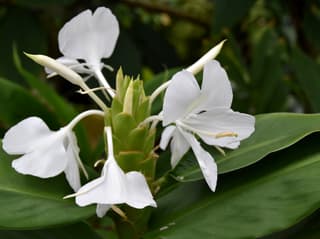
Hedychium is a genus of tropical and subtropical flowering plants in the family Zingiberaceae, native to the Himalayan foothills and Southeast Asia. Prized for their bold, fragrant blooms in shades of white, yellow, orange, and red, these fast-growing rhizomatous perennials thrive in warm, humid environments. Notable species include H. coronarium (the national flower of Cuba) and H. gardnerianum (Kahili ginger). They are excellent garden specimen plants, pond-edge plantings, and container subjects.
Yellow Marsh Ginger Lily
Hedychium chrysoleucum
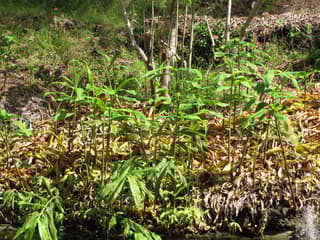
Yellow Marsh Ginger Lily (Hedychium chrysoleucum) is a tropical perennial from the Zingiberaceae family, native to Brazil. It produces fragrant cream-yellow flowers throughout the year, with greatest abundance in spring and summer. A robust and low-maintenance plant, it is highly valued in landscaping near water bodies, ponds, and wetlands.
White Ginger Lily
Hedychium coronarium
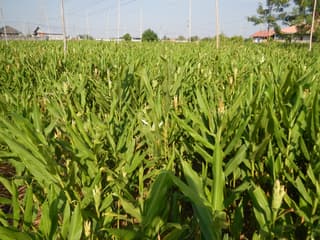
Hedychium coronarium, commonly known as White Ginger Lily or Butterfly Lily, is a robust perennial herb in the Zingiberaceae family, native to the Himalayas and Southeast Asia. Renowned for its intensely fragrant, white butterfly-shaped flowers, this striking plant grows up to 1.8 m tall with bold lance-shaped leaves on tall, erect stems. It is the national flower of Cuba and has naturalized across tropical regions worldwide. Blooming in summer through fall, its flowers are most fragrant in the evening, attracting night-flying pollinators.
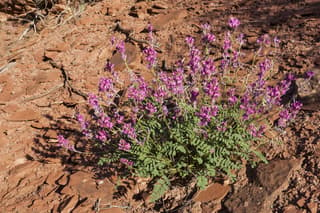
Boreal Sweet-vetch
Hedysarum boreale
Boreal sweet-vetch (Hedysarum boreale) is a hardy perennial legume wildflower native to the cold, dry rangelands and open slopes of northern and western North America, from the Canadian Arctic south through the Intermountain West. Growing from a deep, woody taproot to about 30-70 cm tall, it produces racemes of pink-to-purple, pea-like flowers from late spring into summer, followed by segmented seed pods. As a nitrogen-fixer it improves the soil around it and is prized for erosion control, pollinator meadows, and rangeland restoration. Its sweet, licorice-carrot-flavored roots were traditionally eaten and used medicinally by Indigenous peoples of the region.
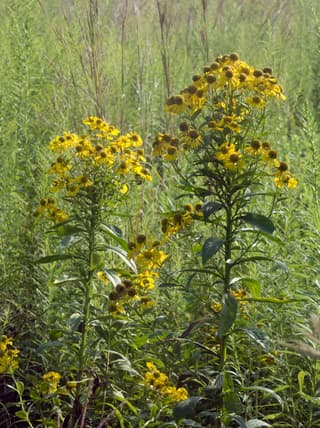
Common Sneezeweed
Helenium autumnale
Common Sneezeweed (Helenium autumnale) is a hardy, perennial herbaceous plant in the aster family (Asteraceae), native to North America, where it frequently grows in moist meadows, along banks, and in marshy areas. From July through October, it produces numerous daisy-like flower heads in vibrant shades of yellow, gold, orange, red, and copper-brown, clustered around a spherical, dark center. Depending on the variety, the plant reaches heights of 50 to 160 cm and grows in a bushy, upright habit with dark green, lance-shaped leaves on winged stems. As a robust pollinator plant for bees and butterflies, it is a popular choice for naturalistic gardens, perennial borders, and cottage gardens in late summer and fall.
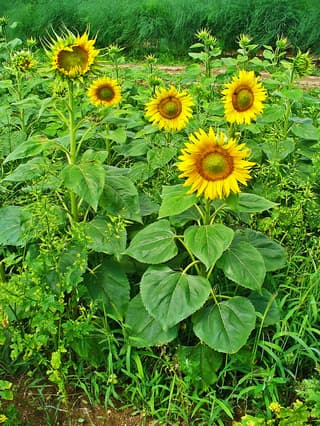
Sunflower
Helianthus
Helianthus is a genus of roughly 70 flowering plant species in the family Asteraceae, native mainly to North America. Its best-known and most widely cultivated species, Helianthus annuus (common sunflower), is a fast-growing annual that can reach several meters in height, producing a large yellow flower head that displays heliotropism (tracking the sun) while young. It is grown worldwide for its edible seeds, oil, and ornamental value.
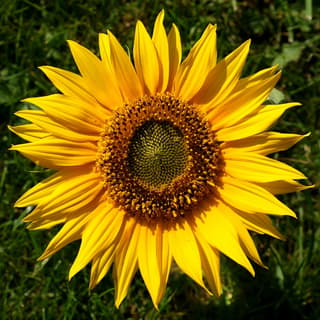
Sunflower
Helianthus annuus
The Sunflower is an annual plant in the Asteraceae family, known for its large yellow flowers that follow the sun's movement (heliotropism). Native to the Americas, it is cultivated worldwide for both ornamental purposes and the production of seeds and oil.
Beach Sunflower
Helianthus debilis
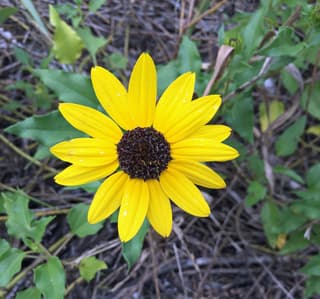
Helianthus debilis, commonly known as beach sunflower, is a sprawling, short-lived perennial native to coastal regions of the southeastern United States. This vigorous groundcover produces a dense carpet of bright yellow flowers, blooming almost year-round in warm climates. Individual flowers measure 2-3 inches across with sunny yellow rays surrounding a dark reddish-brown central disk. The distinctive triangular, slightly lobed leaves resemble cucumber foliage, which is the origin of its alternate common name, cucumberleaf sunflower. This species is exceptionally salt-tolerant, drought-resistant, and well-adapted to harsh coastal environments, making it an excellent choice for beach gardens, dunes, and low-maintenance landscapes. The plant grows rapidly, self-seeds prolifically, and spreads via underground runners. It attracts butterflies and songbirds, making it valuable for pollinator gardens.
Prairie Sunflower
Helianthus petiolaris
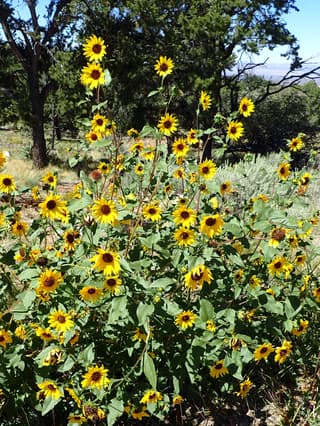
Helianthus petiolaris, commonly known as the Prairie Sunflower or Lesser Sunflower, is a fast-growing annual native to the dry prairies and sandy soils of western and central North America. It produces cheerful bright yellow daisy-like flowers with dark brown central discs from summer through fall, attracting bees, butterflies, and other pollinators. As one of the most widely distributed wild sunflowers in North America, it thrives with minimal care in open, sunny locations and poor soils where other plants struggle.
Jerusalem Artichoke
Helianthus tuberosus
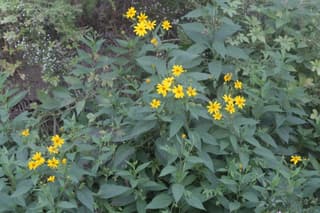
Helianthus tuberosus, commonly known as Jerusalem Artichoke or Sunchoke, is a vigorous perennial sunflower native to central and eastern North America. It grows up to 3 meters tall, producing bright yellow sunflower-like blooms in late summer and fall, while developing knobby, edible tubers underground. One of the most productive and hardy food crops, it thrives in a wide range of conditions and was a staple food of Native American peoples long before European contact.
Helichrysum
Helichrysum
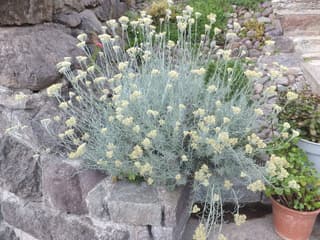
Helichrysum is a large genus of about 600 species in the daisy family (Asteraceae), native mainly to Africa and Madagascar, with others around the Mediterranean, in Eurasia and Australasia. Most are low, bushy subshrubs or perennials with narrow, often silvery or woolly grey leaves and clusters of small button-like flower heads surrounded by dry, papery bracts that keep their shape and colour when dried, hence the names everlasting, immortelle and strawflower. In gardens the most common are Helichrysum italicum (curry plant), with curry-scented silver foliage and mustard-yellow flowers, Helichrysum petiolare (licorice plant), grown for its trailing felted leaves, and compact rock-garden species such as H. amorginum and H. stoechas. Grown plants usually stay 20-60 cm tall. The big, colourful annual sold as strawflower (formerly H. bracteatum) is now classified as Xerochrysum bracteatum.
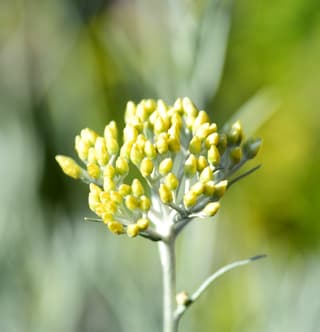
Curry Plant
Helichrysum italicum
Helichrysum italicum, commonly known as the Curry Plant, is a drought-tolerant, aromatic evergreen subshrub native to the Mediterranean region. Its silvery-grey needle-like leaves release a distinctive curry-like fragrance when touched, though it is not related to the culinary spice. In summer, clusters of small, bright yellow button-like flowers bloom, making it a favourite in herb gardens, rock gardens, and dried flower arrangements. It is also highly valued in traditional herbal medicine for its anti-inflammatory and regenerative properties.
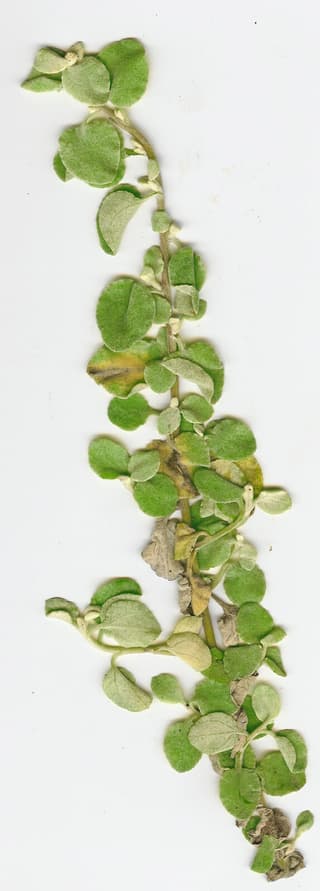
Licorice Plant
Helichrysum petiolare
Helichrysum petiolare is a fast-growing, evergreen trailing subshrub native to the Cape Provinces of South Africa, where it is known locally as kooigoed or impepho. It is grown almost exclusively for its soft, felted, silvery-grey rounded leaves, which release a faint licorice-like scent when brushed or crushed. The plant spreads and cascades vigorously, making it a favorite "spiller" in mixed containers, hanging baskets and window boxes, and it also works well as a fast, drought-tolerant groundcover in dry, sunny borders. Its small creamy-white flower clusters appear in summer but are considered insignificant compared to the foliage.
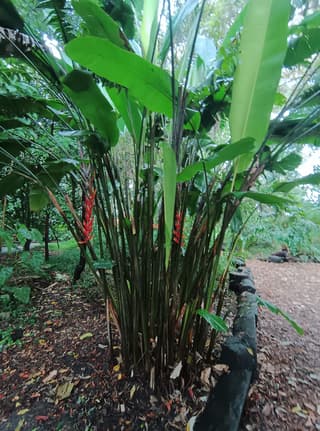
Heliconia
Heliconia
Heliconia is a genus of tropical perennial plants native to the tropical Americas, prized for its striking lobster-claw or parrot-beak shaped inflorescences. Waxy, brightly colored bracts in shades of red, orange, yellow and pink shelter small true flowers and attract hummingbirds in the wild. With large, banana-like leaves, it brings lush jungle texture to tropical gardens and bright indoor spaces.
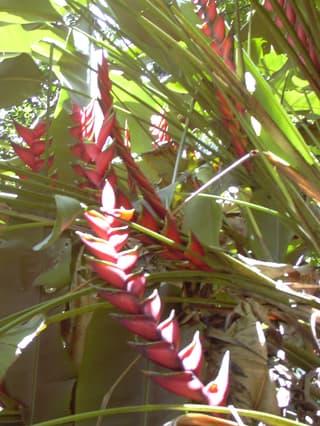
Lobster Claw
Heliconia bihai
Heliconia bihai, commonly known as Lobster Claw or Heliconia, is a spectacular tropical plant native to the Caribbean and South America. Its dramatic inflorescences in shades of red, orange, and yellow emerge among broad, glossy leaves, resembling lobster claws. It is highly valued in tropical floral arrangements and as an ornamental garden plant.
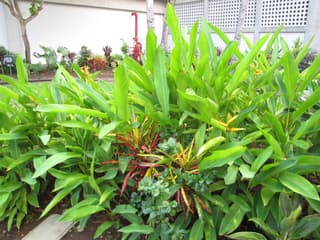
Parrot Heliconia
Heliconia psittacorum
Heliconia psittacorum, commonly known as Parrot Heliconia or Parrot's Beak, is a tropical flowering plant native to Brazil and the Caribbean. It is prized for its vibrant bracts in shades of red, orange, and yellow that resemble a parrot's plumage. A member of the Heliconiaceae family, it blooms nearly year-round in warm climates and is widely used as an ornamental garden plant and cut flower.
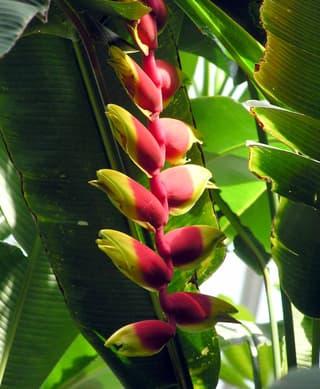
Hanging Lobster Claw
Heliconia rostrata
Heliconia rostrata, commonly known as the Hanging Lobster Claw, is a tropical perennial herbaceous plant native to Peru, Bolivia, and Colombia. It is celebrated for its dramatic pendant inflorescences composed of bright red bracts tipped with yellow and green, attracting hummingbirds and lasting for weeks. Its large, dark-green banana-like leaves can reach up to 120 cm in length, creating a stunning tropical statement in any warm garden.
Find the Perfect Plant
Our plant guide helps you find ideal species for your experience level and time of year.
Browse by Difficulty, Season & More
Use the filters below to narrow this catalog by care difficulty, season, environment, or search directly by name. Each filter leads to a focused list tailored to your specific growing conditions.