Plantaginaceae
Fragrant Hebe: Ground Cover Plant
Hebe odora
Prefers full sun or partial shade and well-drained, neutral to slightly alkaline soil. Tolerates drought once established. During the growing season, light fertilization about once every two weeks is sufficient.
Every 7 days
Bright indirect
-15° - 25°C
% - %
Categories
What is Fragrant Hebe?
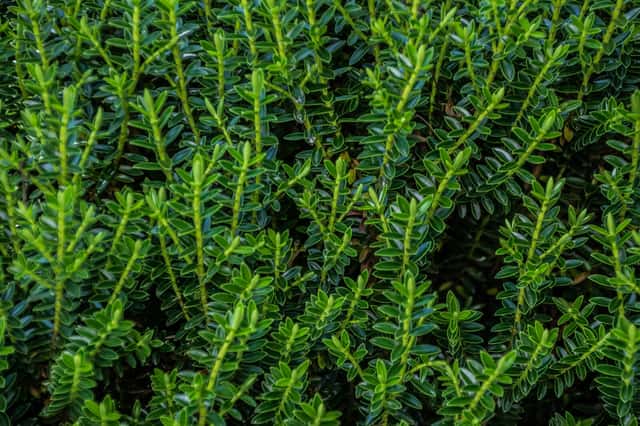
Fragrant Hebe (Hebe odora) is a easy-care plant from the Plantaginaceae family. Fragrant Hebe is a slow-growing evergreen shrub native to New Zealand, featuring small, glossy, dark green leaves. It blooms in late spring and early summer with short spikes of pure white flowers. It is very frost-hardy and suitable for coastal and rock gardens with minimal maintenance.
Fragrant Hebe grows up to 1.0m, spread of 150cm, watering every 7 days, -15°C – 25°C. It is not suitable for indoor environments and safe for pets.
Unlike many tropical plants, Fragrant Hebe tolerates watering mistakes. Best for beginners. Unlike many popular species, Fragrant Hebe is safe to keep around pets.
How to Care for Fragrant Hebe?
TLDR: Fragrant Hebe needs Bright indirect, watering every 7 days, and temperatures between -15-25°C with 40-70% humidity.
How Often Should You Water Fragrant Hebe?
During the growing season, water approximately once a week to keep the soil moist but not waterlogged. Reduce watering in winter.
How Much Light Does Fragrant Hebe Need?
Place in full sun or partial shade; in warmer regions, afternoon shade is beneficial.
What Is the Best Soil for Fragrant Hebe?
Use well-drained, neutral to slightly alkaline soil (pH 6.5-7.8). Avoid consistently waterlogged soil, which causes root rot.
What Pot Should You Use for Fragrant Hebe?
Use a terracotta pot with a drainage hole, at least 5 cm larger than the root ball.
Care Schedule
Fertilize
Every 14 days
Repot
Every 365 days
What Is Fragrant Hebe and Where Does It Come From?
Fragrant Hebe is a slow-growing evergreen shrub native to New Zealand, featuring small, glossy, dark green leaves. It blooms in late spring and early summer with short spikes of pure white flowers. It is very frost-hardy and suitable for coastal and rock gardens with minimal maintenance.
How to Propagate Fragrant Hebe?
Semi-hardwood Cuttings
Humidity and moderate warmth are key; use clean tools.
- 1 Take 8-10 cm semi-hardwood cuttings in late summer
- 2 Remove lower leaves, leaving 2-3 pairs at the top
- 3 Dip the cut end in rooting hormone
- 4 Plant in a mix of compost and coarse sand
- 5 Maintain humidity and a temperature of 12-15°C
Materials needed:
Seeds
Seeds have a short viability, sow fresh.
- 1 Collect seeds immediately after ripening
- 2 Sow in containers in a cold frame
- 3 Maintain humidity and a cool temperature of 12-15°C
Materials needed:
How Big Does Fragrant Hebe Grow?
TLDR: Fragrant Hebe can reach up to 1.0m tall with Slow growth rate.
Max height
1.0m
Spread
1.5m
Growth rate
Slow
Foliage
Evergreen
Plant Uses
Ornamental
Great for decoration
Ground Cover
Soil coverage
Is your plant showing symptoms?
Click on the symptom to discover possible causes:
What Diseases Commonly Affect Fragrant Hebe?
TLDR: Fragrant Hebe is susceptible to 6 known diseases. Monitor regularly for early detection.
Downy Mildew
Downy mildew is a fungal-like disease caused by oomycetes (water molds) that thrives in cool, wet conditions. It affects a wide range of plants, causing yellowing leaves with fuzzy white-gray growth underneath, leading to defoliation and reduced yields if left untreated.
Phytophthora Root Rot
Disease caused by fungus-like organisms (oomycetes) that live in soil and can survive for years. It affects roots, stem, and crown of plants, being especially severe in waterlogged or poorly drained soils. It is the second most common cause of root rot in trees and shrubs.
Leaf Spot
Leaf spot is a common fungal disease caused by various pathogens including Alternaria, Ascochyta, Colletotrichum, Septoria, and Venturia. It primarily affects leaves, causing discolored spots that can lead to premature leaf drop if left untreated.
Powdery Mildew
Powdery mildew is a common fungal disease caused by various fungi species including Erysiphe, Podosphaera, Oïdium, and Leveillula. It affects over 10,000 plant species worldwide. The disease thrives in warm, dry climates with high humidity and appears as a distinctive white powdery coating on plant surfaces.
Meaning & Symbolism
Symbolizes the beauty and resilience of New Zealand flora; the genus Hebe is named after the Greek goddess of youth.
Compare with similar plants
| Attribute | Difficulty | Light | Watering | Pet Safe |
|---|---|---|---|---|
| Field Maple | Easy | Bright indirect | 14d | ✓ |
| Silver Birch | Easy | Direct sun | 14d | ✓ |
| Common Blanketflower | Easy | Direct sun | 10d | ✓ |
| Cushion Bush | Easy | Direct sun | 14d | ✓ |





