Complete Plant Guide
Explore plants by difficulty, season and more. Find the perfect plant for you.
Difficulty
Categories
Plants by City
🗺️ Plants by City3798 plants found
Showing 1693-1728 of 3798
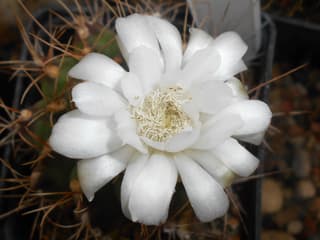
Chin Cactus
Gymnocalycium anisitsii
Gymnocalycium anisitsii, commonly known as the Chin Cactus, is a small globular cactus native to southern Brazil, Paraguay, and Bolivia. It features a grayish-green body with 8 to 11 prominent ribs, yellowish or brownish spines, and funnel-shaped white to pinkish flowers. It is an easy-to-grow species, ideal for beginners and collectors.
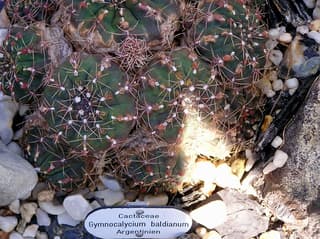
Dwarf Chin Cactus
Gymnocalycium baldianum
Gymnocalycium baldianum, commonly known as the Dwarf Chin Cactus, is a compact globular cactus native to the Catamarca and Salta provinces of Argentina. It is celebrated for its striking crimson to pink-purple flowers that bloom readily even on young plants, making it one of the most floriferous cacti for home cultivation.
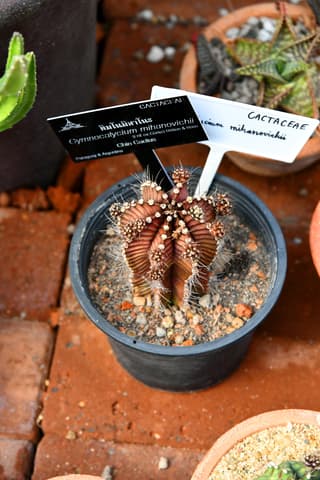
Moon Cactus
Gymnocalycium mihanovichii
Gymnocalycium mihanovichii is a small globular cactus native to Paraguay and Argentina. It is famous for its brightly colored varieties (red, orange, yellow, pink) that lack chlorophyll and must be grafted onto another cactus to survive. Natural green forms can grow on their own and produce beautiful flowers in spring and summer.
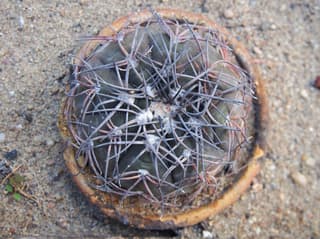
Pflanz's Chin Cactus
Gymnocalycium pflanzii
Gymnocalycium pflanzii is a slow-growing, globular cactus native to Bolivia and Paraguay, belonging to the Cactaceae family. It reaches approximately 15 cm in diameter and produces attractive pink, white, and orange flowers atop the plant during spring and summer. It is highly drought-tolerant and well-adapted to arid environments.
Gymnopus
Gymnopus
Gymnopus is a genus of gilled mushrooms that was formerly part of the Marasmiaceae family and is now often classified within the Omphalotaceae. These fungi are characterized by their typically tough stems and pale spore prints. They grow saprobically on forest litter, decaying wood, or humus, playing a crucial role in forest ecosystems as decomposers of organic matter.
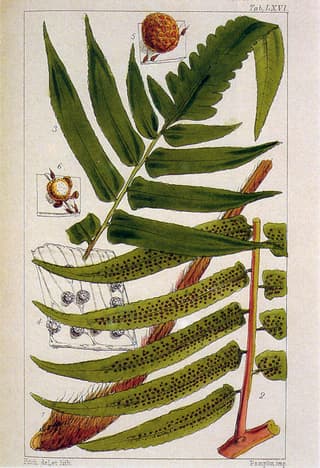
Asian Tree Fern
Gymnosphaera podophylla
Gymnosphaera podophylla, also known as Alsophila podophylla or Cyathea podophylla, is a trunk-forming tree fern native to Southeast Asia, southern China, Taiwan, Japan, and the Ryukyu Islands. It grows in shaded forest understories, along streams and in ravines at elevations of 600–1000 m. This dwarf tree fern develops a distinctive trunk adorned with warty, dark purple-polished old frond bases and attractive bipinnate fronds, reaching up to 1.8 m in height.
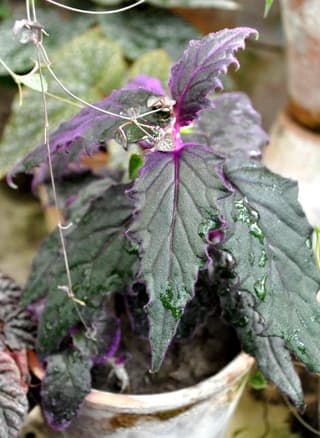
Purple Passion Plant
Gynura aurantiaca
Gynura aurantiaca is a striking tropical plant native to Java and Sumatra, known for its velvety purple-haired foliage that shimmers in the light. A member of the Asteraceae family, this fast-growing evergreen makes an excellent houseplant and is particularly stunning in hanging baskets where its trailing stems can cascade gracefully. While it produces small orange-yellow flowers in fall and winter, many growers pinch them off due to their unpleasant smell.
Baby's Breath
Gypsophila
Gypsophila, commonly known as baby's breath, is a genus of airy, cloud-like flowering plants in the carnation family (Caryophyllaceae). Prized for its cascades of tiny white or pale pink blooms on wiry, branching stems, it is a classic filler flower in bouquets and garden borders, and forms a mounded, drought-hardy clump once established.
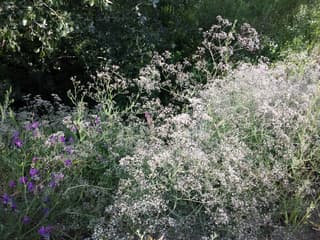
Baby's Breath
Gypsophila paniculata
Gypsophila paniculata, commonly known as Baby's Breath, is a graceful perennial flowering plant native to Europe and Asia. It produces clouds of tiny white or pale pink flowers on delicate, airy stems, making it a beloved staple in floral arrangements and cottage gardens. It thrives in full sun with well-drained, slightly alkaline soil and is notably drought-tolerant once established.
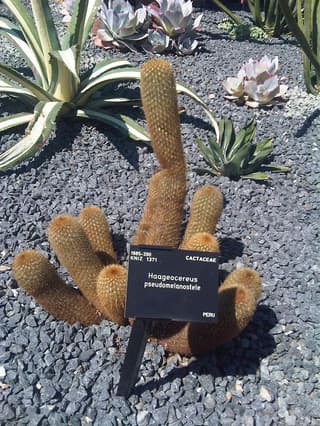
Foxtail Cactus
Haageocereus pseudomelanostele
A shrubby, perennial columnar cactus, native to the coastal hills and dry scrublands of western Peru (Ancash, Lima, and Ica), found at altitudes between 300 and 2000 meters. It forms clumps of erect stems, highly branched from the base, growing up to 70 cm tall and 8 cm in diameter. The areoles bear white wool, a strong central spine up to 5 cm, numerous yellowish radial spines, and white bristles. Its white flowers, purple on the outside with a greenish to reddish throat, measure about 10 cm. The fruits are ovoid, red, up to 6 cm, and are sometimes eaten raw.
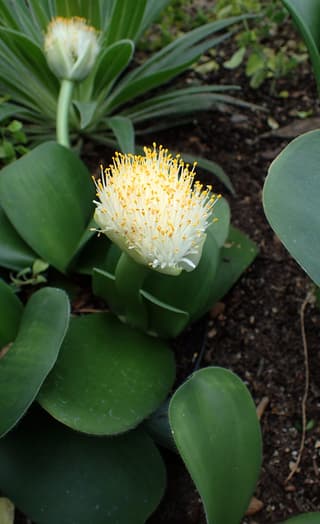
Blood Lily
Haemanthus
Haemanthus is a genus of bulbous perennials native to southern Africa, prized for its bold, brush-like flowerheads and thick, paddle-shaped leaves. Sometimes called the Blood Lily for the vivid scarlet blooms of species like H. coccineus, or the Paintbrush Lily for the softer white tufts of the popular houseplant H. albiflos, the genus stores water and nutrients in a large fleshy bulb that lets it survive long, dry dormant seasons. Depending on the species, foliage may be evergreen or fully deciduous, dying back after flowering before regrowing with the rains. Because of this dormancy cycle, care should follow the plant's natural rhythm rather than a fixed calendar.
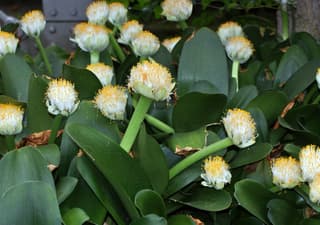
Paintbrush Lily
Haemanthus albiflos
Haemanthus albiflos, the Paintbrush Lily, is an evergreen bulbous perennial native to coastal South Africa. It produces distinctive white shaving-brush flowers with prominent yellow-tipped stamens in autumn and winter. One of the most shade-tolerant and low-maintenance bulbs available, it thrives indoors for decades with minimal care.
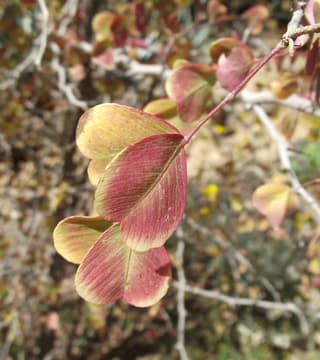
Mexican Logwood
Haematoxylum brasiletto
The Mexican Logwood (Haematoxylum brasiletto) is a small tree or thorny shrub native to Mexico, Central America, and northern Colombia, belonging to the Fabaceae family. It grows between 2 and 15 meters tall, featuring a twisted, fluted trunk and an intense red heartwood, historically used for extracting textile dye (hematoxylin). Its leaves are pinnate with heart-shaped leaflets, and the branches bear rigid thorns up to 2 cm long. It produces small clusters of fragrant yellow flowers, followed by copper-colored seed pods. It is extremely drought and heat resistant, thriving in rocky, alkaline soils of tropical deciduous forests and thorn scrubs.
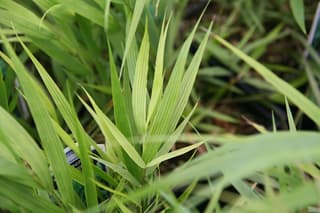
Japanese forest grass
Hakonechloa macra
Hakonechloa macra is the only species in the genus Hakonechloa, a perennial clumping grass native to the mountainous regions of the Japanese island of Honshu, where it grows on moist rocks and stabilized scree in wooded mountain gorges between 500 and 1500 m above sea level. It forms dense clumps with short creeping rhizomes and thin, arching stems over 50 cm long. Narrow lanceolate leaves grow to about 25 cm in length and are complemented by inconspicuous greenish-yellow panicle inflorescences from summer to autumn. Thanks to its elegant, waterfall-like growth habit, it is one of the most popular ornamental grasses for shady gardens.
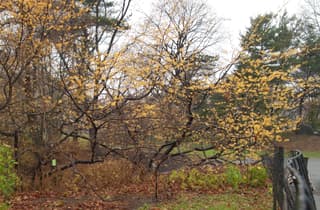
American witch-hazel
Hamamelis virginiana
Hamamelis virginiana, the American witch-hazel, is a large deciduous shrub or small tree (15-30 ft) native to eastern North America. It is notable for its late blooming period: from late fall into winter, thin, thread-like, bright yellow flowers appear, often while the last leaves are still falling. The species is globally renowned as the source of the classic skincare extract "witch hazel," derived from the bark and twigs, which has been used for centuries by North American indigenous peoples and later the pharmaceutical industry for its astringent and anti-inflammatory properties.
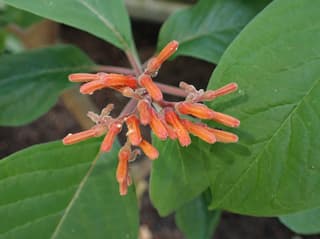
scarletbush
Hamelia patens
Hamelia patens, commonly known as firebush or scarletbush, is a fast-growing perennial shrub native to the American subtropics. It is highly prized for its vibrant, tubular reddish-orange flowers that bloom almost year-round in warm climates, serving as a primary nectar source for hummingbirds and butterflies. The foliage often turns a beautiful bronze-red in the autumn.
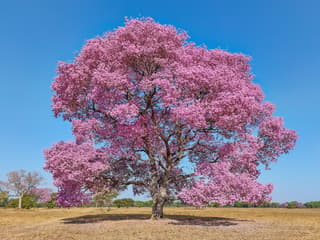
Trumpet Tree
Handroanthus
Handroanthus is a genus of Neotropical flowering trees in the family Bignoniaceae, native to Brazil and other tropical and subtropical regions of the Americas. This genus-level profile covers the group as a whole, including iconic species such as the yellow-flowered Golden Trumpet Tree (Handroanthus albus and H. chrysotrichus) and the purple-flowered Pink/Purple Trumpet Tree (H. impetiginosus). Known in Brazil as "Ipê," these deciduous trees produce one of the most spectacular displays in the plant world: a canopy of flowers covering completely leafless branches, typically between late winter and spring.

Sierra Golden Trumpet Tree
Handroanthus albus
The sierra golden trumpet tree (Handroanthus albus), family Bignoniaceae, is a deciduous tree native to the Cerrado of Brazil and adjacent areas of Argentina, Paraguay and Bolivia. It grows 20-30 m tall with a trunk 40-60 cm in diameter. Despite the species epithet 'albus' (white), the flowers are yellow - the name instead refers to the whitish pubescence on new twigs and the underside of the leaves. Flowering occurs in late winter to early spring (August-September), before new leaves emerge, covering the crown in bright yellow trumpet-shaped blooms.

Golden Trumpet Tree
Handroanthus chrysotrichus
The Golden Trumpet Tree (Handroanthus chrysotrichus) is a small to medium-sized tree native to Brazil, in the family Bignoniaceae. Its common name comes from the rough, scaly bark covering its trunk and branches. In late winter, the tree drops all of its leaves and bursts into a spectacular display of golden-yellow, trumpet-shaped flowers with faint reddish streaks in the throat. It is widely planted as a street and ornamental tree across warm-climate regions worldwide, prized for its dramatic bloom and its value to pollinators.
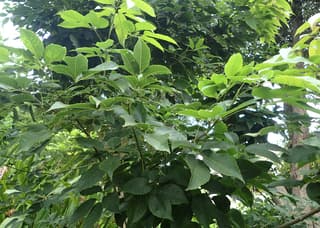
Pink Trumpet Tree
Handroanthus heptaphyllus
Handroanthus heptaphyllus, commonly known as the Pink Trumpet Tree or Purple Ipê, is a stunning South American native celebrated for its spectacular lavender-pink trumpet-shaped flowers that emerge on bare branches from July to September. It can reach up to 20 meters in height and is widely planted as a street and ornamental tree throughout Brazil and beyond.
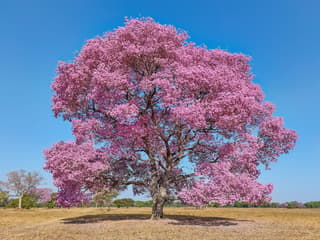
Pink trumpet tree
Handroanthus impetiginosus
The pink trumpet tree (Handroanthus impetiginosus) is a deciduous tree native to South America, prized for its striking pink-to-magenta trumpet-shaped flowers that bloom on bare branches in late winter to spring. It can grow up to 20 m tall and is widely planted as an ornamental street and garden tree. Its inner bark, known as pau d'arco, is traditionally brewed as a medicinal tea.
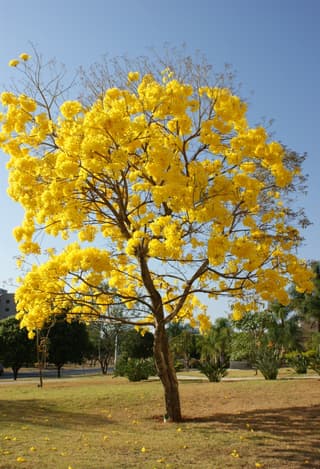
Yellow ipê
Handroanthus serratifolius
Handroanthus serratifolius, the yellow ipê, is a deciduous tree native to the forests and savannas of South America, especially Brazil. In spring it drops its leaves and covers itself entirely in golden-yellow flowers, one of the most striking displays of Brazilian flora.
tender nesting polypore
Hapalopilus rutilans
Hapalopilus rutilans, commonly known as the tender nesting polypore or cinnamon bracket, is a unique fungal species featuring a distinctive orange-cinnamon fruiting body. Its most notable characteristic is that it immediately turns a vivid purple color when in contact with alkaline substances (such as ammonia). It primarily grows on the trunks of dead deciduous trees, decomposing wood saprotrophically. Warning: severely toxic, containing polyporic acid which causes neurological and kidney damage.
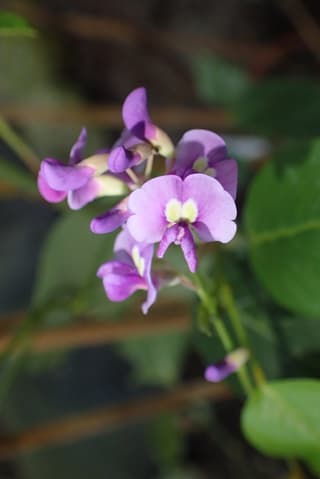
Purple Coral Pea
Hardenbergia violacea
Hardenbergia violacea is a woody, evergreen climbing vine native to eastern and southern Australia, prized for cascading sprays of pea-shaped purple to violet flowers that appear from late winter into spring. Its dark green, leathery lance-shaped leaves stay attractive year-round. Vigorous but well-behaved, it can be trained onto trellises and fences, allowed to scramble as a groundcover, or grown in large containers.
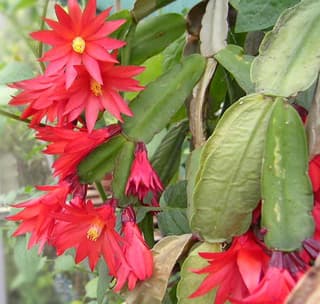
Easter Cactus
Hatiora gaertneri
The Easter Cactus (Hatiora gaertneri) is an epiphytic cactus native to the subtropical forests of southern Brazil, found in the states of Paraná, Santa Catarina, and Rio Grande do Sul. Unlike desert cacti, it grows on trees and moist rocks within the Atlantic Forest, thriving in filtered shade and high humidity. Its stunning red, pink, or orange flowers appear in spring, typically around Easter time, giving it its common name. It is widely appreciated as an ornamental houseplant and is non-toxic to pets and humans.
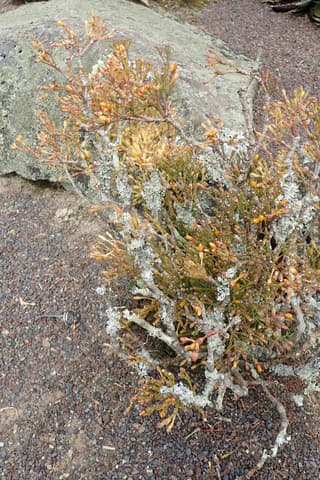
Dancing bones cactus
Hatiora salicornioides
Hatiora salicornioides, commonly known as the Dancing Bones Cactus, is a unique epiphytic cactus native to the Brazilian rainforests. It is characterized by its unusual, many-branched stems made of small, bottle-shaped segments that resemble tiny bones or joints. Unlike desert cacti, it lacks spines and produces delicate, bell-shaped yellow or orange flowers at the tips of its branches during late winter and early spring.
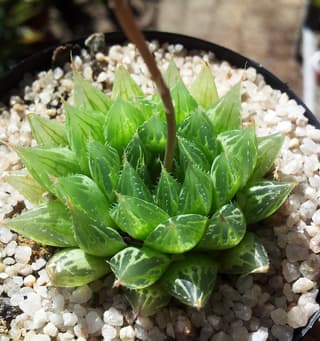
Haworthia (genus)
Haworthia
Haworthia is a genus of soft-leaved succulent plants native to southern Africa, particularly South Africa. These compact, rosette-forming plants are prized as houseplants for their tolerance of low-light conditions and ease of care.
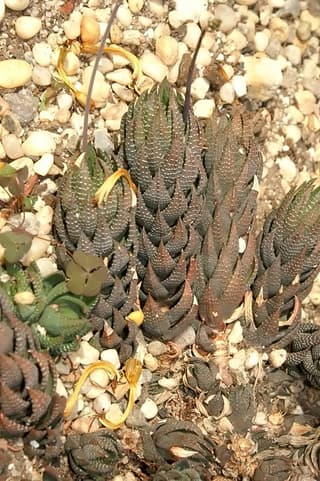
Crowded Haworthia
Haworthia coarctata
Haworthia coarctata is a slow-growing succulent that forms upright columns of tightly packed, incurved dark-green leaves dotted with white tubercles. Under bright light the towers stay compact and flush attractive red-bronze tones. It is an easy, forgiving houseplant that clumps into small colonies over time.
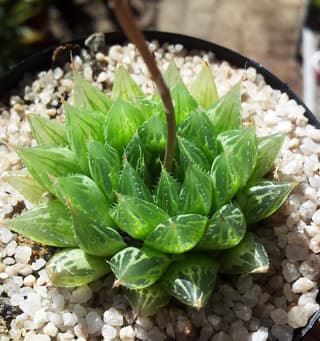
Cooper's Haworthia
Haworthia cooperi
Haworthia cooperi is a charming dwarf succulent native to the Eastern Cape of South Africa. It forms compact rosettes of fleshy, translucent-tipped leaves that appear almost jewel-like when light passes through them. Naturally adapted to growing semi-buried in soil with only its translucent leaf tips exposed to capture sunlight, this plant is a true marvel of nature.
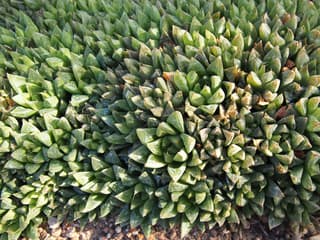
Cathedral Window Haworthia
Haworthia cymbiformis
Haworthia cymbiformis, commonly known as Cathedral Window Haworthia, is a small, clump-forming succulent in the Asphodelaceae family native to the Eastern Cape region of South Africa. It forms low rosettes of thick, translucent-tipped leaves that resemble tiny windows, allowing light to filter into the leaf tissue for photosynthesis even when much of the plant is buried in sandy or rocky crevices in habitat. Unlike many succulents, its leaves are relatively soft and pliable rather than rigid, giving the rosette a cushion-like appearance. It slowly produces offsets around the base, eventually forming dense mounding clusters. In late spring to summer, thin wiry stalks rise above the foliage bearing small white to pale pink tubular flowers.
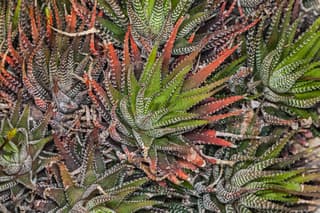
Zebra Plant
Haworthia fasciata
Haworthia fasciata, commonly known as Zebra Plant, is a small, slow-growing succulent native to South Africa. It features dark green, pointed leaves arranged in a rosette pattern, adorned with distinctive white horizontal stripes (tubercles) on the outer surface. Rarely exceeding 15 cm in height, this compact plant is perfect for windowsills and desks. It is an excellent choice for beginners due to its low maintenance requirements and resilience.
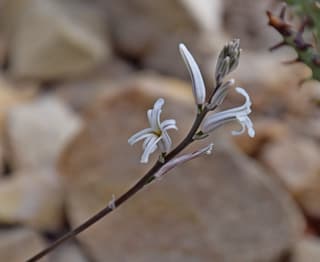
Marumian Haworthia
Haworthia marumiana
Haworthia marumiana is a compact, clumping succulent native to the rocky Karoo region of South Africa. It forms dense rosettes of soft, semi-translucent leaves adapted to grow in partial shade between rocks. One of the most graceful haworthias for container growing.
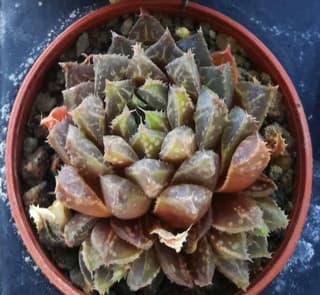
Mirable Haworthia
Haworthia mirabilis
Haworthia mirabilis, commonly known as the Mirable Haworthia, is a small compact succulent native to the Western Cape of South Africa. Its green leaves feature pale longitudinal lines and translucent leaf tips that act as "windows," allowing light to penetrate to the photosynthetic tissues beneath. A slow-growing, drought-tolerant plant ideal for indoor cultivation.
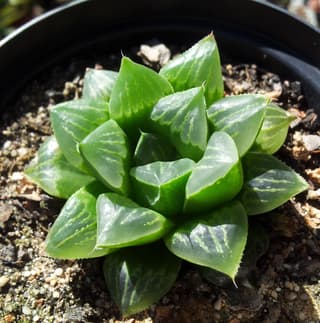
Star Cactus
Haworthia retusa
Haworthia retusa is a compact succulent native to the Western Cape of South Africa. It forms star-shaped rosettes with triangular, translucent-tipped leaves that act as windows filtering sunlight. One of the easiest succulents to grow indoors.
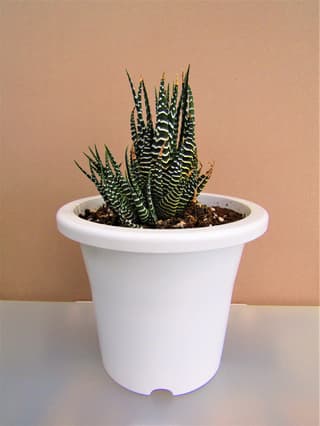
Haworthiopsis (genus)
Haworthiopsis
Haworthiopsis is a genus of small, robust succulents native to the arid regions of South Africa. Their fleshy leaves, often adorned with white stripes or tubercles, form compact and elegant rosettes, ideal for indoor cultivation.
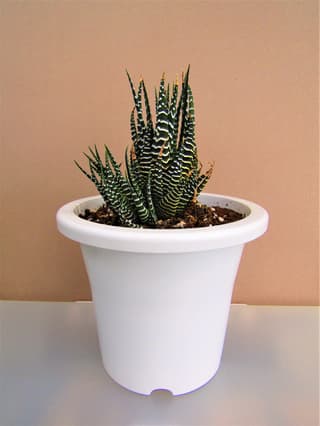
Zebra Haworthia
Haworthiopsis attenuata
Haworthiopsis attenuata, commonly known as Zebra Haworthia or Zebra Plant, is a compact succulent native to the Eastern Cape Province of South Africa. Its fleshy rosette leaves are adorned with distinctive white raised stripes (tubercles) resembling zebra stripes, making it one of the most recognizable and decorative succulents. A slow-growing, extremely hardy plant ideal for beginners and collectors alike.
Find the Perfect Plant
Our plant guide helps you find ideal species for your experience level and time of year.
Browse by Difficulty, Season & More
Use the filters below to narrow this catalog by care difficulty, season, environment, or search directly by name. Each filter leads to a focused list tailored to your specific growing conditions.