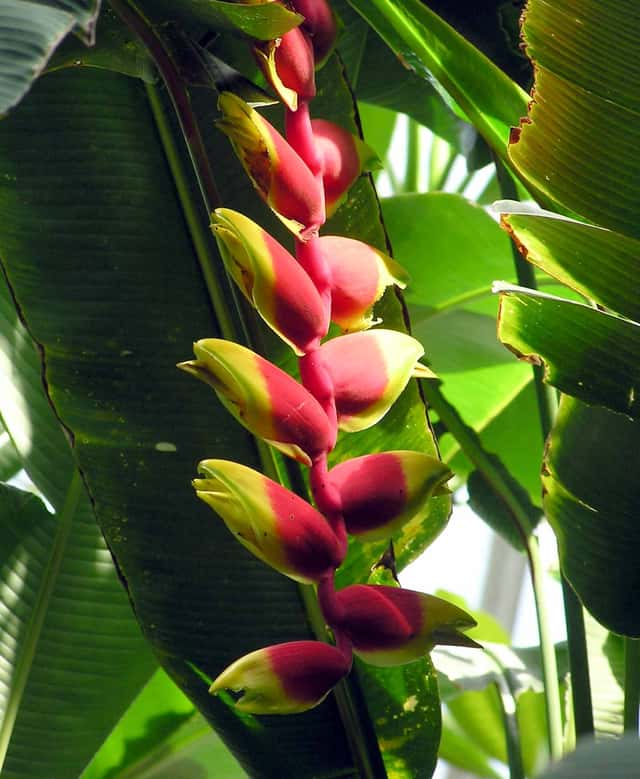
Heliconiaceae
Heliconia rostrata (Hanging Lobster Claw): Complete Care Guide
Heliconia rostrata
Heliconia rostrata thrives in full sun to partial shade with at least 6 hours of bright light daily, frequent watering to keep soil evenly moist, high ambient humidity (60-80%), and warm temperatures between 15-35°C. Fertilize every 2 months during the growing season and propagate by rhizome division.
Every 2 days
Bright indirect
15° - 35°C
60% - 80%
Categories
What is Hanging Lobster Claw?
Hanging Lobster Claw (Heliconia rostrata) is a medium-care plant from the Heliconiaceae family. Heliconia rostrata, commonly known as the Hanging Lobster Claw, is a tropical perennial herbaceous plant native to Peru, Bolivia, and Colombia. It is celebrated for its dramatic pendant inflorescences composed of bright red bracts tipped with yellow and green, attracting hummingbirds and lasting for...
Hanging Lobster Claw grows up to 1.8m, spread of 180cm, watering every 2 days, 15°C – 35°C, 60–80% humidity. It is not suitable for indoor environments and safe for pets.
Unlike many popular species, Hanging Lobster Claw is safe to keep around pets.
How to Care for Hanging Lobster Claw?
TLDR: Hanging Lobster Claw needs Bright indirect, watering every 2 days, and temperatures between 15-35°C with 60-80% humidity.
How Often Should You Water Hanging Lobster Claw?
Water every 2-3 days in summer to keep the soil evenly moist but never waterlogged. Always water at soil level to prevent fungal diseases. Reduce watering frequency during winter.
How Much Light Does Hanging Lobster Claw Need?
Place in full sun or partial shade with at least 6 hours of bright light per day. Avoid intense midday sun in very hot climates. Insufficient light significantly reduces flowering.
What Is the Best Soil for Hanging Lobster Claw?
Use a rich, well-draining organic mix amended with sand or perlite. Ideal pH is 5.5-7.0. Avoid heavy clay or compacted soils that retain excess water.
What Pot Should You Use for Hanging Lobster Claw?
Large terracotta pot or sturdy outdoor container with excellent drainage. Ensure the diameter is wide enough to accommodate spreading rhizomes.
Care Schedule
Fertilize
Every 60 days
Misting
Every 3 days
Repot
Every 730 days
What Is Hanging Lobster Claw and Where Does It Come From?
Heliconia rostrata, commonly known as the Hanging Lobster Claw, is a tropical perennial herbaceous plant native to Peru, Bolivia, and Colombia. It is celebrated for its dramatic pendant inflorescences composed of bright red bracts tipped with yellow and green, attracting hummingbirds and lasting for weeks. Its large, dark-green banana-like leaves can reach up to 120 cm in length, creating a stunning tropical statement in any warm garden.
How to Propagate Hanging Lobster Claw?
Rhizome Division
Best done at the start of spring. Keep soil consistently moist the first few weeks but avoid waterlogging. New plants typically flower in their second year.
- 1 Carefully dig up the plant at the beginning of spring as new growth emerges.
- 2 Separate rhizome sections using a sharp, sterilized spade or knife, ensuring each piece has at least one shoot or pseudostem.
- 3 Dust cut surfaces with powdered fungicide to prevent infection.
- 4 Plant each section in a hole with rich, well-draining soil at the same depth it was growing.
- 5 Water thoroughly and keep the soil moist until the new plant establishes.
Materials needed:
Seed Propagation
Germination is highly variable, ranging from 1 month to over a year. Rhizome division is far more reliable and faster.
- 1 Scarify seeds lightly to improve germination rates.
- 2 Sow in warm, moist propagation mix at 25-30°C.
- 3 Cover with plastic to maintain humidity.
- 4 Place in a warm location with indirect light until germination occurs.
- 5 Transplant seedlings once they reach at least 10 cm tall.
Materials needed:
How Big Does Hanging Lobster Claw Grow?
TLDR: Hanging Lobster Claw can reach up to 1.8m tall with Medium growth rate.
Max height
1.8m
Spread
1.8m
Growth rate
Medium
Foliage
Evergreen
Plant Uses
Ornamental
Great for decoration
Is your plant showing symptoms?
Click on the symptom to discover possible causes:
What Diseases Commonly Affect Hanging Lobster Claw?
TLDR: Hanging Lobster Claw is susceptible to 10 known diseases. Monitor regularly for early detection.
Cercospora Leaf Spot
Cercospora leaf spot is a common fungal disease caused by Cercospora species that affects many plant types, particularly beets, roses, and leafy vegetables. The disease thrives in warm, humid conditions and can cause significant defoliation, reducing plant vigor and yield. It spreads rapidly through water splash, wind, and contaminated tools.
Leaf Spot
Leaf spot is a common fungal disease caused by various pathogens including Alternaria, Ascochyta, Colletotrichum, Septoria, and Venturia. It primarily affects leaves, causing discolored spots that can lead to premature leaf drop if left untreated.
Bacterial Wilt
Bacterial wilt is a fatal vascular disease caused by bacteria (Erwinia tracheiphila, Ralstonia solanacearum, Xanthomonas spp.) that infects the water-conducting tissue of plants. The bacteria multiply and block the flow of water and nutrients, causing rapid wilting and plant death within 1-2 weeks.
Phytophthora Root Rot
Disease caused by fungus-like organisms (oomycetes) that live in soil and can survive for years. It affects roots, stem, and crown of plants, being especially severe in waterlogged or poorly drained soils. It is the second most common cause of root rot in trees and shrubs.
Meaning & Symbolism
In Andean and Amazonian cultures, the Hanging Lobster Claw symbolizes tropical joy, abundance, and spiritual connection with the jungle. Its vivid hanging inflorescence is a symbol of exuberant tropical life.
Fun Facts
Heliconia rostrata bracts can last weeks after being cut, making it a popular choice in exotic tropical floral arrangements.
This plant is a magnet for hummingbirds, which feed on its abundant nectar and play a role in pollination across Andean ecosystems.
Heliconia rostrata can grow up to 1.8 meters tall in ideal conditions, producing new pseudostems each growing season.
The genus Heliconia is named after Mount Helicon in Greece, the mythological home of the Muses, reflecting the plant's beauty and grandeur.
Frequently asked questions
How often should I water Heliconia rostrata?
Does Heliconia rostrata need full sun?
When does Heliconia rostrata bloom?
Is Heliconia rostrata cold-hardy?
How do I propagate Heliconia rostrata?
Compare with similar plants
| Attribute | Difficulty | Light | Watering | Pet Safe |
|---|---|---|---|---|
| Dark Fieldcap | Medium | Low light | 2d | ⚠️ |
| Azalea | Medium | Partial shade | 3d | ⚠️ |
| Muriel's Bamboo | Medium | Partial shade | 3d | ✓ |
| Bougainvillea | Medium | Direct sun | 7d | ⚠️ |




