Complete Plant Guide
Explore plants by difficulty, season and more. Find the perfect plant for you.
Difficulty
Categories
Plants by City
🗺️ Plants by City3798 plants found
Showing 1657-1692 of 3798
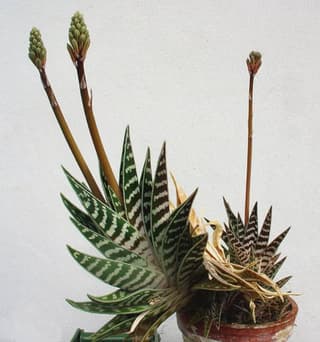
Tiger Aloe
Gonialoe variegata
Gonialoe variegata, commonly called tiger aloe or partridge-breast aloe, is a small evergreen succulent native to the arid Karoo regions of South Africa and Namibia. It forms dense, dwarf rosettes of dark green, triangular leaves marked with irregular pale green to white bands, resembling the stripes of a tiger or the plumage of a partridge. In winter and spring it sends up slender stalks bearing tubular flesh-pink to dull red (occasionally yellow) flowers.
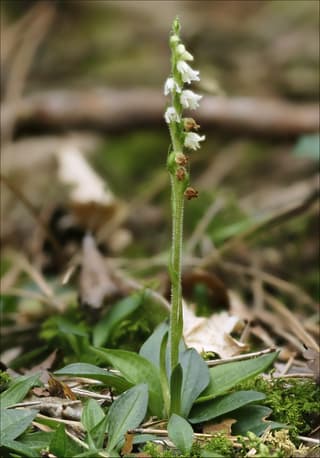
Creeping lady's-tresses
Goodyera repens
Creeping lady's-tresses (Goodyera repens) is a small, evergreen terrestrial orchid that spreads across the temperate coniferous and mixed forests of the Northern Hemisphere in Europe, Asia, and North America. The plant forms slowly expanding colonies via rhizomes in old, undisturbed coniferous forests, and its dark green leaves are decorated with a silvery-white reticulated pattern. From July to September, the plant produces a 10-20 cm tall one-sided inflorescence, bearing 7-36 small white or pale green hairy flowers. The orchid lives in close symbiosis with mycorrhizal fungi, upon which its seedlings are entirely dependent.
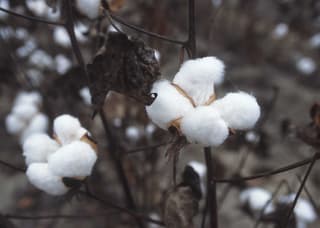
Cotton
Gossypium
Gossypium is the botanical genus encompassing all cultivated cotton species, belonging to the Malvaceae family. Economically one of the most important fiber crops in the world, cotton plants produce ornamental flowers and iconic fluffy white bolls used in textiles, oil, and more.
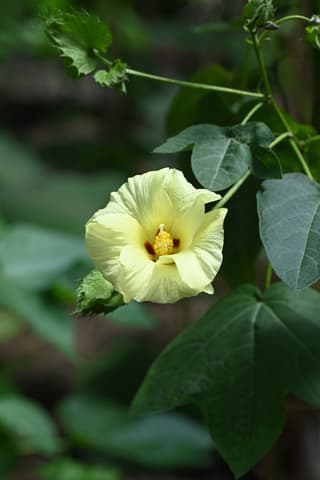
Upland Cotton
Gossypium hirsutum
Gossypium hirsutum, commonly known as upland cotton, is the most widely cultivated cotton species in the world, accounting for approximately 90% of global cotton fiber production. Native to Mexico and Central America, it is an annual or short-lived perennial shrub grown primarily for its fiber, oil, and ornamental value.
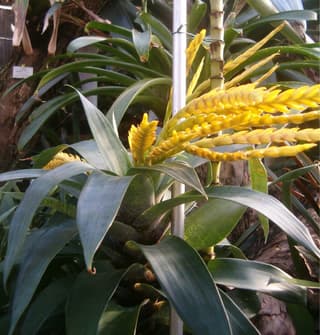
Goudaea (genus)
Goudaea
Goudaea is a genus of epiphytic bromeliads in the family Bromeliaceae, split from Vriesea in 2009 based on molecular phylogenetic studies. Native to Andean forests of Colombia, it includes species such as G. ospinae and G. chrysostachys, prized for their showy inflorescences and elegant rosette foliage.
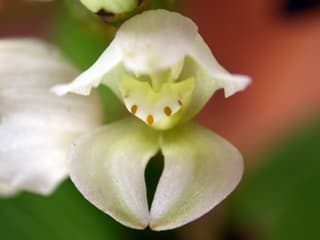
Govenia
Govenia
Govenia is a genus of terrestrial (rarely epiphytic) orchids belonging to the Orchidaceae family, comprising about 20–24 species. It naturally occurs in the mountainous pine-oak forests of Mexico, Central and South America (as far as Peru and Bolivia), and the Caribbean; a single taxon, now extinct (Govenia floridana), grew in Florida. The plants produce bulbous corms covered by membranous sheaths, from which usually two plicate (pleated) leaves emerge. The leaves are shed seasonally – in some species, flowering occurs while the leaves are still present, in others only after they have completely withered. The inflorescence forms a raceme of several to a dozen bright, usually white or cream-colored flowers, often speckled with purple or crimson, which do not fully open.
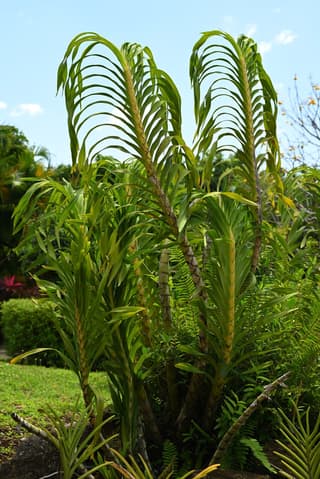
Giant orchid (Grammatophyllum)
Grammatophyllum
Grammatophyllum is a genus of about 12 epiphytic orchids from Southeast Asia, ranging from Indochina to Indonesia, the Philippines, New Guinea and the Pacific islands. It includes the largest orchid in the world, Grammatophyllum speciosum (giant or tiger orchid), with stems up to 3 m long and clumps weighing hundreds of kilograms. In cultivation the most common is G. scriptum, with smaller pseudobulbs and strap-like leaves, which fits in a large pot or basket. The flowers are waxy, yellow-green with reddish-brown tiger-like spots, carried by dozens on long arching spikes. The name comes from Greek gramma (line) and phyllon (leaf), after the parallel leaf veins. Plants take several years to reach flowering size.

Giant Orchid
Grammatophyllum speciosum
Grammatophyllum speciosum is the world's largest orchid species, an epiphytic giant native to the rainforests of Southeast Asia. It forms massive clumps of cane-like pseudobulbs that can reach over 2.5 meters long, with clusters weighing several hundred kilograms in the wild. Its striking yellow flowers marked with maroon blotches appear in dense, arching racemes, making it a prized specimen for botanical gardens and serious orchid collectors.
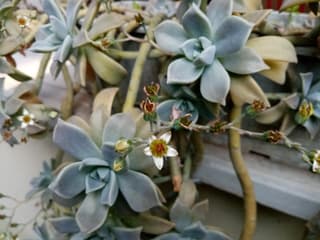
Ghost Plant
Graptopetalum
Graptopetalum is a genus of succulents in the Crassulaceae family, native to Mexico and southern Arizona. It forms compact rosettes of thick, triangular leaves in dusty grey-blue or pinkish tones with a pearlescent sheen, which is why it is nicknamed "ghost plant" or "mother-of-pearl plant". The most widely grown species, Graptopetalum paraguayense, is a popular indoor and outdoor succulent thanks to its high drought tolerance and effortless propagation from leaves.
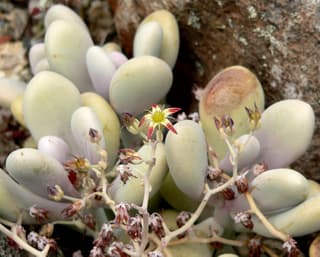
Lavender Pebbles
Graptopetalum amethystinum
Graptopetalum amethystinum, commonly known as Lavender Pebbles or Jewel-Leaf Plant, is a stunning rosette-forming succulent native to the deserts of Mexico. Its thick, fleshy leaves display a captivating lavender-pink to blue-grey hue coated with a powdery farina, giving it the appearance of delicate gemstones. In spring, it produces charming star-shaped flowers in cream to yellow with reddish tips. A low-maintenance beauty beloved by succulent collectors worldwide.
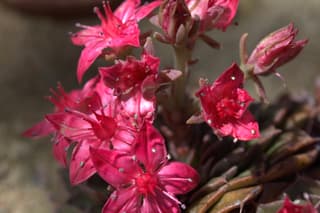
Chihuahua Flower
Graptopetalum bellum
Graptopetalum bellum, commonly known as the Chihuahua Flower, is a perennial succulent in the family Crassulaceae, native to the rocky mountains of Chihuahua and Sonora in northern Mexico at elevations around 1,460 m. It forms flat rosettes up to 10 cm in diameter with smooth, triangular, gray-bronze leaves. The plant produces spectacular deep pink to red star-shaped flowers in late spring and early summer, earning the Royal Horticultural Society's Award of Garden Merit.
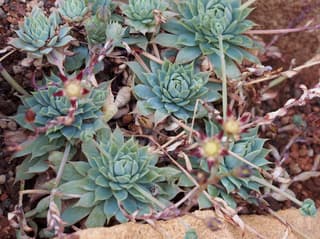
MacDougall's Stonecrop
Graptopetalum macdougallii
Graptopetalum macdougallii is a compact succulent endemic to the mountains of Oaxaca, Mexico. It forms elegant rosettes of blue-grey, slightly translucent leaves that can take on pink or purple hues under intense sun exposure. Highly resilient and low-maintenance, it is perfect for both beginners and experienced succulent collectors.
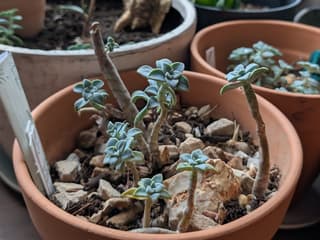
Ghost Plant
Graptopetalum paraguayense
Graptopetalum paraguayense, commonly known as the Ghost Plant, is a perennial succulent native to Mexico. Its rosettes are composed of fleshy, pointed leaves that range in color from bluish-gray to lavender and pink, depending on sun exposure. It is famous for its extreme resilience and the ease with which its fallen leaves grow new roots, making it a favorite among succulent beginners.
Caricature Plant
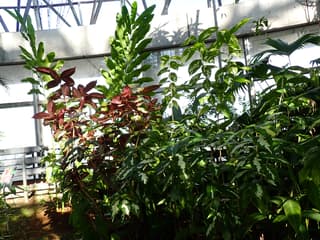
Graptophyllum pictum
Graptophyllum pictum, commonly known as the Caricature Plant, is a tropical evergreen shrub native to the Pacific islands, particularly the New Guinea and Solomon Islands region. It is celebrated for its striking variegated leaves, which display patterns of green, yellow, and red that some observers liken to caricatures of the human face. Growing to 3.5 metres in ideal conditions, it is a popular choice for tropical landscaping and indoor cultivation in temperate climates.
Graptosedum
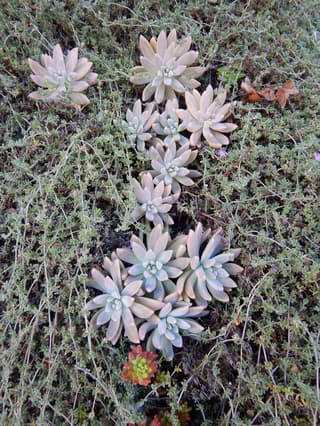
Graptosedum
Graptosedum is a cross-generic hybrid between Graptopetalum and Sedum. These succulents are characterized by their thick, fleshy leaves arranged in beautiful rosettes. They are highly prized for their 'sun-stress' colors, where the foliage shifts from blue-green to vibrant shades of bronze, pink, or orange when exposed to bright sunlight. They are hardy, low-maintenance, and perfect for rock gardens or containers.
California Sunset
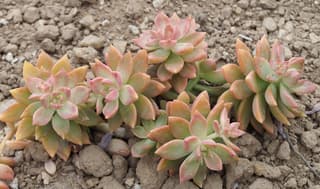
Graptosedum 'California Sunset'
Graptosedum 'California Sunset' is a striking hybrid succulent between Graptopetalum and Sedum, prized for its trailing rosettes that shift from soft blue-green to fiery coral-pink and orange when grown in bright, stressed light. Easy to grow and drought-tolerant, it forms dense mats or spills gracefully over pots and rock gardens.
Pink Sedeveria
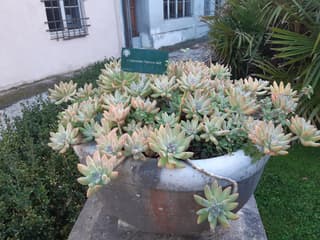
Graptosedum 'Francesco Baldi'
Graptosedum 'Francesco Baldi' is a succulent hybrid of Graptopetalum paraguayense and Sedum pachyphyllum, in the family Crassulaceae. It forms branching, slightly trailing stems topped with compact rosettes of plump, grayish-green leaves that blush pink and peach under bright light and cooler temperatures. A slow-to-moderate grower, it is popular in rock gardens, hanging baskets, and mixed succulent arrangements.
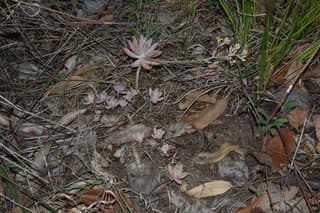
Graptosedum Ghosty
Graptosedum 'Ghosty'
Graptosedum 'Ghosty' is a hybrid succulent in the Crassulaceae family, a cross between Graptopetalum and Sedum. Its rosettes of grayish-green leaves with pink undertones give it an ethereal, "ghostly" look, hence the name. It is slow-growing, easy to care for, and very drought tolerant.
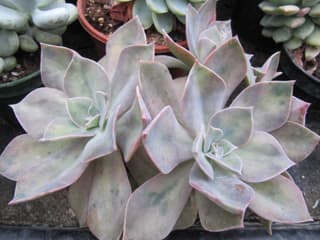
Graptoveria
Graptoveria
Graptoveria is an intergeneric hybrid genus resulting from crosses between Graptopetalum and Echeveria, part of the Crassulaceae family. It forms compact, fleshy rosettes with thick leaves ranging from grayish-green to pink and lilac tones, often covered with a fine powdery coating (farina) that protects the plant from intense sun. It is an easy-to-grow succulent, very popular among beginners for its drought tolerance and low maintenance needs.
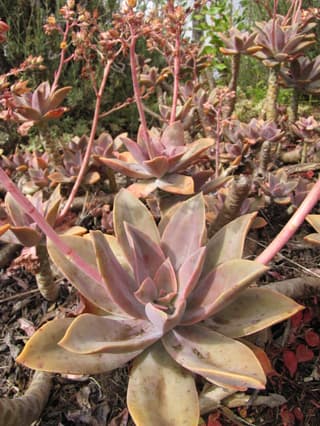
Graptoveria Ellen
Graptoveria 'Ellen'
Graptoveria 'Ellen' is a fascinating hybrid succulent that forms dense, fleshy rosettes. Its leaves feature a coloration ranging from mint green to soft pink and apricot when exposed to intense sunlight. It is a compact plant, ideal for arrangements and small pots, standing out for its hardiness and delicate beauty.
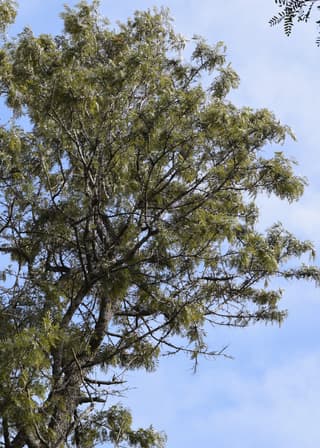
Silk Oak
Grevillea robusta
The Silk Oak is the largest species in the genus Grevillea, native to the east coast of Australia. It is a fast-growing tree, famous for its delicate fern-like foliage and spectacular golden-orange brush-like flowers. Although it can reach great heights in the wild, it is often grown in pots when young due to the beauty of its silver-backed leaves.
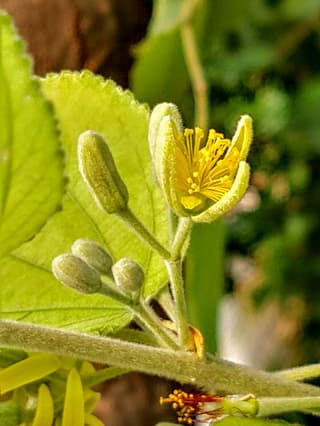
Phalsa
Grewia asiatica
The phalsa (Grewia asiatica) is a deciduous shrub or small tree belonging to the mallow family (Malvaceae), native to South Asia, primarily India and Pakistan. Following its small yellow flowers, it produces purple-red, tart berries that are consumed fresh or processed into refreshing summer drinks and syrups. The plant is fast-growing and highly tolerant of heat and drought, making it a popular fruit shrub during the hot summers of South Asia.
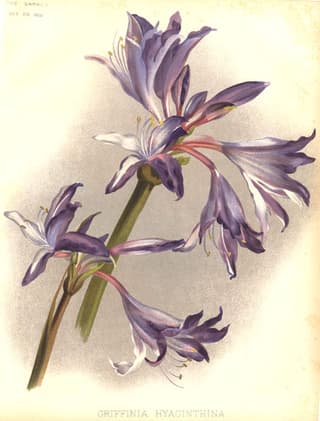
Blue Griffin Lily
Griffinia hyacinthina
Griffinia hyacinthina is a rare and stunning bulbous plant native to the Brazilian Atlantic Forest. It is known for its deep violet-blue flowers with white centers, which resemble hyacinths. Its leaves are broad, green, and glossy, often featuring small light spots. As an understory species, it is ideal for indoor environments with bright indirect light or shaded gardens.
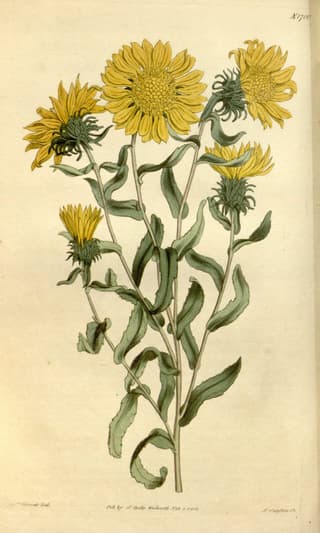
Gumweed
Grindelia
Grindelia is a genus of resinous, sun-loving wildflowers in the daisy family (Asteraceae), native to open, dry habitats across North and South America. Plants form upright, branching clumps topped with bright yellow, daisy-like flower heads whose green bracts curl backwards and exude a sticky, aromatic gum that gives the group its 'gumweed' and 'gumplant' names. Tough and unfussy, they thrive in poor, sandy or gravelly soils and shrug off drought, heat, and salinity, blooming prolifically from midsummer into autumn. Several species, notably G. squarrosa, G. robusta, and G. camporum, are long-standing herbal medicines valued for respiratory and skin complaints.
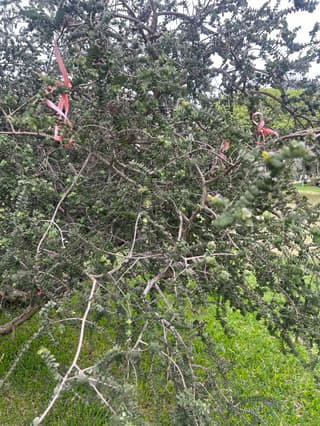
Coulter's Lignum Vitae
Guaiacum coulteri
Coulter's Lignum Vitae (Guaiacum coulteri) is a slow-growing evergreen tree native to western Mexico and Guatemala. Renowned for producing the world's densest and hardest wood, it bears stunning violet-blue flowers in spring and summer. Highly drought-tolerant once established, it thrives in full sun and well-drained soils, making it ideal for xeriscape and low-maintenance gardens in warm climates.
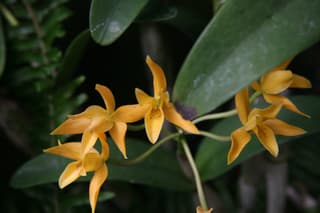
Orange Cattleya
Guarianthe aurantiaca
Guarianthe aurantiaca, commonly known as the Orange Cattleya, is a compact epiphytic orchid native to the tropical and montane forests of Mexico, Guatemala, Honduras, El Salvador, Nicaragua, and Costa Rica. It forms clumps of slender cane-like pseudobulbs topped with a pair of leathery, evergreen leaves, and produces clusters of two to eleven small, vividly orange (occasionally yellow) flowers from late winter through spring. Once classified as a Cattleya, this species is now placed in the genus Guarianthe alongside close relatives such as G. skinneri and G. bowringiana.
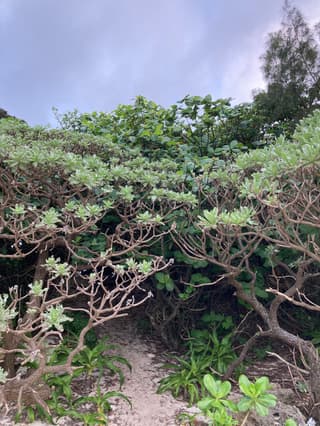
Velvetseed
Guettarda
Guettarda is a genus of tropical and subtropical evergreen shrubs and small trees in the family Rubiaceae, comprising over 150 species. Commonly known as velvetseed, these plants are native to the Neotropics, Pacific Islands, and coastal regions of Africa and Australia. They are characterized by opposite, often velvety leaves, fragrant tubular white or pink flowers, and small fleshy multi-seeded fruits. Species such as G. speciosa thrive on sandy beaches and coastal margins, while G. scabra favors dry Caribbean woodlands.
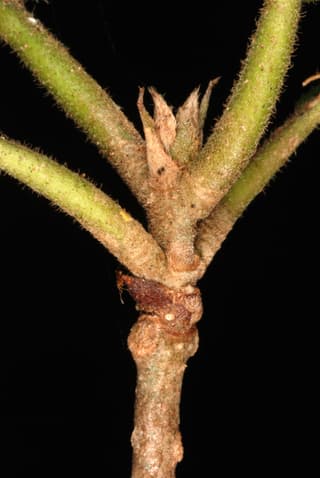
Rough Velvetseed
Guettarda scabra
Rough Velvetseed (Guettarda scabra) is an evergreen shrub or small tree in the Rubiaceae family, native to the Caribbean and Florida Keys. It features distinctively rough, velvety-textured leaves and small white, intensely fragrant flowers that bloom at night, attracting moth pollinators. Plants can reach 3 to 10 meters tall with an open, spreading crown. Highly tolerant of coastal conditions including salt spray, limestone soils, and strong winds.
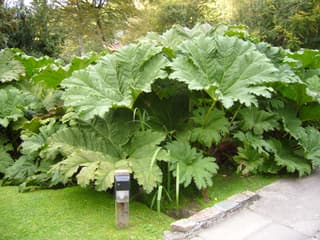
Giant Rhubarb
Gunnera manicata
Gunnera manicata is a monumental clump-forming herbaceous perennial native to the Serra do Mar coastal mountains of southern Brazil. Commonly known as Giant Rhubarb or Dinosaur Food, it is celebrated for its colossal leaves that can exceed 2 meters in diameter. Despite its common name, it is not related to culinary rhubarb. It belongs to the family Gunneraceae and has a fascinating symbiotic relationship with nitrogen-fixing cyanobacteria.

Chilean Gunnera
Gunnera tinctoria
Gunnera tinctoria, commonly known as Chilean rhubarb or nalca, is a colossal herbaceous perennial native to the cool, wet forests of central Chile and southern Argentina, where locals have long harvested its tart leaf stalks as a rhubarb-like vegetable. Forming clumps of enormous, deeply lobed leaves that can each span over a metre across, it produces a dense, cone-shaped flower spike in summer followed by small orange-red fruits. Outside its native range, however, it has become a serious invasive weed in wetlands and coastal areas of Ireland, the UK, New Zealand, and parts of the Azores, where it forms dense colonies that crowd out native vegetation and clog waterways -- check local regulations before planting it in these regions.
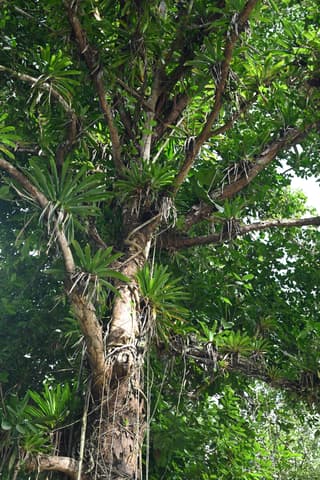
Guzmania
Guzmania
Guzmania is a genus of epiphytic bromeliads native to the rainforests of Central and South America, prized for its strap-shaped leaf rosettes and long-lasting, brightly colored bracts that resemble flowers.
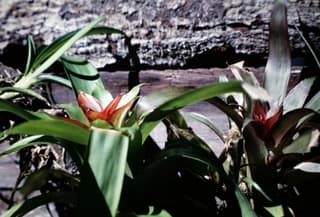
Guzmania Hope
Guzmania 'Hope'
Guzmania 'Hope' is a compact, evergreen bromeliad cultivar prized for its long-lasting, star-shaped bract in vivid red that rises from a rosette of glossy, strap-like green leaves. Like all Guzmania bromeliads, it is epiphytic in habitat, drawing water and nutrients through a central "tank" formed by its overlapping leaves rather than through an extensive root system. It is monocarpic: the mother rosette flowers only once, the colorful bract persists for several months, and the plant then produces offsets ("pups") around its base before slowly declining. Native to the tropical rainforests of Central and South America, it thrives as a low-maintenance houseplant given bright, indirect light and high humidity.
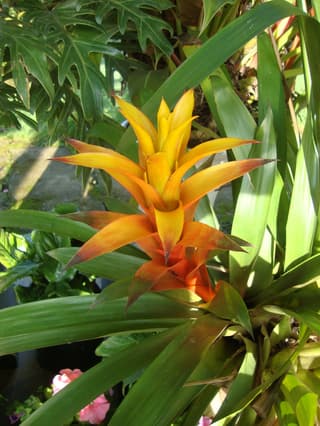
Scarlet Star
Guzmania lingulata
Guzmania lingulata is a tropical bromeliad native to Central and South America. It is famous for its striking red, orange, or yellow bracts that surround small white flowers. An epiphytic plant, it naturally grows on trees in rainforests, absorbing moisture and nutrients from the air.
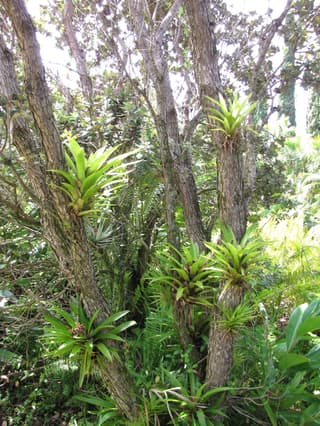
West Indian Tufted Airplant
Guzmania monostachia
Guzmania monostachia is an epiphytic bromeliad native to Florida, the Caribbean, and tropical Central and South America, where it grows perched on tree branches rather than rooted in soil. Its glossy, strap-shaped leaves form a rosette around a central water-holding cup, and once mature it sends up an upright spike of bracts that shift from green to red, studded with small white or yellow tubular flowers that can last for months.
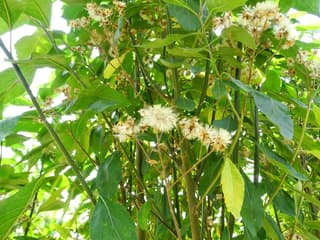
Bitter Leaf
Gymnanthemum amygdalinum
Bitter Leaf (Gymnanthemum amygdalinum) is a perennial shrub native to tropical Africa, widely cultivated for its edible and medicinal leaves. Known for its characteristic bitter flavor, it is a traditional vegetable in many African cuisines and holds well-documented therapeutic properties. It can reach up to 8 meters tall under ideal conditions.

Chin Cactus
Gymnocalycium
Gymnocalycium is a genus of small, globe-shaped cacti native to Argentina, Bolivia, Brazil, Paraguay, and Uruguay. Named for the naked (spineless) flower buds that emerge from woolly areoles, these compact plants form ribbed, spherical bodies topped with short, curved spines and a distinctive chin-like bump beneath each areole — the trait that gives the genus its common name. Gymnocalycium cacti bloom generously from spring through summer, producing funnel-shaped flowers in white, pink, red, or yellow that often dwarf the plant body itself. Slow-growing and low-maintenance, they are popular beginner cacti for sunny windowsills and rock gardens in warm climates.
Find the Perfect Plant
Our plant guide helps you find ideal species for your experience level and time of year.
Browse by Difficulty, Season & More
Use the filters below to narrow this catalog by care difficulty, season, environment, or search directly by name. Each filter leads to a focused list tailored to your specific growing conditions.