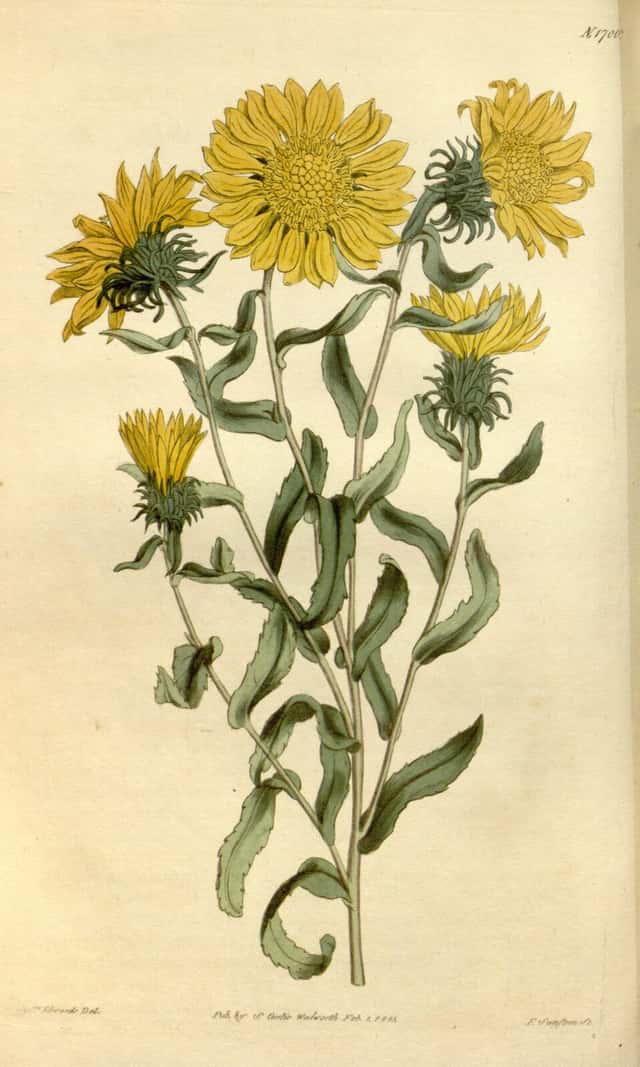
Asteraceae
Gumweed: Full Sun Plant
Grindelia
Grow Grindelia in full sun and lean, sharply drained soil, then largely leave it alone. It is drought-tolerant, dislikes rich soil and excess moisture, and needs no feeding; the main killer is wet, waterlogged ground. An easy, low-maintenance plant best suited to open beds, prairies, and pollinator gardens rather than pots or indoors.
Every 14 days
Direct sun
-37° - 38°C
30% - 50%
Categories
What is Gumweed?
Gumweed (Grindelia) is a easy-care plant from the Asteraceae family. Grindelia is a genus of resinous, sun-loving wildflowers in the daisy family (Asteraceae), native to open, dry habitats across North and South America. Plants form upright, branching clumps topped with bright yellow, daisy-like flower heads whose green bracts curl backwards and exude a sticky, aroma...
Gumweed grows up to 90cm, spread of 60cm, watering every 14 days, -37°C – 38°C, 30–50% humidity. It is not suitable for indoor environments and safe for pets.
Unlike many tropical plants, Gumweed tolerates watering mistakes. Best for beginners. Unlike many popular species, Gumweed is safe to keep around pets.
How to Care for Gumweed?
TLDR: Gumweed needs Direct sun, watering every 14 days, and temperatures between -37-38°C with 30-50% humidity.
How Often Should You Water Gumweed?
Water sparingly and only after the top few centimetres of soil have dried out; established plants are drought-tolerant and far more likely to suffer from overwatering and root rot than from dryness. Avoid summer soggy conditions.
How Much Light Does Gumweed Need?
Give it full, direct sun all day. Grindelia cannot tolerate shade and becomes weak and floppy without strong light.
What Is the Best Soil for Gumweed?
Use light, sandy or gravelly, well-draining soil of poor to average fertility. Do not enrich with organic matter; it performs better on lean soils and tolerates neutral to mildly alkaline and even saline conditions.
What Pot Should You Use for Gumweed?
Best grown in the open ground, but if potted use an unglazed terracotta pot with generous drainage holes and a gritty, fast-draining cactus-type mix to prevent waterlogging.
What Is Gumweed and Where Does It Come From?
Grindelia is a genus of resinous, sun-loving wildflowers in the daisy family (Asteraceae), native to open, dry habitats across North and South America. Plants form upright, branching clumps topped with bright yellow, daisy-like flower heads whose green bracts curl backwards and exude a sticky, aromatic gum that gives the group its 'gumweed' and 'gumplant' names. Tough and unfussy, they thrive in poor, sandy or gravelly soils and shrug off drought, heat, and salinity, blooming prolifically from midsummer into autumn. Several species, notably G. squarrosa, G. robusta, and G. camporum, are long-standing herbal medicines valued for respiratory and skin complaints.
How to Propagate Gumweed?
Seed
The primary and easiest method; surface-sow as seed needs light and should not be buried deep. Fresh seed germinates readily.
- 1 Sow in autumn or early spring in pots or trays in a cool greenhouse, or direct-sow outdoors in spring
- 2 Press seed lightly onto the surface of a gritty, free-draining mix and barely cover
- 3 Keep the surface lightly and consistently moist until germination
- 4 Prick out seedlings once large enough to handle and grow on
- 5 Harden off and plant out into a sunny, well-drained site after frost
Materials needed:
Division
Useful for established perennial clumps; divide as new growth resumes so divisions re-establish quickly.
- 1 Lift an established clump in spring as new growth begins
- 2 Split into smaller clumps each with roots and shoots
- 3 Pot up divisions or replant directly into well-drained soil
- 4 Water in and keep lightly moist until roots re-establish
Materials needed:
How Big Does Gumweed Grow?
TLDR: Gumweed can reach up to 90cm tall with Fast growth rate.
Max height
90cm
Spread
60cm
Growth rate
Fast
Foliage
Deciduous
Warning: Toxic Plant
This plant can be toxic if ingested. Keep out of reach of:
Plant Uses
Medicinal
Medicinal properties
Ornamental
Great for decoration
Medicinal Uses
- Expectorant and antispasmodic remedy for bronchial asthma, bronchitis, and coughs with sticky phlegm (dried leaves and flowering tops)
- Traditional treatment for whooping cough and upper respiratory congestion
- Topical wash or poultice for poison ivy/poison oak rash, dermatitis, and minor burns
- Anti-inflammatory and mild sedative in traditional and homeopathic preparations
Is your plant showing symptoms?
Click on the symptom to discover possible causes:
What Diseases Commonly Affect Gumweed?
TLDR: Gumweed is susceptible to 5 known diseases. Monitor regularly for early detection.
Root Rot
Root rot is a serious fungal disease that affects the root system of plants, causing them to decay and die. It is primarily caused by overwatering, poor drainage, or soil-borne fungi such as Pythium, Phytophthora, Rhizoctonia, and Fusarium. The disease thrives in waterlogged conditions where roots are deprived of oxygen, making them susceptible to fungal infection.
Powdery Mildew
Powdery mildew is a common fungal disease caused by various fungi species including Erysiphe, Podosphaera, Oïdium, and Leveillula. It affects over 10,000 plant species worldwide. The disease thrives in warm, dry climates with high humidity and appears as a distinctive white powdery coating on plant surfaces.
Aphids
Aphids are small, soft-bodied, pear-shaped insects (1/16 to 1/8 inch long) that feed by sucking nutrient-rich sap from plants. They reproduce rapidly and can quickly weaken plants, causing distorted growth and transmitting plant viruses. Aphids come in various colors including green, black, red, yellow, brown, and gray. They secrete honeydew, a sticky substance that attracts ants and encourages sooty mold growth.
Rust
Rust is a common fungal disease caused by fungi in the order Pucciniales that affects a wide variety of plants. The disease gets its name from the characteristic orange, yellow, or reddish-brown pustules that appear on leaves, resembling metal rust. This obligate fungal parasite requires living plants to survive and can cause significant economic losses in agricultural crops.
Compare with similar plants
| Attribute | Difficulty | Light | Watering | Pet Safe |
|---|---|---|---|---|
| Field Maple | Easy | Bright indirect | 14d | ✓ |
| Silver Birch | Easy | Direct sun | 14d | ✓ |
| Common Blanketflower | Easy | Direct sun | 10d | ✓ |
| Cushion Bush | Easy | Direct sun | 14d | ✓ |





