Complete Plant Guide
Explore plants by difficulty, season and more. Find the perfect plant for you.
Difficulty
Categories
Plants by City
🗺️ Plants by City3728 plants found
Showing 541-576 of 3728
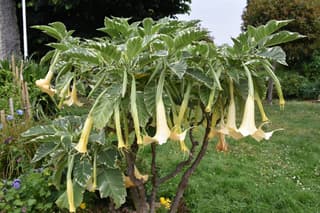
White Angel's Trumpet
Brugmansia arborea
Brugmansia arborea, the white angel's trumpet, is an evergreen shrub or small tree native to the Andes from southern Colombia to northern Chile, where it grows in dry montane valleys between 2,000 and 3,000 m elevation. Its ovate leaves and young shoots are covered in fine velvety white down, and it bears pendulous, trumpet-shaped white to cream flowers 12–17 cm long with an intense fragrance that peaks in the evening. It is considered the hardiest Brugmansia species to both cold and drought, and is classified as Extinct in the Wild by the IUCN, surviving today only in cultivation.

Angels Trumpet
Brugmansia suaveolens
Angels Trumpet (Brugmansia suaveolens) is a woody shrub native to Brazil, prized for its large, pendulous, trumpet-shaped flowers that can reach up to 30 cm long. The white, pink, or yellow blooms release an intensely sweet fragrance, especially at night, attracting pollinating moths. Despite its striking beauty, every part of the plant contains highly toxic tropane alkaloids, requiring extreme caution around children and pets.
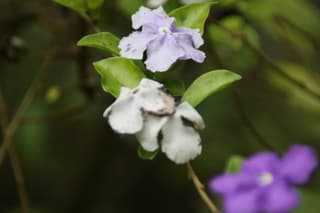
Yesterday-today-and-tomorrow
Brunfelsia uniflora
Yesterday-today-and-tomorrow is a shrub native to the Brazilian Atlantic Forest, famous for its flowers that change color: they open in a vibrant shade of purple, turn lavender, and finally white before wilting. This characteristic gives the plant its popular name. In addition to the visual spectacle, its flowers exude a sweet and intense fragrance, especially at night.
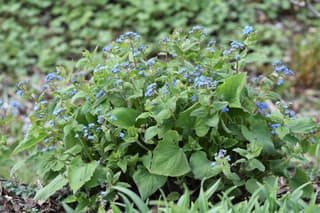
Siberian Bugloss
Brunnera macrophylla
Brunnera macrophylla, commonly called Siberian Bugloss or False Forget-Me-Not, is a shade-loving herbaceous perennial native to the forests of the Caucasus region and Turkey. It produces sprays of tiny, brilliant blue flowers above large heart-shaped leaves every spring, making it a beloved choice for woodland gardens and shaded borders.
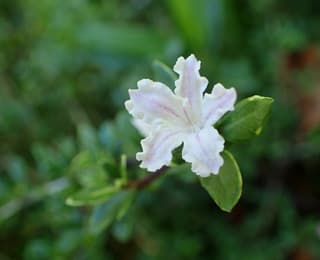
Snowrose
Buchozia japonica
Buchozia japonica is currently recognized by Plants of the World Online (Kew) as a synonym for Serissa japonica, an evergreen or semi-evergreen shrub in the Rubiaceae family, native to the subtropical regions of East Asia (China, Japan, India). Typically growing 24-48 inches tall, it features small, oval, dark green, leathery leaves that emit an unpleasant odor when crushed, which led to its former name Serissa foetida. It produces a nearly continuous bloom from spring to autumn, featuring small white funnel-shaped flowers (sometimes double or pink-veined) preceded by pinkish buds. It is one of the most popular species for bonsai in Europe and North America, also known as the 'Tree of a Thousand Stars' or 'Snowrose'.
Butterfly Bush
Buddleja davidii
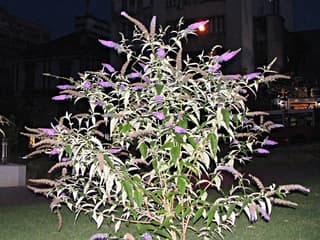
Buddleja davidii, commonly known as Butterfly Bush or Summer Lilac, is a fast-growing deciduous shrub native to central China. It produces long, arching panicles of fragrant flowers in shades of purple, white, pink, and lavender from summer through fall, making it a magnet for butterflies, bees, and other pollinators. Its vigorous growth and spectacular blooms have made it one of the most popular ornamental garden shrubs worldwide.
Madagascar Butterfly Bush
Buddleja madagascariensis
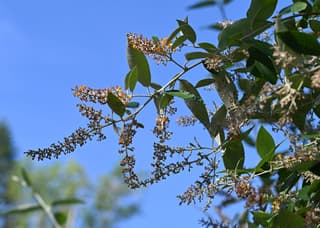
Buddleja madagascariensis, commonly known as the Madagascar butterfly bush or smokebush, is a fast-growing, sprawling evergreen shrub native to Madagascar. It can reach 1.5-4 m in cultivation (occasionally taller in the wild) and produces long, slender terminal panicles of fragrant flowers that open deep yellow and age through orange to soft pink, blooming from autumn through spring. The felted, greyish undersides of its leaves give the plant a soft, silvery look, and its flowers are highly attractive to butterflies, hummingbirds and bees. Outside its native range it has become invasive in parts of Hawaii and other subtropical regions, where its vigorous growth allows it to overtop native vegetation, so it should be planted with care and, where required by local regulation, kept contained.
Sagewood
Buddleja salviifolia
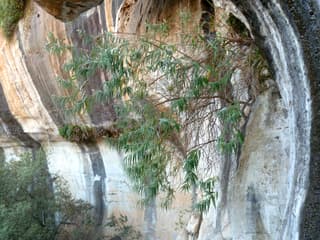
Buddleja salviifolia, commonly known as Sagewood or South African Sagewood, is a fast-growing semi-evergreen shrub native to southern and eastern Africa. In spring it produces narrow panicles of small, highly fragrant flowers ranging from white and cream to lilac and pale mauve, with a distinctive orange throat. Highly valued for attracting butterflies, bees and birds, it is an excellent choice for wildlife gardens. Its hard, heavy wood has traditionally been used in Africa for assegais and fishing rods.
Burn Jelly Plant
Bulbine frutescens
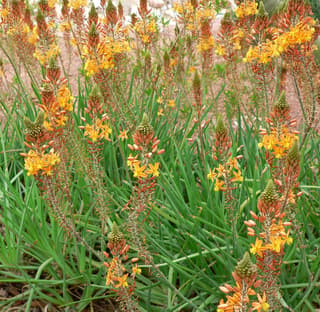
Bulbine frutescens, commonly called the burn jelly plant, is a fast-growing, clump-forming succulent perennial from South Africa. Its narrow, fleshy, onion-like leaves radiate from a low rosette, while airy spikes of star-shaped yellow-to-orange flowers rise well above the foliage from spring through fall. Tough, drought-tolerant, and virtually pest-free, it thrives as a groundcover, border edging, or rockery accent in warm, sunny gardens.
Pale Umbrella Orchid
Bulbophyllum longiflorum
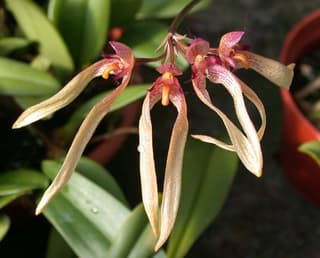
The Pale Umbrella Orchid (Bulbophyllum longiflorum) is a widespread epiphytic or lithophytic orchid native to rainforests and hill forests across Africa, Madagascar, the Mascarenes, Seychelles, Southeast Asia, New Guinea, New Caledonia, Fiji and northern Australia. It grows from a creeping rhizome bearing widely-spaced, dark green pseudobulbs, each topped with a single fleshy leaf. Its most striking feature is the umbrella-like flower cluster: a semicircular umbel of small, greenish cream to yellowish blooms speckled with purple, held on an arching stem above the foliage.
Stinking Orchid
Bulbophyllum phalaenopsis
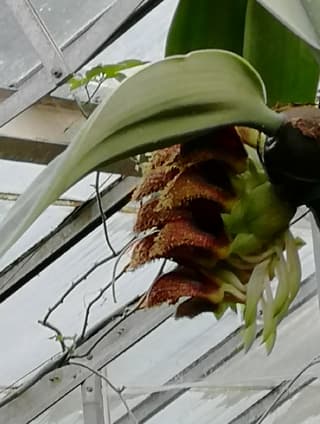
Bulbophyllum phalaenopsis is one of the largest orchids in the Bulbophyllum genus, native to the tropical rainforests of New Guinea. It is notorious for its massive leaves, which can exceed 60 cm in length, and for its flowers that emit a powerful putrid odor — an evolutionary strategy to attract fly pollinators. Despite its unusual smell, it is a prized specimen among serious orchid collectors.
Black Bulgur
Bulgaria inquinans
Bulgaria inquinans, commonly known as the 'black rubber fungus,' is an ascomycete fungus that grows in clusters on recently felled oak logs and other hardwoods. It features a cup-shaped or disc-like fruiting body, shiny black in color with a gelatinous texture when moist, becoming leathery when dry. Its upper surface is smooth and produces black spores that can stain the hands upon contact.
Peanut Butter Fruit Tree
Bunchosia argentea
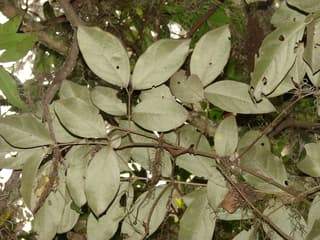
Bunchosia argentea, commonly known as the Peanut Butter Fruit Tree, is a small tropical tree or large shrub in the family Malpighiaceae, native to the tropical forests of South America — including Venezuela, Colombia, Peru, Brazil, Guyana, and Suriname. It produces small oval fruits that ripen from orange to deep red, with a dense, sweet pulp that has a remarkable peanut butter-like flavor and texture. It is valued both as an ornamental plant and for its unique edible fruit.

Hare's Ear
Bupleurum
Bupleurum is a genus of about 180 species in the carrot family (Apiaceae), ranging from delicate annual wildflowers to woody Mediterranean shrubs. The most widely cultivated members are the ornamental hare's ear (Bupleurum rotundifolium), prized by florists for its chartreuse, cup-shaped bracts, and the East Asian medicinal species B. falcatum and B. chinense, whose dried roots are known in Traditional Chinese Medicine as 'chai hu.' Plants form airy clumps of blue-green, rounded leaves topped by flat umbels of tiny yellow-green flowers from summer into fall.
Bursera
Bursera
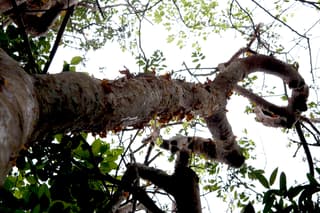
Bursera is a genus of about 100 species of trees and shrubs in the family Burseraceae, native to tropical and subtropical regions of the Americas, from Mexico to Argentina. They are known for their thin, papery, peeling bark and aromatic resin (copal), used for centuries in incense and purification rituals. Representative species include Bursera simaruba (gumbo-limbo) and Bursera graveolens (palo santo).
Fragrant Bursera
Bursera fagaroides
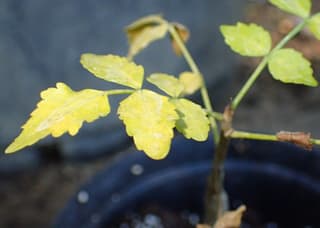
Bursera fagaroides, known as the fragrant bursera or elephant tree, is a deciduous shrub or small tree in the Burseraceae family, native to arid and semi-arid regions of Mexico, from Sonora to Oaxaca. It is recognized by its thick, sculptural (pachycaul) trunk and papery bark in reddish, gray or yellowish tones that peels away in layers to reveal a grey-green surface beneath. Its pinnate leaves, made up of several leaflets, release a citrus scent when crushed. In spring it produces small creamy-white flowers, sometimes tinged yellow or green. It is one of the most prized Bursera species in bonsai cultivation for its gnarled trunk and exfoliating bark.
Pindo Palm
Butia capitata
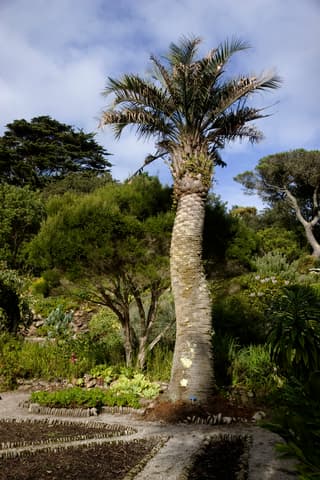
Butia capitata, commonly known as the Pindo Palm or Jelly Palm, is a slow-growing feather palm native to southern Brazil, Uruguay, and Argentina. It is prized for its graceful blue-gray arching fronds and clusters of edible orange-yellow fruits used to make jellies and wines.
Jelly Palm
Butia odorata
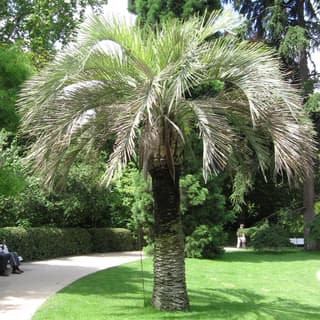
Butia odorata, commonly known as the Jelly Palm or Pindo Palm, is a hardy feather palm native to the grasslands of southern Brazil, Uruguay, and Argentina. It is one of the most cold-tolerant palms in the world, withstanding temperatures as low as -12°C (10°F). Its arching blue-green fronds and clusters of edible orange-yellow fruits make it a prized ornamental and edible landscape tree.
Oak Bolete
Butyriboletus appendiculatus
Butyriboletus appendiculatus, known as the Oak Bolete or Butter Bolete, is a highly sought-after edible mushroom found in deciduous forests, particularly under oak and beech trees. It is characterized by its leathery brown cap, bright yellow pores on the underside that bruise slightly blue when touched, and a stem that is often rooting or tapered toward the base. It is a mycorrhizal fungus, meaning it lives in a complex symbiotic relationship with tree roots, making it nearly impossible to cultivate artificially.
Boxwood
Buxus
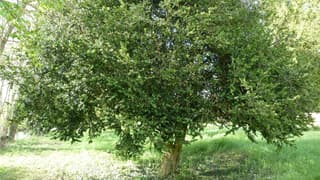
Boxwood (Buxus) is an evergreen shrub in the Buxaceae family, prized for formal hedging, borders and topiary. Slow-growing with small, dense leaves, it tolerates heavy shearing and holds its shape for decades.
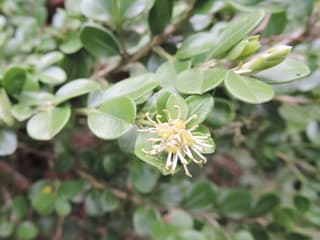
Japanese Boxwood
Buxus microphylla
Japanese Boxwood (Buxus microphylla) is a slow-growing, evergreen shrub native to Japan and Korea, prized for its dense, compact mounding habit and small, glossy dark green leaves. It is one of the most versatile shrubs in formal horticulture, widely used for hedges, borders, topiary, and foundation plantings. In spring it produces small, fragrant cream-yellow flowers. Remarkably long-lived and cold-hardy, it thrives in USDA zones 6–9.
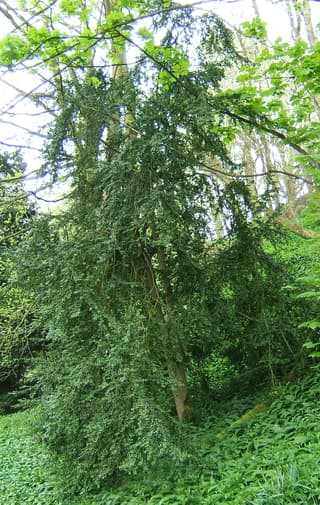
Common boxwood
Buxus sempervirens
Buxus sempervirens, commonly known as common boxwood or European box, is a slow-growing evergreen shrub or small tree native to southern Europe, northern Africa, and western Asia. Its dense, glossy, dark-green foliage makes it one of the most prized plants for formal gardens, hedging, and topiary. It can reach up to 5 metres in height under ideal conditions and is renowned for its exceptional longevity — some specimens live for centuries. Despite its ornamental appeal, all parts of the plant are toxic to humans and animals.
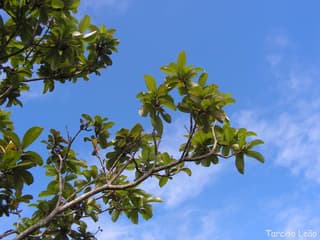
Murici
Byrsonima verbascifolia
The murici (Byrsonima verbascifolia) is a small shrub or tree, ranging from 1 to 6 meters in height, native to the Cerrado, Pantanal, Caatinga, and open areas of the Amazon and Atlantic Forest, also occurring in Bolivia, Colombia, Venezuela, the Guianas, and Trinidad. It is characterized by opposite, oval leaves densely covered in fine hairs (tomentum), a twisted trunk 15 to 25 cm in diameter, and yellow flowers that turn reddish over time, gathered in small nectar-rich clusters. It blooms from July to November and bears fruit from October to December, producing small yellow globose fruits with sweet and acidic pulp, highly prized by birds, mammals, and the local population. It is an extremely fire-resistant species adapted to sandy, poor, and acidic soils typical of the Cerrado, surviving long periods of drought once established.
Cactus
Cactaceae
Cactaceae is a family of succulent plants adapted to arid environments. They are distinguished by the presence of areoles, from which spines, branches, and flowers grow. Most species have thickened, photosynthetic stems that store water, allowing them to survive in conditions of extreme drought.
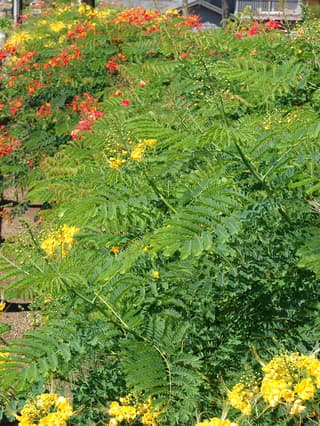
Pride of Barbados
Caesalpinia pulcherrima
The Pride of Barbados (Caesalpinia pulcherrima) is a perennial shrub or small tree native to the American tropics and subtropics, widely cultivated in tropical gardens for its showy blooms. Its leaves are bipinnate with numerous oval leaflets, and the branches feature thorns. The flowers appear in racemes, with orange or red petals and long stamens, attracting hummingbirds and butterflies. It is the national flower of Barbados.
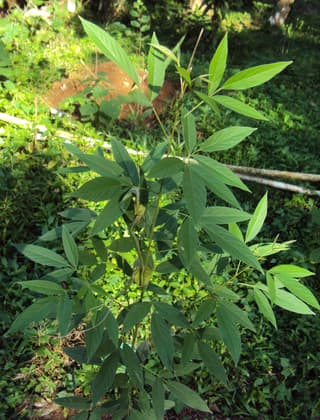
Pigeon pea
Cajanus cajan
The pigeon pea (Cajanus cajan) is a fast-growing, semi-perennial leguminous shrub, native to India or Africa and cultivated for over 3,000 years. It reaches between 1 and 3 meters in height, featuring trifoliate leaves and yellow flowers—sometimes with reddish streaks—that give way to pods containing 2 to 9 edible seeds. Thanks to its deep taproot and nitrogen-fixing capacity, it tolerates poor soils and drought periods, making it a key crop in tropical and subtropical agriculture.
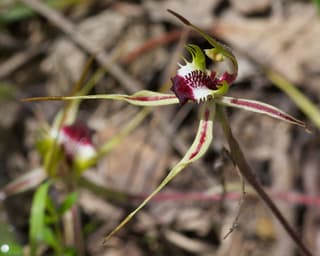
Small Spider-orchid
Caladenia parva
Caladenia parva is a small terrestrial orchid endemic to southeastern Australia, found in scattered areas of southern Victoria and the far southeast of South Australia. It is a deciduous perennial herb with a single underground tuber and a single narrow leaf 3 to 10 cm long, usually with small red spots at the base. Between September and November (southern spring), it produces one or two greenish flowers with red stripes on a 5 to 15 cm stem, featuring a greenish-white labellum with a curled dark red tip. It grows in open forests, woodlands, and coastal vegetation in well-drained sandy-clay soils.
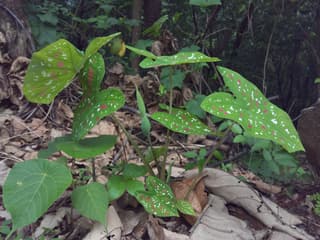
Angel Wings
Caladium bicolor
Caladium bicolor is a tropical tuberous plant native to South America, prized for its large, heart-shaped leaves in striking combinations of red, pink, white, and green. A deciduous perennial that goes dormant in winter, it is one of the most popular foliage plants for adding color to shaded gardens and indoor spaces.
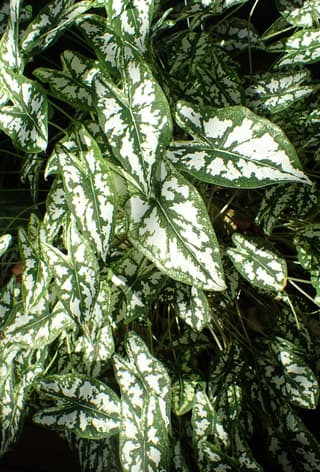
Miniature caladium
Caladium humboldtii
Caladium humboldtii, known as the miniature caladium, is a compact tropical aroid native to South America. Its small green leaves are adorned with striking white spots and veins, making it a prized specimen for terrariums, desktops, and humid indoor spaces.
White-veined Caladium
Caladium lindenii
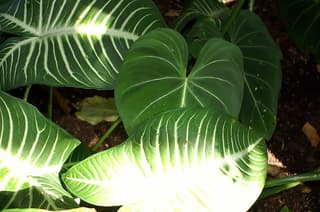
Caladium lindenii, commonly known as White-veined Caladium or Linden's Caladium, is a spectacular tropical foliage plant native to Colombia and Venezuela. A member of the Araceae family, it is celebrated for its dramatic heart-shaped leaves adorned with striking white veins against a deep green background. This deciduous species goes dormant in winter and reemerges in spring with lush, ornamental foliage, making it a prized specimen for indoor plant enthusiasts.
Fancy-leaf Caladium
Caladium x hortulanum
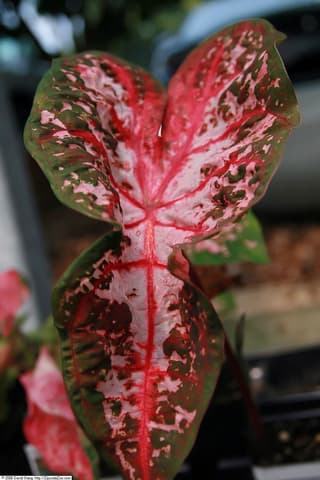
Fancy-leaf Caladium (Caladium x hortulanum) is a tropical foliage plant prized for its stunning, paper-thin leaves in combinations of red, pink, white, and green. Native to tropical South and Central America, it is widely grown as an ornamental houseplant and shade garden specimen.
Feather Reed Grass
Calamagrostis x acutiflora
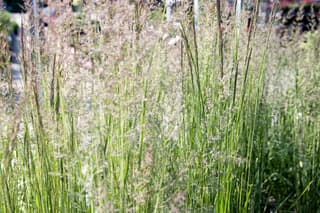
Feather Reed Grass 'Karl Foerster' is a perennial grass that forms a dense, upright clump of fresh green leaves. From June to August, slender, golden-brown spikes rise above the foliage and remain upright well into winter, providing structure and movement to winter garden beds. The variety is a sterile hybrid between Calamagrostis arundinacea and Calamagrostis epigejos and therefore does not set seed - it does not spread unwantedly in the garden. With its striking, columnar growth, it is one of the most popular ornamental grasses for contemporary perennial beds.
Calathea / Prayer Plant (genus)
Calathea
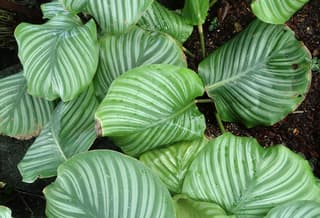
Calathea is a genus of tropical foliage plants in the family Marantaceae, native to the tropical forests of South America. They are prized for their strikingly patterned leaves in shades of green, purple, and silver. Many species were reclassified into the genus Goeppertia in 2012, but Calathea remains the widely used common name.
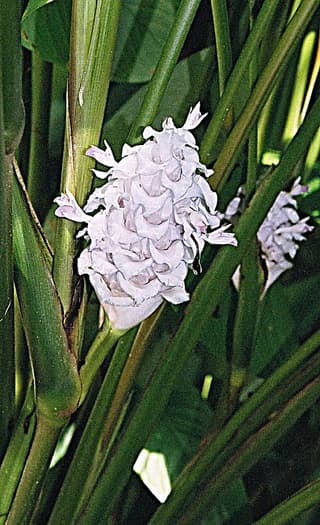
Fishbone Prayer Plant
Calathea burle-marxii
Native to the tropical forests of Brazil, the Fishbone Prayer Plant (Calathea burle-marxii, syn. Goeppertia burle-marxii) is a low, compact foliage plant in the Marantaceae family, prized for the silvery fishbone pattern on its gray-green leaves and their reddish undersides. Like other prayer plants, its leaves fold upward at night and open again during the day, following the light cycle.
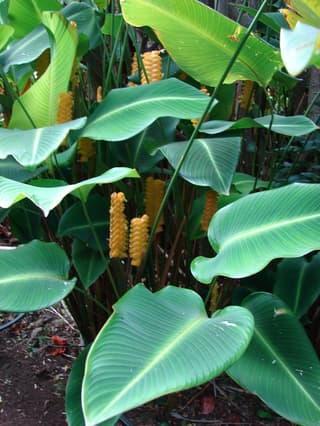
Yellow Rattleshaker
Calathea crotalifera
Calathea crotalifera, commonly known as the yellow rattleshaker, is a rhizomatous perennial herb in the family Marantaceae, native to the humid tropical forests of Central America and northern South America. It is grown for its large, glossy green foliage and its yellow, spike-shaped inflorescences that resemble the tail of a rattlesnake.
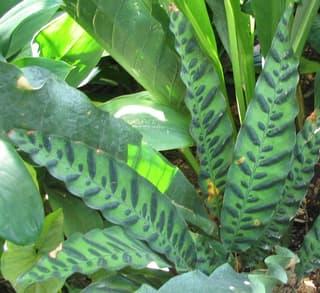
Rattlesnake Plant
Calathea lancifolia
The Calathea lancifolia, commonly known as the Rattlesnake Plant, is a tropical plant native to the rainforests of Brazil. Its elongated leaves display a dark green pattern with lighter green spots resembling rattlesnake markings, with a reddish-purple underside. Part of the Marantaceae family, it is known for its nyctinastic leaf movement, where leaves fold up at night like hands in prayer.
Find the Perfect Plant
Our plant guide helps you find ideal species for your experience level and time of year.
Browse by Difficulty, Season & More
Use the filters below to narrow this catalog by care difficulty, season, environment, or search directly by name. Each filter leads to a focused list tailored to your specific growing conditions.