Complete Plant Guide
Explore plants by difficulty, season and more. Find the perfect plant for you.
Difficulty
Categories
Plants by City
🗺️ Plants by City3698 plants found
Showing 505-540 of 3698
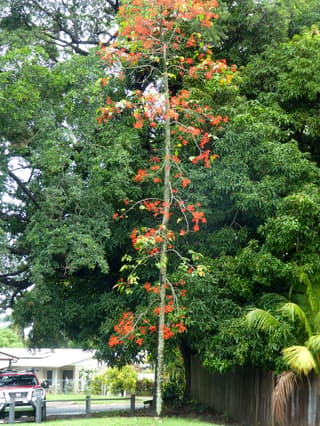
Illawarra Flame Tree
Brachychiton acerifolius
A spectacular large deciduous tree of the Malvaceae family, native to the east coast of Australia from southern New South Wales to far north Queensland. Renowned for its striking display of bright scarlet, bell-shaped flowers that appear in dense panicles on a leafless tree in late spring to early summer, creating a dramatic visual effect resembling a tree on fire. Reaches 15-18 meters in cultivation and up to 35 meters in natural habitat. Features deep lobed glossy leaves and a pyramidal growth habit. Once established, this tree is highly drought-tolerant and low-maintenance.
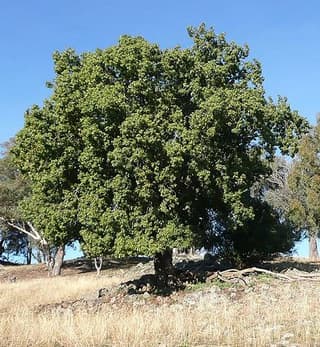
Kurrajong
Brachychiton populneus
The Kurrajong (Brachychiton populneus) is a hardy, evergreen tree native to eastern Australia, prized for its distinctive bottle-shaped trunk that stores water, its glossy poplar-like leaves, and its resilience to drought. It produces creamy-white, bell-shaped flowers streaked with pink or purple in spring and summer, followed by woody seed pods.
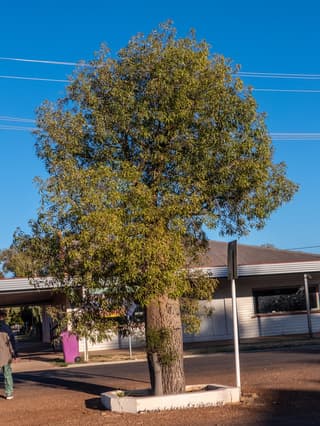
Queensland bottle tree
Brachychiton rupestris
Native to central Queensland, Australia, the Queensland bottle tree is a caudiciform species in the Malvaceae family, prized for the dramatically swollen, bottle-shaped trunk that stores water and carbohydrates to help it survive long droughts. In the wild it can grow 10-20+ m tall, though cultivated and bonsai specimens stay far more compact. It is deciduous, dropping its leaves in the dry season before producing cream-colored, red-marked flower panicles.
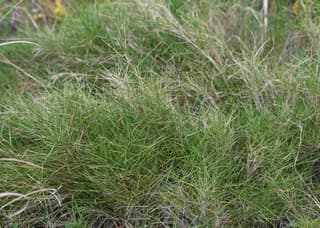
Mediterranean False Brome
Brachypodium retusum
Brachypodium retusum is a tough, drought-resistant perennial grass native to the Mediterranean basin. It forms dense tufts of narrow, glaucous leaf blades that remain green year-round. Ecologically significant, it is the first grass to resprout after wildfires, making it vital for soil stabilization and habitat recovery across Mediterranean scrubland and garrigue. Its pale yellow-green spikelets bloom from spring to early summer, adding natural texture and movement to dry gardens.
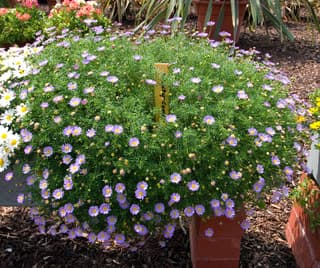
Swan River Daisy
Brachyscome iberidifolia
Brachyscome iberidifolia, commonly known as the Swan River Daisy, is a charming Australian annual herb. It is highly valued for its delicate, fern-like foliage and a profusion of small, daisy-like flowers that appear in vibrant shades of blue, purple, pink, and white. Growing in a compact, mounding habit, it is a favorite for borders, rock gardens, and hanging baskets.
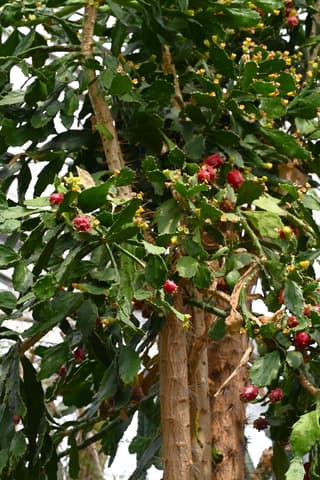
Brazilian Tree Cactus
Brasiliopuntia brasiliensis
Brasiliopuntia brasiliensis, commonly known as the Brazilian Tree Cactus, is a monotypic tree-like cactus native to Brazil, Argentina, and Paraguay. It is the sole species of the genus Brasiliopuntia and stands out for its arborescent structure — a woody cylindrical trunk topped with flattened cladodes on branch tips — which can reach over 20 meters in its natural habitat.
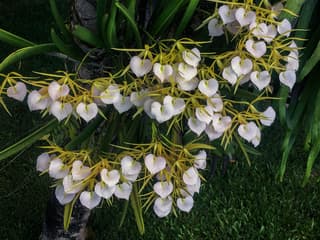
Lady of the Night
Brassavola nodosa
Brassavola nodosa, known as the Lady of the Night, is a medium-sized epiphytic orchid native to coastal regions of Central and South America, from Mexico to Brazil, where it grows on trees and even mangrove roots near the sea. Its cylindrical, succulent leaves produce stems with greenish-white flowers up to 6 inches (15 cm) wide, which release an intense, sweet fragrance at dusk to attract pollinating moths.
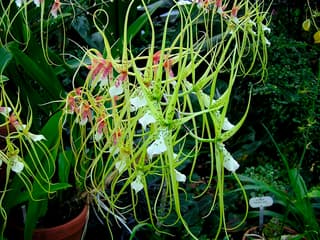
Spider Orchid
Brassia
Brassia is a genus of epiphytic orchids native to the tropical and subtropical forests of Central and South America, popularly known as spider orchids due to their long, thin petals and sepals that resemble spider legs. Their flower spikes can display up to 20 blooms in shades of yellow, cream, greenish, or reddish-brown, usually speckled with dark spots. It is a genus appreciated by both collectors and commercial hybridizers, valued for its exuberant flowering and exotic floral shape.
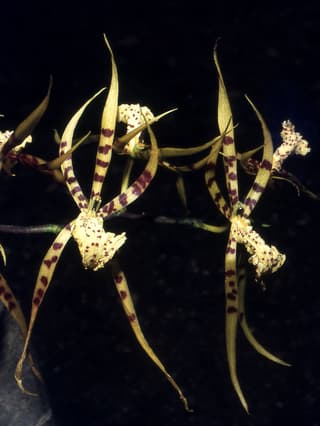
Spider Orchid
Brassia arachnoidea
Brassia arachnoidea, known as the spider orchid, is an epiphytic orchid native to the humid tropical forests of Central and South America, including Ecuador. It is named after the shape of its flowers—long, thread-like, greenish-yellow sepals and petals spotted with chocolate brown, reminiscent of a spider's legs. The leaves are broad and pleated, attached to ovoid pseudobulbs, and the flowering stems can bear up to 8 fragrant flowers, each with a diameter of 10-12 cm.
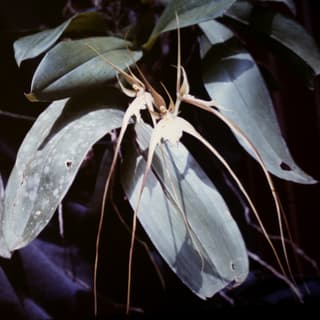
Spider Orchid
Brassia caudata
Brassia caudata, commonly known as the Spider Orchid, is a neotropical epiphytic orchid native to southern Mexico, Central America, the Caribbean, and northern South America. Its striking flowers feature long, spider-leg-like sepals and petals in yellow with brown markings, reaching up to 15 cm in length. It is a slow-growing evergreen perennial that blooms primarily in spring and summer.
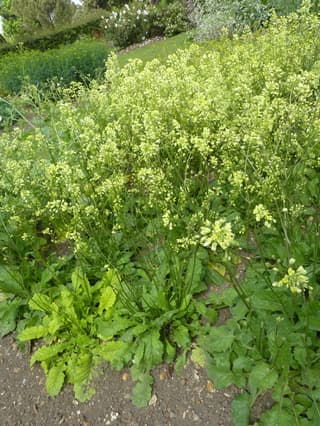
Brassica
Brassica
The genus Brassica comprises more than 30 species of herbaceous plants in the Brassicaceae family, including some of the most widely consumed vegetables in the world: kale, cabbage, broccoli, cauliflower, mustard, and turnip. Native to Europe and Asia, these annual or biennial plants adapt to cool and temperate climates, producing nutrient-rich leaves and characteristic four-petaled yellow or white flowers that gave the family its name.
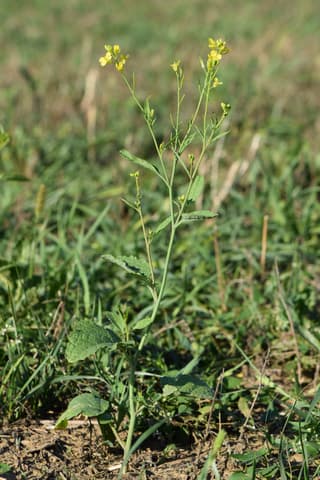
Brown Mustard
Brassica juncea
Brassica juncea, commonly known as brown mustard or mustard greens, is a fast-growing annual herb in the Brassicaceae family, native to Central and South Asia. It is widely cultivated worldwide for its pungent edible leaves, seeds used in condiment production, and mustard oil extraction. The plant produces bright yellow flowers and thrives in cool weather.
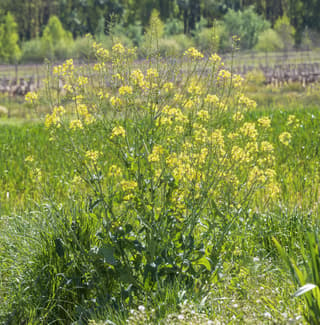
Rapeseed
Brassica napus
Brassica napus, widely known as rapeseed or canola, is a fast-growing herbaceous plant famous for its vast fields of vibrant yellow flowers. It is one of the world's most important oilseed crops, used for the production of edible vegetable oil, biodiesel, and animal feed. Its young leaves are edible and nutrient-rich, resembling kale.
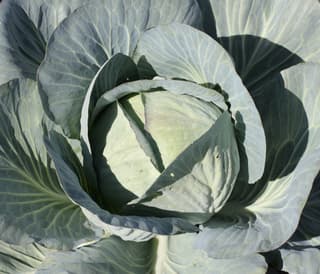
Wild Cabbage
Brassica oleracea
Brassica oleracea is the wild ancestor of many of the world's most important vegetables, including cabbage, kale, broccoli, cauliflower, Brussels sprouts, kohlrabi, and collard greens. Native to the coastal cliffs of the Mediterranean and Atlantic Europe, this biennial or perennial herb has been cultivated for over 2,000 years and selectively bred into an extraordinary array of cultivar groups. In its wild form it produces wavy blue-green leaves, a sturdy erect stem, and clusters of small yellow flowers. As the parent species of all these major cultivar groups, Brassica oleracea represents one of humanity's greatest achievements in plant domestication — transforming a coastal weed into the world's most important leafy edible crop.
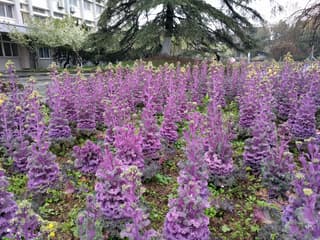
Kale
Brassica oleracea var. acephala
Kale is a leafy, nutritious herbaceous vegetable belonging to the Brassicaceae family. It is extremely hardy and valued worldwide as a superfood, being rich in iron, calcium, and vitamins A, C, and K. Its leaves can range from light green to purple, depending on the variety.
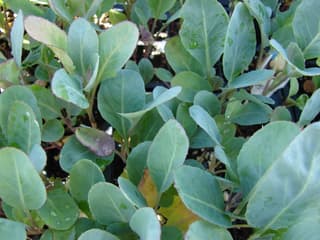
Cabbage
Brassica oleracea var. capitata
Cabbage (Brassica oleracea var. capitata) is a biennial leafy vegetable of the Brassicaceae family, grown as an annual for its tightly packed head of leaves. Native to the Mediterranean coast and western Europe, it is one of the most widely eaten vegetables worldwide, used raw in salads, fermented into sauerkraut, or cooked.
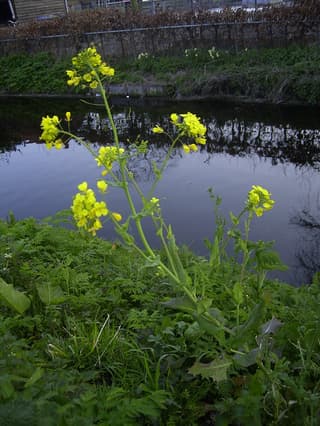
Turnip
Brassica rapa
Turnip (Brassica rapa) is a biennial vegetable from the Brassicaceae family, cultivated for thousands of years for its edible roots and nutritious leaves. Native to Central Asia, it thrives in temperate climates worldwide. The plant produces bright yellow flowers in spring and summer, and its swollen taproot is packed with vitamins C and K.
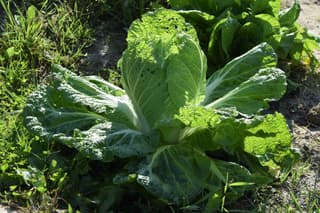
Chinese Cabbage
Brassica rapa pekinensis
Chinese Cabbage (Brassica rapa pekinensis) is a cool-season leafy vegetable originating from China, belonging to the Brassicaceae family. It forms a tight cylindrical head of pale green, crinkled leaves and is one of the most widely cultivated vegetables in East Asia. It is prized for its mild, slightly sweet flavor and versatility in cooking.
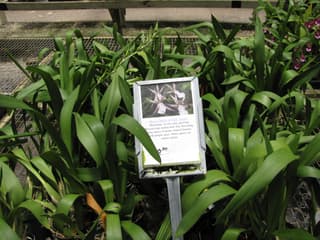
Miltassia orchid
Bratonia Charles M. Fitch
Bratonia Charles M. Fitch is a popular intergeneric orchid hybrid, a cross between Brassia verrucosa and Miltonia spectabilis. It is celebrated for its large, star-shaped flowers that resemble spiders, featuring striking lavender and purple hues with olive-green or brown spotting. The plant produces long, arching sprays of blooms that can last for several weeks, emerging from pseudobulbs with strap-like evergreen leaves.
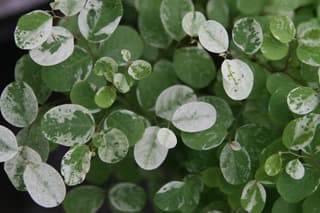
Snow Bush
Breynia
Breynia is a genus of around 35 evergreen shrubs in the Phyllanthaceae family, native to Southeast Asia, Australia and the western Pacific islands. The most widely grown ornamental species, Breynia disticha (snow bush), is prized for its small oval leaves splashed with white, pink and green in a mottled, almost hand-painted pattern. Grown as a houseplant, patio shrub, or clipped hedge in warm climates, it produces tiny inconspicuous flowers that are rarely the main attraction — the variegated foliage does all the work. It suckers and grows quickly, so regular pruning keeps it tidy and encourages the brightest new leaf color.
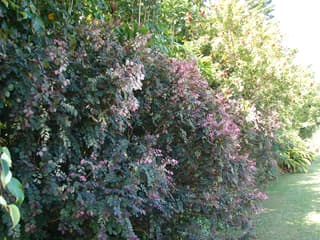
Snowbush
Breynia disticha
Breynia disticha, commonly known as Snowbush or Breynia, is a tropical evergreen shrub native to the Pacific Islands. Its lush, multicolored foliage—featuring oval leaves in shades of green, creamy white, pink, and burgundy—is its hallmark. The white-tipped branches evoke a delicate layer of snow, hence the name "Snowbush." A fast-growing plant, it can reach between 3 and 6 feet in height in tropical and subtropical gardens, being widely used as a hedge, border, or focal point in decorative pots. Its small, inconspicuous green flowers bloom in summer. Ideal for warm, humid climates, it requires high light and humidity to display its full color splendor.
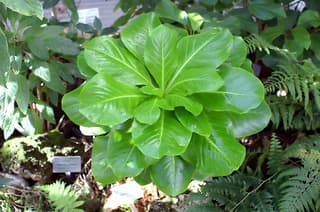
Hawaiian Palm
Brighamia insignis
Brighamia insignis, commonly known as the Hawaiian Palm or Vulcan Palm, is one of the world's most critically endangered plants. Native to the rocky sea cliffs of Kauaʻi and Niʻihau in Hawaii, this remarkable succulent features a bulbous, tapered trunk topped with a rosette of glossy green leaves. In autumn it produces clusters of fragrant, tubular yellow flowers. Now extinct in the wild, it survives only in cultivation, making it a living symbol of conservation.

Caraguata
Bromelia antiacantha
Bromelia antiacantha, commonly known as caraguata or gravata, is a terrestrial bromeliad native to the Atlantic Forest and coastal restinga scrub of southern and southeastern Brazil, also found in Uruguay. It forms dense clumps up to 2 meters tall, with long, rigid leaves (80-185 cm) edged with dark spines arranged in a rosette. It flowers in summer (December to February), producing creamy-white bracts and pink flowers with pale margins. The fruits, ripening from February to June, are triangular, juicy berries with a tangy-sweet flavor, traditionally used in cooking and folk medicine for respiratory ailments.
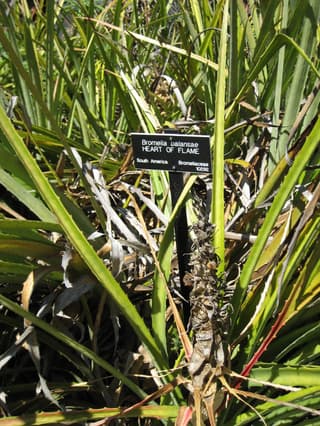
Heart of Flame
Bromelia balansae
Bromelia balansae, commonly known as Heart of Flame, is a large terrestrial bromeliad native to Brazil, Argentina, Bolivia, Colombia, and Paraguay. This striking plant features long, spiny leaves arranged in a large rosette, and is renowned for its spectacular flowering display: before blooming, the center of the rosette transforms into a vivid red-orange color, then reveals magenta and white flowers — creating the iconic "heart of flame" appearance. It is a tough, drought-tolerant plant that works beautifully as a landscape accent, living fence, or bold container specimen.
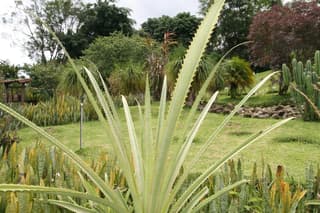
Wild Pineapple
Bromelia pinguin
Bromelia pinguin, commonly known as Wild Pineapple or Pinguin, is a spiny terrestrial bromeliad native to Central America, the Caribbean, and northern South America. It forms dense rosettes with long, robust leaves armed with sharp spines. The intensely sour yellow fruits are edible with a distinctive, citrus-like flavor. The plant naturally reproduces via thick runners (stolons) both above and below ground, forming dense colonies in its native habitat. Extremely hardy and adapted to challenging conditions, it is widely planted as a living fence and for erosion control throughout the tropics.
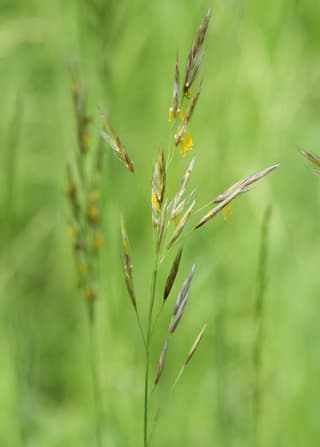
Brome grass
Bromus
The genus Bromus comprises a diverse group of grasses, commonly known as bromes or brome grasses. They are widely distributed in temperate regions and are recognized by their branched and drooping panicle inflorescences. While some species are considered weeds in crops, many are valued as livestock forage or as ornamental plants due to their delicate texture and graceful movement in the wind.
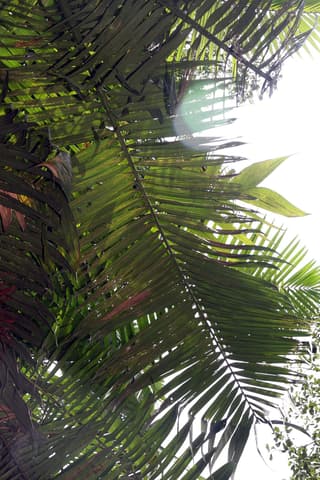
Breadnut
Brosimum alicastrum
Breadnut (Brosimum alicastrum) is a large, evergreen tropical tree in the family Moraceae, native to Central America, southern Mexico, the Caribbean, and northern South America. It can reach up to 45 metres tall with a straight trunk and wide, globose crown. One of the most ecologically and culturally important trees of Mesoamerica, it was a dietary staple for the ancient Maya civilization. Its highly nutritious seeds, leaves, and latex have sustained communities for millennia.
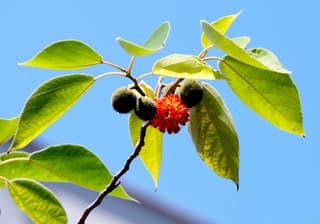
Paper Mulberry
Broussonetia papyrifera
Paper mulberry (Broussonetia papyrifera) is a fast-growing deciduous tree native to East Asia. Historically prized for producing washi paper in Japan and tapa cloth across Pacific cultures, it is a highly adaptable tree tolerant of poor soils, drought, and urban pollution.
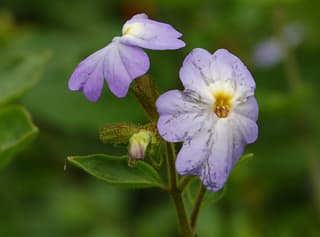
Jamaican Forget-Me-Not
Browallia americana
Browallia americana, commonly known as Jamaican Forget-Me-Not or Bush Violet, is an annual or short-lived perennial ornamental plant from the Solanaceae family, native to tropical South America. It produces star-shaped flowers in shades of blue, violet, and white, blooming abundantly in spring and summer. It is an excellent choice for containers, borders, and shaded gardens.

Candelabra cactus
Browningia candelaris
Browningia candelaris is a large columnar cactus endemic to the arid slopes of the Andes in southern Peru and northern Chile, where it grows between 1,600 and 3,000 meters above sea level in the heart of the Atacama Desert, one of the driest places on Earth. Young specimens form a single, heavily spined columnar trunk with straight brown spines up to 15 cm long; with age, the upper part of the trunk develops a crown of slender, cylindrical, and nearly spineless branches, giving the plant the characteristic candelabra-like appearance for which it is named. It can reach between 5 and 7 meters in height, with a trunk up to 50 cm in diameter. Its white, tubular flowers, measuring 8 to 12 cm, bloom at night on the upper branches and last barely 24 hours, followed by fleshy, yellow, edible fruits up to 7 cm long.
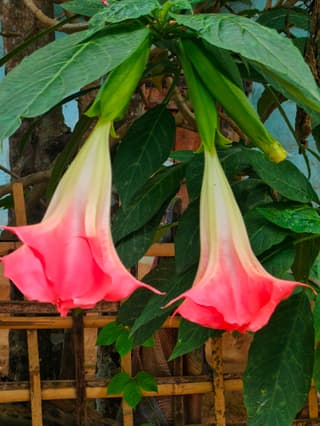
Angel's Trumpet
Brugmansia
Brugmansia is a genus of tropical shrubs and small trees in the Solanaceae family, native to the Andean regions of South America (Ecuador, Colombia, Peru, Bolivia, Chile). Renowned for its spectacular, pendulous trumpet-shaped flowers up to 50 cm long with an intoxicating fragrance that intensifies at dusk. All parts of the plant are highly toxic due to tropane alkaloids (scopolamine, hyoscyamine, atropine). Brugmansia is extinct in the wild — every known specimen is cultivated.
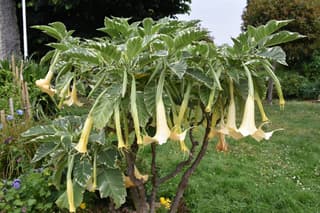
White Angel's Trumpet
Brugmansia arborea
Brugmansia arborea, the white angel's trumpet, is an evergreen shrub or small tree native to the Andes from southern Colombia to northern Chile, where it grows in dry montane valleys between 2,000 and 3,000 m elevation. Its ovate leaves and young shoots are covered in fine velvety white down, and it bears pendulous, trumpet-shaped white to cream flowers 12–17 cm long with an intense fragrance that peaks in the evening. It is considered the hardiest Brugmansia species to both cold and drought, and is classified as Extinct in the Wild by the IUCN, surviving today only in cultivation.

Angels Trumpet
Brugmansia suaveolens
Angels Trumpet (Brugmansia suaveolens) is a woody shrub native to Brazil, prized for its large, pendulous, trumpet-shaped flowers that can reach up to 30 cm long. The white, pink, or yellow blooms release an intensely sweet fragrance, especially at night, attracting pollinating moths. Despite its striking beauty, every part of the plant contains highly toxic tropane alkaloids, requiring extreme caution around children and pets.
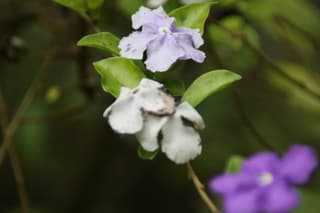
Yesterday-today-and-tomorrow
Brunfelsia uniflora
Yesterday-today-and-tomorrow is a shrub native to the Brazilian Atlantic Forest, famous for its flowers that change color: they open in a vibrant shade of purple, turn lavender, and finally white before wilting. This characteristic gives the plant its popular name. In addition to the visual spectacle, its flowers exude a sweet and intense fragrance, especially at night.
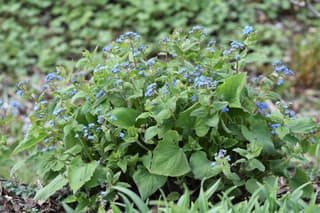
Siberian Bugloss
Brunnera macrophylla
Brunnera macrophylla, commonly called Siberian Bugloss or False Forget-Me-Not, is a shade-loving herbaceous perennial native to the forests of the Caucasus region and Turkey. It produces sprays of tiny, brilliant blue flowers above large heart-shaped leaves every spring, making it a beloved choice for woodland gardens and shaded borders.
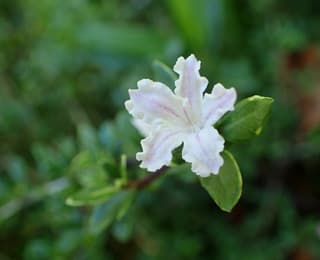
Snowrose
Buchozia japonica
Buchozia japonica is currently recognized by Plants of the World Online (Kew) as a synonym for Serissa japonica, an evergreen or semi-evergreen shrub in the Rubiaceae family, native to the subtropical regions of East Asia (China, Japan, India). Typically growing 24-48 inches tall, it features small, oval, dark green, leathery leaves that emit an unpleasant odor when crushed, which led to its former name Serissa foetida. It produces a nearly continuous bloom from spring to autumn, featuring small white funnel-shaped flowers (sometimes double or pink-veined) preceded by pinkish buds. It is one of the most popular species for bonsai in Europe and North America, also known as the 'Tree of a Thousand Stars' or 'Snowrose'.
Find the Perfect Plant
Our plant guide helps you find ideal species for your experience level and time of year.
Browse by Difficulty, Season & More
Use the filters below to narrow this catalog by care difficulty, season, environment, or search directly by name. Each filter leads to a focused list tailored to your specific growing conditions.