Rubiaceae
Snowrose: Complete Care Guide
Buchozia japonica
It is a delicate plant that requires stable conditions: it is sensitive to temperature fluctuations, relocation, and sudden changes in light, often reacting by dropping its leaves. It prefers bright but filtered light, a well-drained substrate kept uniformly moist, and temperatures ranging approximately between 50°F and 86°F (10°C-30°C).
Every 7 days
Partial shade
10° - 30°C
% - %
Categories
What is Snowrose?
Snowrose (Buchozia japonica) is a medium-care plant from the Rubiaceae family. Buchozia japonica is currently recognized by Plants of the World Online (Kew) as a synonym for Serissa japonica, an evergreen or semi-evergreen shrub in the Rubiaceae family, native to the subtropical regions of East Asia (China, Japan, India). Typically growing 24-48 inches tall, it features small,...
Snowrose grows up to 1.2m, spread of 150cm, watering every 7 days, 10°C – 30°C. It is suitable for indoor environments and not safe for pets.
Without precautions, ingestion can cause irritation in pets. Keep out of reach of cats and dogs. Without adequate drainage, root rot can develop within 14 days.
How to Care for Snowrose?
TLDR: Snowrose needs Partial shade, watering every 7 days, and temperatures between 10-30°C with 40-70% humidity.
How Often Should You Water Snowrose?
Water when the top layer of soil begins to dry out, keeping the substrate slightly moist at all times without allowing it to become waterlogged or dry out completely; during summer outdoors, daily watering may be necessary.
How Much Light Does Snowrose Need?
Place in a bright location with filtered sunlight, near a window but away from direct sun during peak hours, which can burn the leaves; when kept outdoors, it should be protected from the wind and placed in a sunny but not overly exposed position.
What Is the Best Soil for Snowrose?
Use a well-draining substrate capable of retaining some moisture, such as a bonsai mix (akadama, pumice, and bark) or a fertile potting soil rich in organic matter with a neutral pH (6-8).
What Pot Should You Use for Snowrose?
As it is commonly grown as a bonsai, it adapts well to shallow, wide pots with excellent drainage; if grown as a standard houseplant, prefer containers with large drainage holes to prevent water stagnation.
Care Schedule
Fertilize
Every 14 days
Repot
Every 730 days
What Is Snowrose and Where Does It Come From?
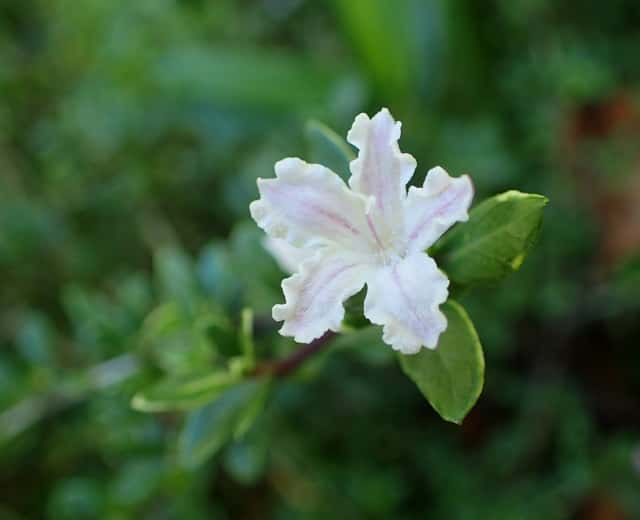
Buchozia japonica is currently recognized by Plants of the World Online (Kew) as a synonym for Serissa japonica, an evergreen or semi-evergreen shrub in the Rubiaceae family, native to the subtropical regions of East Asia (China, Japan, India). Typically growing 24-48 inches tall, it features small, oval, dark green, leathery leaves that emit an unpleasant odor when crushed, which led to its former name Serissa foetida. It produces a nearly continuous bloom from spring to autumn, featuring small white funnel-shaped flowers (sometimes double or pink-veined) preceded by pinkish buds. It is one of the most popular species for bonsai in Europe and North America, also known as the 'Tree of a Thousand Stars' or 'Snowrose'.
How to Propagate Snowrose?
Semi-hardwood cuttings
- 1 In spring or early summer, take 3-4 inch cuttings from healthy current-year shoots, cutting just below a leaf node
- 2 Remove the leaves from the bottom part of the cutting and, if available, dip it in rooting hormone
- 3 Plant in a draining and moist substrate (peat and perlite, or a cutting/bonsai mix)
- 4 Cover with a humidity dome or a clear plastic bag to maintain high humidity and place in a warm, bright spot without direct sunlight
- 5 Keep the substrate constantly moist; bottom heat of about 68-77°F (20-25°C) accelerates rooting
Materials needed:
How Big Does Snowrose Grow?
TLDR: Snowrose can reach up to 1.2m tall with Slow growth rate.
Max height
1.2m
Spread
1.5m
Growth rate
Slow
Foliage
Semi-evergreen
Warning: Toxic Plant
This plant can be toxic if ingested. Keep out of reach of:
Plant Uses
Ornamental
Great for decoration
Is your plant showing symptoms?
Click on the symptom to discover possible causes:
What Diseases Commonly Affect Snowrose?
TLDR: Snowrose is susceptible to 6 known diseases. Monitor regularly for early detection.
Root Rot
Root rot is a serious fungal disease that affects the root system of plants, causing them to decay and die. It is primarily caused by overwatering, poor drainage, or soil-borne fungi such as Pythium, Phytophthora, Rhizoctonia, and Fusarium. The disease thrives in waterlogged conditions where roots are deprived of oxygen, making them susceptible to fungal infection.
Spider Mites
Spider mites are tiny arachnids (less than 1/20 inch long) related to spiders and ticks that feed on plant sap. They thrive in hot, dry conditions and can cause significant damage to ornamental and vegetable plants. During severe infestations, crop losses can reach 14% or higher as these pests disrupt vital plant processes including photosynthesis, carbon dioxide absorption, and transpiration.
Aphids
Aphids are small, soft-bodied, pear-shaped insects (1/16 to 1/8 inch long) that feed by sucking nutrient-rich sap from plants. They reproduce rapidly and can quickly weaken plants, causing distorted growth and transmitting plant viruses. Aphids come in various colors including green, black, red, yellow, brown, and gray. They secrete honeydew, a sticky substance that attracts ants and encourages sooty mold growth.
Powdery Mildew
Powdery mildew is a common fungal disease caused by various fungi species including Erysiphe, Podosphaera, Oïdium, and Leveillula. It affects over 10,000 plant species worldwide. The disease thrives in warm, dry climates with high humidity and appears as a distinctive white powdery coating on plant surfaces.
Meaning & Symbolism
Often associated with well-being, luck, and resilience in various Asian cultures.
Compare with similar plants
| Attribute | Difficulty | Light | Watering | Pet Safe |
|---|---|---|---|---|
| Dark Fieldcap | Medium | Low light | 2d | ⚠️ |
| Azalea | Medium | Partial shade | 3d | ⚠️ |
| Muriel's Bamboo | Medium | Partial shade | 3d | ✓ |
| Bougainvillea | Medium | Direct sun | 7d | ⚠️ |
Choose & Compare
Sources & References
- Buchozia japonica (Thunb.) Callm. | Plants of the World Online | Kew Science
- Serissa - Wikipedia
- Serissa japonica (Snowbush, Snowrose, Tree of a Thousand Stars) | NC State Extension Gardener Plant Toolbox
- Care guide for the Serissa Bonsai tree (Snow rose) - Bonsai Empire
- Snowrose (Serissa japonica) Care Guide - ForwardPlant
- Serissa japonica (Tree of a Thousand Stars) | RHS Gardening




