Burseraceae
Fragrant Bursera - Bursera fagaroides
Bursera fagaroides
Low-difficulty plant to grow. Needs full sun, moderate watering with the substrate allowed to dry out completely between waterings, and a very fast-draining, cactus- or bonsai-type mineral mix. It is drought tolerant and naturally drops its leaves in winter as part of its dormancy cycle. Protect from hard frost.
Every 10 days
Direct sun
13° - 29°C
% - %
Categories
What is Fragrant Bursera?
Fragrant Bursera (Bursera fagaroides) is a easy-care plant from the Burseraceae family. Bursera fagaroides, known as the fragrant bursera or elephant tree, is a deciduous shrub or small tree in the Burseraceae family, native to arid and semi-arid regions of Mexico, from Sonora to Oaxaca. It is recognized by its thick, sculptural (pachycaul) trunk and papery bark in reddish, gray or yel...
Fragrant Bursera grows up to 10.0m, watering every 10 days, 13°C – 29°C. It is suitable for indoor environments and safe for pets.
Unlike many tropical plants, Fragrant Bursera tolerates watering mistakes. Best for beginners. Unlike many popular species, Fragrant Bursera is safe to keep around pets. Without adequate drainage, root rot can develop within 20 days.
How to Care for Fragrant Bursera?
TLDR: Fragrant Bursera needs Direct sun, watering every 10 days, and temperatures between 13-29°C with 40-70% humidity.
How Often Should You Water Fragrant Bursera?
Let the substrate dry out completely between waterings. During spring and summer, water once the top 5-8 cm of substrate are dry; in fall and winter, cut back watering significantly as the plant enters dormancy. Overwatering favors root rot, especially indoors.
How Much Light Does Fragrant Bursera Need?
Place it in full sun, with at least half a day of direct sunlight. Indoors, position it in front of a south- or west-facing window; if natural light is insufficient, supplement with a grow light.
What Is the Best Soil for Fragrant Bursera?
Use a fast-draining mineral mix, such as a cactus or bonsai blend, with a high percentage of perlite or pumice. Avoid soils high in organic matter that hold moisture.
What Pot Should You Use for Fragrant Bursera?
A bonsai pot or shallow, well-draining container suited to displaying the thick, characteristic trunk of this species.
Care Schedule
Fertilize
Every 14 days
Repot
Every 2008 days
What Is Fragrant Bursera and Where Does It Come From?
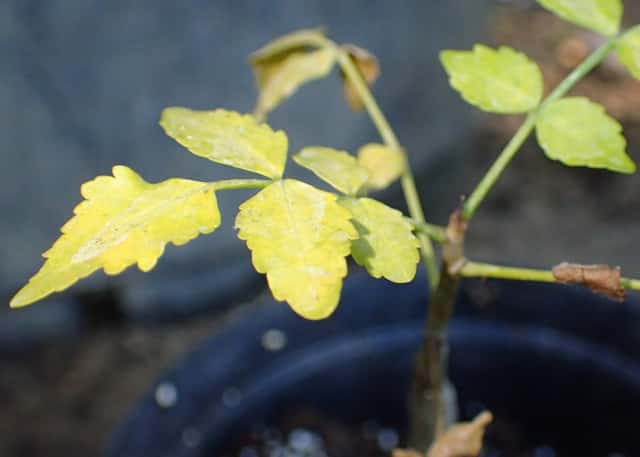
Bursera fagaroides, known as the fragrant bursera or elephant tree, is a deciduous shrub or small tree in the Burseraceae family, native to arid and semi-arid regions of Mexico, from Sonora to Oaxaca. It is recognized by its thick, sculptural (pachycaul) trunk and papery bark in reddish, gray or yellowish tones that peels away in layers to reveal a grey-green surface beneath. Its pinnate leaves, made up of several leaflets, release a citrus scent when crushed. In spring it produces small creamy-white flowers, sometimes tinged yellow or green. It is one of the most prized Bursera species in bonsai cultivation for its gnarled trunk and exfoliating bark.
How to Propagate Fragrant Bursera?
Seed propagation
Germination is faster with warm temperatures and a lightly moist, never waterlogged, substrate.
- 1 Collect seeds from mature seed pods
- 2 Sow in a moist, well-draining mineral substrate
- 3 Keep warm with indirect light until germination
Materials needed:
Stem cutting
Avoid overwatering while roots form to prevent rot.
- 1 Cut a healthy semi-woody stem
- 2 Let the cut callus over for several days
- 3 Plant in well-draining mineral substrate and keep barely moist
Materials needed:
Root division
Less common method with a lower success rate than seed or cuttings.
- 1 Carefully lift the plant without damaging the root system
- 2 Separate sections that each have their own roots
- 3 Replant each section in well-draining mineral substrate
Materials needed:
How Big Does Fragrant Bursera Grow?
TLDR: Fragrant Bursera can reach up to 10.0m tall with Slow growth rate.
Max height
10.0m
Growth rate
Slow
Foliage
Deciduous
Plant Uses
Ornamental
Great for decoration
Medicinal
Medicinal properties
Aromatic
Pleasant fragrance
Medicinal Uses
- Resin traditionally used against scorpion stings and insect bites
- Used in traditional Mexican medicine for inflammation and stomach ailments
Is your plant showing symptoms?
Click on the symptom to discover possible causes:
What Diseases Commonly Affect Fragrant Bursera?
TLDR: Fragrant Bursera is susceptible to 5 known diseases. Monitor regularly for early detection.
Mealybugs
Mealybugs are small, soft-bodied insects covered with a white, waxy, cottony material. They are common pests of houseplants and outdoor plants in mild climates. These sap-sucking insects feed on plant tissue, causing damage, stunted growth, and can lead to plant death if left untreated. They produce sticky honeydew which attracts sooty mold.
Spider Mites
Spider mites are tiny arachnids (less than 1/20 inch long) related to spiders and ticks that feed on plant sap. They thrive in hot, dry conditions and can cause significant damage to ornamental and vegetable plants. During severe infestations, crop losses can reach 14% or higher as these pests disrupt vital plant processes including photosynthesis, carbon dioxide absorption, and transpiration.
Scale Insects
Scale insects are small sap-sucking pests that appear as brown, shell-like bumps on plant stems and leaves. There are over 25 species, divided into armored (hard) and unarmored (soft) scales. They feed by piercing plant tissue and extracting sap, which weakens the plant and can lead to yellowing, stunted growth, and even death if left untreated. They also excrete honeydew, which attracts ants and promotes sooty mold growth.
Whiteflies
Whiteflies are small, soft-bodied, winged insects closely related to aphids and mealybugs. They are moth-like in appearance, about 1/16 inch long, triangular in shape, and gray-white in color. These sap-sucking pests feed on plant tissue, causing yellowing, stunted growth, and wilting. They also excrete honeydew, which attracts ants and promotes sooty mold growth. Whiteflies can transmit serious plant viruses.
Fun Facts
Its papery bark peels away in layers, revealing a grey-green surface underneath
The leaves release a citrus scent when crushed
It is one of the most popular Bursera species in bonsai for its sculptural trunk
Frequently asked questions
How often should I water Bursera fagaroides?
What light does the fragrant bursera need?
Is it normal for this plant to drop its leaves?
What soil is best for Bursera fagaroides?
Compare with similar plants
| Attribute | Difficulty | Light | Watering | Pet Safe |
|---|---|---|---|---|
| Field Maple | Easy | Bright indirect | 14d | ✓ |
| Silver Birch | Easy | Direct sun | 14d | ✓ |
| Common Blanketflower | Easy | Direct sun | 10d | ✓ |
| Cushion Bush | Easy | Direct sun | 14d | ✓ |
Choose & Compare
Sources & References
- Bursera fagaroides - Wikipedia
- Bursera fagaroides 101 - Succulent Alley
- Bursera fagaroides - Henry Shaw Cactus and Succulent Society
- How to Grow and Care for Bursera Fagaroides - Biology Insights
- Bursera fagaroides - LLIFLE Encyclopedia
- How to Care for Your Bursera fagaroides (Copalwood Tree) - The Plant Daddies





