Complete Plant Guide
Explore plants by difficulty, season and more. Find the perfect plant for you.
Difficulty
Categories
Plants by City
🗺️ Plants by City3613 plants found
Showing 469-504 of 3613
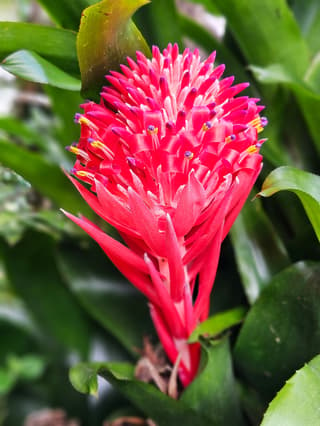
Flaming Torch
Billbergia pyramidalis
Billbergia pyramidalis, commonly called flaming torch or foolproof plant, is an epiphytic or terrestrial bromeliad native to northern South America and the Caribbean. It forms a compact rosette of glossy green leaves and produces a pyramidal scarlet-red inflorescence with violet and yellow highlights, typically in late summer or early autumn. It is a tough, low-maintenance plant popular in tropical gardens and decorative pots.
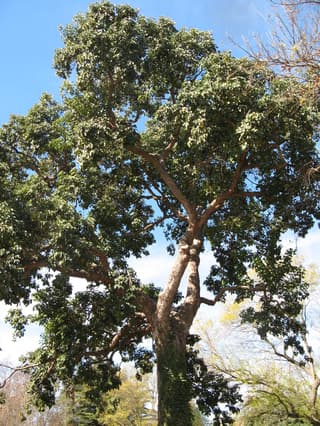
Bishopwood
Bischofia javanica
Bischofia javanica, known as bishopwood, is a fast-growing evergreen tree native to tropical and subtropical Asia, Australia, and the Pacific. It features trifoliate leaves that emerge bronze-red and mature to glossy green, small greenish-yellow flowers in hanging clusters, and round berry-like fruits that turn brownish-orange. In its native range it can exceed 30 m in height, though cultivated specimens are usually smaller. It is valued as a fast shade tree but has become invasive in some regions such as Florida and Pacific islands.
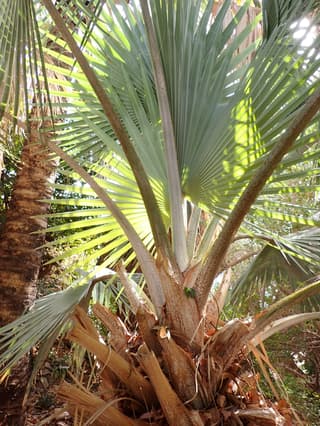
Bismarck Palm
Bismarckia nobilis
Bismarckia nobilis, commonly known as the Bismarck Palm, is one of the most majestic and sculptural palms in the world. Native to Madagascar, it stands out for its massive fan-shaped leaves with a unique silvery-blue hue. It is a slow-to-moderate growing plant that becomes the focal point of any garden due to its imposing stature and dense foliage.
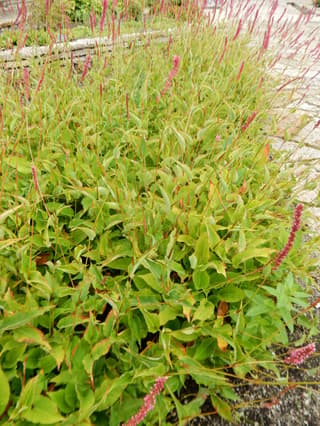
Red Bistort
Bistorta amplexicaulis
Bistorta amplexicaulis (syn. Persicaria amplexicaulis), commonly called red bistort or mountain fleece, is a clump-forming herbaceous perennial in the buckwheat family (Polygonaceae), native to the Himalayan region from Afghanistan to China. It forms bushy mounds of pointed, heart-shaped leaves that clasp the stem (the epithet 'amplexicaulis' means 'stem-clasping'), topped from midsummer to early autumn by narrow, bottlebrush-like spikes of tiny red, pink or white flowers that are highly attractive to bees and butterflies. Fully hardy and easy-going, it is a mainstay of cottage gardens, borders, pond margins and bog gardens.
Annatto
Bixa orellana
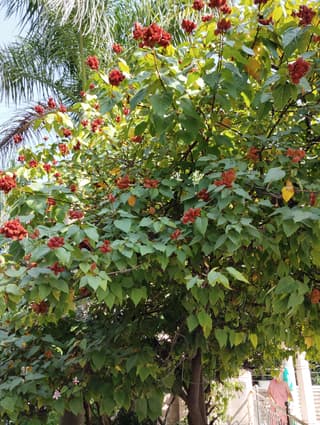
Bixa orellana, commonly known as annatto or the lipstick tree, is a fast-growing tropical shrub or small tree native to Brazil and tropical America. It is prized for its spiny reddish seed pods containing bixin-rich seeds, a natural orange-red pigment widely used as a food coloring and in cosmetics. The plant produces beautiful pink flowers and is equally valued as an ornamental and as a commercial crop.
Yellow-wort
Blackstonia perfoliata
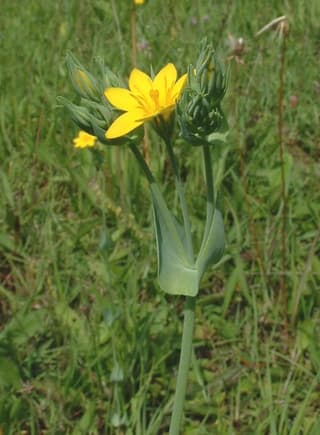
Yellow-wort (Blackstonia perfoliata) is a low-growing annual wildflower in the gentian family, native to the Mediterranean Basin and extending into northwestern Europe, including Britain, Ireland and Iberia. It grows 10-50cm tall on stiff, branching stems, with distinctive bluish-green waxy leaves that fuse together in opposite pairs to form a shallow saucer around the stem. From June to October it produces clusters of bright yellow, star-shaped flowers with 6-8 pointed petals that close in the afternoon. It is a classic indicator of chalk and limestone grassland, thriving on sunny, lime-rich, nutrient-poor soils where it self-sows freely.
Membranous Hard Fern
Blechnum membranaceum
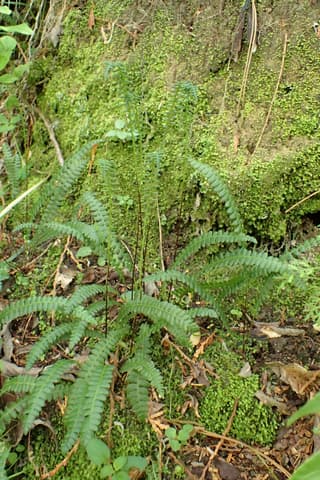
Blechnum membranaceum, commonly known as the Membranous Hard Fern, is a small Neotropical fern in the family Blechnaceae. Native to Central and South America, it produces delicate, thin fronds with a distinctive membranous texture, thriving in humid, shaded forest understories. Now reclassified as Austroblechnum membranaceum, it retains its historic trade name in horticulture.
Soft Water Fern
Blechnum minus
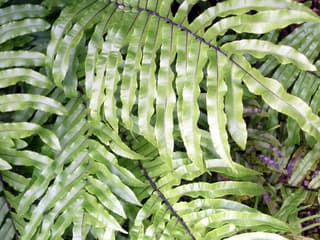
Blechnum minus, commonly known as the Soft Water Fern, is a beautiful shade-loving terrestrial fern native to Australia, New Zealand, and Tasmania. It thrives in moist, riparian environments along creek banks and sheltered forest floors, forming dense, bushy clumps of glossy green fronds that reach 40–70 cm in length. As a member of the Blechnaceae family (synonyms: Lomaria minus, Parablechnum minus), it is a slow-growing evergreen fern prized for its graceful, arching fronds and adaptability to shaded garden positions.
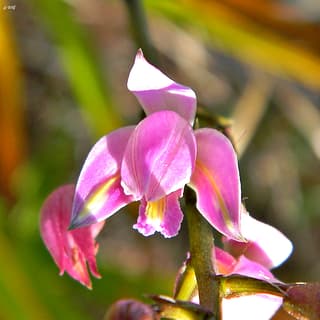
Pine-pink Orchid
Bletia purpurea
Bletia purpurea, commonly known as Pine-pink Orchid, is a terrestrial orchid native to the Caribbean, Florida, Mexico, and Central and South America. It produces oval pseudobulbs and elegant linear leaves, with impressive flower spikes carrying up to 80 pink-purple blooms on stems reaching 180 cm tall. The plant is deciduous, going dormant in winter before blooming in spring and summer.
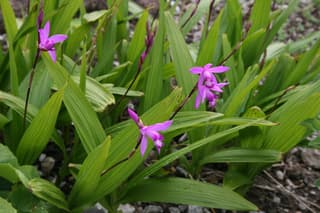
Chinese Ground Orchid
Bletilla striata
Bletilla striata, known as the Chinese ground orchid or hyacinth orchid, is a hardy deciduous terrestrial orchid native to China, Japan, and Korea. Unlike tropical orchids, it grows directly in garden soil, producing pleated, lance-shaped leaves and upright spikes of purple-pink, hyacinth-like flowers in spring and early summer.
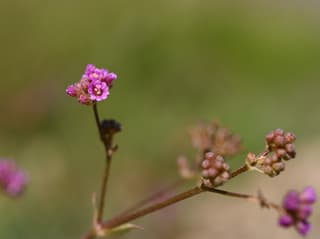
Red Spiderling
Boerhavia diffusa
Boerhavia diffusa is a sprawling, pantropical perennial herb with prostrate to semi-erect, much-branched stems and fleshy taproots. Tiny pink flowers, only about 5mm across, appear in loose clusters almost year-round wherever moisture is adequate. Best known by its Sanskrit name "punarnava" ("that which renews"), it is one of the most widely used plants in Ayurvedic medicine, and its tender young leaves are cooked as a leafy green vegetable across India and the tropics.
Porcini and Allies
Boletus
Boletus is a genus of mushroom-producing fungi, including the famous King Bolete (Boletus edulis). These fungi are mycorrhizal, meaning they form a symbiotic relationship with the roots of specific trees, primarily in temperate forests. They are characterized by a fleshy cap and a pore surface instead of gills on the underside.
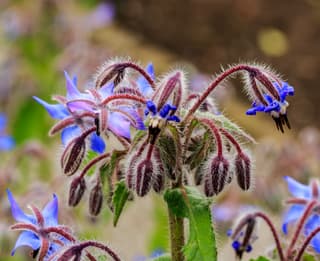
Borage
Borago officinalis
Borage is a fast-growing, hardy annual herb in the Boraginaceae family, prized for its coarse, hairy leaves and vivid star-shaped blue flowers. Native to the Mediterranean region, it has been grown for centuries as a culinary, medicinal, and ornamental plant, and is one of the best bee and pollinator plants for the vegetable garden.
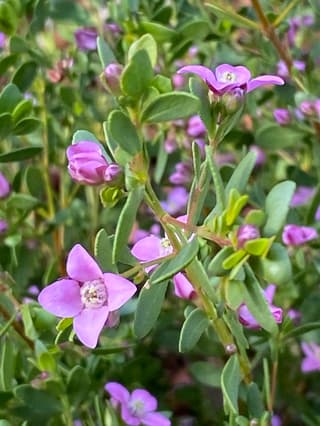
Aniseed Boronia
Boronia crenulata
Aniseed Boronia is an evergreen Australian shrub in the citrus family (Rutaceae), native to southwestern Western Australia, where it grows in sandy and rocky heathlands and open woodlands. It typically reaches 25–120 cm (10–47 inches) in height with an open, slightly pendulous growth habit. The small, serrated (crenulate) leaves release a distinct anise-like fragrance when crushed. From late winter to autumn—peaking in spring—the plant produces numerous small, four-petaled flowers in shades of pink to reddish-purple, appearing singly or in small clusters at the tips of the branches.
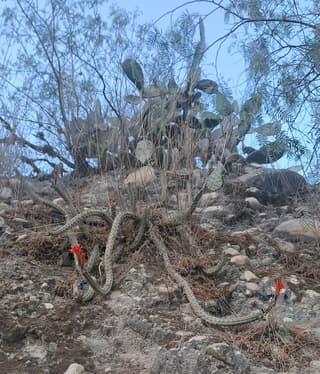
Cleistocactus
Borzicactus
Borzicactus is a genus of columnar or prostrate cacti native to the Andes of South America (Peru, Bolivia, Ecuador, Argentina), often treated as a synonym of Cleistocactus or included within Loxanthocereus. Its stems, densely covered with fine spines, can grow upright or form hanging clumps. It produces very showy tubular flowers - usually red, orange, or pink - adapted for hummingbird pollination. It is a long-lived, drought-resistant, slow-growing plant, highly valued in cactus collections for its sculptural form.
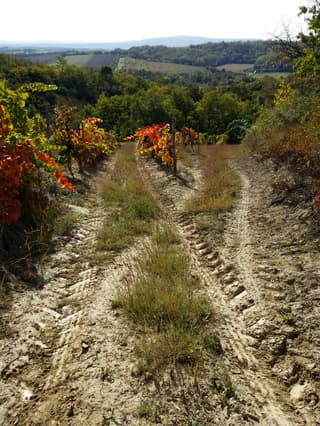
Yellow Bluestem
Bothriochloa ischaemum
Yellow bluestem (Bothriochloa ischaemum) is a perennial, bunch-forming grass belonging to the Poaceae family. Originally native to the dry steppes of Southern Europe and Western Asia, it has since spread globally and is considered an invasive species in many regions. It grows in loose tufts with erect stems reaching 30–100 cm in height, featuring grayish-green foliage that turns a distinctive brownish-red in the fall. Thanks to its strong, deep-reaching root system, it is exceptionally drought-tolerant and resistant to trampling, making it a frequent choice for roadside embankments and erosion control. During summer and autumn, it produces yellowish inflorescences followed by reddish-brown seed heads.
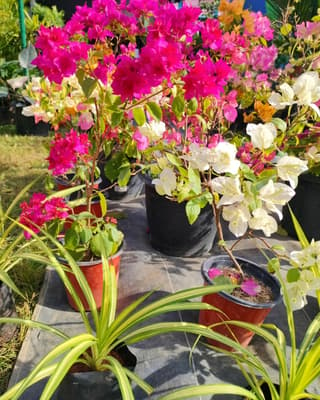
Garden Bougainvillea
Bougainvillea × buttiana
Garden Bougainvillea (Bougainvillea × buttiana) is a vigorous, thorny climbing hybrid celebrated for its vividly colored bracts surrounding small, inconspicuous flowers. Native to South America, it thrives in tropical and subtropical gardens thanks to its prolific blooming and drought tolerance.
Bougainvillea
Bougainvillea glabra
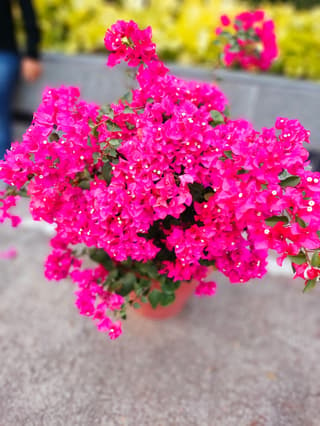
Bougainvillea glabra, commonly known as Paperflower or Bougainvillea, is a vigorous woody climber native to Brazil. It is famous for its vibrant colors, which are actually bracts (modified leaves) surrounding its small, inconspicuous white flowers. It is an extremely resilient plant that thrives in full sun and is ideal for covering walls, fences, and pergolas, bringing a lush, tropical look to the garden.

Bougainvillea
Bougainvillea peruviana
Bougainvillea peruviana is a vigorous climbing shrub native to Peru and northern South America, belonging to the family Nyctaginaceae. Its spectacular display comes not from its true flowers — which are small, white, and inconspicuous — but from the brilliantly colored bracts that surround them in shades of magenta, pink, white, and purple. A champion of warm, sunny climates, it thrives in gardens, on trellises, walls, and pergolas, producing abundant color from spring through summer and beyond when given sufficient light.
Great Bougainvillea
Bougainvillea spectabilis
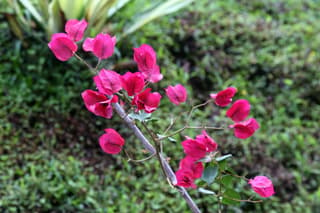
Bougainvillea spectabilis, commonly known as Great Bougainvillea or Paper Flower, is a vigorous thorny climbing shrub native to the eastern coast of Brazil. Celebrated for its spectacular papery bracts in shades of magenta, pink, orange, purple, red, and white, it is one of the most widely cultivated ornamental plants in tropical and subtropical regions worldwide. The true flowers are small and white, surrounded by three showy bracts that provide all the visual drama. Once established, it is exceptionally drought-tolerant and fast-growing, thriving in full sun and warm climates.
Bougainvillea
Bougainvillea x buttiana
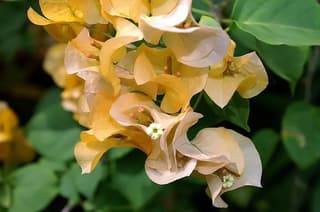
Bougainvillea × buttiana, commonly called Paper Flower or simply Bougainvillea, is a vigorous ornamental climbing shrub and one of the world's most popular tropical plants. A natural hybrid between Bougainvillea glabra and Bougainvillea peruviana, it was originally developed in South African gardens in the 19th century. The spectacular display comes not from the plant's true flowers — which are small and white — but from the vivid papery bracts that surround them, available in shades of pink, red, purple, orange, white, magenta, and yellow. Armed with stiff thorns, this fast-growing climber can reach up to 12 meters and is widely used on walls, fences, trellises, and pergolas across tropical and subtropical regions worldwide.
Climbing Onion
Bowiea volubilis
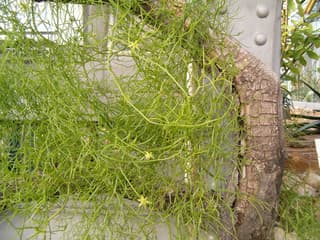
Bowiea volubilis is a succulent bulbous plant (caudiciform) native to southern and eastern Africa. Instead of traditional leaves, it produces thin, climbing green stems from a large, partially exposed green bulb that perform the function of photosynthesis. These stems can twine around supports and grow several meters long in warm climates. In spring, small star-shaped greenish-yellow flowers with an unpleasant scent appear. The plant is highly toxic, containing cardiac glycosides (bufadienolides).
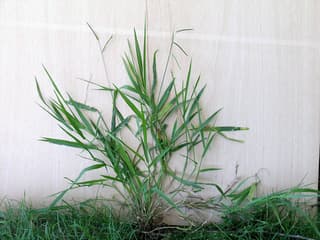
Signal Grass
Brachiaria decumbens
Signal grass (Brachiaria decumbens) is a vigorous perennial tropical grass native to central and east Africa, belonging to the Poaceae family. Widely naturalized across tropical regions, it is one of the most important pasture grasses in South America, particularly Brazil. It forms dense, fast-spreading mats via stolons and rhizomes, tolerating poor, acidic soils and seasonal drought.
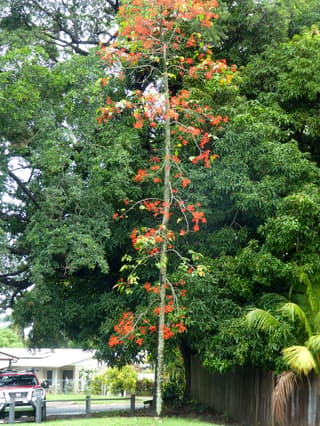
Illawarra Flame Tree
Brachychiton acerifolius
A spectacular large deciduous tree of the Malvaceae family, native to the east coast of Australia from southern New South Wales to far north Queensland. Renowned for its striking display of bright scarlet, bell-shaped flowers that appear in dense panicles on a leafless tree in late spring to early summer, creating a dramatic visual effect resembling a tree on fire. Reaches 15-18 meters in cultivation and up to 35 meters in natural habitat. Features deep lobed glossy leaves and a pyramidal growth habit. Once established, this tree is highly drought-tolerant and low-maintenance.
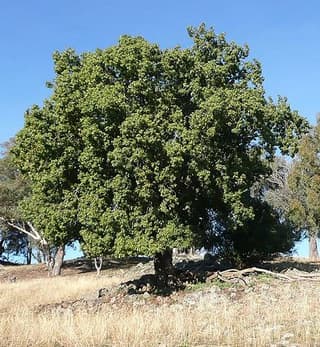
Kurrajong
Brachychiton populneus
The Kurrajong (Brachychiton populneus) is a hardy, evergreen tree native to eastern Australia, prized for its distinctive bottle-shaped trunk that stores water, its glossy poplar-like leaves, and its resilience to drought. It produces creamy-white, bell-shaped flowers streaked with pink or purple in spring and summer, followed by woody seed pods.
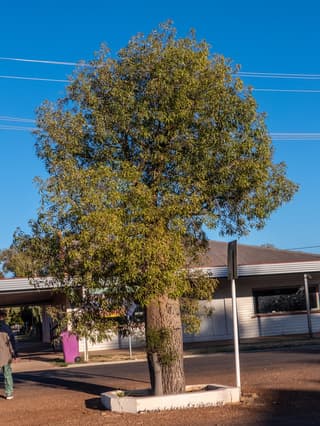
Queensland bottle tree
Brachychiton rupestris
Native to central Queensland, Australia, the Queensland bottle tree is a caudiciform species in the Malvaceae family, prized for the dramatically swollen, bottle-shaped trunk that stores water and carbohydrates to help it survive long droughts. In the wild it can grow 10-20+ m tall, though cultivated and bonsai specimens stay far more compact. It is deciduous, dropping its leaves in the dry season before producing cream-colored, red-marked flower panicles.
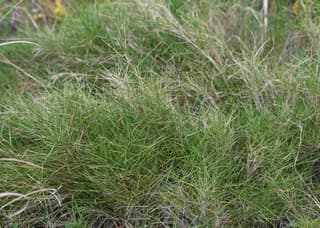
Mediterranean False Brome
Brachypodium retusum
Brachypodium retusum is a tough, drought-resistant perennial grass native to the Mediterranean basin. It forms dense tufts of narrow, glaucous leaf blades that remain green year-round. Ecologically significant, it is the first grass to resprout after wildfires, making it vital for soil stabilization and habitat recovery across Mediterranean scrubland and garrigue. Its pale yellow-green spikelets bloom from spring to early summer, adding natural texture and movement to dry gardens.
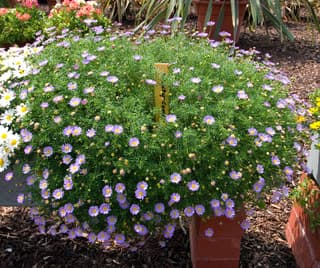
Swan River Daisy
Brachyscome iberidifolia
Brachyscome iberidifolia, commonly known as the Swan River Daisy, is a charming Australian annual herb. It is highly valued for its delicate, fern-like foliage and a profusion of small, daisy-like flowers that appear in vibrant shades of blue, purple, pink, and white. Growing in a compact, mounding habit, it is a favorite for borders, rock gardens, and hanging baskets.
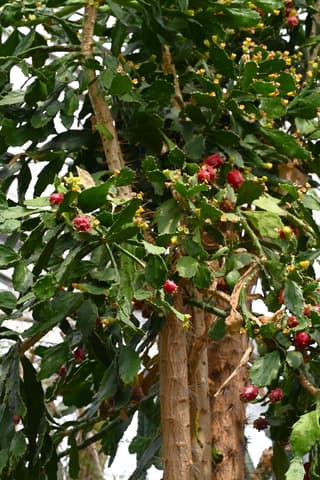
Brazilian Tree Cactus
Brasiliopuntia brasiliensis
Brasiliopuntia brasiliensis, commonly known as the Brazilian Tree Cactus, is a monotypic tree-like cactus native to Brazil, Argentina, and Paraguay. It is the sole species of the genus Brasiliopuntia and stands out for its arborescent structure — a woody cylindrical trunk topped with flattened cladodes on branch tips — which can reach over 20 meters in its natural habitat.
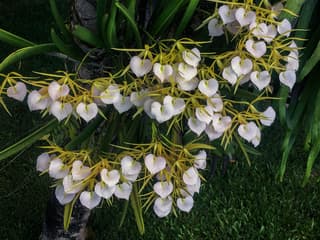
Lady of the Night
Brassavola nodosa
Brassavola nodosa, known as the Lady of the Night, is a medium-sized epiphytic orchid native to coastal regions of Central and South America, from Mexico to Brazil, where it grows on trees and even mangrove roots near the sea. Its cylindrical, succulent leaves produce stems with greenish-white flowers up to 6 inches (15 cm) wide, which release an intense, sweet fragrance at dusk to attract pollinating moths.
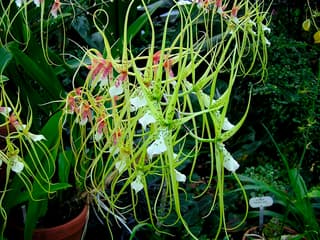
Spider Orchid
Brassia
Brassia is a genus of epiphytic orchids native to the tropical and subtropical forests of Central and South America, popularly known as spider orchids due to their long, thin petals and sepals that resemble spider legs. Their flower spikes can display up to 20 blooms in shades of yellow, cream, greenish, or reddish-brown, usually speckled with dark spots. It is a genus appreciated by both collectors and commercial hybridizers, valued for its exuberant flowering and exotic floral shape.
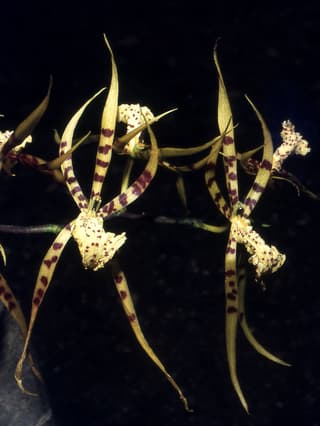
Spider Orchid
Brassia arachnoidea
Brassia arachnoidea, known as the spider orchid, is an epiphytic orchid native to the humid tropical forests of Central and South America, including Ecuador. It is named after the shape of its flowers—long, thread-like, greenish-yellow sepals and petals spotted with chocolate brown, reminiscent of a spider's legs. The leaves are broad and pleated, attached to ovoid pseudobulbs, and the flowering stems can bear up to 8 fragrant flowers, each with a diameter of 10-12 cm.
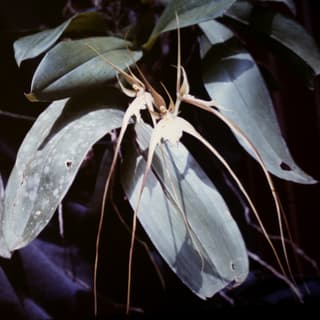
Spider Orchid
Brassia caudata
Brassia caudata, commonly known as the Spider Orchid, is a neotropical epiphytic orchid native to southern Mexico, Central America, the Caribbean, and northern South America. Its striking flowers feature long, spider-leg-like sepals and petals in yellow with brown markings, reaching up to 15 cm in length. It is a slow-growing evergreen perennial that blooms primarily in spring and summer.
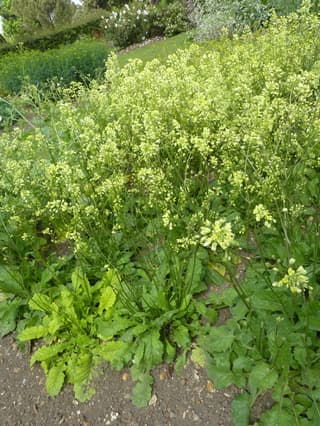
Brassica
Brassica
The genus Brassica comprises more than 30 species of herbaceous plants in the Brassicaceae family, including some of the most widely consumed vegetables in the world: kale, cabbage, broccoli, cauliflower, mustard, and turnip. Native to Europe and Asia, these annual or biennial plants adapt to cool and temperate climates, producing nutrient-rich leaves and characteristic four-petaled yellow or white flowers that gave the family its name.
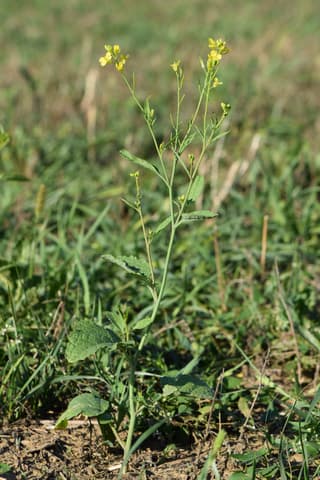
Brown Mustard
Brassica juncea
Brassica juncea, commonly known as brown mustard or mustard greens, is a fast-growing annual herb in the Brassicaceae family, native to Central and South Asia. It is widely cultivated worldwide for its pungent edible leaves, seeds used in condiment production, and mustard oil extraction. The plant produces bright yellow flowers and thrives in cool weather.
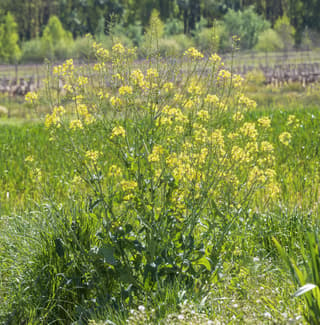
Rapeseed
Brassica napus
Brassica napus, widely known as rapeseed or canola, is a fast-growing herbaceous plant famous for its vast fields of vibrant yellow flowers. It is one of the world's most important oilseed crops, used for the production of edible vegetable oil, biodiesel, and animal feed. Its young leaves are edible and nutrient-rich, resembling kale.
Find the Perfect Plant
Our plant guide helps you find ideal species for your experience level and time of year.
Browse by Difficulty, Season & More
Use the filters below to narrow this catalog by care difficulty, season, environment, or search directly by name. Each filter leads to a focused list tailored to your specific growing conditions.