1159 Medium Plants | 2026 Guide - Page 22
Discover 1159 medium plants for your garden. Complete care guide.
1159 Medium Plants
Showing 757-792 of 1159
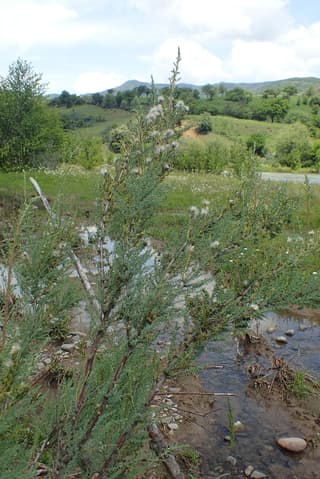
German tamarisk
Myricaria germanica
The German tamarisk (Myricaria germanica) is the only species of the Tamaricaceae family native to Central Europe. It is a deciduous shrub growing 60–250 cm tall, featuring rod-like, upright branches and tiny, scale-like leaves. It blooms between June and August, producing small flowers ranging from pale pink to white in dense racemes. A typical pioneer species, it colonizes gravelly and sandy banks of mountain and subalpine rivers, where periodic flooding and drought are common. In Hungary, it is a strictly protected and endangered species, now occurring only in a few, mostly secondary (man-made) habitats.
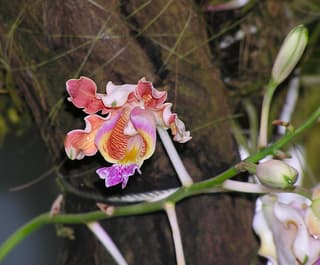
Cow Horn Orchid
Myrmecophila tibicinis
Myrmecophila tibicinis is a large epiphytic orchid native to seasonally dry tropical forests from Mexico through northern South America. Its hollow, cylindrical pseudobulbs — up to 45 cm tall — are colonized by ants in the wild in a mutualistic relationship that provides extra nutrients to the plant. Flowers are spectacular: magenta sepals and petals with bronze-orange tips, a large white lip with intense magenta veining, and a bright yellow central callus. The flower spike can exceed 1.5 m and bear up to 15 blooms.

Paperwhite Narcissus
Narcissus tazetta
Narcissus tazetta, commonly known as the paperwhite narcissus or bunch-flowered daffodil, is a bulbous perennial native to the Mediterranean region and parts of Central Asia. Unlike single-flowered daffodils, each stem carries a cluster of 4 to 8 small, intensely fragrant flowers with white petals and a shallow yellow or white corona. Growing 45-75cm tall, it is prized both as a garden bulb for mild-winter climates and as an indoor bulb that can be forced into bloom for the winter holidays with no soil at all, simply set in water and pebbles.
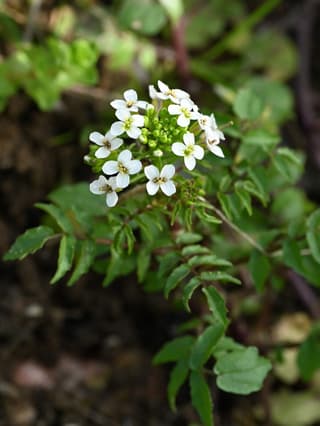
Watercress
Nasturtium officinale
Watercress (Nasturtium officinale) is a perennial aquatic vegetable from the Brassicaceae family, native to Europe and Central Asia, where it grows spontaneously along the banks of clean, flowing streams and springs. Its hollow, floating stems easily root at the nodes in contact with waterlogged soil, forming dense clumps of dark green, rounded leaves with a pungent and slightly bitter taste. It is one of the oldest leafy vegetables cultivated by humans: it was already recommended by Hippocrates as an expectorant in Ancient Greece, and Greek soldiers consumed the plant believing it strengthened the body and mind. Today it is recognized as one of the most nutritious vegetables in the world, rich in vitamins A, C, and B complex, as well as iron, folic acid, and calcium.
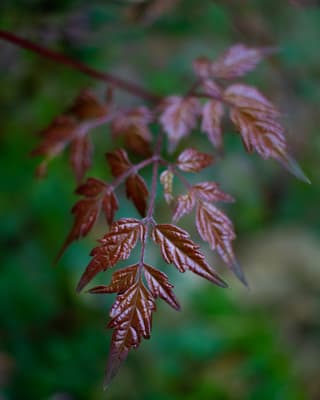
Peppervine
Nekemias arborea
Peppervine (Nekemias arborea, formerly Ampelopsis arborea) is a vigorous deciduous to semi-evergreen woody vine in the grape family, native to the southeastern and south-central United States. It climbs by tendrils onto trees, shrubs, fences, and other structures, reaching 20 to 35 feet in length, or sprawls as an informal ground cover where nothing supports it. Its bipinnately compound leaves emerge purple-red and mature to glossy dark green before turning yellow or red in fall. Small greenish-white flower clusters appear in late spring to summer and give way to showy berries that shift from green to red to shiny blue-black, which birds and small mammals readily eat. Because it spreads rapidly by seed and root suckers, it is often regarded as weedy in cultivated settings.
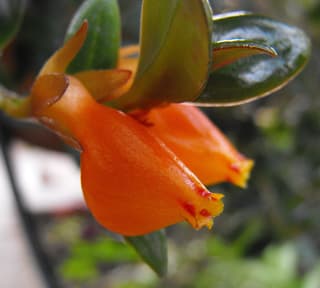
Goldfish Plant
Nematanthus wettsteinii
The Goldfish Plant (Nematanthus wettsteinii) is a trailing epiphytic plant native to the Brazilian Atlantic Forest, where it naturally grows on tree trunks. It is prized for its small, glossy, fleshy leaves and its plump, tubular orange flowers that resemble tiny goldfish with their mouths open. It is ideal for hanging baskets, where its cascading stems can be shown off.

Tropical Pitcher Plant (genus)
Nepenthes
Nepenthes is a genus of tropical carnivorous climbing plants native primarily to Southeast Asia, with over 170 described species. They are renowned for their hanging pitcher-shaped traps (ascidia) that dangle from leaf tendrils, capable of capturing and digesting insects and small animals. Species range from small epiphytes to large canopy climbers.
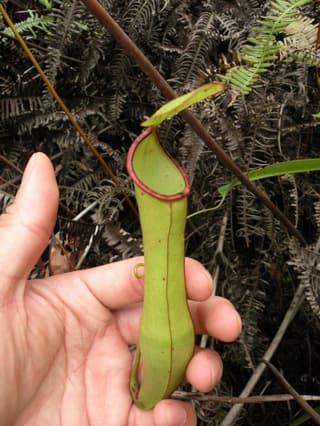
Neglecta Pitcher Plant
Nepenthes × neglecta
Nepenthes × neglecta is a naturally occurring tropical pitcher plant hybrid between N. gracilis and N. mirabilis, native to the lowland rainforests of Borneo, Peninsular Malaysia, Sumatra, and Thailand below 1000 m elevation. This scrambling, climbing subshrub can reach up to 5 m in length, producing funnel-shaped pitchers up to 15 cm tall that lure and digest insects to supplement nutrient-poor soils. Like most Nepenthes hybrids, it displays strong hybrid vigor, making it a hardier and more forgiving grower than many pure species.

Winged Pitcher Plant
Nepenthes alata
Nepenthes alata, commonly known as the winged pitcher plant, is a tropical carnivorous vine native to the Philippines, where it grows across a wide altitudinal range from lowland forests to mountain slopes. Its distinctive winged leaf petioles give the species its name, and its curling tendrils produce colorful pitcher-shaped traps that lure, capture, and digest insects to supplement the nutrient-poor soils it grows in. Prized by houseplant collectors for its striking pitchers and relatively forgiving nature compared to other Nepenthes, it is often recommended as a beginner-friendly carnivorous plant.
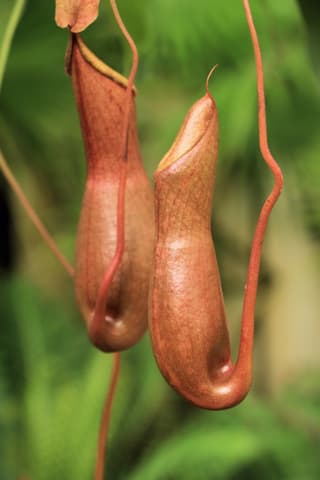
Tropical Pitcher Plant
Nepenthes spp
Nepenthes, commonly known as tropical pitcher plants or monkey cups, are fascinating carnivorous plants native to Southeast Asia, particularly Borneo, Sumatra, and the Philippines. They produce iconic pitcher-shaped traps filled with digestive fluid that capture and dissolve insects and small animals to obtain nutrients from their nutrient-poor, acidic native soils.
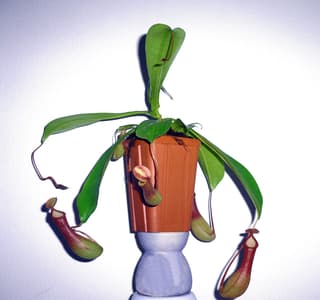
Ventrata pitcher plant
Nepenthes ventrata
Nepenthes ventrata is a hardy hybrid of Nepenthes alata and Nepenthes ventricosa, popular as a carnivorous houseplant. It grows pitchers at the tips of leaf tendrils that trap and digest insects, and thrives in hanging pots.
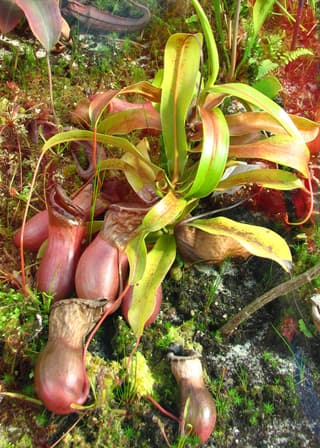
Ventricosa Pitcher Plant
Nepenthes ventricosa
Nepenthes ventricosa is a tropical pitcher plant native to the mountain forests of Luzon in the Philippines, where it grows as a climbing vine on rocky slopes and forest edges. It produces distinctive funnel-shaped pitchers with a shield-like, upturned lid used to lure and trap insects, which the plant digests to supplement the scarce nutrients of its native volcanic soil. It is one of the most beginner-friendly carnivorous plants thanks to its tolerance of a wide range of humidity levels.
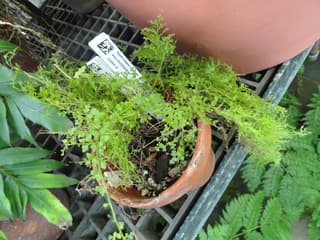
Boston Fern
Nephrolepis exaltata
The Boston Fern is a lush, elegant houseplant known for its gracefully arching fronds and excellent air-purifying qualities. Native to tropical regions of the Americas including Florida, Central America, South America, and the West Indies, this evergreen fern has been a popular indoor plant since Victorian times. Its feathery, bright green fronds can grow up to 90 cm long, creating a dramatic cascading effect perfect for hanging baskets or elevated displays.
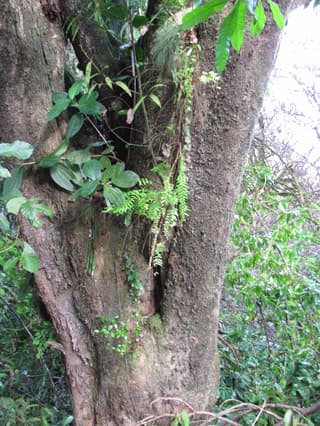
Fishtail Fern
Nephrolepis falcata
Nephrolepis falcata, commonly known as the fishtail fern, is an epiphytic fern native to Southeast Asia and the Pacific Islands, belonging to the family Nephrolepidaceae. Its long, arching fronds have forked, tail-like tips that resemble a fish tail, giving the plant its common name. A moderate-growing perennial, it is popular in hanging baskets and shaded gardens for its lush, textured foliage.
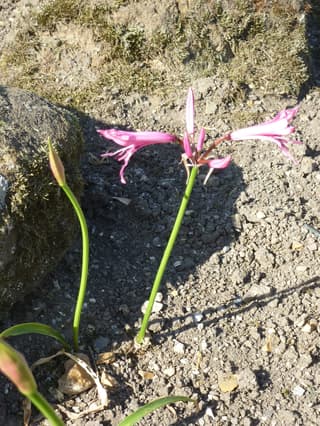
Cornish Lily
Nerine bowdenii
Nerine bowdenii, commonly known as the Cornish lily or Bowden lily, is a bulbous perennial in the amaryllis family (Amaryllidaceae) native to the Drakensberg mountains and Eastern Cape region of South Africa. It sends up bare flower stems topped with umbels of six or more bright pink, frilly-tipped, trumpet-shaped blooms in late summer and autumn, appearing before or alongside the strap-shaped leaves. Naturalised on sheltered coastal walls in Cornwall and the Isles of Scilly, it is one of the hardiest nerine species and one of the few bulbs that flower reliably outdoors as summer fades into autumn.
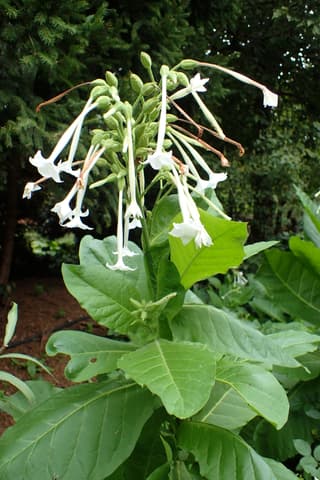
Woodland Tobacco
Nicotiana sylvestris
Nicotiana sylvestris, commonly known as Woodland Tobacco or Flowering Tobacco, is a tall ornamental plant native to the Andes of Argentina and Bolivia. It belongs to the Solanaceae family and can grow up to 1.5 m (5 ft) tall, producing long drooping clusters of tubular white flowers with an intense jasmine-like fragrance strongest at night. Grown as an annual or biennial in temperate climates, it is a dramatic addition to borders and moon gardens.
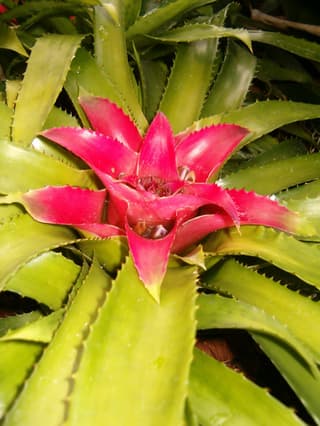
Blushing Bromeliad
Nidularium fulgens
Nidularium fulgens, known as the Blushing Bromeliad, is a stunning bromeliad native to the understory of Brazil's Atlantic Forest. It forms a flat rosette of green, spotted leaves, and when it blooms, the central cup flushes brilliant red, framing clusters of small violet flowers within.

Yellow Pond-Lily
Nuphar
Nuphar is a genus of hardy aquatic perennials native to still and slow-moving fresh waters across the temperate Northern Hemisphere -- from ponds and lake margins to ditches, canals, and slow rivers. Thick, spongy rhizomes anchor in the muddy bottom and send up both submerged, translucent leaves and floating or emergent leathery leaves. From late spring through autumn the plant produces small, cup-shaped, yellow (occasionally greenish-yellow) flowers held just above the water surface, each lasting several days and opening in the morning. Compared with the related water lilies (Nymphaea), Nuphar tolerates deeper water, cooler climates, and considerably more shade, making it one of the toughest and lowest-maintenance plants for natural ponds and wildlife water gardens.
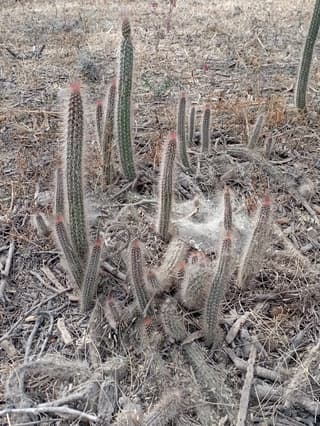
Snake Cactus, Junco, Queen of the Night
Nyctocereus serpentinus
Nyctocereus serpentinus is a night-blooming climbing cactus native to southern Mexico (Michoacán, Morelos, Oaxaca), belonging to the Cactaceae family. The plant features long, sinuous, spiny stems (up to 3 meters) that initially grow upright but sprawl horizontally without support. It is highly prized for its spectacular large white, funnel-shaped flowers measuring up to 15 cm in diameter that open at night with an intense, seductive fragrance. These nocturnal blooms attract pollinators including moths, bats, and bees. The plant produces edible fruits that change from green to bright red, ripening primarily from August to October. Widely cultivated in warm climates for its ornamental value and aromatic night-blooming flowers, this species combines functional beauty with practical food production.
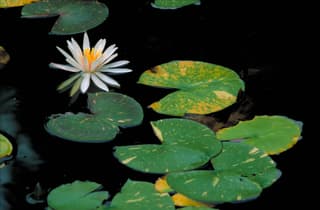
Water Lily
Nymphaea
Water Lily (Nymphaea) is a genus of approximately 65 species of aquatic perennial plants belonging to the family Nymphaeaceae, distributed across every continent except Antarctica. Renowned for their spectacular floating flowers in shades of white, pink, red, yellow, orange, purple, and blue, water lilies are among the most beloved ornamental aquatic plants in the world. Their large, round, waxy leaves repel water and float gracefully on the surface of ponds, lakes, and water gardens. The genus includes both hardy varieties, which can overwinter in cold climates, and tropical varieties that require warm water year-round.
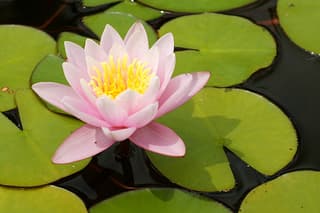
Water lily
Nymphaea × marliacea
Nymphaea × marliacea is a group of hardy water lily hybrids bred by French nurseryman Joseph Bory Latour-Marliac in the late 19th century, crossing European and North American Nymphaea species. It belongs to the family Nymphaeaceae and is an aquatic perennial with floating pads and surface-blooming flowers in white, yellow, or pink depending on the cultivar (e.g. 'Albida', 'Chromatella', 'Rosea').
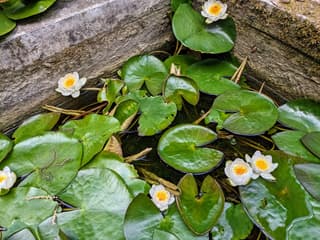
White Water Lily
Nymphaea candida
Nymphaea candida is a hardy perennial aquatic plant native to the still ponds and quiet freshwater habitats of temperate Eurasia. Its floating leaves and pristine white, yellow-centered flowers open each morning across the water surface from spring through summer, making it a classic addition to garden ponds.

Red Bartsia
Odontites vernus
Red Bartsia (Odontites vernus) is an annual, hemi-parasitic meadow plant in the broomrape family. It features an upright, branched, and finely hairy stem with narrow, toothed leaves and small, pink to reddish tubular flowers that bloom from June to September. The plant partially parasitizes grass roots and thrives in nutrient-poor meadows, pastures, and along field margins.
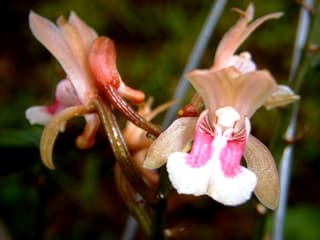
Monk Orchid
Oeceoclades maculata
Oeceoclades maculata, commonly known as the monk orchid or African spotted orchid, is a terrestrial orchid in the family Orchidaceae native to tropical Africa and Madagascar. It grows from small, clustered pseudobulbs, each topped with a single mottled, dark-green leaf marked with pale spots. In spring it sends up slender flower spikes bearing small white-and-pink blooms. Remarkably adaptable, the species has naturalized widely across the Neotropics -- from Brazil and the Caribbean to Florida -- since the 19th century, and is now considered one of the most successful invasive orchids outside its native range.
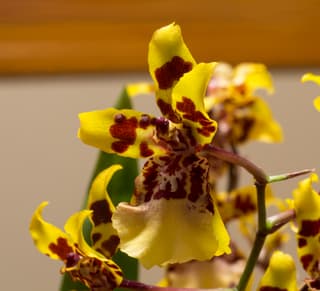
Dancing Lady Orchid (genus)
Oncidium
Oncidium is a large genus of epiphytic Neotropical orchids renowned for their abundant yellow, butterfly-like flowers that sway gracefully in the breeze. Native from Central America to South America, the genus encompasses hundreds of species widely grown as ornamentals.
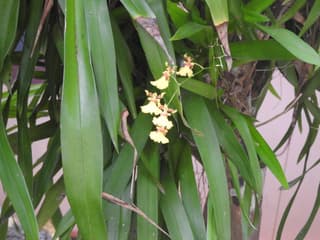
Tall Oncidium
Oncidium altissimum
Oncidium altissimum is a large epiphytic orchid native to the Caribbean islands of Cuba, Hispaniola, Puerto Rico, and the Lesser Antilles. It produces dramatically tall, branching flower spikes reaching 5–6 feet (150–180 cm) in length, adorned with hundreds of small yellow and brown flowers. This majestic species blooms in spring and fall, making it a spectacular addition to any orchid collection. Like all epiphytes, it thrives when its roots can breathe freely in well-draining bark-based media.
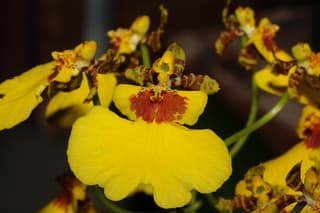
Dancing Lady Orchid
Oncidium Celtic Sun x Burgundian
The Oncidium Celtic Sun x Burgundian is a captivating sympodial orchid hybrid known for its 'Dancing Lady' appearance. It produces branched sprays of numerous small flowers that feature a large, ruffled labellum, typically in shades of golden yellow with intricate burgundy or reddish-brown markings. The plant grows from pseudobulbs that store water, with long, strap-like evergreen leaves.

Dancing Doll Orchid
Oncidium flexuosum
Oncidium flexuosum, commonly known as the Dancing Doll Orchid or Bent Oncidium, is an epiphytic orchid native to eastern and southern Brazil, extending into northern Argentina, Paraguay and Uruguay. It forms compact clumps of oval pseudobulbs bearing narrow, glossy leaves. From fall through winter it produces long, arching, branched flower spikes—up to 1.5 m (5 ft)—carrying dozens of small golden-yellow flowers marked with reddish-brown blotches at the base and lip, which flutter in the breeze and give the plant its playful common name.
Dancing Lady Orchid
Oncidium leleui
Oncidium leleui is an epiphytic orchid native to southwestern Mexico, found across the states of Nayarit, Jalisco, Colima, Michoacán, Oaxaca, and Guerrero in seasonally dry tropical forests at elevations of 250 to 950 meters. It produces spectacular arching flower spikes that can exceed two meters in length, bearing over 270 small yellow and brown flowers resembling graceful dancing figures. It is a slow-growing species prized by orchid collectors for its extraordinary floral displays each spring.
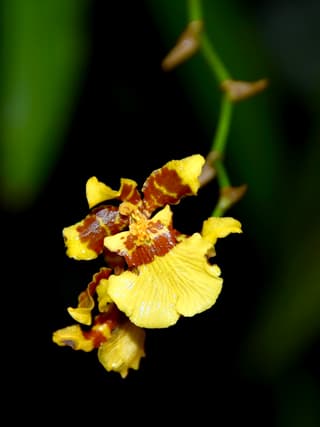
Golden Shower Orchid
Oncidium sphacelatum
Oncidium sphacelatum, commonly known as the Golden Shower Orchid, is a large epiphytic orchid native to Mexico and Central America. It produces spectacular arching flower spikes up to 1.5 meters long, adorned with masses of bright yellow and brown flowers. A vigorous grower, it forms impressive clumps over time and is considered one of the easiest oncidiums to cultivate.
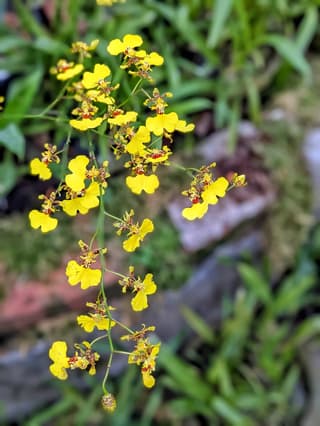
Golden Shower Orchid
Oncidium varicosum
Epiphytic orchid native to Brazil, known for its long sprays of small yellow flowers resembling a cascade of gold. Features pseudobulbs for water and nutrient storage, typical of orchids. One of the most popular orchids in Brazil due to its exuberant blooming and relatively easy cultivation.
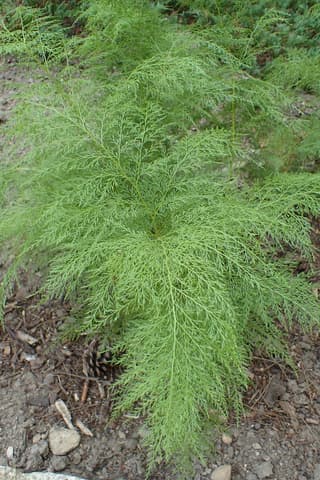
Carrot Fern
Onychium japonicum
Onychium japonicum, the carrot fern, is a clump-forming, deciduous fern native to central and eastern China, Japan, the Himalayas, the Philippines and Vietnam, where it grows in humid forests, shaded banks and rocky slopes. Its wiry, glossy black stems carry arching, feathery fronds cut two to three times into fine, thread-like segments that closely resemble carrot-top foliage -- the source of its common name. Slow to mature (often taking 5-10 years to reach full size), it forms neat mounds around 45 cm tall and wide and is prized in shade gardens and containers for its delicate, lacy texture.
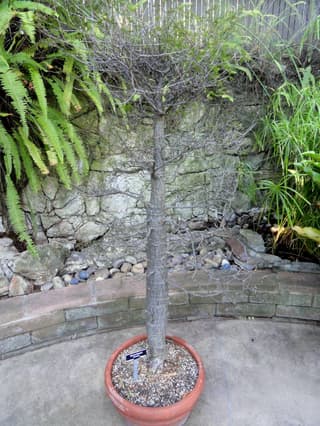
Elephant Tree
Operculicarya decaryi
Operculicarya decaryi is a slow-growing, thick-stemmed succulent tree endemic to the spiny thickets of southern Madagascar. Prized in bonsai culture for its swollen caudex, corky bark, and intricate branching pattern, it produces tiny fernlike compound leaves and clusters of small red flowers in winter. In cultivation it is grown both as an ornamental caudiciform houseplant and as a classic subject for tropical bonsai.
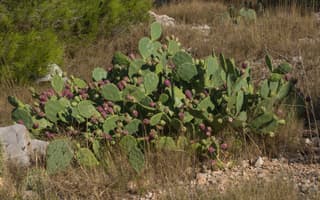
Erect Prickly Pear
Opuntia stricta
Opuntia stricta is an upright to spreading succulent shrub from the Cactaceae family, native to tropical and subtropical America including Florida, Cuba, and eastern Mexico. Typically 50-100 cm tall but can reach 2 m in height. The plant bears flat, paddle-shaped stems (cladodes) 10-35 cm long covered in sharp spines and microscopic barbed glochids. It produces bright yellow flowers in spring and summer, followed by edible red or purple fruits. Now classified as one of the 100 worst invasive species globally, it has spread throughout Africa, Australia, Mediterranean regions, and Asia.
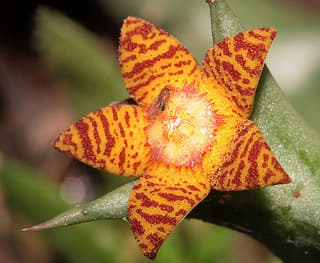
Schweinfurth's Carrion Flower
Orbea schweinfurthii
Orbea schweinfurthii is a low, mat-forming succulent in the milkweed subfamily of the Apocynaceae, native to the savannas and rocky grasslands of eastern and southern Africa -- from Botswana and Namibia through Zimbabwe, Zambia, Malawi, the Democratic Republic of Congo, Tanzania, Rwanda and Uganda. Its leafless, four- to five-angled stems creep and branch along the ground, rarely exceeding 15 cm, with widely spaced tubercles that taper to a small conical tooth and often blush purple-red under strong sun or stress. In summer and autumn it produces star-shaped flowers with a deep yellow, densely papillate corolla marked with dark maroon spots and a cream corona flecked with purple. Unlike most of its carrion-flower relatives, its scent is mild and fruity rather than foul, resembling overripe orange, pineapple or red wine, and it draws small fruit flies rather than blowflies as pollinators.
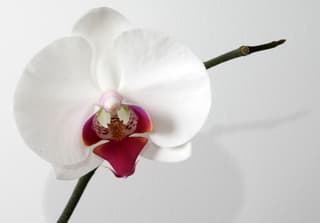
Orchid
Orchidaceae
Orchidaceae is one of the largest families of flowering plants, with over 25,000 species of mostly epiphytic and terrestrial perennials prized for their intricate, long-lasting blooms. The Phalaenopsis, or moth orchid, is the most widely grown houseplant representative of the family, valued for its arching sprays of waxy flowers that can stay open for months. Most cultivated orchids are epiphytes native to tropical and subtropical forests, where they cling to tree bark and absorb moisture and nutrients through thick, exposed aerial roots rather than soil.
What are Medium Plants?
Medium Plants require a bit more attention and basic gardening knowledge. These plants thrive with regular care and some cultivation experience. Ideal for those who already master the basics.
Tips for Growing Medium Plants
medium plants need a balance between attention and freedom. Keep a regular care routine, watch leaves to identify problems early, and adjust watering by season.