Amaryllidaceae
Cornish Lily: Complete Care Guide
Nerine bowdenii
Grow Nerine bowdenii in full sun with its neck exposed in gritty, free-draining soil, and let the bulb's natural rhythm guide watering: water regularly through the growing and flowering period (roughly late summer to spring), then withhold water almost completely while the bulb rests dormant over summer. It resents disturbance, so leave clumps undivided for several years -- flowering is best once the pot or bed is comfortably crowded with bulbs.
Every 7 days
Bright indirect
5° - 28°C
30% - 50%
Categories
What is Cornish Lily?
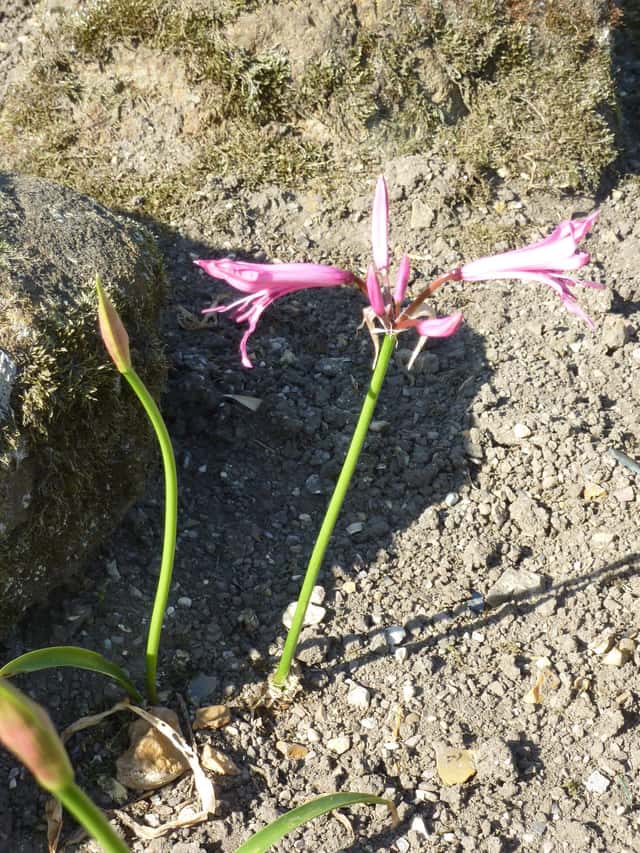
Cornish Lily (Nerine bowdenii) is a medium-care plant from the Amaryllidaceae family. Nerine bowdenii, commonly known as the Cornish lily or Bowden lily, is a bulbous perennial in the amaryllis family (Amaryllidaceae) native to the Drakensberg mountains and Eastern Cape region of South Africa. It sends up bare flower stems topped with umbels of six or more bright pink, frilly-tipped,...
Cornish Lily grows up to 50cm, spread of 20cm, watering every 7 days, 5°C – 28°C, 30–50% humidity. It is suitable for indoor environments and not safe for pets.
Without precautions, ingestion can cause irritation in pets. Keep out of reach of cats and dogs. Without adequate drainage, root rot can develop within 14 days.
How to Care for Cornish Lily?
TLDR: Cornish Lily needs Bright indirect, watering every 7 days, and temperatures between 5-28°C with 30-50% humidity.
How Often Should You Water Cornish Lily?
Water about once a week while leaves and flower stems are actively growing, letting the top of the soil dry between waterings. Stop watering almost entirely once the foliage yellows and dies back for summer dormancy, resuming only when new growth appears.
How Much Light Does Cornish Lily Need?
Give it a warm spot in full sun, such as a bed against a sunny, sheltered wall, or at least several hours of direct light a day; too much shade weakens flowering.
What Is the Best Soil for Cornish Lily?
Plant in gritty, sharply-draining soil -- equal parts loam-based compost, peat-free multipurpose compost and coarse sand or grit work well -- with the bulb's neck sitting just proud of the soil surface to prevent rot.
What Pot Should You Use for Cornish Lily?
Choose a relatively shallow, unglazed terracotta pot only slightly larger than the bulb cluster, with generous drainage holes; nerines flower best when their roots are snug, so avoid oversized containers and resist repotting for two to three years.
Care Schedule
Fertilize
Every 14 days
Repot
Every 913 days
What Is Cornish Lily and Where Does It Come From?
Nerine bowdenii, commonly known as the Cornish lily or Bowden lily, is a bulbous perennial in the amaryllis family (Amaryllidaceae) native to the Drakensberg mountains and Eastern Cape region of South Africa. It sends up bare flower stems topped with umbels of six or more bright pink, frilly-tipped, trumpet-shaped blooms in late summer and autumn, appearing before or alongside the strap-shaped leaves. Naturalised on sheltered coastal walls in Cornwall and the Isles of Scilly, it is one of the hardiest nerine species and one of the few bulbs that flower reliably outdoors as summer fades into autumn.
How to Propagate Cornish Lily?
Bulb offset division
Nerines resent disturbance and flower best when left undisturbed and slightly pot-bound, so only divide overcrowded clumps every 4-5 years.
- 1 Wait until the clump is dormant in early-to-mid summer, after the foliage has died back.
- 2 Lift the whole clump carefully with a fork, keeping the roots intact.
- 3 Gently separate small offset bulbs (bulblets) from the main bulb by hand.
- 4 Replant each bulb immediately with the neck and shoulders sitting just above the soil surface.
- 5 Water lightly to settle the soil, then hold off further watering until new growth appears.
Materials needed:
Seed propagation
This method is slow and mainly used by breeders raising new cultivars, not for quick garden results.
- 1 Sow fresh seed as soon as it ripens, since viability drops quickly.
- 2 Press seeds onto the surface of a free-draining seed compost without covering them.
- 3 Keep at 10-13C (50-55F) in bright, indirect light until germination.
- 4 Grow seedlings on without disturbing the roots for the first few years.
- 5 Pot up small bulbs individually once they are large enough to handle.
Materials needed:
How Big Does Cornish Lily Grow?
TLDR: Cornish Lily can reach up to 50cm tall with Slow growth rate.
Max height
50cm
Spread
20cm
Growth rate
Slow
Foliage
Deciduous
Warning: Toxic Plant
This plant can be toxic if ingested. Keep out of reach of:
Plant Uses
Ornamental
Great for decoration
Medicinal Uses
- Bulb alkaloids, including ungeremine, are studied in pharmacological research for acetylcholinesterase-inhibiting activity relevant to Alzheimer's disease research, but the plant has no established home medicinal or herbal use and the bulb is toxic if ingested.
Is your plant showing symptoms?
Click on the symptom to discover possible causes:
What Diseases Commonly Affect Cornish Lily?
TLDR: Cornish Lily is susceptible to 6 known diseases. Monitor regularly for early detection.
Root Rot
Root rot is a serious fungal disease that affects the root system of plants, causing them to decay and die. It is primarily caused by overwatering, poor drainage, or soil-borne fungi such as Pythium, Phytophthora, Rhizoctonia, and Fusarium. The disease thrives in waterlogged conditions where roots are deprived of oxygen, making them susceptible to fungal infection.
Mealybugs
Mealybugs are small, soft-bodied insects covered with a white, waxy, cottony material. They are common pests of houseplants and outdoor plants in mild climates. These sap-sucking insects feed on plant tissue, causing damage, stunted growth, and can lead to plant death if left untreated. They produce sticky honeydew which attracts sooty mold.
Slugs and Snails
Slugs and snails are mollusks that feed on plant tissue, causing irregular holes in leaves and damage to young seedlings. They are most active at night and in moist conditions, leaving characteristic silvery slime trails. These pests can quickly devastate gardens, especially during wet seasons.
Mosaic Virus
Mosaic virus is a group of plant viruses that cause mottled, patchy patterns on leaves and can affect a wide variety of plants. The virus creates characteristic yellow, white, and green mosaic patterns, often accompanied by stunted growth and deformed plant parts. This highly contagious disease spreads rapidly through insect vectors and contaminated tools.
Meaning & Symbolism
Named for Nerine, one of the fifty sea-nymph daughters of Nereus in Greek mythology, the nerine's late, luminous autumn blooms have made it a symbol of resilience, hope and quiet joy -- flowers that appear just as summer fades, offering colour and reassurance ahead of winter. In floral tradition it also carries associations with fortunate change and heartfelt, unspoken affection.
Compare with similar plants
| Attribute | Difficulty | Light | Watering | Pet Safe |
|---|---|---|---|---|
| Dark Fieldcap | Medium | Low light | 2d | ⚠️ |
| Azalea | Medium | Partial shade | 3d | ⚠️ |
| Muriel's Bamboo | Medium | Partial shade | 3d | ✓ |
| Bougainvillea | Medium | Direct sun | 7d | ⚠️ |




