1159 Medium Plants | 2026 Guide - Page 23
Discover 1159 medium plants for your garden. Complete care guide.
1159 Medium Plants
Showing 793-828 of 1159
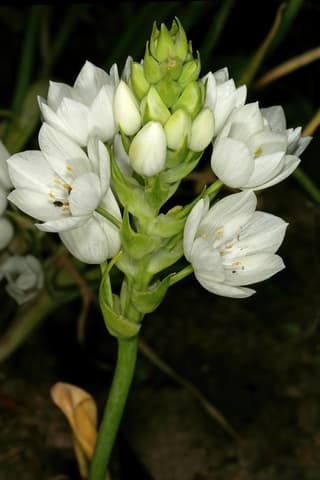
Chincherinchee
Ornithogalum thyrsoides
Chincherinchee (Ornithogalum thyrsoides) is an ornamental bulb native to South Africa, prized for its immaculate white or cream flowers arranged in dense pyramidal clusters. Highly valued as a cut flower for its exceptional longevity — blooms remain fresh for weeks after cutting. WARNING: all parts of the plant, especially the bulb, are toxic to humans and pets.
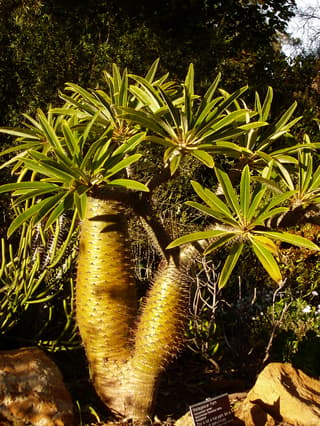
Madagascar Palm
Pachypodium
Pachypodium is a genus of spiny, caudex-forming succulent shrubs and trees native primarily to Madagascar. The most widely cultivated species — P. lamerei and P. geayi — are commonly called "Madagascar palms" for their striking appearance: a thick, spiny, water-storing trunk topped with a crown of long, narrow leaves. Despite the common name, they are not true palms but members of the Apocynaceae family.
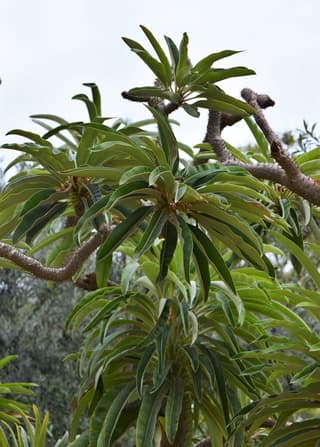
Silver Madagascar Palm
Pachypodium geayi
Pachypodium geayi, commonly called the Silver Madagascar Palm, is a striking caudiciform succulent native to the arid southwest of Madagascar. Despite its palm-like silhouette, it belongs to the Apocynaceae family and is unrelated to true palms. Its thick, spiny, silvery-grey trunk stores water for long dry spells, while a crown of narrow, grey-green leaves with a distinctive pink midrib tops the plant. In the wild it can reach 5-8 m, though potted specimens stay much smaller and grow slowly. Mature plants produce fragrant white flowers with yellow centers after a decade or more of growth.
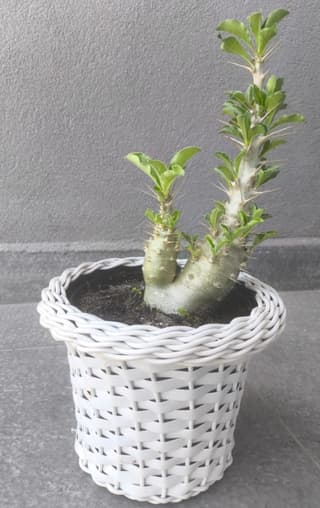
Kudu Lily
Pachypodium saundersii
Pachypodium saundersii, commonly known as the Kudu Lily, is a caudiciform succulent shrub native to rocky lowveld habitats in South Africa, Eswatini, Mozambique, and Zimbabwe. It features a thick, swollen grey-green stem armed with paired spines up to 7 cm long, glossy dark green leaves, and clusters of white flowers flushed with pink to purple that bloom from late summer into winter. The succulent stem stores water, allowing the plant to endure long dry seasons in its native lowveld woodland.
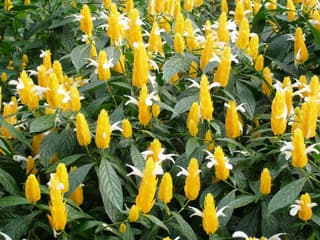
Golden Shrimp Plant
Pachystachys lutea
The Golden Shrimp Plant (Pachystachys lutea) is a tropical shrub native to Peru and South America, prized for its upright golden-yellow bracts and delicate white tubular flowers. An evergreen perennial in tropical climates, it is widely grown as an indoor houseplant or outdoor ornamental shrub worldwide.
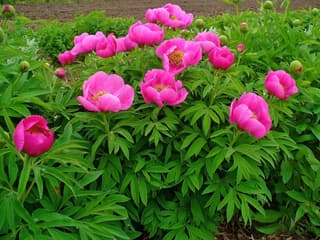
Peony
Paeonia
Paeonia is a genus of herbaceous perennial and shrubby flowering plants in the family Paeoniaceae, native to Asia, Europe, and western North America. Cultivated for centuries for their large, fragrant blooms, garden peonies (herbaceous types) die back to the ground each winter and re-emerge in spring, flowering from late spring into early summer.
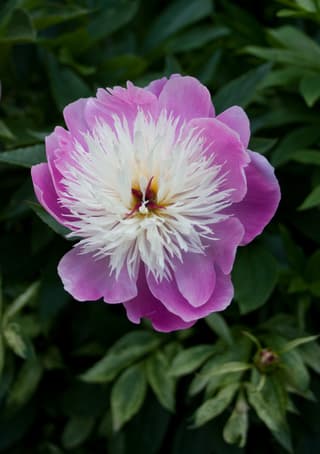
Chinese Peony
Paeonia lactiflora
Paeonia lactiflora, commonly known as the Chinese Peony or Common Garden Peony, is a herbaceous perennial native to China, Korea, and Mongolia. Celebrated for its enormous, fragrant blooms up to 25 cm across in shades of white, pink, red, and purple, it is one of the most beloved garden plants in the world.
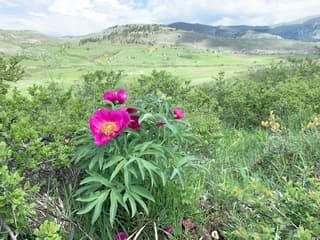
European Common Peony
Paeonia officinalis
Paeonia officinalis, the European common peony or garden peony, is a herbaceous perennial native to southern Europe. It produces large, fragrant flowers in spring in shades of red, pink, and white, growing up to 90 cm tall. It is one of the most beloved ornamental plants in European gardens, prized for its longevity and classic beauty. CAUTION: toxic to pets and humans — roots contain paeonol.
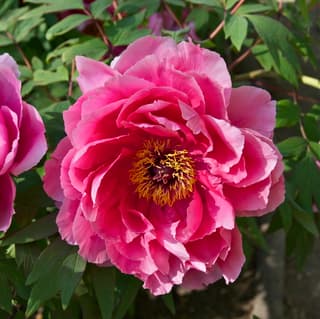
Tree Peony
Paeonia suffruticosa
Paeonia suffruticosa, commonly known as the Tree Peony or Mudan, is a majestic woody shrub native to China that can live for over a century. It produces spectacular flowers up to 20 cm in diameter in shades of white, pink, red, purple, and yellow, blooming in spring. Revered as the "King of Flowers" (花王) in Eastern culture, it is one of the most celebrated ornamental plants in the world.
Panaeolus cinctulus
Panaeolus cinctulus
Panaeolus cinctulus is a cosmopolitan saprophytic fungus, commonly known as the banded mottlegill. It is characterized by its convex, cinnamon to dark brown cap that displays a distinctive hygrophanous band around the margin when it begins to dry. It typically grows on dung piles, well-fertilized lawns, or nitrogen-rich substrates.
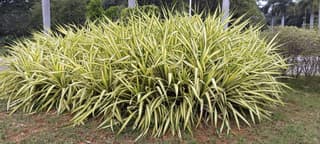
Screw Pine
Pandanus
Pandanus is a large genus of palm-like, dioecious trees and shrubs native to the Old World tropics, spanning coastal Africa, Madagascar, South and Southeast Asia, and the Pacific islands. Known for its strap-shaped, often spiny leaves arranged in a spiral around the stem and distinctive stilt roots that anchor top-heavy trunks, Pandanus ranges from compact houseplant-sized shrubs to towering 20-meter trees. Female plants produce pineapple-like fruit clusters that ripen to orange or red, while the fragrant leaves of some species (notably Pandanus amaryllifolius) are prized across Southeast Asian kitchens.
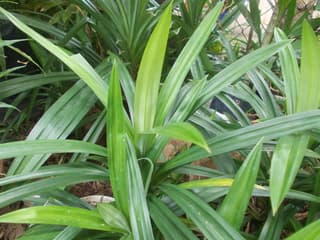
Pandan
Pandanus amaryllifolius
Pandanus amaryllifolius, commonly known as pandan, is a tropical evergreen shrub prized for its long, blade-like aromatic leaves. Native to Southeast Asia, this sterile cultivar rarely flowers and is propagated entirely from suckers. Its leaves are a staple flavoring and coloring agent in Southeast Asian cuisine, often called the "vanilla of Asia" for their sweet, nutty fragrance.
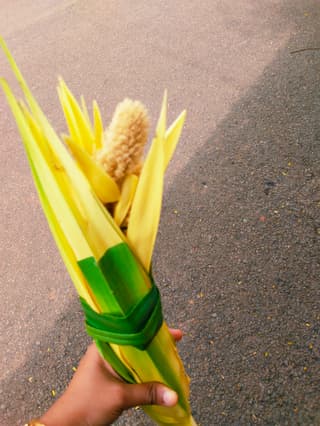
Fragrant Screwpine
Pandanus odorifer
Pandanus odorifer, commonly known as Fragrant Screwpine or Kewra, is a tropical evergreen plant of the family Pandanaceae, native to South Asia. Its intensely fragrant male flowers are distilled to produce kewra essence and kewra water — key ingredients in Indian cuisine, confectionery and traditional perfumery. With its long spiraling leaves and striking silhouette, it is valued as an ornamental plant and for its wide range of culinary, medicinal and aromatic uses.
Screw Pine
Pandanus utilis
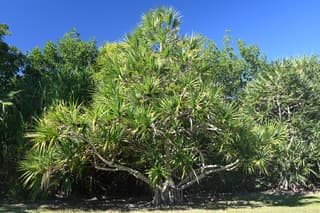
Pandanus utilis is a sculptural tropical tree, famous for its aerial (prop) roots that support the trunk and its long, leathery, spirally arranged leaves. Native to Madagascar, it is widely used in tropical landscaping due to its exotic and architectural appearance. Its leaves have small spines along the edges, requiring careful handling.
Poppy
Papaver
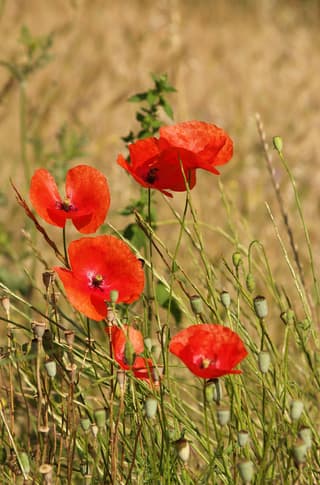
Papaver is a genus of about 80 species of flowering plants commonly known as poppies. They are celebrated for their silky, tissue-paper-like petals in shades of red, orange, yellow, pink, and white. Notable species include P. somniferum (opium poppy), P. rhoeas (corn/field poppy), and P. orientale (oriental poppy). All parts of the plant produce a milky latex that is toxic if ingested. Species range from hardy annuals to perennials, blooming in late spring through early summer.
Oriental Poppy
Papaver orientale
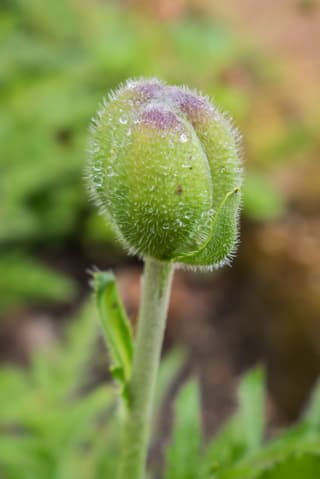
Papaver orientale, commonly known as the Oriental Poppy, is a spectacular hardy perennial native to the Caucasus mountains, northeastern Turkey, and northern Iran. It produces enormous, tissue-paper-thin flowers in vivid shades of orange, red, pink, white, and purple, each with a dramatic dark center. After flowering in late spring to early summer, the foliage dies back completely, only to reappear as a basal rosette in autumn. This deciduous habit allows it to survive the dry summers of its native range.
Lady Slipper Orchid
Paphiopedilum insigne
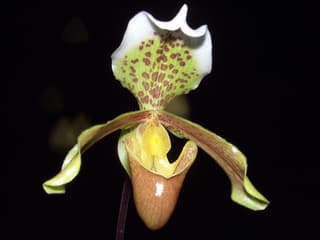
Paphiopedilum insigne is a stunning terrestrial orchid native to the misty forests of Southeast Asia and the Himalayas. Known for its distinctive pouch-shaped lip that resembles a delicate slipper, this cool-growing orchid produces elegant flowers in shades of green, yellow, and brown with characteristic spotted patterns. It is the type species of the Paphiopedilum genus and has been cultivated since the 19th century, prized for its long-lasting blooms that can persist for 6-8 weeks.
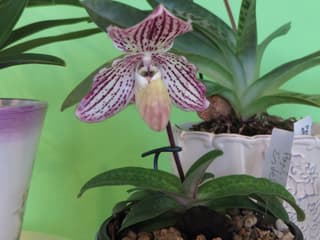
Lady Slipper Orchid
Paphiopedilum sp
Paphiopedilum, commonly known as the Lady Slipper Orchid, is a genus of terrestrial orchids native to the humid forests of Southeast Asia. Distinguished by their unique pouch-shaped lip (the "slipper"), these orchids produce long-lasting, exotic blooms in a wide range of colors. Unlike most orchids, they are true ground-dwellers, growing in leaf litter and mossy forest floors.
Pleated Inkcap
Parasola
Parasola is a genus of small saprobic fungi, commonly known as pleated inkcaps. They are extremely delicate, with nearly transparent caps featuring deep radial grooves, resembling a paper parasol. They appear quickly after rain on lawns or organic debris and usually wither within a few hours under strong sunlight.
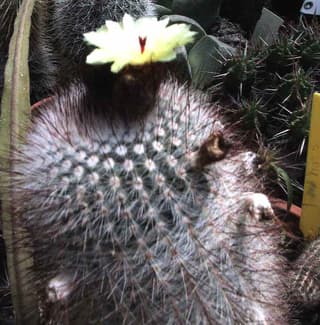
Silver Ball Cactus
Parodia scopa
Parodia scopa, commonly known as the silver ball cactus, is a globular to cylindrical cactus native to the uplands of southern Brazil and Uruguay. Its spherical body is densely covered in fine white to silvery spines that give it a shimmering, satin-like appearance. In late spring and summer, it produces bright pale-yellow flowers at the crown.
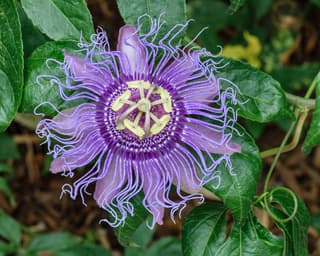
Passion Flower / Passion Vine (genus)
Passiflora
Passiflora is a genus of over 500 species of tropical and subtropical climbing vines, native primarily to South and Central America. The genus spans edible species like P. edulis (passion fruit) and ornamental species like P. caerulea (blue passion flower) and P. incarnata (maypop), all prized for their spectacular, intricate blooms.
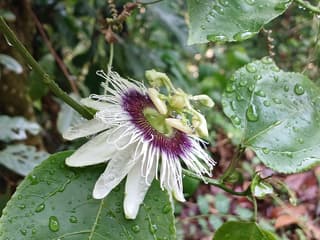
Purple Passion Fruit
Passiflora edulis
Passiflora edulis, commonly known as Purple Passion Fruit, is a vigorous climbing vine native to subtropical regions of Brazil, Paraguay, and Argentina. It produces aromatic fruits with a purple or yellow rind, widely used in culinary and medicinal applications. Its striking white and purple ornamental flowers bloom for a single day.
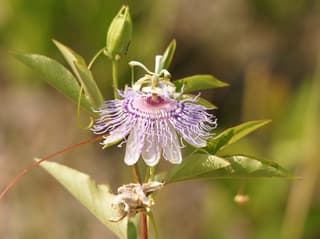
Maypop
Passiflora incarnata
Passiflora incarnata, commonly known as maypop or purple passionflower, is a fast-growing, herbaceous perennial vine native to the southeastern United States. Its intricate, fringed purple-and-white flowers bloom from early summer through fall, followed by egg-shaped, edible yellow-green fruits that turn yellow when ripe. The vine dies back to its rootstock each winter and re-sprouts vigorously in spring, often naturalizing along fences, trellises, and woodland edges.
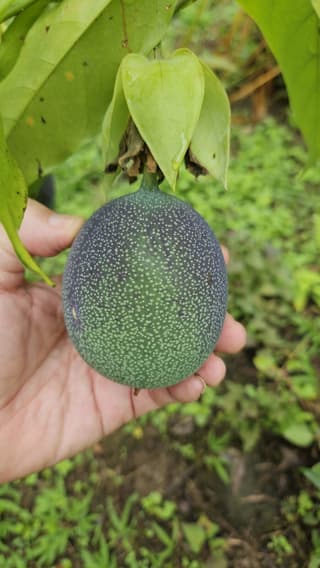
Sweet Granadilla
Passiflora ligularis
Evergreen climbing vine native to the Andes of South America, with stems up to 5 m long that cling by coiling tendrils. It bears white flowers, sometimes tinged with pink or violet, and orange-yellow fruits with a sweet, perfumed, translucent pulp. It flowers year-round and does best in warm, humid, mountain climates.
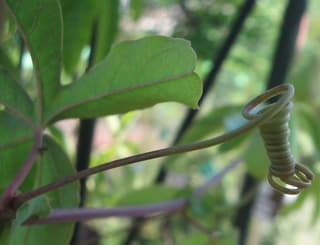
Passion Flower
Passiflora sp
Passiflora sp (Passion Flower) is a vigorous tropical vine native to Brazil and South America, belonging to the Passifloraceae family. Famous for its stunning and intricate flowers featuring colorful filaments in purple, white and blue, it is one of the most exotic and captivating plants in the tropical flora. Many species also produce delicious edible fruits and have recognized medicinal properties.
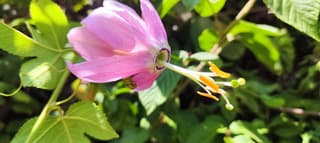
Banana Poka
Passiflora tarminiana
Passiflora tarminiana, commonly known as Banana Poka or banana passionfruit, is a vigorous climbing vine native to the Andes of Colombia, Ecuador, and Venezuela. It produces striking pink tubular flowers and elongated, aromatic fruits widely used in juices and desserts. Due to its rapid growth, it has become an invasive species in Hawaii and other tropical regions.
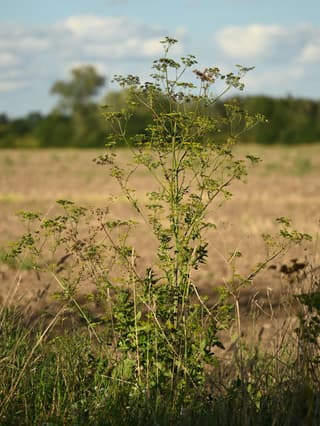
Parsnip
Pastinaca sativa
Parsnip (Pastinaca sativa) is a biennial root vegetable from the Apiaceae family, native to Eurasia. Resembling a carrot in shape but with a creamy-white colour, it produces a sweet and nutritious taproot in its first growing season. It is primarily cultivated for its edible root, which becomes noticeably sweeter after exposure to frost. Parsnip has been a staple of European cuisine for centuries and is highly valued for both culinary and historical significance.

Guarana
Paullinia
Paullinia is a genus of woody climbing vines (lianas) in the Sapindaceae family, native to the tropical rainforests of South America, especially the Amazon. The most well-known species of the genus is guarana (Paullinia cupana), cultivated for centuries by indigenous peoples, particularly the Sateré-Mawé, for its caffeine-rich seeds. Plants in this genus feature glossy compound leaves, tendrils that assist in climbing supports and trees, and small whitish flowers clustered in inflorescences. The fruits are capsules that, when ripe, split open to expose dark seeds surrounded by a white aril—features that resemble an eye, which is the origin of the indigenous legend regarding the creation of guarana.
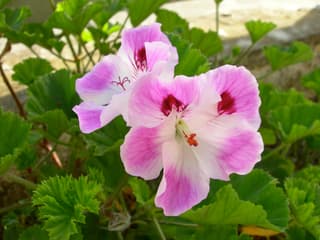
Regal Geranium
Pelargonium × domesticum
Pelargonium × domesticum, commonly known as the regal or Martha Washington geranium, is a hybrid pelargonium prized for its large, ruffled, azalea-like blooms in shades of white, pink, red, purple and burgundy, often with dark blotches. Unlike its zonal cousins, it needs cool nights to set flower buds and struggles in prolonged heat and humidity, making it a classic cool-season patio and greenhouse plant.
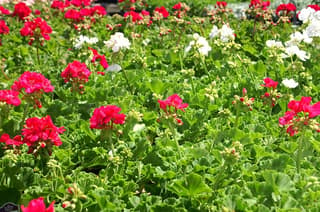
Zonal Geranium
Pelargonium × hortorum
Pelargonium hortorum, commonly known as Zonal Geranium or Horseshoe Geranium, is one of the most popular flowering plants in gardens and containers worldwide. Native to South Africa, it is a hybrid derived from Pelargonium zonale and P. inquinans. Its distinctive rounded leaves feature a darker horseshoe-shaped band, and it produces prolific clusters of flowers in vibrant shades of red, pink, orange, white, and purple from spring through fall.
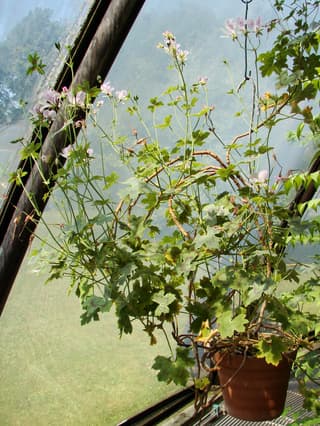
Regal Storksbill
Pelargonium grandiflorum
Pelargonium grandiflorum, commonly known as the Regal Pelargonium or Regal Storksbill, is an ornamental plant native to the Cape region of South Africa. It stands out for its large, showy flowers in shades of white, pink, red, and purple, often featuring distinctive dark markings on the upper petals. It is one of the most elegant species in the Pelargonium genus, widely grown in pots and temperate gardens.
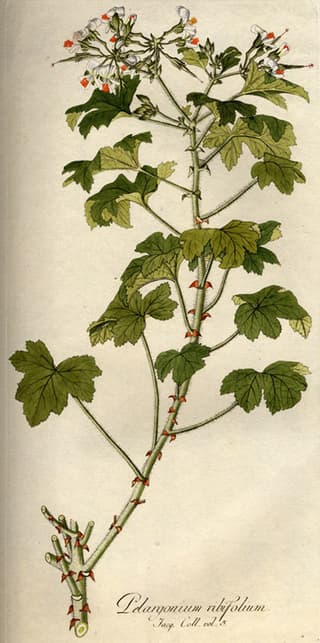
Currant-leaved Pelargonium
Pelargonium ribifolium
Pelargonium ribifolium is a much-branched, evergreen shrub native to the southern Western and Eastern Cape of South Africa, where it is more common along the margins of streams and other consistently moist habitats. Reaching up to 2 m in height and around 1 m in spread, it forms an erect, woody-based shrub with softly hairy, aromatic, three-lobed leaves reminiscent of currant (Ribes) foliage - the origin of its species epithet ribifolium. Small white flowers, roughly 20 mm across and marked with red veining on the two upper petals, appear intermittently through the year with a peak flush from September to November (Southern Hemisphere spring). Unlike many of its Cape relatives that demand full baking sun, this species is notably adaptable, thriving in full sun near water as well as in partially or fully shaded understorey positions. In cultivation it makes an attractive, low-maintenance garden shrub for moist, humus-rich beds or large containers, and propagates readily from softwood or semi-ripe cuttings.
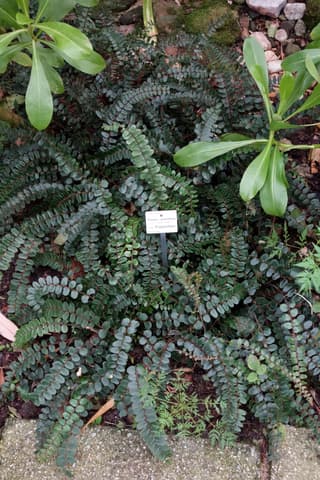
Button Fern
Pellaea rotundifolia
Pellaea rotundifolia is a compact, evergreen fern native to New Zealand and Australia, prized for its distinctive round, button-like leaflets arranged along dark, wiry stems. Unlike many ferns, it tolerates lower humidity and is remarkably drought-resistant, making it an excellent low-maintenance houseplant. It received the Royal Horticultural Society Award of Garden Merit.
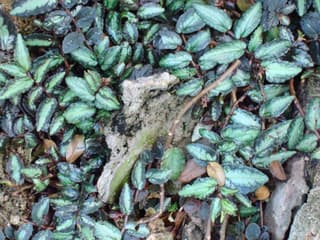
Trailing Watermelon Begonia
Pellionia repens
Trailing Watermelon Begonia (Pellionia repens, synonym Elatostema repens) is a small perennial indoor plant from the Urticaceae family, native to Southeast Asia, including Vietnam and Malaysia. It reaches a height of only about 6 inches, but its prostrate to trailing stems can spread up to 24 inches wide. The oval leaves are olive green with darker, purplish or brown markings that resemble the rind of a watermelon, which is why it is commonly called the Watermelon Begonia. The tiny greenish-white flowers are inconspicuous and hold little ornamental value. It is well-suited for hanging baskets, terrariums, and as a groundcover in warm, humid environments. It is considered non-toxic to cats, dogs, and humans.
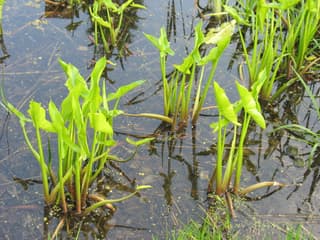
Arrow Arum
Peltandra
Peltandra is a genus of aquatic and wetland perennials in the arum family (Araceae), native to marshes, swamps, and pond edges of eastern North America. This profile covers the genus as a whole (most commonly represented by Peltandra virginica, green arrow arum) rather than a single species, since all members share the same emergent, bog-loving growth habit, arrow-shaped leaves, and calcium-oxalate toxicity. Grown submerged or in permanently saturated soil, Peltandra forms dense clumps of glossy, sagittate leaves topped by greenish-white spadix flowers in spring, followed by berry clusters that mature underwater.
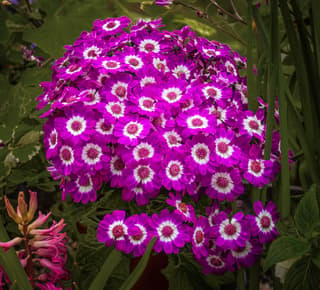
Florist's Cineraria
Pericallis × hybrida
Florist's Cineraria (Pericallis × hybrida) is a popular cool-season annual celebrated for its spectacular daisy-like flowers in vivid shades of blue, purple, pink, red, and white, often with striking bicolor patterns. Native to the Canary Islands, it is widely grown as a potted plant and bedding annual during winter and early spring. It belongs to the Asteraceae family and is a hybrid of several Pericallis species, formerly classified as Senecio cruentus or Cineraria.
What are Medium Plants?
Medium Plants require a bit more attention and basic gardening knowledge. These plants thrive with regular care and some cultivation experience. Ideal for those who already master the basics.
Tips for Growing Medium Plants
medium plants need a balance between attention and freedom. Keep a regular care routine, watch leaves to identify problems early, and adjust watering by season.