Vitaceae
Peppervine (Nekemias arborea) Care Guide
Nekemias arborea
Peppervine thrives in full sun to partial shade and consistently moist, well-drained soil, tolerating everything from sandy to clay conditions and occasional standing water. It needs little feeding or pampering but does need regular pruning and boundary control to keep its fast, aggressive growth in check. It is best planted where its size and spreading habit can be accommodated, such as along a fence line or over a large trellis.
Every 5 days
Bright indirect
° - °C
% - %
Categories
What is Peppervine?
Peppervine (Nekemias arborea) is a medium-care plant from the Vitaceae family. Peppervine (Nekemias arborea, formerly Ampelopsis arborea) is a vigorous deciduous to semi-evergreen woody vine in the grape family, native to the southeastern and south-central United States. It climbs by tendrils onto trees, shrubs, fences, and other structures, reaching 20 to 35 feet in length, o...
Peppervine grows up to 10.7m, spread of 300cm, watering every 5 days. It is not suitable for indoor environments and safe for pets.
Unlike many popular species, Peppervine is safe to keep around pets.
How to Care for Peppervine?
TLDR: Peppervine needs Bright indirect, watering every 5 days, and temperatures between 15-30°C with 40-70% humidity.
How Often Should You Water Peppervine?
Keep soil evenly moist, especially during establishment and hot weather; established plants tolerate brief wet spells but not prolonged drought.
How Much Light Does Peppervine Need?
Give it full sun for the best flowering and fruit display, though it also grows well in partial shade.
What Is the Best Soil for Peppervine?
Plant in humus-rich, well-draining soil with a mildly acidic to neutral pH; it adapts to sandy, loamy, or clay textures as long as drainage is reasonable.
What Pot Should You Use for Peppervine?
Best grown in the ground with a sturdy trellis, arbor, or fence to climb; if container growing is necessary, use a large, well-draining pot with a tall support and expect to repot or root-prune often given its vigorous growth.
What Is Peppervine and Where Does It Come From?
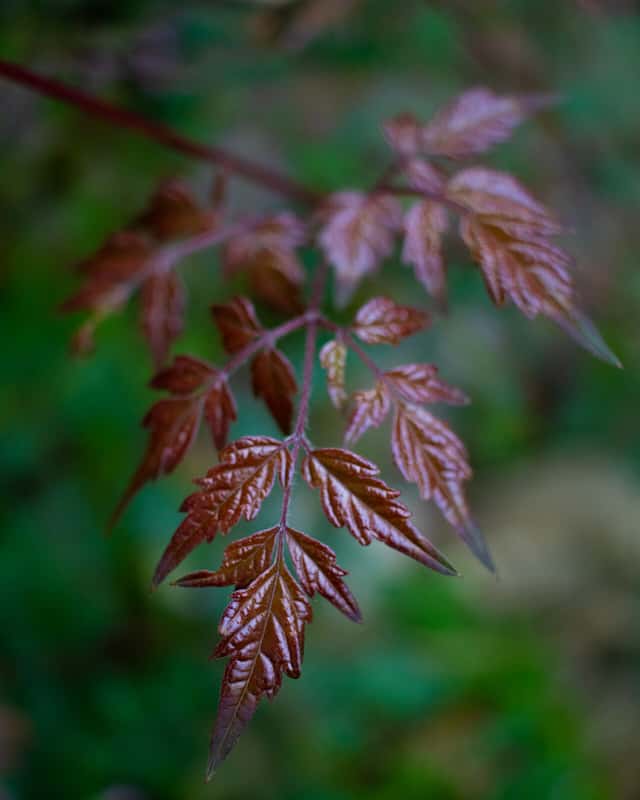
Peppervine (Nekemias arborea, formerly Ampelopsis arborea) is a vigorous deciduous to semi-evergreen woody vine in the grape family, native to the southeastern and south-central United States. It climbs by tendrils onto trees, shrubs, fences, and other structures, reaching 20 to 35 feet in length, or sprawls as an informal ground cover where nothing supports it. Its bipinnately compound leaves emerge purple-red and mature to glossy dark green before turning yellow or red in fall. Small greenish-white flower clusters appear in late spring to summer and give way to showy berries that shift from green to red to shiny blue-black, which birds and small mammals readily eat. Because it spreads rapidly by seed and root suckers, it is often regarded as weedy in cultivated settings.
How to Propagate Peppervine?
Seed sowing
Wild seed set is heavy, so germination is often erratic and self-seeding is common near parent plants.
- 1 Collect ripe black berries in fall and clean the pulp from the seeds
- 2 Cold-stratify seeds over winter or sow outdoors in early spring
- 3 Sow seeds shallowly in moist, well-draining soil
- 4 Keep soil consistently moist until germination
Materials needed:
Hardwood stem cuttings
Rooting hormone can improve success rates on woody sections.
- 1 Take hardwood cuttings from dormant stems in early spring
- 2 Cut sections with at least two nodes
- 3 Insert cuttings into moist, well-draining rooting medium
- 4 Keep humid and lightly moist until roots and new growth appear
Materials needed:
Runner layering
Peppervine's sprawling runners root readily where they touch soil, making this the easiest method.
- 1 Select a low, flexible runner still attached to the parent vine
- 2 Bury a section of the runner in contact with moist soil, leaving the tip exposed
- 3 Hold the buried section down and keep it consistently moist
- 4 Once roots form, sever from the parent plant and transplant
Materials needed:
How Big Does Peppervine Grow?
TLDR: Peppervine can reach up to 10.7m tall with Fast growth rate.
Max height
10.7m
Spread
3.0m
Growth rate
Fast
Foliage
Deciduous
Warning: Toxic Plant
This plant can be toxic if ingested. Keep out of reach of:
Plant Uses
Ornamental
Great for decoration
Ground Cover
Soil coverage
Is your plant showing symptoms?
Click on the symptom to discover possible causes:
What Diseases Commonly Affect Peppervine?
TLDR: Peppervine is susceptible to 2 known diseases. Monitor regularly for early detection.
Aphids
Aphids are small, soft-bodied, pear-shaped insects (1/16 to 1/8 inch long) that feed by sucking nutrient-rich sap from plants. They reproduce rapidly and can quickly weaken plants, causing distorted growth and transmitting plant viruses. Aphids come in various colors including green, black, red, yellow, brown, and gray. They secrete honeydew, a sticky substance that attracts ants and encourages sooty mold growth.
Insect Feeding Damage
Insect feeding damage includes holes or notches in leaves, removal of tissue between leaf veins, tunnels in plant tissue, root consumption, and other forms of damage.
Meaning & Symbolism
Peppervine has no widely documented cultural symbolism; as a fast, resilient climbing native, it is sometimes associated informally with vigor and reclaiming disturbed or overgrown ground.
Fun Facts
Peppervine's common name comes from its peppercorn-like berries, not any culinary use, since the fruit is not edible.
It was reclassified from Ampelopsis arborea to Nekemias arborea after genetic studies separated Nekemias as its own genus within Vitaceae.
New leaves emerge deep purple-red before turning green, giving the vine seasonal color changes even before fall.
Its berries ripen through a striking color sequence from green to red to glossy blue-black, attracting birds and small mammals.
Frequently asked questions
Is peppervine toxic?
How fast does peppervine grow?
Does peppervine need full sun?
Can peppervine be grown in containers?
Compare with similar plants
| Attribute | Difficulty | Light | Watering | Pet Safe |
|---|---|---|---|---|
| Dark Fieldcap | Medium | Low light | 2d | ⚠️ |
| Azalea | Medium | Partial shade | 3d | ⚠️ |
| Muriel's Bamboo | Medium | Partial shade | 3d | ✓ |
| Bougainvillea | Medium | Direct sun | 7d | ⚠️ |




