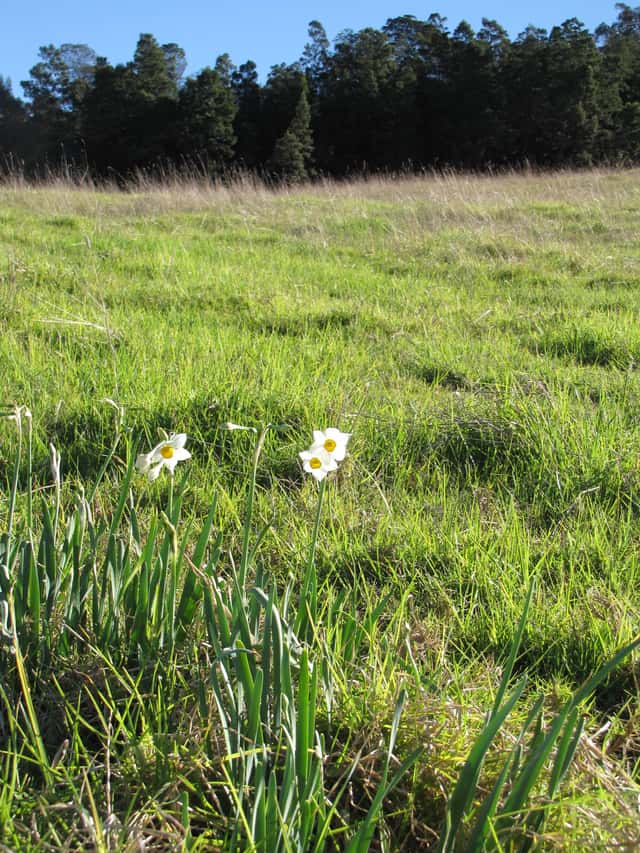
Amaryllidaceae
Narcissus tazetta (Paperwhite Narcissus)
Narcissus tazetta
Plant Narcissus tazetta bulbs in autumn in well-draining, fertile soil in full sun to light shade. Keep the soil consistently moist while the plant is actively growing and flowering, but let it dry out once the foliage yellows and dies back for the summer dormancy period. It tolerates USDA zones 7 to 10 and is largely pest- and disease-resistant outdoors, though bulbs can rot in soggy soil.
Every 7 days
Bright indirect
° - °C
% - %
Categories
What is Paperwhite Narcissus?
Paperwhite Narcissus (Narcissus tazetta) is a medium-care plant from the Amaryllidaceae family. Narcissus tazetta, commonly known as the paperwhite narcissus or bunch-flowered daffodil, is a bulbous perennial native to the Mediterranean region and parts of Central Asia. Unlike single-flowered daffodils, each stem carries a cluster of 4 to 8 small, intensely fragrant flowers with white petals a...
Paperwhite Narcissus grows up to 76cm, watering every 7 days. It is suitable for indoor environments and not safe for pets.
Without precautions, ingestion can cause irritation in pets. Keep out of reach of cats and dogs. Without adequate drainage, root rot can develop within 14 days.
How to Care for Paperwhite Narcissus?
TLDR: Paperwhite Narcissus needs Bright indirect, watering every 7 days, and temperatures between 15-30°C with 40-70% humidity.
How Often Should You Water Paperwhite Narcissus?
Water whenever the top 2-3cm of soil feels dry during active growth, keeping the soil evenly moist but never waterlogged; reduce watering sharply once the leaves begin to yellow after flowering.
How Much Light Does Paperwhite Narcissus Need?
Give it full sun to light partial shade -- at least 6 hours of direct light produces the strongest flower stems, though a few hours of afternoon shade is tolerated in hot climates.
What Is the Best Soil for Paperwhite Narcissus?
Use a rich, well-draining soil (loam, clay-loam or sandy loam) with a neutral to slightly acidic pH; soggy, poorly drained soil is the main cause of bulb rot.
What Pot Should You Use for Paperwhite Narcissus?
A wide, shallow pot with generous drainage holes works best, since Narcissus tazetta bulbs are often grown several to a container; unglazed terracotta helps excess moisture evaporate and reduces the risk of bulb rot.
What Is Paperwhite Narcissus and Where Does It Come From?
Narcissus tazetta, commonly known as the paperwhite narcissus or bunch-flowered daffodil, is a bulbous perennial native to the Mediterranean region and parts of Central Asia. Unlike single-flowered daffodils, each stem carries a cluster of 4 to 8 small, intensely fragrant flowers with white petals and a shallow yellow or white corona. Growing 45-75cm tall, it is prized both as a garden bulb for mild-winter climates and as an indoor bulb that can be forced into bloom for the winter holidays with no soil at all, simply set in water and pebbles.
How to Propagate Paperwhite Narcissus?
Bulb offset division
Discard soft, damaged, or undersized offsets, and plant the healthy ones at a proper depth so they are protected from summer heat and winter cold while they mature.
- 1 Wait until the foliage has died back naturally, about six weeks after flowering ends, then lift the clump of bulbs with a garden fork.
- 2 Gently separate the small bulblets (offsets) that have formed around the base of each mature bulb.
- 3 Discard any offsets that are soft, damaged, or smaller than a marble, and let the healthy ones air dry for a day in a shaded spot.
- 4 Replant the offsets 10 to 15cm deep and about 10cm apart in well-draining soil in early autumn.
- 5 Keep the soil lightly moist through autumn and winter; offsets usually take two to three years to reach flowering size.
Materials needed:
How Big Does Paperwhite Narcissus Grow?
TLDR: Paperwhite Narcissus can reach up to 76cm tall with Slow growth rate.
Max height
76cm
Growth rate
Slow
Foliage
Deciduous
Warning: Toxic Plant
This plant can be toxic if ingested. Keep out of reach of:
Plant Uses
Ornamental
Great for decoration
Aromatic
Pleasant fragrance
Is your plant showing symptoms?
Click on the symptom to discover possible causes:
What Diseases Commonly Affect Paperwhite Narcissus?
TLDR: Paperwhite Narcissus is susceptible to 9 known diseases. Monitor regularly for early detection.
Mosaic Virus
Mosaic virus is a group of plant viruses that cause mottled, patchy patterns on leaves and can affect a wide variety of plants. The virus creates characteristic yellow, white, and green mosaic patterns, often accompanied by stunted growth and deformed plant parts. This highly contagious disease spreads rapidly through insect vectors and contaminated tools.
Fusarium Wilt
Fusarium is a soil-borne fungus that primarily attacks the roots and vascular tissues of plants. It enters through small wounds or stressed roots, is favored by warm temperatures and waterlogging, and then obstructs the flow of sap. Symptoms include yellowing, often on only one side of the plant, wilting even with moist soil, stunted growth, and, when cutting the stem, internal brown streaks. It frequently affects tomatoes, peppers, eggplants, basil, cucumbers, and zucchini, as well as ornamentals like carnations and cyclamen. In potted plants, it can manifest as root rot with a darkened crown.
Root-Knot Nematodes
Root-knot nematodes (Meloidogyne species) are microscopic roundworms that parasitize plant roots, causing characteristic galls or knots. These soil-borne pests are among the most economically damaging plant pathogens worldwide, affecting a wide range of ornamental and edible plants. The nematodes inject enzymes into root cells, causing abnormal swelling and disrupting water and nutrient uptake.
White Mold
White mold (Sclerotinia sclerotiorum) is a devastating fungal disease affecting over 400 plant species worldwide. The fungus produces black, seed-like structures (sclerotia) that can survive in soil for 5 or more years. The disease is favored by cool, moist weather (50-68°F/10-20°C), especially during flowering.
Meaning & Symbolism
In Greek myth, the narcissus flower sprang from the spot where Narcissus died gazing at his reflection, so the genus has long symbolized vanity and self-regard. Because it is one of the first bulbs to bloom, it is also a widespread symbol of rebirth, renewal and hope after winter. In Chinese culture, Narcissus tazetta (the water fairy flower, shui xian) is traditionally forced into bloom for Lunar New Year as a symbol of good fortune and prosperity.
Fun Facts
Each stem can carry 4 to 8 small flowers at once, giving the tazetta group its bunch-flowered name, unlike most daffodils, which bear a single bloom per stem.
The genus Narcissus is named after the youth in Greek mythology who fell in love with his own reflection, and the flower toxic bulb was linked by the ancient Greeks to death and the underworld.
Paperwhites can be forced into bloom indoors in just water and pebbles, with no soil at all, making them a popular winter-holiday houseplant.
Frequently asked questions
Is Narcissus tazetta toxic to cats and dogs?
How often should I water paperwhite narcissus?
Can I grow Narcissus tazetta indoors without soil?
When should I divide Narcissus tazetta bulbs?
Compare with similar plants
| Attribute | Difficulty | Light | Watering | Pet Safe |
|---|---|---|---|---|
| Dark Fieldcap | Medium | Low light | 2d | ⚠️ |
| Azalea | Medium | Partial shade | 3d | ⚠️ |
| Muriel's Bamboo | Medium | Partial shade | 3d | ✓ |
| Bougainvillea | Medium | Direct sun | 7d | ⚠️ |




