Euphorbiaceae
Poinsettia: Complete Care Guide
Poinsettia pulcherrima
It thrives in bright but filtered light, stable temperatures between 60-72°F (15-22°C), and moderate watering performed only when the surface soil is dry. It is sensitive to temperature fluctuations, cold drafts, and waterlogging, which quickly cause root rot. After the winter bloom, it requires a rest period with reduced watering, followed by pruning and a resumption of growth in the spring.
Every 7 days
Bright indirect
15° - 24°C
40% - 60%
Categories
What is Poinsettia?
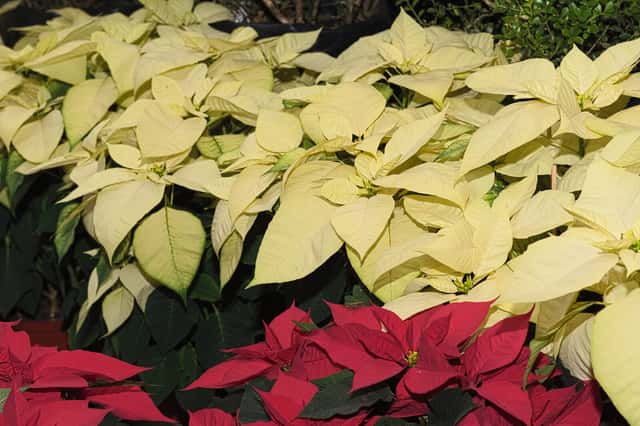
Poinsettia (Poinsettia pulcherrima) is a medium-care plant from the Euphorbiaceae family. The Poinsettia (Euphorbia pulcherrima) is an evergreen shrub native to Mexico and Central America, belonging to the Euphorbiaceae family. It is famous for its showy, brightly colored bracts—red, pink, white, or cream—which surround the small, yellow true flowers clustered in cyathia at the center of...
Poinsettia grows up to 90cm, spread of 60cm, watering every 7 days, 15°C – 24°C, 40–60% humidity. It is suitable for indoor environments and not safe for pets.
Without precautions, ingestion can cause irritation in pets. Keep out of reach of cats and dogs. Without adequate drainage, root rot can develop within 14 days.
How to Care for Poinsettia?
TLDR: Poinsettia needs Bright indirect, watering every 7 days, and temperatures between 15-24°C with 40-60% humidity.
How Often Should You Water Poinsettia?
Water moderately only when the top few inches of soil feel dry to the touch, avoiding standing water in the saucer: excess water is the most common cause of root rot.
How Much Light Does Poinsettia Need?
Place in a very bright spot but protected from direct midday sun, such as an east or west-facing window; the plant only blooms if it receives a maximum of 9-10 hours of light per day followed by a period of complete, uninterrupted darkness.
What Is the Best Soil for Poinsettia?
Prefers a lightweight substrate, rich in organic matter, well-draining, and slightly acidic, achieved for example by mixing peat, universal potting soil, and perlite or coarse sand.
What Pot Should You Use for Poinsettia?
Small to medium-sized pot (maximum 7-8 inches in diameter) with plenty of drainage holes and a saucer to prevent water stagnation around the rot-sensitive roots.
Care Schedule
Fertilize
Every 14 days
Rotate
Every 7 days
Repot
Every 365 days
What Is Poinsettia and Where Does It Come From?
The Poinsettia (Euphorbia pulcherrima) is an evergreen shrub native to Mexico and Central America, belonging to the Euphorbiaceae family. It is famous for its showy, brightly colored bracts—red, pink, white, or cream—which surround the small, yellow true flowers clustered in cyathia at the center of the rosette. In the wild, it can reach several meters in height, but when grown in pots, it remains a compact shrub typically sold during the Christmas holidays. Like all euphorbias, it produces a white latex that is mildly toxic if ingested or if it comes into contact with skin and eyes.
How to Propagate Poinsettia?
Stem cutting
Wear gloves during collection because the latex is irritating to skin and eyes; avoid temperatures below 65°F (18°C) as they drastically slow down rooting.
- 1 Take a 4-6 inch apical cutting from a semi-woody branch, cutting just below a node with a clean, disinfected blade
- 2 Allow the cut to air dry for a few hours to let the white latex coagulate and reduce the risk of rot
- 3 Dip the base in rooting hormone powder and plant it in a light, well-draining mix of peat and perlite
- 4 Cover with a transparent bag or humidity dome to maintain constant humidity, keeping the substrate slightly moist
- 5 Place in a bright, warm location (68-75°F / 20-24°C) without direct sun until new leaves appear, signaling successful rooting
Materials needed:
How Big Does Poinsettia Grow?
TLDR: Poinsettia can reach up to 90cm tall with Medium growth rate.
Max height
90cm
Spread
60cm
Growth rate
Medium
Foliage
Evergreen
Warning: Toxic Plant
This plant can be toxic if ingested. Keep out of reach of:
Plant Uses
Ornamental
Great for decoration
Is your plant showing symptoms?
Click on the symptom to discover possible causes:
What Diseases Commonly Affect Poinsettia?
TLDR: Poinsettia is susceptible to 7 known diseases. Monitor regularly for early detection.
Powdery Mildew
Powdery mildew is a common fungal disease caused by various fungi species including Erysiphe, Podosphaera, Oïdium, and Leveillula. It affects over 10,000 plant species worldwide. The disease thrives in warm, dry climates with high humidity and appears as a distinctive white powdery coating on plant surfaces.
Root Rot
Root rot is a serious fungal disease that affects the root system of plants, causing them to decay and die. It is primarily caused by overwatering, poor drainage, or soil-borne fungi such as Pythium, Phytophthora, Rhizoctonia, and Fusarium. The disease thrives in waterlogged conditions where roots are deprived of oxygen, making them susceptible to fungal infection.
Scale Insects
Scale insects are small sap-sucking pests that appear as brown, shell-like bumps on plant stems and leaves. There are over 25 species, divided into armored (hard) and unarmored (soft) scales. They feed by piercing plant tissue and extracting sap, which weakens the plant and can lead to yellowing, stunted growth, and even death if left untreated. They also excrete honeydew, which attracts ants and promotes sooty mold growth.
Whiteflies
Whiteflies are small, soft-bodied, winged insects closely related to aphids and mealybugs. They are moth-like in appearance, about 1/16 inch long, triangular in shape, and gray-white in color. These sap-sucking pests feed on plant tissue, causing yellowing, stunted growth, and wilting. They also excrete honeydew, which attracts ants and promotes sooty mold growth. Whiteflies can transmit serious plant viruses.
Meaning & Symbolism
In Western Christmas tradition, the Poinsettia symbolizes holiday joy, generosity, and celebration; in Mexico, it is linked to the legend of Nochebuena, the flower that bloomed from a poor girl's humble gift to the Baby Jesus.
Compare with similar plants
| Attribute | Difficulty | Light | Watering | Pet Safe |
|---|---|---|---|---|
| Dark Fieldcap | Medium | Low light | 2d | ⚠️ |
| Azalea | Medium | Partial shade | 3d | ⚠️ |
| Muriel's Bamboo | Medium | Partial shade | 3d | ✓ |
| Bougainvillea | Medium | Direct sun | 7d | ⚠️ |
Choose & Compare
Sources & References
- Stella di Natale - Come curare, coltivare e far fiorire le piante di Stella di Natale (Elicriso)
- Euphorbia pulcherrima (Poinsettia) - NC Extension Gardener Plant Toolbox
- Stella di Natale: tutto quello che devi sapere su Euphorbia pulcherrima (Gardenia)
- Poinsettia (Euphorbia pulcherrima) - Gray Mold, Pacific Northwest Pest Management Handbooks
- Poinsettia Care: Water, Light, and Keeping It Alive - Gardening Know How




