Polypodiaceae
Platycerium alcicorne - Elkhorn Fern Care Guide
Platycerium alcicorne
Grow the Elkhorn Fern mounted on a wood slab or in a hanging basket with a chunky, well-draining epiphyte mix or sphagnum moss. Provide bright, indirect light and water by soaking or misting once the mounting medium is nearly dry, roughly every 7-10 days in the growing season and less often in winter. Maintain moderate humidity (40-60%) and average warmth; the species tolerates brief dips to 10C but grows best between 18-30C. Fertilize lightly about once a month during spring and summer, and avoid overwatering, since root and shield rot are its main vulnerability.
Every 7 days
Bright indirect
10° - 35°C
40% - 60%
Categories
What is Elkhorn Fern?
Elkhorn Fern (Platycerium alcicorne) is a medium-care plant from the Polypodiaceae family. Platycerium alcicorne, commonly known as the Elkhorn Fern, is an epiphytic fern native to Madagascar and East Africa (including Kenya, Mozambique, Tanzania, Zimbabwe, and neighboring islands such as the Comoros, Mauritius, Reunion, and Seychelles). Like other staghorn ferns, it produces two distinct...
Elkhorn Fern grows up to 1.0m, spread of 100cm, watering every 7 days, 10°C – 35°C, 40–60% humidity. It is suitable for indoor environments and safe for pets.
Unlike many popular species, Elkhorn Fern is safe to keep around pets. Without adequate drainage, root rot can develop within 14 days.
How to Care for Elkhorn Fern?
TLDR: Elkhorn Fern needs Bright indirect, watering every 7 days, and temperatures between 10-35°C with 40-60% humidity.
How Often Should You Water Elkhorn Fern?
Water by submerging the mount or misting the shield fronds thoroughly, then let the medium dry out almost completely before watering again, roughly every 7-10 days in warm months and less frequently in winter. Never let the plant sit in standing water.
How Much Light Does Elkhorn Fern Need?
Place in bright, indirect light. A spot near an east- or west-facing window works well; avoid intense direct afternoon sun, which can scorch the fronds, but a little gentle morning sun is tolerated.
What Is the Best Soil for Elkhorn Fern?
Skip regular potting soil. Mount on a wood or cork slab with a pad of sphagnum moss, or pot in a chunky, well-draining epiphyte mix (bark, perlite, coarse peat) that mimics its natural life on tree bark.
What Pot Should You Use for Elkhorn Fern?
Wood or cork mount with sphagnum moss, or a hanging basket lined with sphagnum moss and a chunky epiphyte mix; avoid solid, non-draining pots.
Care Schedule
Fertilize
Every 30 days
Misting
Every 7 days
What Is Elkhorn Fern and Where Does It Come From?
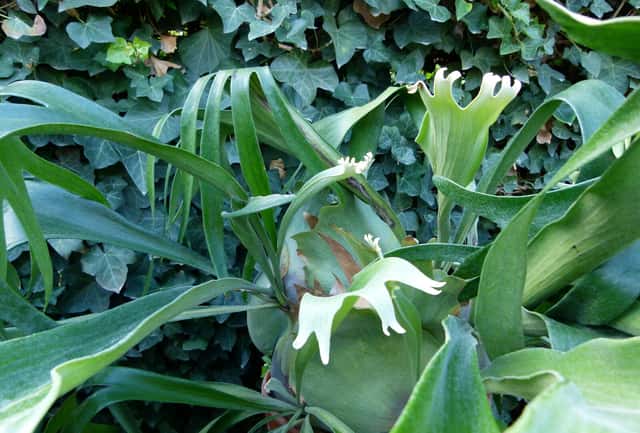
Platycerium alcicorne, commonly known as the Elkhorn Fern, is an epiphytic fern native to Madagascar and East Africa (including Kenya, Mozambique, Tanzania, Zimbabwe, and neighboring islands such as the Comoros, Mauritius, Reunion, and Seychelles). Like other staghorn ferns, it produces two distinct types of fronds: rounded, shield-shaped sterile fronds that clasp its mounting surface and protect the root ball, and antler-like fertile fronds that arch outward and carry spore patches on their undersides. In the wild it grows attached to tree trunks and branches, absorbing moisture and nutrients from the air, rainfall, and decaying organic debris trapped behind its shield fronds. It never produces flowers or seeds, reproducing instead through spores and by forming offsets (pups) that can be divided from the parent plant.
How to Propagate Elkhorn Fern?
Spore propagation
This method is slow and best left to patient growers; keep the medium sterile and consistently moist without waterlogging.
- 1 Collect ripe brown spores from the underside of mature fertile fronds
- 2 Sprinkle the spores evenly over sterile, moist peat-based media
- 3 Cover the container with plastic wrap to maintain high humidity
- 4 Keep in bright, indirect light at warm, stable temperatures until tiny prothalli and then young ferns appear
Materials needed:
Offset (pup) division
Only remove pups once they have their own roots and shield frond; removing them too early lowers survival chances.
- 1 Look for a pup with its own small shield frond and visible roots growing from the base of the parent plant
- 2 Carefully separate the pup from the mother plant with a clean, sharp knife, keeping some roots intact
- 3 Mount or pot the pup onto its own slab or chunky epiphyte mix
- 4 Keep humidity high and avoid direct sun while the new plant establishes
Materials needed:
How Big Does Elkhorn Fern Grow?
TLDR: Elkhorn Fern can reach up to 1.0m tall with Slow growth rate.
Max height
1.0m
Spread
1.0m
Growth rate
Slow
Foliage
Evergreen
Plant Uses
Ornamental
Great for decoration
Is your plant showing symptoms?
Click on the symptom to discover possible causes:
What Diseases Commonly Affect Elkhorn Fern?
TLDR: Elkhorn Fern is susceptible to 11 known diseases. Monitor regularly for early detection.
Root Rot
Root rot is a serious fungal disease that affects the root system of plants, causing them to decay and die. It is primarily caused by overwatering, poor drainage, or soil-borne fungi such as Pythium, Phytophthora, Rhizoctonia, and Fusarium. The disease thrives in waterlogged conditions where roots are deprived of oxygen, making them susceptible to fungal infection.
Leaf Spot
Leaf spot is a common fungal disease caused by various pathogens including Alternaria, Ascochyta, Colletotrichum, Septoria, and Venturia. It primarily affects leaves, causing discolored spots that can lead to premature leaf drop if left untreated.
Grey Mould
Rust
Rust is a common fungal disease caused by fungi in the order Pucciniales that affects a wide variety of plants. The disease gets its name from the characteristic orange, yellow, or reddish-brown pustules that appear on leaves, resembling metal rust. This obligate fungal parasite requires living plants to survive and can cause significant economic losses in agricultural crops.
Meaning & Symbolism
Represents resilience, protection, and adaptability, an emblem of thriving against the odds, since it grows without soil, anchored only to bark, drawing sustenance from air and rain.
Fun Facts
Its sterile shield fronds turn brown and papery with age but should never be removed, they continue protecting the root system.
In the wild it grows wedged onto tree trunks and rocks across Madagascar and East Africa, absorbing nutrients from rainwater and decaying leaf litter trapped behind its shield fronds.
The fertile, antler-shaped fronds carry rusty brown spore patches on their undersides instead of seeds.
Despite its dramatic look, it is completely non-toxic to cats, dogs, and horses.
Frequently asked questions
Does the Elkhorn Fern flower?
How often should I water my Elkhorn Fern?
Is Platycerium alcicorne toxic to pets?
Can I grow Elkhorn Fern in regular potting soil?
Why are the fronds turning brown or mushy?
Compare with similar plants
| Attribute | Difficulty | Light | Watering | Pet Safe |
|---|---|---|---|---|
| Dark Fieldcap | Medium | Low light | 2d | ⚠️ |
| Azalea | Medium | Partial shade | 3d | ⚠️ |
| Muriel's Bamboo | Medium | Partial shade | 3d | ✓ |
| Bougainvillea | Medium | Direct sun | 7d | ⚠️ |




