1159 Medium Easy Care | 2026 Guide - Page 10
Find 1159 medium easy care. Complete guide for your garden.
1159 Easy Care with medium level
Showing 325-360 of 1159

Rock samphire
Crithmum maritimum
Rock samphire (Crithmum maritimum) is a succulent perennial plant in the Apiaceae family, widespread along the rocky and sandy coasts of the Mediterranean, the Atlantic, and the Black Sea. It grows wild on cliffs and rocks battered by salty winds, forming compact, branched bushes with fleshy, glaucous, and aromatic leaves that have an intensely savory flavor. In summer, it produces umbels of small yellowish-white flowers, followed in autumn by aromatic seeds. Extremely resistant to drought and salt spray, it is one of the few truly halophytic horticultural plants.

Saffron crocus
Crocus sativus
The saffron crocus (Crocus sativus) is a cormous bulbous plant in the Iridaceae family, native to the eastern Mediterranean and Asia Minor. Unlike most crocuses that bloom in the spring, it flowers in the autumn, producing lilac to purple blossoms with three long red stigmas—the spice saffron, the most expensive in the world by weight. It is a sterile (triploid) plant, propagated exclusively by corm division, and has been cultivated for over 3,500 years for its aromatic stigmas.
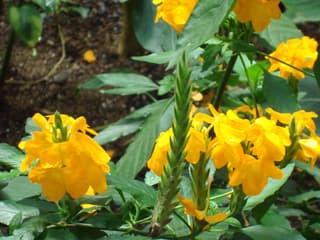
Firecracker Flower
Crossandra infundibuliformis
Crossandra infundibuliformis, commonly known as the Firecracker Flower, is a tropical evergreen shrub native to India and Sri Lanka. It belongs to the Acanthaceae family and is prized for its vibrant fan-shaped flowers that bloom nearly year-round in warm conditions. The glossy, dark green foliage with wavy margins provides an attractive backdrop to the spectacular orange, salmon, yellow, and pink blooms. Its seed pods famously "explode" when wet, which inspired its common name.
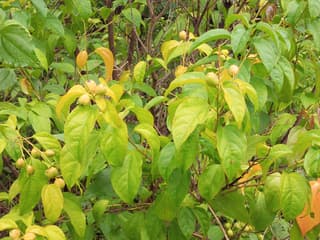
Croton
Croton
Croton is one of the largest genera in the spurge family Euphorbiaceae, comprising over 1,100 species of herbs, shrubs, and trees found across tropical and subtropical regions worldwide. The genus displays exceptional diversity in form, size, and habitat — from small ground-cover herbs in dry savannas to large canopy trees in rainforests. It is important to distinguish genus Croton from the popular houseplant known as "garden croton" (Codiaeum variegatum), which belongs to a separate genus despite sharing a common name. Several Croton species have significant medicinal and economic importance: cascarilla bark (Croton eluteria) flavors liqueurs such as Campari, while Croton megalocarpus is studied as a biofuel source. Many species produce a toxic latex and seeds that should be handled with care.
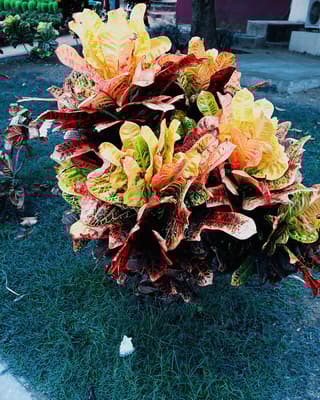
Croton
Croton variegatum
Croton (Codiaeum variegatum) is a stunning tropical plant native to Indonesia and Malaysia, prized for its brilliantly colored, leathery leaves that display a kaleidoscope of red, orange, yellow, green, and purple hues. This evergreen shrub belongs to the Euphorbiaceae family and can grow up to 3 meters tall in ideal conditions. The vibrant foliage makes it a popular choice for adding a splash of color to indoor spaces and tropical gardens.
common bird's nest fungus
Crucibulum laeve
Crucibulum laeve, commonly known as the common bird's nest fungus, is a saprobic species of fungus that grows on decaying wood, mulch, and plant debris. It is characterized by its small, cup-shaped fruiting bodies that resemble tiny bird nests containing 'eggs' (peridioles). These peridioles contain the spores and are splashed out of the cup by raindrops. The exterior of the cup is typically yellowish to tan and covered in fine hairs when young, while the interior is smooth and greyish-white.
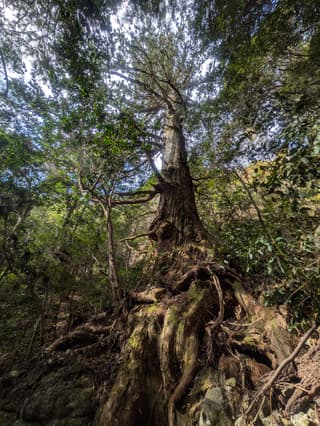
Japanese Cedar
Cryptomeria japonica
Cryptomeria japonica, known as Japanese cedar or sugi, is an evergreen conifer native to Japan, where it is the national tree. It can reach great heights in the wild and is widely cultivated as an ornamental garden tree, hedge, or bonsai specimen.
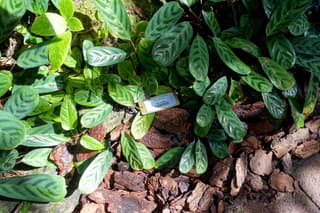
Never Never Plant
Ctenanthe
Ctenanthe is a genus of around 15 evergreen perennial species in the prayer-plant family (Marantaceae), grown for their richly patterned, two-toned foliage that folds upward at night in a rhythmic motion called nyctinasty. Native to the tropical rainforests of Central and South America, these bushy, clumping plants stay compact but can spread wide, making them a striking foliage feature for shaded, humid corners of the home.
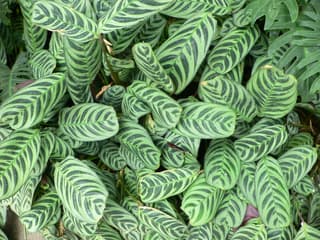
Fishbone Prayer Plant
Ctenanthe burle-marxii
Ctenanthe burle-marxii, commonly known as the Fishbone Prayer Plant, is a stunning tropical perennial native to the humid rainforests of Brazil. A member of the Marantaceae family, it is celebrated for its distinctive oval leaves featuring a silvery-green base adorned with dark green fishbone markings on top, and a rich burgundy-purple underside. Like its prayer plant relatives, it exhibits nyctinasty — the fascinating behavior of folding its leaves upward at dusk as if in prayer, and reopening them at dawn. Compact and elegant, it reaches around 40 cm in height and is perfectly suited for indoor cultivation, particularly in humid environments. It is completely non-toxic to humans and pets, making it a safe and beautiful choice for any household.
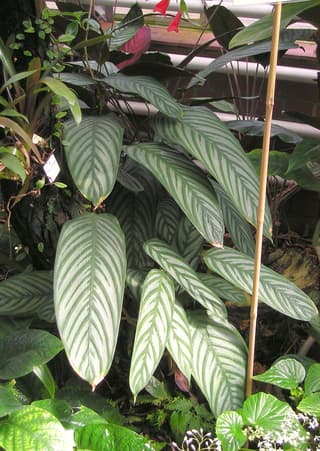
Grey Star
Ctenanthe setosa
Ctenanthe setosa, commonly known as the Grey Star or Never Never Plant, is a tropical plant native to Brazil in the Marantaceae family. It is prized for its stunning elongated leaves featuring silvery-grey and dark green striped patterns with deep purple undersides. Like other prayer plants, it exhibits nyctinasty — its leaves gently fold upward at night and open again in the morning, as if in prayer.
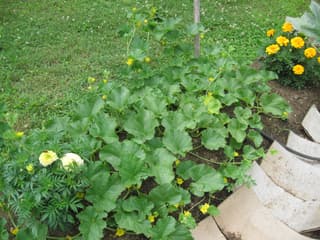
Melon
Cucumis melo
Cucumis melo, commonly known as Melon or Cantaloupe, is an annual climbing and sprawling vine in the Cucurbitaceae family, native to Africa and southwest Asia. It is one of the world's most beloved edible fruits, cultivated for thousands of years since ancient Egypt. The plant produces large, aromatic fruits with sweet, juicy flesh in colors ranging from orange to green and white. Yellow star-shaped flowers appear in summer, attracting pollinators. Numerous cultivar groups exist, including cantaloupe, honeydew, muskmelon, and casaba.
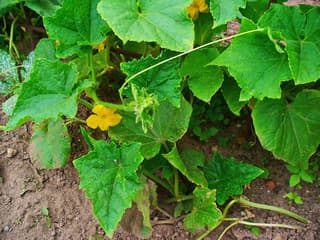
Cucumber
Cucumis sativus
Cucumber (Cucumis sativus) is a widely cultivated creeping vine vegetable originating from South Asia (India). It produces elongated, green-skinned fruits with crisp, watery flesh beloved worldwide in salads, pickling, and fresh eating.

Squash
Cucurbita
Cucurbita is a genus of herbaceous vines and bushy plants in the family Cucurbitaceae, native to the Americas. It encompasses a remarkable diversity of edible crops including summer squash, winter squash, pumpkins, zucchini, and decorative gourds. The genus features large, bright yellow or orange flowers and fruits that vary enormously in shape, size, and color. Cultivated for over 10,000 years, Cucurbita species are among the most important food crops in the world, valued for their nutritious flesh, edible seeds, and versatile culinary applications.
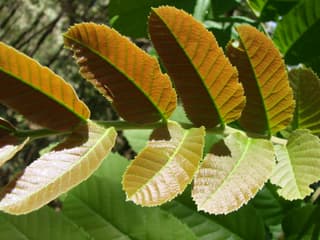
Camboata Tree
Cupania
Cupania is a genus of neotropical trees in the family Sapindaceae, comprising about 58 species distributed from Mexico and southern Florida through Central America, the Caribbean, and South America to northern Argentina. The best-known species, Cupania vernalis (camboata), is a semi-deciduous tree reaching 10 to 22 meters tall with a dense, elongated crown. Its small, whitish-yellow to pale pink flowers bloom between summer and autumn and attract many pollinators. The fruits are capsules that turn from green to reddish, exposing black seeds wrapped in an orange aril that is highly attractive to birds. It is a pioneer species widely used in the restoration of degraded land and in urban tree planting.
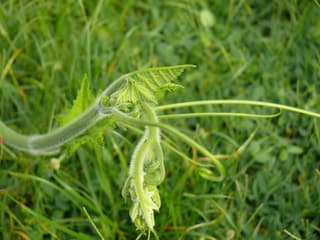
Pumpkin
Curburbita pepo
Pumpkin (Cucurbita pepo) is an annual vine from the Cucurbitaceae family, native to North and Central America. It produces creeping or climbing stems, large, rough leaves, and showy yellow-orange flowers. Its fruits vary enormously in shape, size, and color, including zucchini, ornamental gourds, and winter squash. It has been cultivated for millennia by indigenous American peoples and is now one of the most popular vegetables in the world.
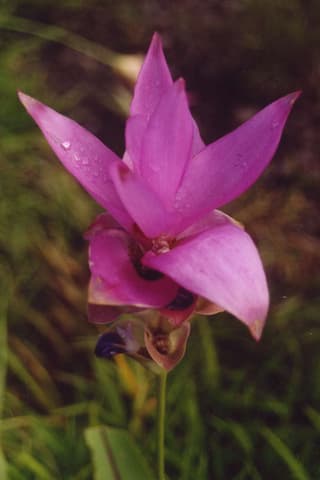
Turmeric
Curcuma
Turmeric is a genus of over one hundred species of rhizomatous herbs in the Zingiberaceae family (the same as ginger), native to South and Southeast Asia. Some species, such as Curcuma longa (the turmeric used in cooking and traditional medicine), are cultivated for their rhizomes; others, such as Curcuma alismatifolia (Siam tulip), are prized for their colorful, cone-shaped inflorescences. All share large, lanceolate foliage and a seasonal growth habit marked by a period of dormancy.

Siam Tulip
Curcuma alismatifolia
The Siam tulip (Curcuma alismatifolia) is a rhizomatous perennial in the ginger family (Zingiberaceae), native to Thailand, Laos, and Cambodia. Despite its common name, it is unrelated to true tulips (Tulipa spp.) — its showy pink, white, or purple "flowers" are actually colorful bracts surrounding small, inconspicuous true flowers. The plant grows from underground rhizomes, producing clumps of large, lance-shaped leaves resembling miniature banana foliage. It blooms from late spring through summer and then goes fully dormant in autumn and winter, dying back to the rhizome until the following growing season. Siam tulip is widely grown as a container and garden ornamental in warm climates, and also valued as a long-lasting cut flower.
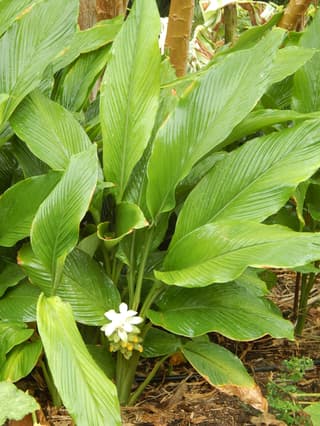
Turmeric
Curcuma longa
Turmeric (Curcuma longa) is a herbaceous perennial in the ginger family (Zingiberaceae), native to India and Southeast Asia. It grows from fleshy, bright orange rhizomes and produces large, lance-shaped leaves resembling those of a banana plant. It is cultivated both as an ornamental and for its rhizome, which has been used as a spice, dye, and medicine for thousands of years.
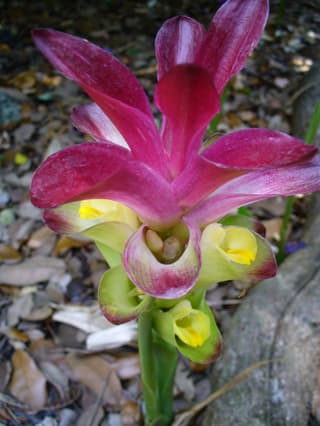
Zedoary
Curcuma zedoaria
Curcuma zedoaria, commonly known as Zedoary or White Turmeric, is a tropical rhizomatous perennial herb from Southeast Asia. A member of the ginger family (Zingiberaceae), it produces elegant pale yellow to white flowers with purple bracts in spring and summer. Its aromatic rhizomes have been used for millennia in Ayurvedic and Traditional Chinese Medicine, as well as in cooking. It goes dormant in winter, dying back to its underground rhizomes, and re-emerges vigorously each spring.
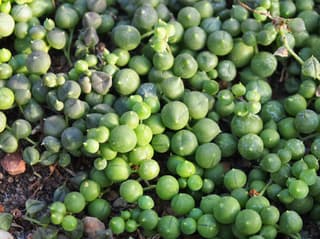
String of Pearls
Curio rowleyanus
String of Pearls (Curio rowleyanus) is a trailing succulent native to South Africa, prized for its distinctive spherical, bead-like leaves that cascade elegantly from hanging baskets. WARNING: Toxic to cats, dogs, and humans due to pyrrolizidine alkaloids.
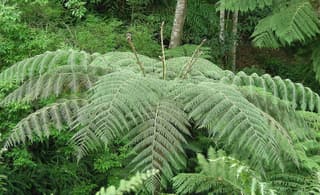
Tree Fern
Cyathea delgadii
Cyathea delgadii, popularly known as the tree fern or lacy tree fern, is an arborescent fern native to the tropical and subtropical forests of Central and South America, including Brazil (Rio Grande do Sul and Santa Catarina). It forms an erect stipe (trunk) up to 4.5 m tall, covered with scars left by fallen old fronds, and supports a crown of arching bipinnate fronds that can reach 1.5 to 3 m in length. It is found in the understory of humid forests at altitudes between 100 and 2,700 m, always in shaded locations with constant high humidity. Like other species in the genus, it produces extraordinary amounts of spores per frond, one of the highest recorded spore production rates among vascular plants.
Fluted bird's nest
Cyathus striatus
Cyathus striatus, commonly known as the fluted bird's nest, is a saprobic fungus characterized by its splash-cup shape. The inner surface of the cup is distinctly fluted or grooved, and it contains small, egg-like structures called peridioles which house the spores. These fungi are typically found growing in clusters on decomposing wood, mulch, or woody debris in shaded, moist environments.
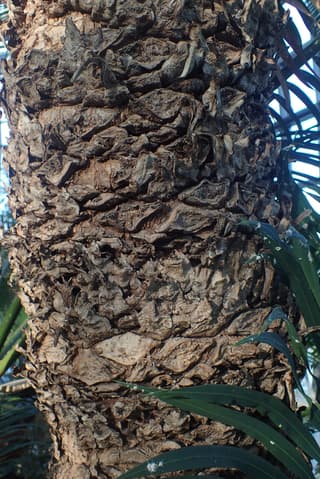
Queen Sago
Cycas rumphii
Cycas rumphii, known as queen sago, is a slow-growing cycad native to the coastal forests of Indonesia, New Guinea and nearby Indian Ocean islands. Despite its palm-like rosette of glossy, arching fronds, it is not a true palm but an ancient gymnosperm related to conifers, predating flowering plants by millions of years. It forms a thick, columnar trunk topped with a crown of pinnate leaves and is prized as a striking, long-lived ornamental for gardens and large containers in tropical and subtropical climates.
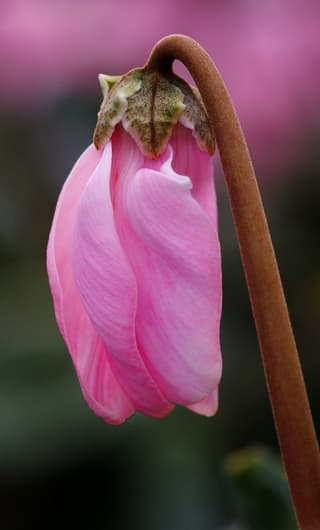
Cyclamen
Cyclamen
Cyclamen is a genus of about 20 tuberous perennial species in the family Primulaceae, native to the Mediterranean basin and parts of Europe, North Africa and Iran. The most widely cultivated species as a houseplant is Cyclamen persicum, the florist's cyclamen, prized for its upswept, butterfly-like flowers in white, pink, red and magenta held above heart-shaped, often silver-marbled leaves. Cyclamen grow from a flattened tuber and follow a distinct seasonal cycle: active growth and flowering in cool months (fall through spring), followed by a summer dormancy when the foliage yellows and dies back.
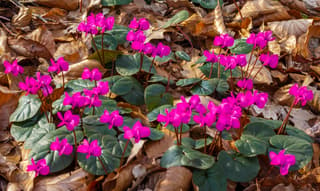
Eastern Cyclamen
Cyclamen coum
Cyclamen coum, the eastern sowbread, is a tuberous winter- and spring-flowering perennial native to the region around the Black Sea, from Bulgaria through northern Turkey to the Caucasus, with an isolated population reaching Lebanon and northern Israel. It forms a low, flattened tuber that rests dormant through summer heat, then pushes up rounded, heart-shaped leaves - often marbled silver - alongside shell-shaped flowers in white, pink, or deep magenta from late winter into spring. One of the hardiest cyclamen species, it naturalises readily under deciduous trees and shrubs, self-seeding into drifts over the years.
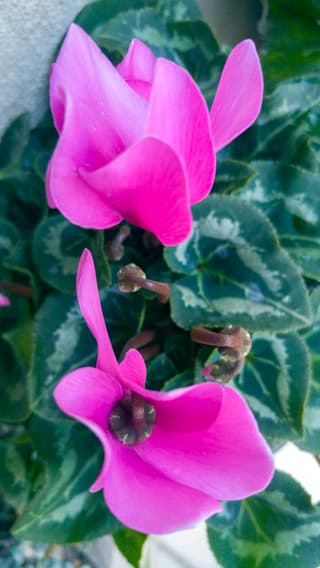
Persian Cyclamen
Cyclamen persicum
Cyclamen persicum is a charming tuberous perennial native to the Mediterranean region, prized for its elegant upswept flowers and heart-shaped marbled leaves. It blooms prolifically during winter when most houseplants are dormant, providing vibrant color indoors. The flowers come in shades of white, pink, red, and purple, often with a sweet fragrance.
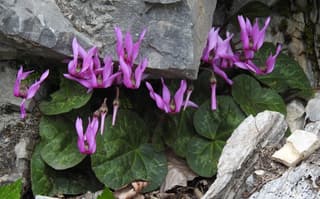
European Cyclamen
Cyclamen purpurascens
European Cyclamen (Cyclamen purpurascens) is a tuberous perennial in the family Primulaceae, native to the mountain forests of Central Europe. It is distinguished by its evergreen, heart-shaped leaves with elegant silver patterns and its sweetly fragrant flowers in shades of pink to deep purple, blooming from summer through autumn. It is one of the hardiest cyclamen species, tolerating temperatures well below freezing.
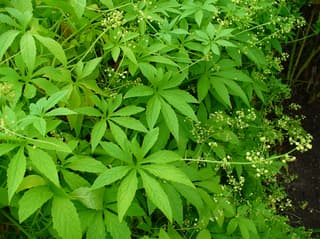
Caigua
Cyclanthera pedata
Caigua (Cyclanthera pedata) is a fast-growing annual climbing vine from the Cucurbitaceae family, native to the Andean regions of Peru. Its thin, tendril-bearing stems grow to a length of approximately 4.5 m, with palmately divided leaves measuring 10–12 cm in diameter. Small white-greenish flowers grow in the leaf axils. The light green, slightly curved fruits grow up to 20 cm and have a smooth or finely spiked skin; young fruits are eaten raw, while more mature ones are stuffed.
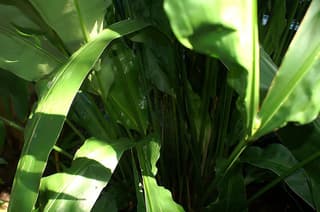
Split-leaf Cyclanthus
Cyclanthus bipartitus
Cyclanthus bipartitus, known within its family as the "Panama hat plant" (Cyclanthaceae), is a stemless perennial herb native to humid tropical rainforests ranging from southern Mexico and Central America to Venezuela, the Guianas, Colombia, Ecuador, Peru, Bolivia, and northern Brazil. It typically grows along stream banks and in swampy understory areas, forming dense clumps. Its long leaves (50 to 100 cm or more) are deeply divided in half from the base, resembling a split fan or a fishtail—therefore, despite its palm-like appearance, it is not a true palm. It produces a spadix inflorescence with flowers arranged in discs, orange in color, with a fragrance reminiscent of a blend of cinnamon and vanilla; among Amazonian indigenous peoples, these flowers are used in body adornments.
Dark Fieldcap
Cyclocybe erebia
Cyclocybe erebia, formerly known as Agrocybe erebia, is a saprophytic fungus that plays a crucial role in the decomposition of organic matter. It is characterized by a dark brown cap, often slimy when wet, which becomes wrinkled and pale as it dries. It features a persistent membranous ring on the stem and gills that change from grayish to chocolate brown as the spores mature. It is commonly found in rich soils of deciduous forests or gardens with heavy mulch.
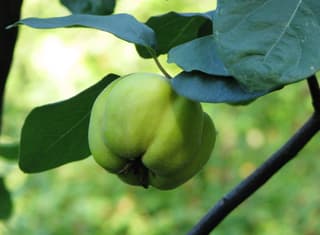
Quince
Cydonia oblonga
Cydonia oblonga, commonly known as quince, is a deciduous small tree or large shrub in the family Rosaceae. Native to southwest Asia and the Caucasus region, it produces fragrant pinkish-white flowers in spring and large, golden-yellow, pear-shaped aromatic fruits in autumn. One of the oldest cultivated fruits, quince has been grown for thousands of years for its culinary and medicinal properties.
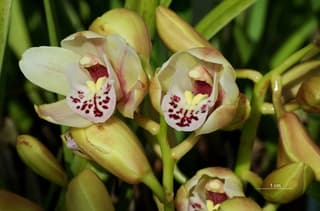
Cymbidium orchid
Cymbidium
The Cymbidium genus comprises orchids highly valued for their lush flowers and flower spikes that can last up to ten weeks. Unlike many tropical orchids, Cymbidiums prefer cooler climates and are known as cool-climate orchids. They feature oval pseudobulbs and long, strap-shaped leaves that remain green year-round.
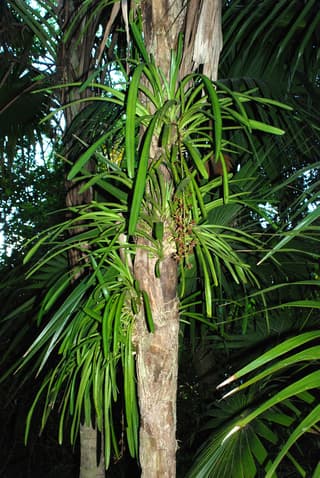
Indian Boat Orchid
Cymbidium aloifolium
Cymbidium aloifolium, commonly known as the Indian Boat Orchid or Aloe-leafed Cymbidium, is an epiphytic orchid native to tropical and subtropical forests of Asia, including India, China, and Southeast Asia. It features stiff, strap-like leaves resembling aloe foliage and produces graceful arching flower spikes with cream, pale yellow, and maroon-striped blooms.

Boat Orchid
Cymbidium hybridum
Cymbidium hybridum refers to the vast group of cultivated Cymbidium hybrids (Orchidaceae) bred over more than a century from wild Asian and Australian species. These evergreen, terrestrial-to-epiphytic orchids form clumps of pseudobulbs topped with long, strap-shaped leaves, and in late winter to spring they send up sturdy arching spikes carrying a dozen or more long-lasting, waxy flowers. Modern hybrids range from miniature to large-flowered types, in shades of white, green, yellow, pink, red, cream and near-brown, often with a contrasting spotted lip. Prized as houseplants, patio specimens in mild climates, and cut flowers, boat orchids reward growers with cool nights and bright light with months of bloom.
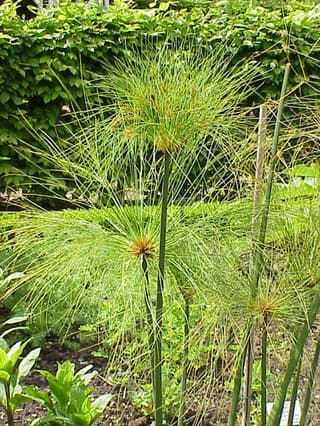
Egyptian Papyrus
Cyperus papyrus
Cyperus papyrus, commonly known as Egyptian Papyrus or Paper Reed, is a majestic semi-aquatic plant native to the banks of the Nile River in northeastern Africa. Its tall, triangular stems can reach up to 16 feet (5 meters) in height, topped with feathery, umbrella-like clusters of thread-fine rays. One of the most historically significant plants in human civilization, it was the source of the world's first paper. Today it thrives in water gardens, ponds, and large containers.
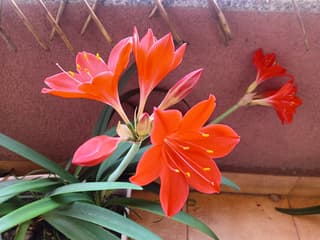
Scarborough lily
Cyrtanthus elatus
Cyrtanthus elatus, popularly known as the Scarborough lily, is a perennial bulb in the Amaryllidaceae family, native to the mountainous coastal slopes of the Cape in southern South Africa (between Mossel Bay and Humansdorp). It produces upright flower stalks up to 65 cm tall with up to nine trumpet-shaped flowers in shades of scarlet red, pink, or, rarely, white, which bloom from late spring to autumn. Cultivated as an ornamental container plant for nearly 250 years, it earned its common name after naturalizing on the coastal cliffs of Scarborough, England, in the 19th century.
Medium Care Easy Care
Our selection of 1159 medium easy care combines the characteristics of this category with moderate care needs. Ideal for those with basic experience.
Why Choose Medium Easy Care?
Combining the beauty of easy care with medium difficulty level lets you enjoy this category with a balanced care commitment. Each plant was selected to offer the best characteristics of the category at the care level you are looking for.