1135 Medium Easy Care | 2026 Guide - Page 9
Find 1135 medium easy care. Complete guide for your garden.
1135 Easy Care with medium level
Showing 289-324 of 1135
Croton Mammy
Codiaeum variegatum 'Mammy'
Croton Mammy is a compact cultivar of Codiaeum variegatum, prized for its narrow, curled leaves splashed with red, orange, yellow, and green. Native to Southeast Asia and the Pacific Islands, this tropical evergreen shrub brings bold, ever-changing color to bright indoor spaces, with leaf hues shifting as they mature and intensifying under strong light.

Croton 'Petra'
Codiaeum variegatum 'Petra'
Croton 'Petra' (Codiaeum variegatum 'Petra') is a popular croton cultivar prized for its large, glossy, leathery leaves splashed with vivid green, yellow, orange and red along the veins. Native to the Pacific Islands and Southeast Asia, this tropical evergreen shrub is grown mainly as a striking indoor ornamental, requiring abundant light to keep its colors intense.
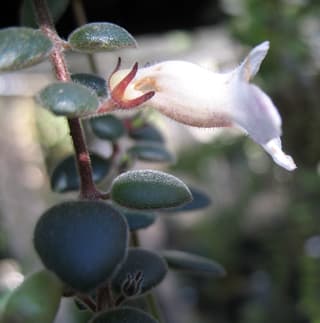
Codonanthe
Codonanthe devosiana
Codonanthe (Codonanthe devosiana) is an epiphytic subshrub from the Gesneriaceae family, related to the African violet. It is native to the Atlantic Forest of southeastern and southern Brazil, where it grows hanging from trunks and branches, rarely rooting in solid ground. Its thin, trailing stems bear small, fleshy, almost round leaves that are dark green on the upper side and reddish or maroon on the underside. Between spring and autumn, it produces white or pale pink tubular flowers, sometimes with a yellow or maroon throat, followed by small, bright orange berries. Due to its trailing habit and prolonged flowering, it is highly valued in hanging baskets and as a houseplant.

Trailing Codonanthe
Codonanthe gracilis
Codonanthe gracilis is a trailing epiphytic subshrub in the African violet family (Gesneriaceae), native to Brazil's Atlantic Forest, where it grows perched on tree trunks and branches in humid, shaded understories. Its slender, cascading stems can reach over a meter in length and readily root along their nodes, making it an excellent choice for hanging baskets. Small, fleshy, glossy leaves line the stems, punctuated by delicate white to pale pink tubular flowers with maroon throat markings that give way to bright orange berries.
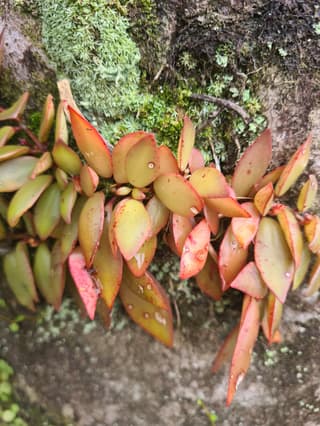
Codonanthe
Codonanthopsis crassifolia
Codonanthopsis crassifolia (still widely sold under its older name, Codonanthe crassifolia) is a small trailing epiphyte in the African violet family, Gesneriaceae. Native to the humid rainforest understory of Brazil, it grows on tree bark, its slender cascading stems studded with thick, glossy, moisture-retaining leaves that form dense mats over time. It produces small tubular flowers in shades of creamy white to pale pink, about 1.5-2.5 cm long, followed by yellow-to-orange berries. In the wild it shares a remarkable partnership with arboreal ants: it offers extrafloral nectar and ant-fodder berries, and in return its seeds and roots are carried into the ants' carton nests, a classic myrmecophyte relationship. In cultivation it makes an easy-going hanging or mounted specimen for warm, humid rooms.
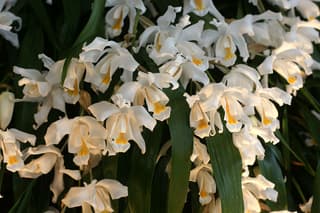
Snow Queen Orchid
Coelogyne cristata
Coelogyne cristata is a stunning epiphytic orchid native to the cool, moist Himalayan foothills. It produces cascading sprays of pristine white flowers with golden-yellow markings on the lip, blooming in late winter to early spring. Its evergreen strap-like leaves emerge from oval pseudobulbs. This orchid is treasured by collectors for its spectacular winter blooms and intoxicating fragrance.
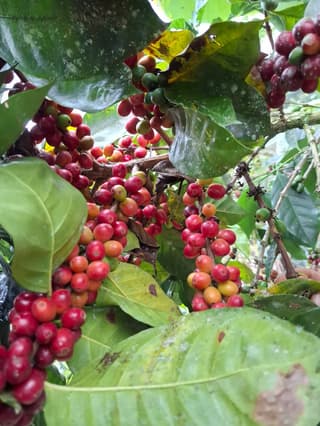
Coffee Plant
Coffea arabica
Coffea arabica, commonly known as the coffee plant, is an evergreen shrub with dark green, glossy, and waxy foliage. Native to the highlands of Ethiopia, it is the species responsible for most of the world's gourmet coffee production. When grown indoors, it stands out for its ornamental beauty and occasionally for its fragrant white flowers that give rise to the red fruits known as 'coffee cherries'.
Robusta Coffee
Coffea canephora
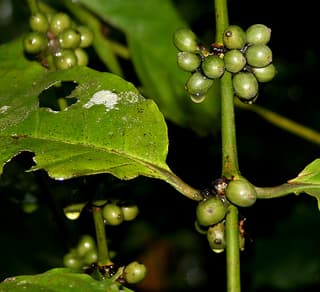
Coffea canephora, commonly known as Robusta coffee, is an evergreen shrub or small tree native to Western and Central Africa (Congo basin). It is the second most widely grown coffee species in the world, accounting for 40–45% of global coffee production. Robusta is prized for its higher caffeine content (2.7%), superior disease resistance, and drought tolerance compared to Arabica. It produces a full-bodied, strong-flavored coffee widely used in espresso blends and instant coffee. Vietnam and Brazil are the world's largest Robusta producers.

Kola nut
Cola acuminata
The kola nut (Cola acuminata) is an evergreen tree belonging to the mallow family (Malvaceae), originating from the lower canopy of the rainforests of West and Central Africa. It can grow up to 20 meters tall with a similar crown diameter in its natural habitat, featuring glossy, leathery, oblong-ovate leaves. Its small, petal-less flowers are creamy yellow with purple striations and bloom in clusters on woodier shoots. The fruit, contained in a woody pod, holds seeds rich in caffeine and theobromine—the famous kola nuts—which have been chewed for centuries in West Africa for their stimulating effects and were the original namesake and ingredient for cola-flavored soft drinks, including Coca-Cola.
Candle Plant
Coleus paniculatus
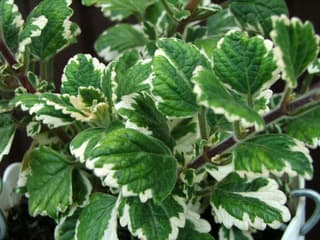
Coleus paniculatus (Candle Plant) is an accepted species in the family Lamiaceae, native to the wet tropical biomes of southern India to southern Indo-China, including India, Thailand, and Vietnam. It was historically treated as a synonym of Plectranthus coleoides and related Plectranthus species, but Coleus paniculatus Benth. is now confirmed as the accepted name by Kew Plants of the World Online (POWO). This fast-growing evergreen shrub is prized for its highly ornamental, richly coloured foliage and is used both as an indoor houseplant and as a tropical garden specimen. It can reach up to 90 cm (3 ft) in height under optimal conditions.
Cooke's Toughshank
Collybia cookei
Collybia cookei, also known as the yellow sclerotium collybia, is a small fungal species recognizable by its characteristic yellowish sclerotium (a persistent resting body). Its cap is whitish or cream-colored, and its gills are crowded. It often appears on the remains of other fungi or heavily decayed wood in humus-rich forest soils.

Taro
Colocasia
Colocasia is a genus of large-leaved tropical perennials native to Southeast Asia, grown worldwide both as a dramatic foliage plant and, in the case of Colocasia esculenta (taro), as one of the world's oldest cultivated food crops. Its broad, heart- or arrow-shaped leaves rise on long petioles from an underground corm, giving it the common name "elephant ear". All parts of the raw plant contain needle-like calcium oxalate crystals that irritate skin and mouth, so the corms and leaves are always cooked thoroughly before eating.

Taro
Colocasia esculenta
Colocasia esculenta, commonly known as Taro or Elephant Ear, is a tropical perennial plant prized for its dramatic heart-shaped leaves that can reach up to 60cm in length. Native to Southeast Asia, it is one of the oldest cultivated plants in the world, grown both as an ornamental foliage plant and as a food crop for its edible corms. The plant produces large, velvety green leaves on long succulent stems, creating a lush tropical appearance.
Goldfish Plant
Columnea gloriosa
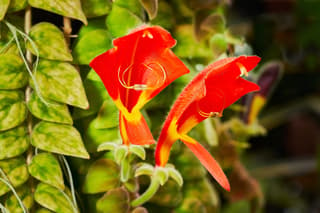
Columnea gloriosa, commonly called the goldfish plant, is a trailing epiphyte native to the tropical rainforests of Costa Rica and Central America. It belongs to the Gesneriaceae family and is prized for its thick, waxy, dark-green leaves and tubular orange-to-red flowers that resemble small leaping goldfish. It blooms mainly in spring and summer along cascading stems that can reach up to 90 cm in length.
Goldfish plant
Columnea microcalyx
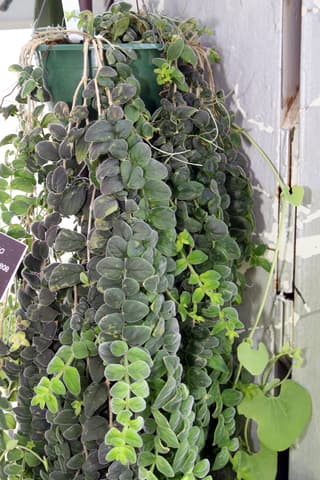
Columnea microcalyx is a tropical epiphytic plant native to Central America, belonging to the Gesneriaceae family. It features trailing stems that can reach up to 90 cm in length, adorned with small, glossy dark green leaves. Its tubular orange to bright red flowers resemble tiny goldfish, giving the plant its common name. It is an ideal houseplant for hanging baskets where it can display its elegant pendulous habit.
milky conecap
Conocybe apala
Conocybe apala, commonly known as the milky conecap, is a saprobic mushroom that frequently appears in lawns, pastures, and compost heaps. It is characterized by its fragile, pale cream to white conical cap and thin, brittle stem. These mushrooms are ephemeral, often appearing in the early morning after rain or heavy dew and collapsing by midday when exposed to the sun.
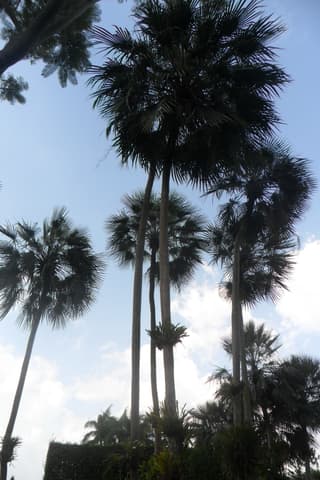
Carnauba Palm
Copernicia prunifera
Copernicia prunifera, the carnauba palm, is a fan palm endemic to the semi-arid Caatinga of northeastern Brazil (Ceara, Piaui, Maranhao, Rio Grande do Norte and Bahia), where it grows along rivers and in seasonally flooded ground that receives only about 800mm of poorly distributed rainfall a year. Mature specimens reach up to 20m tall on a slim, ringed trunk topped by a dense crown of stiff, blue-green fan leaves, and can live for two centuries. It is nicknamed "arvore da vida" (tree of life) in Brazil because almost every part is used, most famously the fine wax coating its fronds, harvested and refined into carnauba wax -- the hardest natural wax in commercial use, prized for polishes, cosmetics and coatings.
Flocculose inkcap
Coprinellus flocculosus
Coprinellus flocculosus is a short-lived, saprotrophic fungal species recognizable by its distinctive cap covered in flaky, whitish veil remnants. Initially ovoid, it becomes bell-shaped before eventually liquefying into a black ink (autolysis), which gives the 'inkcap' family its name. It often appears in clusters on decaying wood, wood chips, or nitrogen-rich soil.
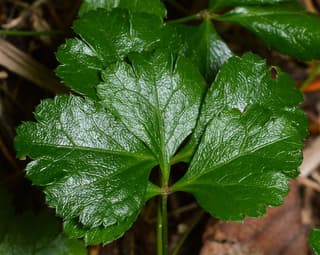
Threeleaf Goldthread
Coptis trifolia
Coptis trifolia, commonly known as Threeleaf Goldthread or Canker Root, is a small evergreen perennial native to boreal forests of North America and East Asia. It forms low-growing mats of glossy trifoliate leaves, with delicate white flowers in spring and summer. Its most distinctive feature is its bright golden-yellow underground rhizomes, from which it derives its common name. The plant contains berberine alkaloids and was historically used by indigenous peoples for treating mouth ulcers and as a bitter tonic.

Spanish Elm
Cordia alliodora
The Spanish Elm (Cordia alliodora) is a tree in the Boraginaceae family, native to the tropical forests of the Americas, ranging from Mexico to Argentina. It can reach up to 30 meters in height, featuring a cylindrical, fluted trunk and branches with hollow nodes that often serve as nesting sites for ants and stingless bees. Its name 'alliodora' refers to the characteristic garlic-like scent emitted by its wood. It is a fast-growing deciduous tree, highly valued as a timber species, for shade in coffee and cocoa agroforestry systems, and as an ornamental for its abundant, fragrant white flowers that primarily bloom during the dry season.
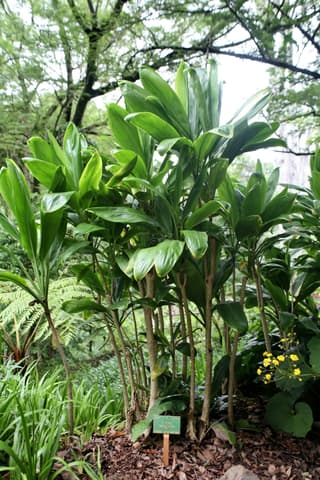
Ti Plant
Cordyline fruticosa
Cordyline fruticosa, commonly known as the Ti Plant or Hawaiian Good Luck Plant, is a striking tropical shrub native to Southeast Asia and the Pacific Islands. Famous for its bold, lance-shaped leaves that come in a stunning array of colors — deep red, pink, purple, and variegated combinations — this plant is as ornamental as it is culturally significant. In Hawaiian and Polynesian traditions, the Ti Plant is considered sacred and is believed to bring good luck and ward off evil spirits.
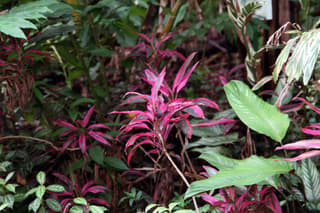
Ti Plant
Cordyline terminalis
Cordyline terminalis, commonly known as the Ti Plant or Hawaiian Ti, is a striking tropical ornamental in the family Asparagaceae, native to Southeast Asia and the Pacific Islands. It is celebrated for its bold, sword-shaped leaves that come in a stunning range of colors — from deep greens to rich burgundy, red, and pink. Revered as sacred in Hawaiian and Polynesian cultures, it symbolizes good luck and spiritual protection. Note: it is toxic to cats, dogs, and humans if ingested (contains saponins).
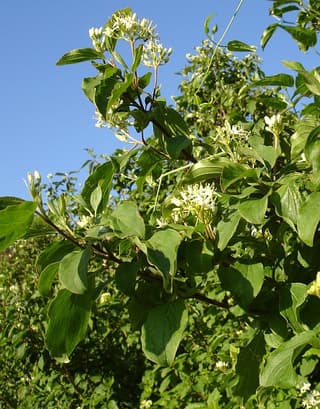
Dogwood
Cornus
Cornus, commonly known as dogwood, is a genus of approximately 60 species of flowering shrubs and small trees belonging to the family Cornaceae. Native primarily to the Northern Hemisphere, dogwoods are celebrated for their spectacular spring blossoms — the showy "petals" are actually modified leaves (bracts) surrounding small true flowers — their stunning autumn foliage, and their ornamental winter stems in vivid red, yellow, or green. Species range from low groundcovers to trees reaching 12 metres, making them versatile additions to gardens, woodland edges, and landscape borders.
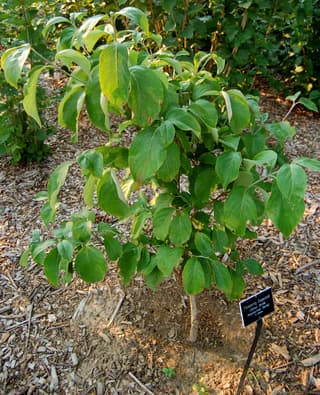
Flowering Dogwood
Cornus florida
Cornus florida, commonly known as the Flowering Dogwood, is a stunning small deciduous tree native to eastern North America. Beloved for its spectacular spring display of white or pink bracts that surround tiny true flowers, it also features brilliant red berries in fall and vibrant scarlet foliage. It is the state tree of Virginia and Missouri, and the state flower of North Carolina.

Scouler's fumewort
Corydalis scouleri
Corydalis scouleri, known as Scouler's fumewort, is a robust woodland perennial native to the coastal forests of Washington and Oregon, where it colonizes rich, moist bottomland along shaded stream banks. It forms broad clumps up to about 90 cm tall of tiered, lacy blue-green foliage, topped in spring and early summer by upright racemes of slender, spurred tubular flowers in pink to mauve. It typically goes dormant by late summer.
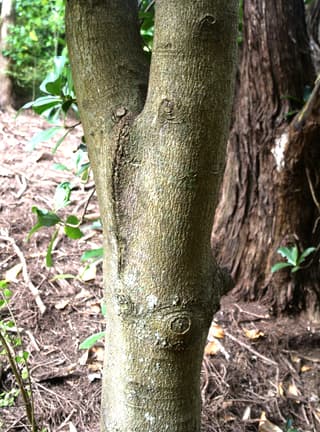
Karaka
Corynocarpus laevigatus
Karaka (Corynocarpus laevigatus) is a stately evergreen tree endemic to New Zealand, prized for its glossy dark-green foliage and orange-yellow drupes. A taonga (treasure) of Māori culture, it was cultivated near settlements as a critical food source — though its seed kernels contain the potent toxin karakin and must be carefully detoxified before consumption. In gardens and coastal landscapes it provides year-round structure and dense shade.
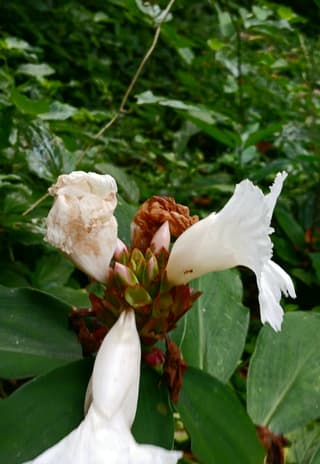
spiral ginger
Costus
Costus is a genus of tropical plants in the family Costaceae, commonly known as spiral ginger. Named for the characteristic spiral arrangement of their stems and leaves, these striking plants produce showy flower spikes in shades of red, orange, yellow, white, and pink. Native to tropical regions of the Americas, Africa, and Asia, the genus encompasses over 150 species thriving in warm, humid environments. Spiral gingers are prized ornamentals in tropical and subtropical gardens and make excellent indoor specimens in bright, humid spaces. Beyond their ornamental value, several Costus species have a long history of use in traditional medicine across their native ranges.
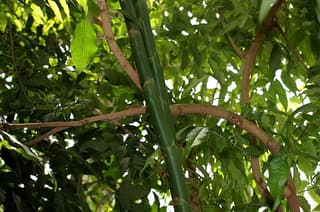
Arabian Spiral Ginger
Costus arabicus
Costus arabicus, commonly known as Arabian Spiral Ginger, is a tropical evergreen perennial in the family Costaceae. Native to South and Central America, it is prized for its spiraling stems, lush foliage, and attractive white to pink flowers. It thrives in warm, humid environments and is widely grown as an ornamental plant in tropical and subtropical gardens as well as indoors.
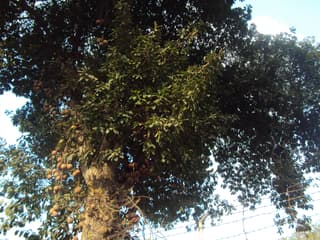
Cannonball Tree
Couroupita guianensis
The Cannonball Tree (Couroupita guianensis) is a majestic tropical tree native to South America, belonging to the family Lecythidaceae. It is renowned worldwide for its spectacular cauliflorous blooms — rose-pink to red fragrant flowers that grow directly from the trunk — and for its large, spherical, cannonball-like fruits weighing up to 7 kg. It can reach up to 30 metres in height in its natural habitat and is widely cultivated as an ornamental tree in botanical gardens and parks.
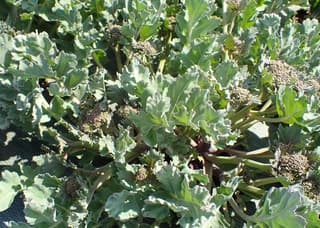
Sea Kale
Crambe
Crambe is a genus of flowering plants in the family Brassicaceae, native to coastal cliffs, stony shores, and Mediterranean regions. The best-known species, Crambe maritima (sea kale), is prized for both ornamental and culinary purposes.
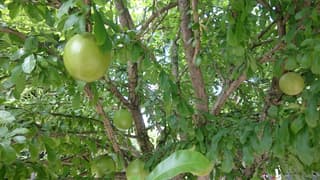
Calabash Tree
Crescentia cujete
Crescentia cujete, the calabash tree, is a small to medium-sized tropical evergreen tree native to Mexico, Central America, and the Caribbean, reaching up to 9 m in height with a broad, spreading canopy. It is instantly recognizable by its cauliflorous habit — large, hard-shelled spherical fruits and yellow-green flowers with purple striping emerge directly from the trunk and older branches. Bat-pollinated and night-flowering, it thrives in full sun and well-draining soils across USDA zones 10b–12b. The calabash has been inseparable from human culture for millennia: its gourd shells have served as bowls, water vessels, musical instruments (maracas, Haitian Vodou asson rattles), and ceremonial containers. In traditional medicine across Latin America and the Caribbean, preparations from bark, leaves, and fruit pulp are used for respiratory ailments, hypertension, wound healing, and as expectorants.

Rock samphire
Crithmum maritimum
Rock samphire (Crithmum maritimum) is a succulent perennial plant in the Apiaceae family, widespread along the rocky and sandy coasts of the Mediterranean, the Atlantic, and the Black Sea. It grows wild on cliffs and rocks battered by salty winds, forming compact, branched bushes with fleshy, glaucous, and aromatic leaves that have an intensely savory flavor. In summer, it produces umbels of small yellowish-white flowers, followed in autumn by aromatic seeds. Extremely resistant to drought and salt spray, it is one of the few truly halophytic horticultural plants.

Saffron crocus
Crocus sativus
The saffron crocus (Crocus sativus) is a cormous bulbous plant in the Iridaceae family, native to the eastern Mediterranean and Asia Minor. Unlike most crocuses that bloom in the spring, it flowers in the autumn, producing lilac to purple blossoms with three long red stigmas—the spice saffron, the most expensive in the world by weight. It is a sterile (triploid) plant, propagated exclusively by corm division, and has been cultivated for over 3,500 years for its aromatic stigmas.
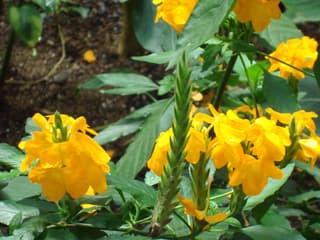
Firecracker Flower
Crossandra infundibuliformis
Crossandra infundibuliformis, commonly known as the Firecracker Flower, is a tropical evergreen shrub native to India and Sri Lanka. It belongs to the Acanthaceae family and is prized for its vibrant fan-shaped flowers that bloom nearly year-round in warm conditions. The glossy, dark green foliage with wavy margins provides an attractive backdrop to the spectacular orange, salmon, yellow, and pink blooms. Its seed pods famously "explode" when wet, which inspired its common name.
Croton
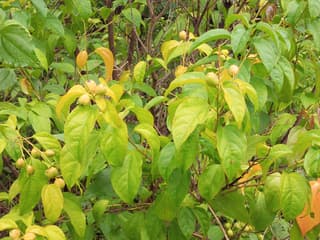
Croton
Croton is one of the largest genera in the spurge family Euphorbiaceae, comprising over 1,100 species of herbs, shrubs, and trees found across tropical and subtropical regions worldwide. The genus displays exceptional diversity in form, size, and habitat — from small ground-cover herbs in dry savannas to large canopy trees in rainforests. It is important to distinguish genus Croton from the popular houseplant known as "garden croton" (Codiaeum variegatum), which belongs to a separate genus despite sharing a common name. Several Croton species have significant medicinal and economic importance: cascarilla bark (Croton eluteria) flavors liqueurs such as Campari, while Croton megalocarpus is studied as a biofuel source. Many species produce a toxic latex and seeds that should be handled with care.
Croton
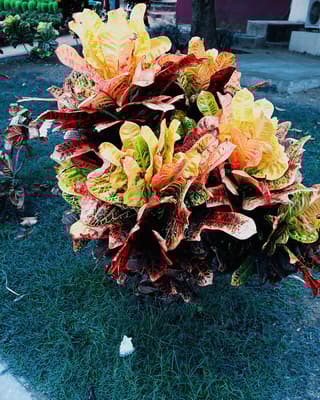
Croton variegatum
Croton (Codiaeum variegatum) is a stunning tropical plant native to Indonesia and Malaysia, prized for its brilliantly colored, leathery leaves that display a kaleidoscope of red, orange, yellow, green, and purple hues. This evergreen shrub belongs to the Euphorbiaceae family and can grow up to 3 meters tall in ideal conditions. The vibrant foliage makes it a popular choice for adding a splash of color to indoor spaces and tropical gardens.
Medium Care Easy Care
Our selection of 1135 medium easy care combines the characteristics of this category with moderate care needs. Ideal for those with basic experience.
Why Choose Medium Easy Care?
Combining the beauty of easy care with medium difficulty level lets you enjoy this category with a balanced care commitment. Each plant was selected to offer the best characteristics of the category at the care level you are looking for.