Euphorbiaceae
Croton: Complete Care Guide
Croton variegatum
Crotons require bright, indirect light to maintain their vibrant colors, consistent watering when the top inch of soil dries, high humidity (40-60%), and warm temperatures between 15-29°C. They are sensitive to cold drafts and sudden temperature changes, which can cause leaf drop.
Every 6 days
Bright indirect
15° - 29°C
40% - 60%
Categories
What is Croton?
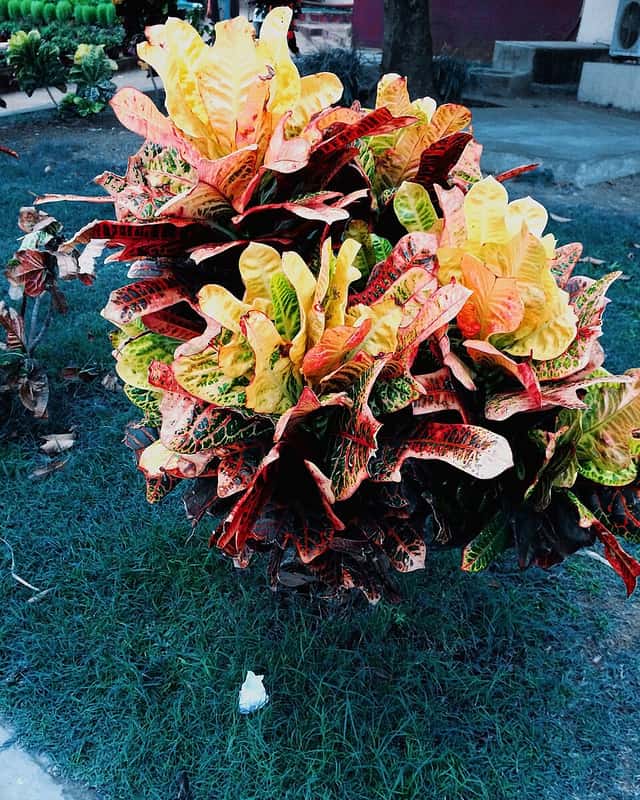
Croton (Croton variegatum) is a medium-care plant from the Euphorbiaceae family. Croton (Codiaeum variegatum) is a stunning tropical plant native to Indonesia and Malaysia, prized for its brilliantly colored, leathery leaves that display a kaleidoscope of red, orange, yellow, green, and purple hues. This evergreen shrub belongs to the Euphorbiaceae family and can grow up to 3 me...
Croton grows up to 3.0m, spread of 180cm, watering every 6 days, 15°C – 29°C, 40–60% humidity. It is suitable for indoor environments and not safe for pets.
Without precautions, ingestion can cause irritation in pets. Keep out of reach of cats and dogs. Without adequate drainage, root rot can develop within 12 days.
How to Care for Croton?
TLDR: Croton needs Bright indirect, watering every 6 days, and temperatures between 15-29°C with 40-60% humidity.
How Often Should You Water Croton?
Water when the top 2-3cm of soil feels dry, typically every 5-7 days. Ensure thorough watering until water drains from the bottom, but never let the plant sit in water. Reduce watering in winter.
How Much Light Does Croton Need?
Place in bright, indirect light for 6-8 hours daily. Morning sun is acceptable, but protect from intense afternoon rays. Insufficient light will cause leaves to lose their vibrant colors and revert to green.
What Is the Best Soil for Croton?
Use a well-draining, slightly acidic potting mix (pH 5.5-6.5) with peat moss, perlite, and pine bark. Good drainage is essential to prevent root rot.
What Pot Should You Use for Croton?
Use a pot with drainage holes. Terracotta pots work well as they allow excess moisture to evaporate, helping prevent root rot.
Care Schedule
Fertilize
Every 30 days
Misting
Every 3 days
Rotate
Every 14 days
Repot
Every 730 days
What Is Croton and Where Does It Come From?
Croton (Codiaeum variegatum) is a stunning tropical plant native to Indonesia and Malaysia, prized for its brilliantly colored, leathery leaves that display a kaleidoscope of red, orange, yellow, green, and purple hues. This evergreen shrub belongs to the Euphorbiaceae family and can grow up to 3 meters tall in ideal conditions. The vibrant foliage makes it a popular choice for adding a splash of color to indoor spaces and tropical gardens.
How to Propagate Croton?
Stem cuttings
Spring and summer are the best times for propagation
- 1 Take a 10-15cm cutting with 3-5 leaves
- 2 Allow the cut end to dry for a few hours
- 3 Dip in rooting hormone
- 4 Plant in moist potting mix
- 5 Cover with plastic bag to maintain humidity
- 6 Keep warm (21-24°C) and in bright indirect light
- 7 Roots develop in 4-6 weeks
Materials needed:
How Big Does Croton Grow?
TLDR: Croton can reach up to 3.0m tall with Medium growth rate.
Max height
3.0m
Spread
1.8m
Growth rate
Medium
Foliage
Evergreen
Warning: Toxic Plant
This plant can be toxic if ingested. Keep out of reach of:
Plant Uses
Ornamental
Great for decoration
Is your plant showing symptoms?
Click on the symptom to discover possible causes:
What Diseases Commonly Affect Croton?
TLDR: Croton is susceptible to 16 known diseases. Monitor regularly for early detection.
Spider Mites
Spider mites are tiny arachnids (less than 1/20 inch long) related to spiders and ticks that feed on plant sap. They thrive in hot, dry conditions and can cause significant damage to ornamental and vegetable plants. During severe infestations, crop losses can reach 14% or higher as these pests disrupt vital plant processes including photosynthesis, carbon dioxide absorption, and transpiration.
Scale Insects
Scale insects are small sap-sucking pests that appear as brown, shell-like bumps on plant stems and leaves. There are over 25 species, divided into armored (hard) and unarmored (soft) scales. They feed by piercing plant tissue and extracting sap, which weakens the plant and can lead to yellowing, stunted growth, and even death if left untreated. They also excrete honeydew, which attracts ants and promotes sooty mold growth.
Mealybugs
Mealybugs are small, soft-bodied insects covered with a white, waxy, cottony material. They are common pests of houseplants and outdoor plants in mild climates. These sap-sucking insects feed on plant tissue, causing damage, stunted growth, and can lead to plant death if left untreated. They produce sticky honeydew which attracts sooty mold.
Thrips
Thrips are tiny cigar-shaped insects (1/25-inch long) that damage plants by sucking plant juices and scraping at fruits, flowers, and leaves. With over 6,000 species and rapid reproduction (lifecycle as short as 14 days), they can quickly infest plants and transmit viruses like tomato spotted wilt virus.
Meaning & Symbolism
Symbolizes change, transformation, and vibrant energy. Its colorful leaves represent diversity and the beauty of embracing different aspects of life.
Compare with similar plants
| Attribute | Difficulty | Light | Watering | Pet Safe |
|---|---|---|---|---|
| Dark Fieldcap | Medium | Low light | 2d | ⚠️ |
| Azalea | Medium | Partial shade | 3d | ⚠️ |
| Muriel's Bamboo | Medium | Partial shade | 3d | ✓ |
| Bougainvillea | Medium | Direct sun | 7d | ⚠️ |




