2343 Easy Plants | 2026 Guide - Page 40
Discover 2343 easy plants for your garden. Complete care guide.
2343 Easy Plants
Showing 1405-1440 of 2343
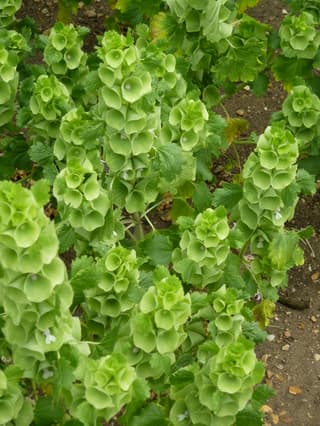
Bells of Ireland
Moluccella laevis
Moluccella laevis, commonly known as Bells of Ireland, is an annual flowering plant native to western Asia (Turkey, Syria, Caucasus region). It produces tall, elegant spikes adorned with distinctive green, bell-shaped calyces encasing small white fragrant flowers. Despite its Irish name, it has no connection to Ireland. Cultivated since 1570, it is prized in fresh and dried floral arrangements worldwide.

Ritchie's Spurge
Monadenium ritchiei
Ritchie's Spurge (Monadenium ritchiei, synonym Euphorbia ritchiei) is a clumping succulent in the spurge family (Euphorbiaceae), native to Kenya. The plant features a thick, fleshy caudex and upright or decumbent stems with distinct, cone-shaped tubercles and fleshy leaves clustered at the tips of the shoots. The leaves often drop during dry periods, and the stems can develop a reddish glow in bright sunlight. In summer and fall, the plant may produce pink flowers (cyathia). Like other Euphorbia species, it contains a white, toxic milky sap (latex) in all parts of the plant.
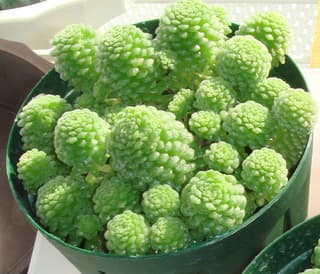
Monanthes polyphylla
Monanthes polyphylla
Monanthes polyphylla is a small perennial succulent endemic to the Canary Islands (Gran Canaria, Tenerife, La Palma, and La Gomera), where it grows in very localized areas within shaded cliff crevices and damp rocks between 100 and 1500 meters in altitude. It forms dense mats of tiny, globose rosettes composed of tightly packed fleshy leaves, resembling succulent moss, and barely reaches 10-12 cm in height. Between late spring and summer, it produces small star-shaped flowers in shades of purple, pink, yellowish, or greenish on thin stems that rise above the foliage.
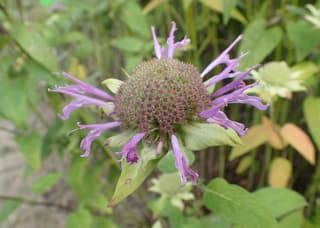
Scarlet Bee Balm
Monarda didyma
Monarda didyma (scarlet bee balm) is a perennial plant in the mint family native to the moist woods and riverbanks of North America. It features dense, globular flower heads with bright red (also pink, purple, or white in cultivars) tubular flowers that bloom from mid-summer to early fall, attracting hummingbirds, butterflies, and bees. The aromatic leaves on square stems release a spicy scent when crushed. The plant spreads via rhizomes and forms expanding clumps.
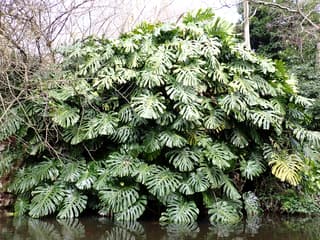
Swiss Cheese Plant
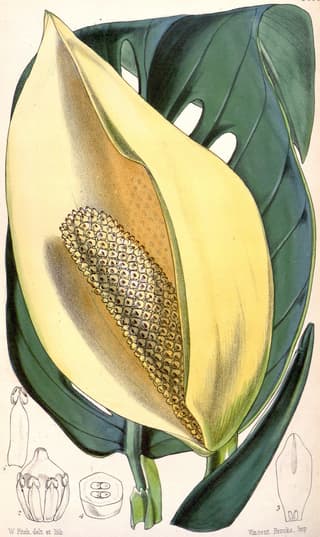
Monstera
Monstera is a genus of approximately 50 species of tropical plants in the family Araceae, native to Mexico and Central America. Famous for their large, glossy leaves with distinctive natural holes and splits (fenestrations), Monsteras are among the most popular houseplants worldwide. The most iconic species is Monstera deliciosa, followed by M. adansonii and M. obliqua.
Swiss Cheese Vine
Monstera adansonii
Monstera adansonii is a charming tropical climber known for its heart-shaped leaves with characteristic natural perforations. Native to Central and South America, this epiphytic plant naturally grows climbing trees in the tropical rainforest. It is a fast-growing and easy-to-care plant, ideal for beginners.
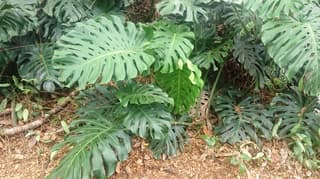
Swiss Cheese Plant
Monstera deliciosa
Tropical plant native to Mexico and Central America, known for its large, perforated leaves. It is one of the most popular houseplants in the world due to its exotic appearance and ease of care.
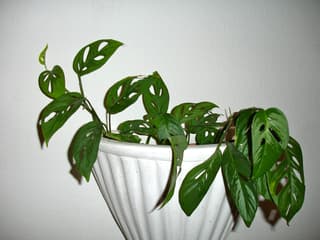
Monstera Friedrichsthalii
Monstera friedrichsthalii
Monstera friedrichsthalii is a tropical climbing aroid (family Araceae) with glossy green leaves full of oval holes (fenestrations), which is why it is called Swiss cheese vine. The name is now treated as a synonym of Monstera adansonii subsp. laniata (the accepted name in POWO and World Flora Online), and in the trade it is usually sold as Monstera adansonii. It grows wild from Nicaragua and Panama through Colombia, Venezuela, the Guianas, Ecuador, Peru, Bolivia and northern Brazil, in moist forests mostly below 700 m. Young plants trail or creep; once they climb a tree they produce much larger leaves.
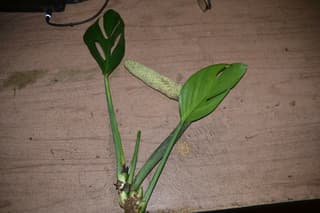
Monstera Peru
Monstera karstenianum
Monstera Peru, scientifically known as Monstera karstenianum, is a unique climbing plant prized for its unusually thick and leathery leaves. Unlike other Monstera species, it typically does not develop holes or fenestrations, but instead stands out for its rugose surface and a metallic dark green sheen that gives it a prehistoric and elegant appearance.
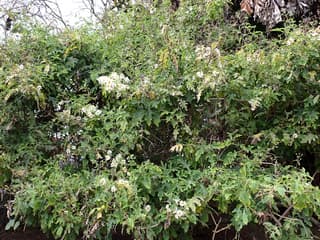
Mexican Daisy Bush
Montanoa bipinnatifida
Montanoa bipinnatifida, commonly known as the Mexican Daisy Bush or Tree Chrysanthemum, is a fast-growing shrub or small tree in the Asteraceae family, native to Mexico and Central America. It can reach up to 5 meters in height, featuring deeply lobed leaves and clusters of white or yellowish daisy-like flowers with a delightful sweet fragrance reminiscent of chocolate or freshly baked cookies. It blooms in fall and winter, making it a standout specimen in the garden during the cooler months.
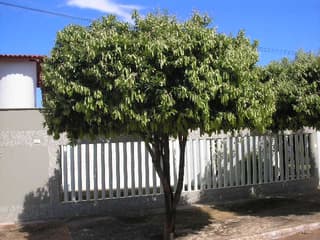
Oiti
Moquilea tomentosa
Moquilea tomentosa, popularly known as Oiti, is a tree native to the Atlantic Forest and Brazilian flora. It is widely used in urban landscaping for streets, parks, and squares due to its dense, rounded canopy that provides excellent shade. It can reach heights of 30 to 50 feet. Its leaves are simple, dark green, and have a velvety texture. It blooms in winter with small white or cream flowers of low ornamental value, and bears fruit between November and January, producing oval, yellow-orange drupes with fibrous, aromatic pulp that is edible for both humans and local wildlife.
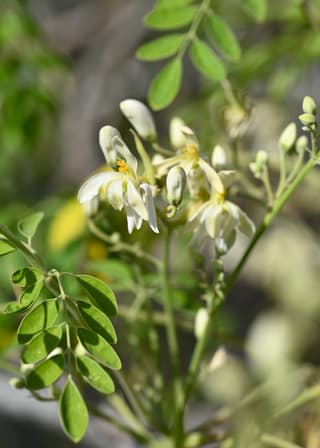
Moringa
Moringa oleifera
Moringa oleifera, commonly known as the drumstick tree, horseradish tree, or ben oil tree, is a fast-growing, drought-resistant tree native to the foothills of the Himalayas. It is widely cultivated in tropical and subtropical areas for its highly nutritious leaves, pods, seeds, and flowers. The tree has a slender trunk, a spreading crown, and compound leaves that are feathery in appearance. It produces clusters of fragrant, white to cream-colored flowers and long, slender, triangular pods.
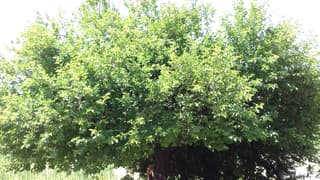
White mulberry
Morus alba
Morus alba, known as white mulberry, is a fast-growing, small to medium-sized tree that typically reaches 10 to 20 meters in height. Native to northern China, it is historically significant as the primary food source for silkworms. The tree features highly variable leaf shapes, often exhibiting deep lobes on younger branches. The fruit is a collective drupe that transitions from white or green to pink or dark purple when fully ripe, offering a sweet flavor profile.
Indian Mulberry
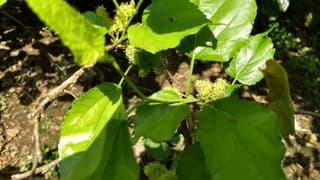
Morus indica
Morus indica is a shrub or small tree in the Moraceae family, native to the temperate and sub-tropical Himalayas and Indochina and cultivated in India, China, Japan and East Africa. Its leaves feed silkworms and its berries are edible.
Black Mulberry
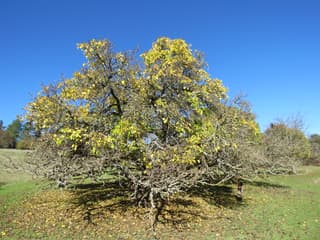
Morus nigra
Morus nigra, commonly known as the Black Mulberry, is a deciduous fruit tree native to Southwest Asia, prized for its dark, juicy berries and ornamental value. It can grow up to 12 meters tall with a wide spreading canopy, making it an excellent choice for large gardens and orchards.

Red Mulberry
Morus rubra
Morus rubra, the red mulberry, is a deciduous tree native to eastern North America, prized for its heart-shaped leaves and sweet, blackberry-like fruit that ripens from red to deep purple in summer.
Wire Vine
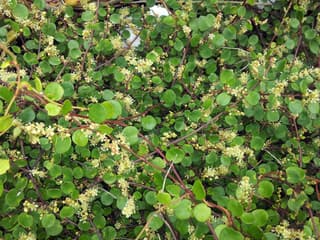
Muehlenbeckia
Muehlenbeckia is a genus of fast-growing creeping and climbing plants from the Polygonaceae family, native to New Zealand and South America. Recognised by their wiry dark stems, tiny rounded leaves, and intricate lace-like texture, these plants are widely used as ground covers, in hanging baskets, and as trailing accents in containers. They are highly adaptable and easy to care for.
Creeping Wire Vine
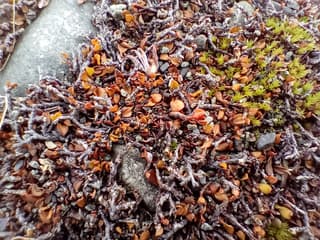
Muehlenbeckia axillaris
Muehlenbeckia axillaris, known as creeping wire vine, is a low, mat-forming evergreen-to-semi-evergreen shrub native to New Zealand and parts of southeastern Australia (Tasmania, New South Wales, Victoria). Its wiry, red-brown stems spread along the ground, studded with tiny, glossy, rounded leaves less than 1 cm across. Small yellowish-white flowers appear in the leaf axils in summer, followed by small black, shiny fruits in late summer to fall. Valued as a tough, drought-tolerant ground cover for rockeries, pathways, and container topiary, it forms dense mats up to 1 metre wide while staying only around 10-30 cm tall.
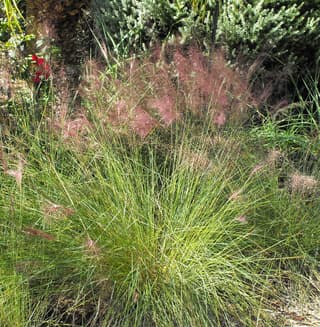
Pink Muhly Grass
Muhlenbergia capillaris
Pink muhly grass (Muhlenbergia capillaris) is a stunning warm-season perennial bunchgrass native to the eastern United States. It forms dense, fine-textured clumps of narrow, arching green blades that reach 60–90 cm tall. In late summer and fall, it erupts into a breathtaking cloud of airy, pink-to-purple panicles that can double its height, creating a spectacular misty effect in the landscape. Hardy from USDA zones 5 to 9b, it thrives in full sun with dry to well-drained soils and is highly drought tolerant once established. Its low-maintenance nature and striking fall display make it one of the most popular ornamental grasses for mass plantings, borders, meadows, and xeriscaping.
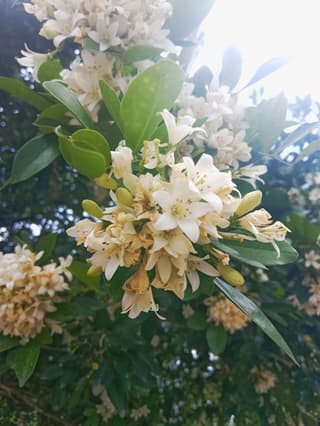
Orange Jasmine
Murraya paniculata
Murraya paniculata is an evergreen shrub or small tree native to South and Southeast Asia. It is widely cultivated for its dense, glossy dark green foliage and intensely fragrant white flowers that resemble the scent of orange blossoms. It is a popular choice for hedges and bonsai.
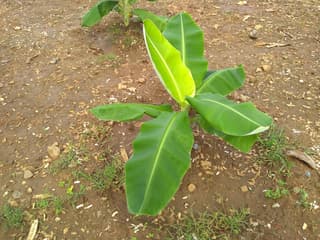
Banana
Musa
Banana (Musa spp.) is a large tropical plant belonging to the family Musaceae. This is a genus-level entry with care data representative of commonly grown ornamental and edible bananas, particularly Musa acuminata-type cultivars such as Dwarf Cavendish. Native to tropical Asia, the banana plant is one of the most recognizable plants in the world, celebrated for its broad, glossy green leaves and iconic fruit. Cultivated for over 8,000 years, it is a symbol of abundance and fertility across many cultures. As a houseplant, it is a fast-growing specimen that can reach 1.5 to 5 metres depending on the cultivar, creating a dramatic tropical focal point.
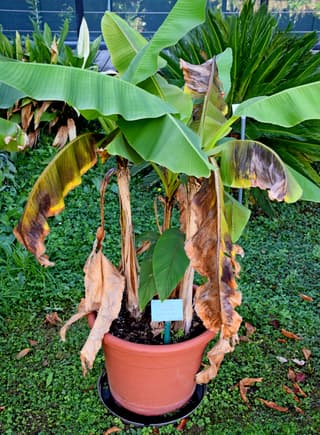
Japanese Banana
Musa basjoo
Musa basjoo, known as the Japanese Banana or Hardy Banana, is a fast-growing herbaceous perennial in the family Musaceae. Native to the Ryukyu Islands of Japan and originally from Sichuan, China, it produces enormous paddle-shaped leaves up to 6 feet long, creating a lush tropical effect in temperate gardens. Unlike most bananas, its underground rhizomes can survive temperatures as low as -10°F with mulch, making it the hardiest banana available for cold-climate gardening.
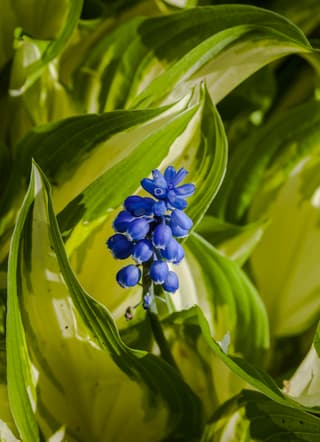
Grape Hyacinth (genus)
Muscari
Muscari is a genus of approximately 30 species of small bulbous spring-flowering perennials in the family Asparagaceae, native to the Mediterranean basin and southwestern Asia. They are beloved for their dense racemes of tiny urn-shaped blue or white flowers that resemble clusters of grapes.
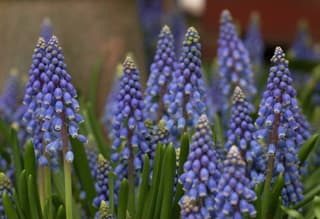
Grape Hyacinth
Muscari armeniacum
Muscari armeniacum, commonly known as Grape Hyacinth, is a bulbous perennial native to Turkey and the Caucasus region. It belongs to the family Asparagaceae and produces small clusters of deep blue-violet, urn-shaped flowers in early spring that resemble bunches of grapes. Hardy, low-maintenance, and highly rewarding, it naturalizes readily in gardens and containers.
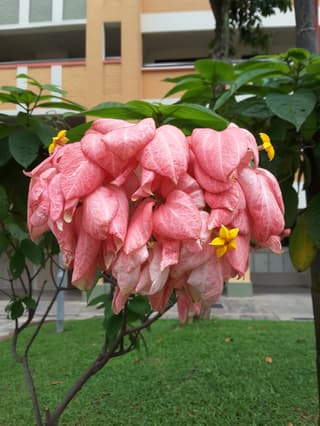
Dona Alicia Mussaenda
Mussaenda alicia
Mussaenda alicia, commonly known as Doña Alicia, is a stunning tropical flowering shrub native to the Philippines and Tropical Asia. It belongs to the family Rubiaceae and is celebrated for its showy pink bracts that surround small yellow tubular flowers. Named in honor of Alicia Santos-Garchitorena, this cultivar is one of the most beloved ornamental plants in Philippine gardens and is grown throughout tropical regions worldwide. The plant produces cascading branches adorned with large, soft, velvety pink sepals, creating a spectacular display from spring through fall.
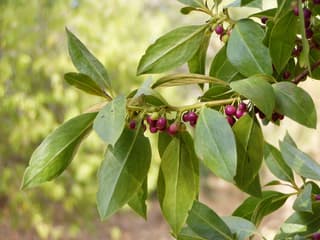
Ngaio
Myoporum laetum
Myoporum laetum, commonly known as ngaio or mousehole tree, is a fast-growing shrub or small tree endemic to New Zealand and the Chatham Islands. It reaches up to 10 meters in height, featuring bright green leaves dotted with translucent oil glands visible when held up to the light. In spring and summer, it produces clusters of small white flowers speckled with purple, followed by reddish fruits. It is extremely salt and wind tolerant, making it widely used as a windbreak and coastal screen. All parts of the plant contain ngaione, a potent liver toxin: it is highly toxic to livestock, dogs, cats, and humans if ingested.
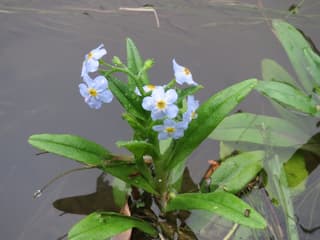
Water Forget-me-not
Myosotis scorpioides
The Water Forget-me-not is a moisture-loving perennial herb from the Boraginaceae family, native to Europe and Asia. It grows on muddy banks, in wetlands, and on river floodplains, blooming from May to September with small blue flowers featuring a yellow center. It is very frost-resistant (down to -20 °C). It spreads easily in nature and can be invasive in some wetland areas.
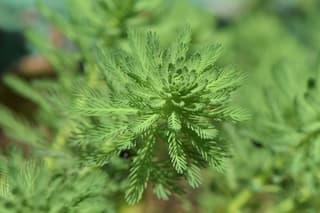
Parrot's feather
Myriophyllum aquaticum
Myriophyllum aquaticum, commonly known as parrot's feather, is a rhizomatous perennial aquatic plant native to the Amazon basin of South America. It produces creeping stems that root in submerged mud and erect stems that emerge from the water surface up to 12-24 inches, covered in bright light green pinnate leaves arranged in feathery whorls that resemble parrot feathers. In summer, it bears tiny, almost imperceptible white or yellowish flowers in the leaf axils of the emergent stems. Widely used ornamentally for ponds and aquariums due to its oxygenating and filtering action, this species is now listed as an invasive alien species of Union concern (EU Regulation 1143/2014): its cultivation, sale, and release into the wild are prohibited in Italy and the rest of the European Union, as it forms dense mats that choke waterways and displace native flora.
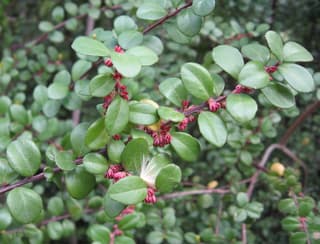
African Boxwood
Myrsine africana
Myrsine africana is a compact, evergreen shrub native to Africa, Asia, and the Mediterranean. Its small, glossy, serrated leaves form a dense canopy, making it excellent for hedging, topiary, and garden borders. It is highly adaptable and drought-tolerant once established.
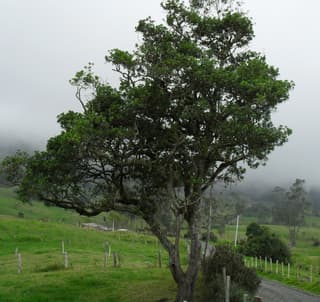
Guiana Rapanea
Myrsine guianensis
The Guiana Rapanea (Myrsine guianensis) is an evergreen shrub or small tree native to coastal areas, moist forests, and dry forests ranging from South Florida and the West Indies to Brazil and northern Argentina, including much of Colombia from sea level to nearly 3,300 meters in altitude. Its leaves are alternate, oblong-elliptic, 7 to 20 cm long, glossy bright green on the upper surface and paler underneath. The trunk typically branches in a candelabra shape, featuring reddish bark and long, flexible, nearly horizontal branches. It produces small, inconspicuous greenish-yellow flowers, followed by drupe fruits that ripen to a shiny black and are highly prized by birds. It is a very resilient species, capable of growing rapidly even in poor, eroded, or poorly drained soils.
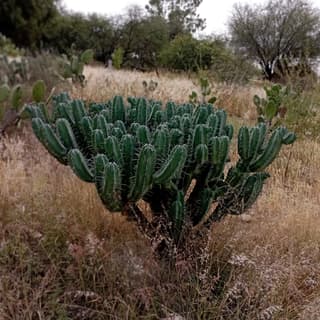
Blue Candle Cactus
Myrtillocactus geometrizans
Myrtillocactus geometrizans, commonly known as the Blue Candle Cactus, is a striking columnar cactus native to central and northern Mexico. Its branching stems display a distinctive blue-green hue that intensifies with sun exposure, and the plant can reach heights of up to 5 meters in its native habitat. It produces small, edible berries called garambullos, similar in appearance to blueberries and long used by indigenous Mexican communities. It is widely cultivated as an ornamental specimen in dry gardens and as a grafting rootstock.
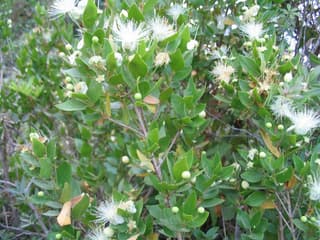
Common Myrtle
Myrtus
Myrtus (myrtle) is an aromatic evergreen shrub native to the Mediterranean, valued for its glossy dark-green leaves, fragrant white star-shaped flowers, and dark berries used in cooking and traditional remedies. Slow-to-medium growing and remarkably drought-tolerant once established, it thrives in full sun and well-drained soil, making it a popular choice for hedges, topiary, and containers.
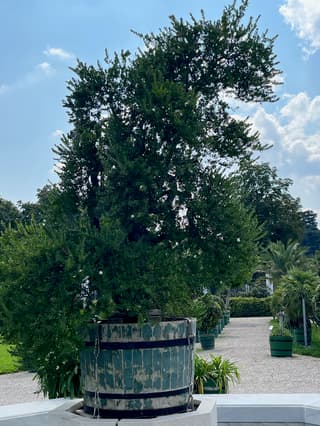
Common Myrtle
Myrtus communis
Common myrtle (Myrtus communis) is an evergreen, aromatic shrub native to the Mediterranean region and a member of the Myrtaceae family. Its small, glossy leaves are packed with essential oils and release a strong fragrance when crushed. From late spring through summer the plant produces delicate white flowers with long, showy stamens, followed by small blue-black to purple berries that are edible and have been used for centuries in cooking and in liqueurs such as Sardinian mirto. Grown as an ornamental shrub, aromatic hedge, or even as a container bonsai, common myrtle is drought-tolerant and low-maintenance, and carries strong historical symbolism tied to love and fidelity.
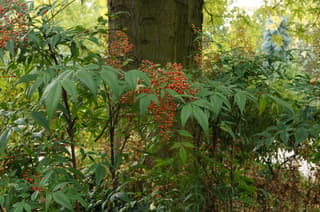
Heavenly Bamboo / Sacred Bamboo (genus)
Nandina
Nandina is a compact, evergreen shrub native to eastern Asia (Japan, China, and the Himalayas), belonging to the family Berberidaceae. Despite its common name "Heavenly Bamboo," it is not a true bamboo. It features elegant foliage with brilliant red new growth, white spring flowers, and vibrant red berries in fall and winter. Widely used in ornamental landscaping across USDA zones 6-11.
Heavenly Bamboo
Nandina domestica
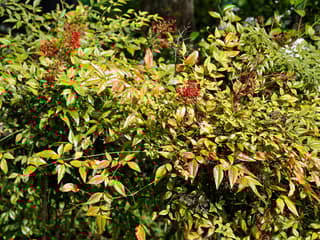
Heavenly Bamboo (Nandina domestica) is an evergreen shrub native to China and Japan, celebrated for its ornamental foliage that transitions from bronze-red in spring, through fresh green in summer, to vivid scarlet and burgundy in autumn and winter. Despite its common name, it is not a true bamboo but belongs to the Berberidaceae family. It produces airy panicles of small white flowers in late spring and clusters of brilliant red berries that persist through winter, making it a four-season garden standout.
Daffodil
Narcissus
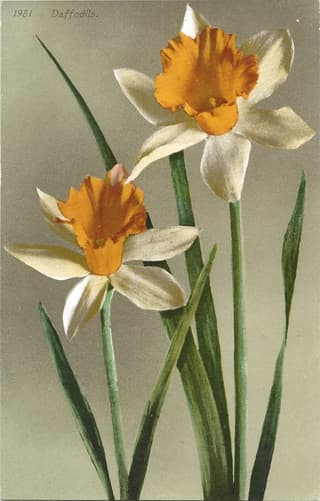
Narcissus is a genus of predominantly spring-flowering perennial bulbous plants in the family Amaryllidaceae. The genus includes daffodils, jonquils, and paperwhites, offering a wide range of flower forms and colors from white to yellow, orange, and pink. Native mainly to Europe and North Africa.
What are Easy Plants?
Easy Plants are ideal for beginners or people with little time for care. These species are tolerant of watering mistakes, light variations, and don't require constant attention. Perfect for those just starting out with plants.
Tips for Growing Easy Plants
To succeed with easy plants, remember: less is more. Avoid overwatering, choose a spot with adequate light, and let the soil dry between waterings. Most of these plants prefer to be 'forgotten' occasionally.