Boraginaceae
Water Forget-me-not: Ground Cover Plant
Myosotis scorpioides
It is a very low-maintenance plant. It requires constantly moist to wet soil and full sun or partial shade. It is disease-resistant, though it can occasionally be affected by powdery mildew.
Every 1 days
Bright indirect
-20° - 25°C
% - %
Categories
What is Water Forget-me-not?
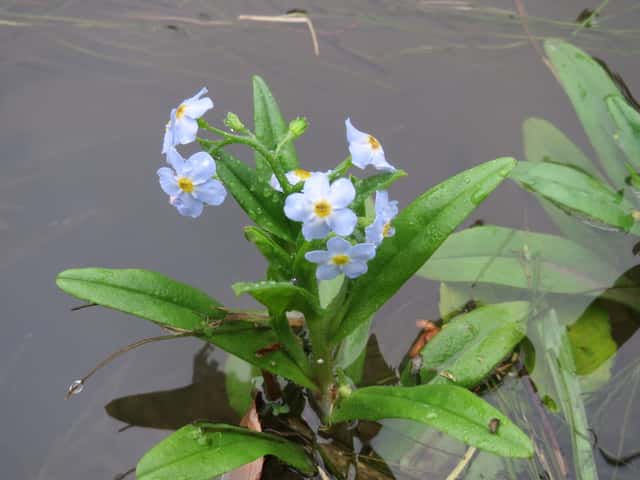
Water Forget-me-not (Myosotis scorpioides) is a easy-care plant from the Boraginaceae family. The Water Forget-me-not is a moisture-loving perennial herb from the Boraginaceae family, native to Europe and Asia. It grows on muddy banks, in wetlands, and on river floodplains, blooming from May to September with small blue flowers featuring a yellow center. It is very frost-resistant (down to -...
Water Forget-me-not grows up to 70cm, spread of 60cm, watering every 1 days, -20°C – 25°C. It is not suitable for indoor environments and safe for pets.
Unlike many tropical plants, Water Forget-me-not tolerates watering mistakes. Best for beginners. Unlike many popular species, Water Forget-me-not is safe to keep around pets.
How to Care for Water Forget-me-not?
TLDR: Water Forget-me-not needs Bright indirect, watering every 1 days, and temperatures between -20-25°C with 40-70% humidity.
How Often Should You Water Water Forget-me-not?
Keep the soil permanently moist to wet; water daily during dry weather. It can tolerate shallow flooding of the roots.
How Much Light Does Water Forget-me-not Need?
Grows best in full sun or partial shade, ideally with 4–6 hours of direct light per day.
What Is the Best Soil for Water Forget-me-not?
Thrives in deep, humus-rich, muddy soil. It has no specific pH requirements; adding peat or compost is beneficial.
What Pot Should You Use for Water Forget-me-not?
Suitable for marginal containers with wet soil or for pond baskets placed at the edge of a water feature.
What Is Water Forget-me-not and Where Does It Come From?
The Water Forget-me-not is a moisture-loving perennial herb from the Boraginaceae family, native to Europe and Asia. It grows on muddy banks, in wetlands, and on river floodplains, blooming from May to September with small blue flowers featuring a yellow center. It is very frost-resistant (down to -20 °C). It spreads easily in nature and can be invasive in some wetland areas.
How to Propagate Water Forget-me-not?
Seeds
The plant self-seeds easily.
- 1 Sow seeds in moist soil in spring
- 2 Maintain a temperature of 10-18°C
- 3 Maintain constant moisture
- 4 Transplant seedlings carefully
Materials needed:
Division
The easiest propagation method.
- 1 Divide the clump into sections with roots
- 2 Plant in moist soil in partial shade
Materials needed:
Cuttings
Roots well in moist conditions.
- 1 Cut young shoots
- 2 Plant in moist soil in partial shade
Materials needed:
How Big Does Water Forget-me-not Grow?
TLDR: Water Forget-me-not can reach up to 70cm tall with Medium growth rate.
Max height
70cm
Spread
60cm
Growth rate
Medium
Foliage
Semi-evergreen
Plant Uses
Ornamental
Great for decoration
Ground Cover
Soil coverage
Medicinal
Medicinal properties
Medicinal Uses
- Traditionally used for coughs and bronchitis (flower tea)
Is your plant showing symptoms?
Click on the symptom to discover possible causes:
What Diseases Commonly Affect Water Forget-me-not?
TLDR: Water Forget-me-not is susceptible to 3 known diseases. Monitor regularly for early detection.
Powdery Mildew
Powdery mildew is a common fungal disease caused by various fungi species including Erysiphe, Podosphaera, Oïdium, and Leveillula. It affects over 10,000 plant species worldwide. The disease thrives in warm, dry climates with high humidity and appears as a distinctive white powdery coating on plant surfaces.
Downy Mildew
Downy mildew is a fungal-like disease caused by oomycetes (water molds) that thrives in cool, wet conditions. It affects a wide range of plants, causing yellowing leaves with fuzzy white-gray growth underneath, leading to defoliation and reduced yields if left untreated.
Rust
Rust is a common fungal disease caused by fungi in the order Pucciniales that affects a wide variety of plants. The disease gets its name from the characteristic orange, yellow, or reddish-brown pustules that appear on leaves, resembling metal rust. This obligate fungal parasite requires living plants to survive and can cause significant economic losses in agricultural crops.
Meaning & Symbolism
In European tradition, it symbolizes remembrance, fidelity, and true love.
Compare with similar plants
| Attribute | Difficulty | Light | Watering | Pet Safe |
|---|---|---|---|---|
| Field Maple | Easy | Bright indirect | 14d | ✓ |
| Silver Birch | Easy | Direct sun | 14d | ✓ |
| Common Blanketflower | Easy | Direct sun | 10d | ✓ |
| Cushion Bush | Easy | Direct sun | 14d | ✓ |





