Asparagaceae
Grape Hyacinth: Complete Care Guide for Muscari armeniacum
Muscari armeniacum
An easy-care bulb that thrives in full sun to partial shade. Water moderately during the growing season and reduce watering during summer dormancy. Well-drained soil is essential to prevent bulb rot. Fertilize lightly once a year in autumn.
Every 10 days
Bright indirect
-18° - 25°C
40% - 60%
Categories
What is Grape Hyacinth?
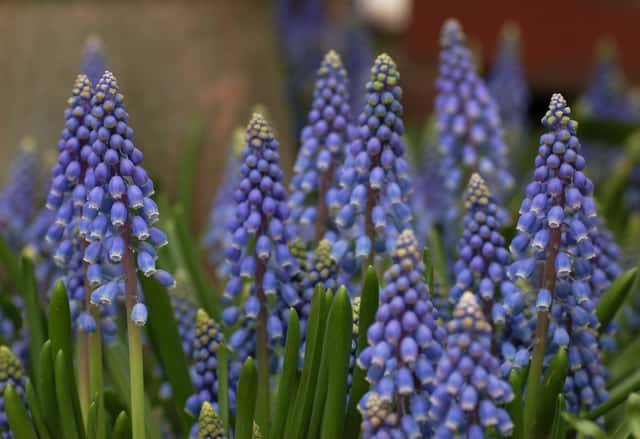
Grape Hyacinth (Muscari armeniacum) is a easy-care plant from the Asparagaceae family. Muscari armeniacum, commonly known as Grape Hyacinth, is a bulbous perennial native to Turkey and the Caucasus region. It belongs to the family Asparagaceae and produces small clusters of deep blue-violet, urn-shaped flowers in early spring that resemble bunches of grapes. Hardy, low-maintenance, an...
Grape Hyacinth grows up to 25cm, spread of 15cm, watering every 10 days, -18°C – 25°C, 40–60% humidity. It is suitable for indoor environments and safe for pets.
Unlike many tropical plants, Grape Hyacinth tolerates watering mistakes. Best for beginners. Unlike many popular species, Grape Hyacinth is safe to keep around pets. Without adequate drainage, root rot can develop within 20 days.
How to Care for Grape Hyacinth?
TLDR: Grape Hyacinth needs Bright indirect, watering every 10 days, and temperatures between -18-25°C with 40-60% humidity.
How Often Should You Water Grape Hyacinth?
Water every 8–12 days during active growth (autumn through spring). Significantly reduce watering once foliage yellows and dies back as the plant enters summer dormancy. Never leave bulbs in waterlogged soil.
How Much Light Does Grape Hyacinth Need?
Prefers full sun to partial shade, with at least 4–6 hours of direct sunlight daily. In hot climates, afternoon shade can help preserve the flowers.
What Is the Best Soil for Grape Hyacinth?
Use well-drained, light sandy or loamy soil with a pH of 6.0–7.0. Amend with coarse sand or perlite for better drainage. Avoid heavy clay soils that retain excess moisture.
What Pot Should You Use for Grape Hyacinth?
Terracotta, ceramic or any container with adequate drainage holes. Plant directly in garden beds for naturalizing.
Care Schedule
Fertilize
Every 60 days
Repot
Every 730 days
What Is Grape Hyacinth and Where Does It Come From?
Muscari armeniacum, commonly known as Grape Hyacinth, is a bulbous perennial native to Turkey and the Caucasus region. It belongs to the family Asparagaceae and produces small clusters of deep blue-violet, urn-shaped flowers in early spring that resemble bunches of grapes. Hardy, low-maintenance, and highly rewarding, it naturalizes readily in gardens and containers.
How to Propagate Grape Hyacinth?
Bulb Division
Divide every 3–4 years when clumps become overcrowded and flowering decreases. Use clean, disinfected tools.
- 1 Wait until foliage has yellowed and died back after flowering
- 2 Carefully dig up the bulb clump with a garden fork
- 3 Gently separate the small offset bulblets from the mother bulb
- 4 Replant immediately in autumn at 5 cm depth, 8–10 cm apart
- 5 Water lightly after planting
Materials needed:
Seed Propagation
Seed propagation is slow—expect 2–3 years before the first flowers. Bulb division is much faster and more reliable.
- 1 Collect seeds after seed capsules mature in late spring
- 2 Sow in autumn in trays with light, well-drained potting mix
- 3 Cover seeds with 1 cm of compost
- 4 Keep moist in a cool location for natural stratification
- 5 Transplant seedlings in the second year
Materials needed:
How Big Does Grape Hyacinth Grow?
TLDR: Grape Hyacinth can reach up to 25cm tall with Slow growth rate.
Max height
25cm
Spread
15cm
Growth rate
Slow
Foliage
Deciduous
Plant Uses
Ornamental
Great for decoration
Is your plant showing symptoms?
Click on the symptom to discover possible causes:
What Diseases Commonly Affect Grape Hyacinth?
TLDR: Grape Hyacinth is susceptible to 7 known diseases. Monitor regularly for early detection.
Root Rot
Root rot is a serious fungal disease that affects the root system of plants, causing them to decay and die. It is primarily caused by overwatering, poor drainage, or soil-borne fungi such as Pythium, Phytophthora, Rhizoctonia, and Fusarium. The disease thrives in waterlogged conditions where roots are deprived of oxygen, making them susceptible to fungal infection.
Gray Mold (Botrytis Blight)
Gray mold, caused by the fungus Botrytis cinerea, is a widespread necrotrophic pathogen affecting over 1,400 plant species. It thrives in cool, humid conditions and attacks weakened or aging plant tissues, causing soft rot and characteristic gray fuzzy growth.
Bacterial Soft Rot
Bacterial soft rot is a destructive plant disease caused primarily by bacteria from the genera Pectobacterium (formerly Erwinia) and Dickeya. These bacteria produce enzymes that break down plant cell walls, causing rapid and foul-smelling tissue decomposition. It mainly affects succulent tissues such as tubers, fruits, stems, and bulbs, being especially problematic in warm and humid conditions.
Mosaic Virus
Mosaic virus is a group of plant viruses that cause mottled, patchy patterns on leaves and can affect a wide variety of plants. The virus creates characteristic yellow, white, and green mosaic patterns, often accompanied by stunted growth and deformed plant parts. This highly contagious disease spreads rapidly through insect vectors and contaminated tools.
Meaning & Symbolism
Symbolizes rebirth, renewal, sincerity, and trust. In the language of flowers, grape hyacinth heralds the arrival of spring and new beginnings.
Fun Facts
Native to Turkey and the Caucasus, Grape Hyacinth has naturalized across much of Europe and other temperate regions worldwide.
The genus name Muscari comes from the Greek word for musk, referring to the musky fragrance produced by some species in the genus.
In Persian New Year celebrations (Nowruz), Muscari bulbs are traditionally grown in pots as symbols of spring and renewal.
A single plant can produce dozens of offset bulblets over the years, forming large, spreading colonies.
Frequently asked questions
How often should I water Grape Hyacinth?
Is Grape Hyacinth toxic to pets?
When does Grape Hyacinth bloom?
How do I propagate Grape Hyacinth?
Can Grape Hyacinth be grown indoors?
Compare with similar plants
| Attribute | Difficulty | Light | Watering | Pet Safe |
|---|---|---|---|---|
| Field Maple | Easy | Bright indirect | 14d | ✓ |
| Silver Birch | Easy | Direct sun | 14d | ✓ |
| Common Blanketflower | Easy | Direct sun | 10d | ✓ |
| Cushion Bush | Easy | Direct sun | 14d | ✓ |





