Araceae
Monstera Friedrichsthalii (Swiss Cheese Vine)
Monstera friedrichsthalii
An easy plant: bright indirect light, water when the top few centimetres of soil are dry, high humidity (above 60%) and a moss pole or trellis to climb. Fast-growing and toxic to pets.
Every 7 days
Partial shade
18° - 29°C
60% - 80%
Categories
What is Monstera Friedrichsthalii?
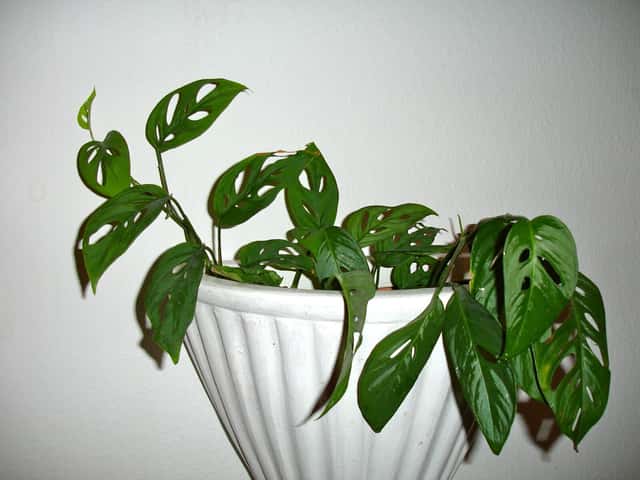
Monstera Friedrichsthalii (Monstera friedrichsthalii) is a easy-care plant from the Araceae family. Monstera friedrichsthalii is a tropical climbing aroid (family Araceae) with glossy green leaves full of oval holes (fenestrations), which is why it is called Swiss cheese vine. The name is now treated as a synonym of Monstera adansonii subsp. laniata (the accepted name in POWO and World Flora Onlin...
Monstera Friedrichsthalii grows up to 2.0m, spread of 90cm, watering every 7 days, 18°C – 29°C, 60–80% humidity. It is suitable for indoor environments and not safe for pets.
Unlike many tropical plants, Monstera Friedrichsthalii tolerates watering mistakes. Best for beginners. Without precautions, ingestion can cause irritation in pets. Keep out of reach of cats and dogs. Without adequate drainage, root rot can develop within 14 days.
How to Care for Monstera Friedrichsthalii?
TLDR: Monstera Friedrichsthalii needs Partial shade, watering every 7 days, and temperatures between 18-29°C with 60-80% humidity.
How Often Should You Water Monstera Friedrichsthalii?
Water when the top 2-3 cm of soil are dry, usually about every 7 days in summer and less often in winter. Let excess water drain out; soggy soil leads to root rot.
How Much Light Does Monstera Friedrichsthalii Need?
Give it bright, indirect light, such as near a window with a sheer curtain. It tolerates partial shade, but in low light new leaves come out smaller with fewer holes. Avoid strong direct sun, which scorches the leaves.
What Is the Best Soil for Monstera Friedrichsthalii?
Use an airy, well-draining mix: potting soil with orchid bark, perlite and some coco coir or sphagnum moss. Slightly acidic to neutral pH (5.5-7).
What Pot Should You Use for Monstera Friedrichsthalii?
A plastic or ceramic pot with drainage holes, only slightly larger than the root ball; or a hanging basket to let the vines trail.
Care Schedule
Fertilize
Every 30 days
Misting
Every 3 days
Rotate
Every 14 days
Repot
Every 730 days
What Is Monstera Friedrichsthalii and Where Does It Come From?
Monstera friedrichsthalii is a tropical climbing aroid (family Araceae) with glossy green leaves full of oval holes (fenestrations), which is why it is called Swiss cheese vine. The name is now treated as a synonym of Monstera adansonii subsp. laniata (the accepted name in POWO and World Flora Online), and in the trade it is usually sold as Monstera adansonii. It grows wild from Nicaragua and Panama through Colombia, Venezuela, the Guianas, Ecuador, Peru, Bolivia and northern Brazil, in moist forests mostly below 700 m. Young plants trail or creep; once they climb a tree they produce much larger leaves.
How to Propagate Monstera Friedrichsthalii?
Stem cutting
Use clean, sharp scissors and refresh the water every few days. The node (ideally with an aerial root) is essential for rooting.
- 1 Cut a stem section with at least one node and one leaf
- 2 Remove the lowest leaf if it would sit under water
- 3 Place the node in water or moist potting mix
- 4 Pot it up when roots are 3-5 cm long
Materials needed:
Water propagation
Change the water weekly to prevent rot.
- 1 Take a cutting with one or two nodes
- 2 Place it in a glass of filtered water with the nodes submerged
- 3 Keep it in bright light without direct sun
- 4 Move it to soil once the roots are sturdy
Materials needed:
How Big Does Monstera Friedrichsthalii Grow?
TLDR: Monstera Friedrichsthalii can reach up to 2.0m tall with Fast growth rate.
Max height
2.0m
Spread
90cm
Growth rate
Fast
Foliage
Evergreen
Warning: Toxic Plant
This plant can be toxic if ingested. Keep out of reach of:
Plant Uses
Ornamental
Great for decoration
Is your plant showing symptoms?
Click on the symptom to discover possible causes:
What Diseases Commonly Affect Monstera Friedrichsthalii?
TLDR: Monstera Friedrichsthalii is susceptible to 16 known diseases. Monitor regularly for early detection.
Root Rot
Root rot is a serious fungal disease that affects the root system of plants, causing them to decay and die. It is primarily caused by overwatering, poor drainage, or soil-borne fungi such as Pythium, Phytophthora, Rhizoctonia, and Fusarium. The disease thrives in waterlogged conditions where roots are deprived of oxygen, making them susceptible to fungal infection.
Overwatering
Overwatering occurs when plants receive too much water, depriving roots of oxygen and causing root rot. This environmental stress is one of the most common causes of houseplant death, as waterlogged soil prevents roots from breathing and functioning properly.
Low Humidity Stress
Low humidity stress occurs when indoor air becomes too dry, causing plants to lose moisture faster than they can absorb it through their roots. This is especially common during winter heating periods, near radiators and heating vents, or in air-conditioned spaces. Tropical plants are particularly susceptible to low humidity damage.
Spider Mites
Spider mites are tiny arachnids (less than 1/20 inch long) related to spiders and ticks that feed on plant sap. They thrive in hot, dry conditions and can cause significant damage to ornamental and vegetable plants. During severe infestations, crop losses can reach 14% or higher as these pests disrupt vital plant processes including photosynthesis, carbon dioxide absorption, and transpiration.
Fun Facts
The name honours Emanuel von Friedrichsthal, a 19th-century Austrian traveller who collected plants in Central America.
The holes in the leaves may help them withstand wind and let light reach the leaves below.
In the wild the plant starts out creeping along the ground and changes form once it finds a tree to climb.
Frequently asked questions
Are Monstera friedrichsthalii and Monstera adansonii the same plant?
How often should I water Monstera friedrichsthalii?
Is Monstera friedrichsthalii toxic to cats and dogs?
Why do new leaves have no holes?
Compare with similar plants
| Attribute | Difficulty | Light | Watering | Pet Safe |
|---|---|---|---|---|
| Field Maple | Easy | Bright indirect | 14d | ✓ |
| Iberian Houseleek | Easy | Direct sun | 14d | ✓ |
| Silver Birch | Easy | Direct sun | 14d | ✓ |
| Common Blanketflower | Easy | Direct sun | 10d | ✓ |
Choose & Compare
Sources & References
- POWO (Kew) - Monstera friedrichsthalii Schott
- World Flora Online - Monstera friedrichsthalii (synonym of M. adansonii subsp. laniata)
- Croat et al. - Revision of Monstera in Central America (Missouri Botanical Garden)
- Exotic Rainforest - Monstera adansonii / friedrichsthalii
- Botanix - Monstera adansonii 'Friedrichsthalii' care
- ASPCA - Cutleaf Philodendron (Monstera) toxicity